


Imperfect but historic: How India repeated and defeated history in T20 World Cup 2026
India were up against history when February started. But they were also pushing this game to places scarcely imaginable. And on Sunday, the Men in Blue smirked at all the history they had previously stared down, and smashed all those once-insurmountable records, courtesy the perfect display.

History is funny. History is nuanced. History is quirky. History does not predict the future. Past events have no active bearing on the present. Nor can it shape the future. But history, in so many walks of life, and across so many different sports, has a tendency to occupy mind-space. To wear teams down. To induce an iota of doubt when least required, and create illusions - that because something has remained unattainable previously, it will remain unattainable forever.
But history could also empower people. Give them belief. Make them believe in that belief. That even though a solution has not been found previously, they will, when the moment calls, and when the time is right, find a way.
India were up against all of it when February started. Back then, no nation had ever won consecutive men's T20 World Cups. Only two countries (Pakistan in 2007 and 2009, and Sri Lanka in 2012 and 2014) had made back-to-back finals. And a grand total of zero teams had tasted triumph on home soil. Across nine editions, and 19 years.
 More from Firstcricket
But India were also pushing this game to places scarcely imaginable. Doing things no one had ever done. Especially with the bat
And on Sunday, India smirked at all the history they had previously stared down, and smashed all those once-insurmountable records, courtesy the perfect display, with Abhishek Sharma and Sanju Samson providing a turbocharged start, and with Jasprit Bumrah doing Jasprit Bumrah things, with Axar Patel and Ishan Kishan playing their parts too.
Overcoming hurdles en route to making history
Things, though, were not always this smooth. India began their campaign with a proper batting capitulation against the United States of America - a tale they can now reminisce and narrate, rather than recount and repent, only due to skipper Suryakumar Yadav. Then, they were obliterated by South Africa at the start of the Super Eight stage - a defeat that effectively left them playing four knockout games in succession.
The top-ranked T20I batter in the world (aka Abhishek) and the top-ranked T20I bowler (aka Varun Chakravarthy) were huffing and puffing too. And India kept dropping catches. 14 of them to be precise, which is the most any team has dropped at a men's T20 World Cup.
But that is the thing about sport. And about such competitions. The internet may have made this a meme, but in sport and in these scenarios, the adage of either winning or learning is quite practical, and for the best teams, actionable too.
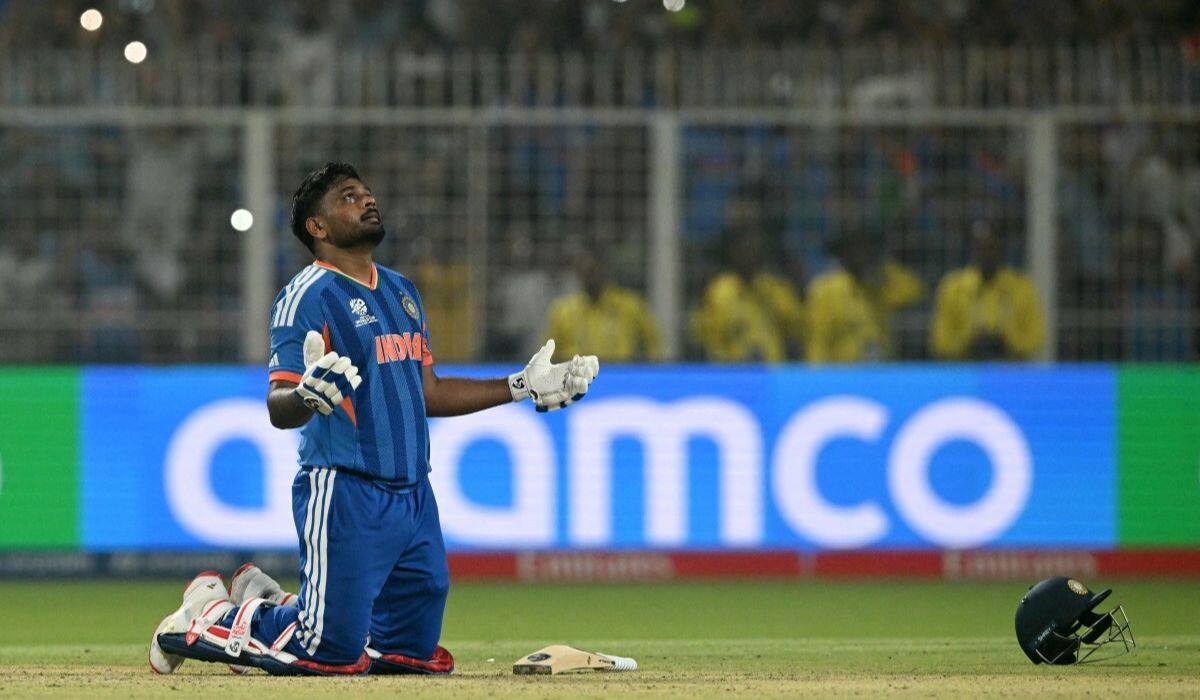
And India did learn along the way. They learned that they could not have too many left-handers in the top order. They learned that they simply needed to throw Samson into the deep end. They learned that they needed to shed the early-tournament inhibition and embrace the style that made them so fearsome and such a force to be reckoned with.
Which brings us to an assumption that is almost universally prevalent across sport. That when World Cups or the really big competitions roll in, teams/players need to be at their absolute best. That they have to be perfect to win it. But that hardly seems to happen. More often than not, the ones who succeed are those who can have bad days, have vulnerable moments and yet, find a way. Which, if you pore over it long enough, seems like a microcosm of life too.
Finding a way when it matters the most
India did find a way, and they found a way when it really mattered. Which makes you wonder if that myth around teams having to be perfect at World Cups and multi-team tournaments really holds. Because sport, at the end of the day, is just as much about what you can do on a good day as it is about how much of your own you can hold when circumstances feel grimmer.
Also Read | Kohli, Yuvraj, Tendulkar applaud India’s third T20 World Cup title: 'Absolutely no match'
Now, India have history to back it up too. And it did not even need India to be at their best. It just needed them to be there. In the thick of it. Eyeball to eyeball. And with unwavering belief. That even if things initially threatened to go pear-shaped, they would, eventually and ultimately, find a way.
That, after all, is what rewriting history, and repeating it, is about. And maybe, that is what it takes too.

Rohit Sharma finally responds to growing speculation over his India future: 'Let the noise be there'
Shubman Gill pins India's loss on death-over lapses after England run riot: 'We gave away lot of runs'
Rohit shines with historic Lord's ton, but England seal series 2-1
India and England players don black armbands, observe minute's silence at Lord's to honour Sir Garfield Sobers
India coach shrugs off Rohit Sharma form woes amid speculation on ODI future: 'He brings that calmness'