


Why the British are not going to return the Kohinoor to India
Before his meeting with King Charles III, New York City's Indian-origin Mayor Zohran Mamdani said that he would ‘probably encourage the royal to return the Kohinoor’. The diamond has long been a point of contention between the two nations, with New Delhi demanding its return on several occasions and Britain refusing to do so

“If I were to speak to the king separately from that, I’d probably encourage him to return the Kohinoor diamond,” said New York City Mayor Zohran Mamdani just hours before he met the UK’s King Charles during the latter’s US State visit.
Hours later, the New York City official met with the British royal during a wreath-laying ceremony for the victims of the 9/11 terror attack.
Mamdani’s statement has once again shifted the attention to the crown jewel, which has been a contentious issue between Britain and India. Indians have repeatedly demanded the return of the 105.6-carat diamond, while the British have refused every time.
History of the Kohinoor
The history of the Kohinoor diamond is complicated and long. The diamond was mined in what is modern-day Andhra Pradesh during the Kakatiyan dynasty of the 12th-14th centuries. When initially mined, it was believed to have been 793 carats uncut.
 More from Explainers
According to written records, the Kohinoor first emerged in 1628, and it was then in the possession of the Mughals. Mughal ruler Shah Jahan commissioned a magnificent, gemstone-encrusted throne. The bejeweled structure was inspired by the fabled throne of Solomon, the Hebrew king who figures into the histories of Islam, Judaism, and Christianity. Shah Jahan’s throne took seven years to make, costing four times as much as the Taj Mahal, which was also under construction.
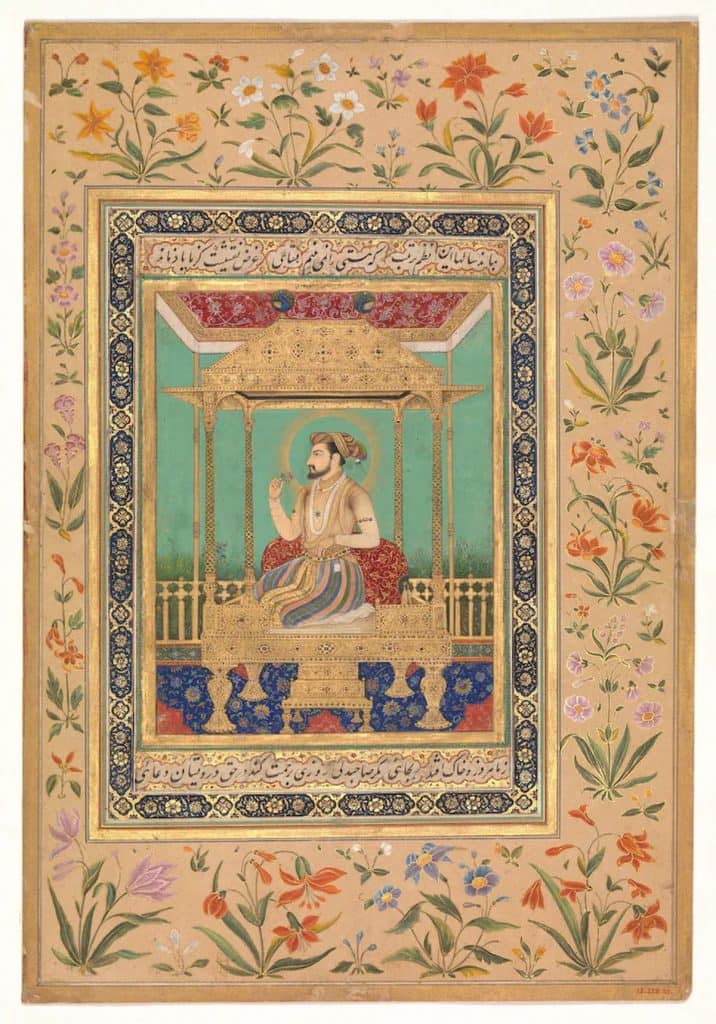
The throne contained many precious stones, but two were of significance: the Timur Ruby and the Kohinoor diamond. The peacock throne with the Kohinoor diamond remained in India for almost a century while the Mughals ruled the country.
However, when the Persian ruler Nader Shah invaded Delhi in 1739, he plundered the city and took the Peacock Throne as part of his treasure. However, he removed the Timur Ruby and the Kohinoor diamond to wear on an armband.
The diamond then crossed hands again, landing in modern-day Afghanistan for almost 70 years. The book Kohinoor: The Story Of The World’s Most Infamous Diamond, written by William Dalrymple and Anita Anand, notes, “By the time the diamond passed from the Afghans to Maharaja Ranjit Singh, the diamond had been with the Afghans of the Durrani empire for two to three generations. It kept getting transferred peaceably through each generation and finally came into the possession of Shah Shujah. Shah Shujah, in his autobiography, mentions that his son was tortured and that he was starved for days by Ranjit Singh in order to get the diamond.”
Britain’s tryst with the Kohinoor
After Ranjit Singh’s death in 1839, four different rulers ascended the Punjabi throne over four years.
As the violent period ended, Duleep Singh, Ranjit Singh’s youngest boy, and his mother, Rani Jindan, were the only ones left in line for the throne, as per the Smithsonian Magazine.
And it is here that the British acquired the precious stone. It is noted that in 1849, the British forced Duleep to sign a legal document amending the Treaty of Lahore, which included surrendering the Kohinoor and any sovereignty claims.
The diamond then became a special possession of Britain’s Queen Victoria. Later, Prince Albert, Queen Victoria’s husband, had the diamond re-cut as it had yellow flecks at its centre that prevented it from refracting light.
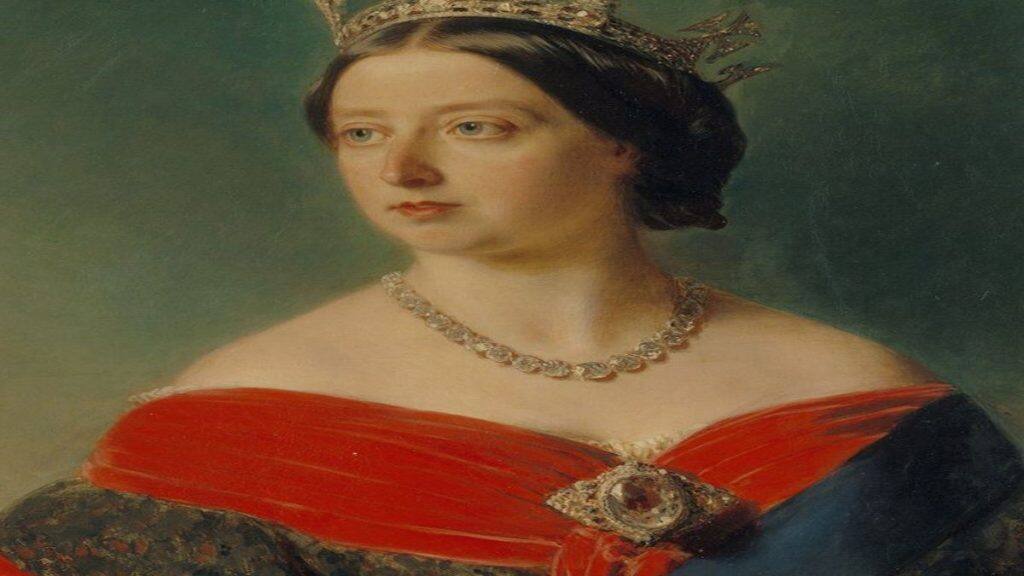
Queen Victoria then wore the gem in a brooch, but over time became part of the Crown Jewels.
The diamond came to its current place of honour in 1937, at the front of the crown worn by the Queen Mother, wife of George VI and mother of Elizabeth II. It was last seen in public resting on the Queen Mother's casket at her funeral.
India’s efforts to retrieve the Kohinoor
India has made numerous attempts to get the Kohinoor back from the British, stating that it is a “valued piece of art with strong roots in our nation’s history”.
Upon India’s independence in 1947, the government asked for the diamond back. India made another demand in the year of Queen Elizabeth II’s coronation. In 2022, India signalled it is exploring ways to bring back the Kohinoor. The then Ministry of External Affairs (MEA) spokesperson Arindam Bagchi said, “My understanding is that the government of India responded to it in Parliament a few years ago. We have said that we have been raising this matter from time to time with the UK government, and we will continue to explore ways and means for obtaining a satisfactory resolution of the matter.”

The demand for bringing back the gemstone reached its peak during the coronation of British King Charles III and Queen Camilla in May 2023, following the death of Queen Elizabeth the previous September.
Britain’s refusal to hand over Kohinoor
Despite India’s many efforts to retrieve the Kohinoor, the British haven’t relented.
In 2010, Britain rejected India’s demand to return the precious diamond, citing a law that prevents it from giving back the items. The Foreign and Commonwealth Office said, “The British Museum Act 1963 prevents our national museums from removing items... the government has no plan to change the law.
Six years later, Britain’s then minister of Asia and Pacific affairs Alok Sharma also turned down a request to hand over the Kohinoor, stating that there was no legal ground to do so. “It is the UK government’s [view] that there are no legal grounds for restitution.” He also cited the United Nations convention on restitution of cultural property to support his statement. The rule, adopted in 1970, is considered the guiding principle regarding such disputes.
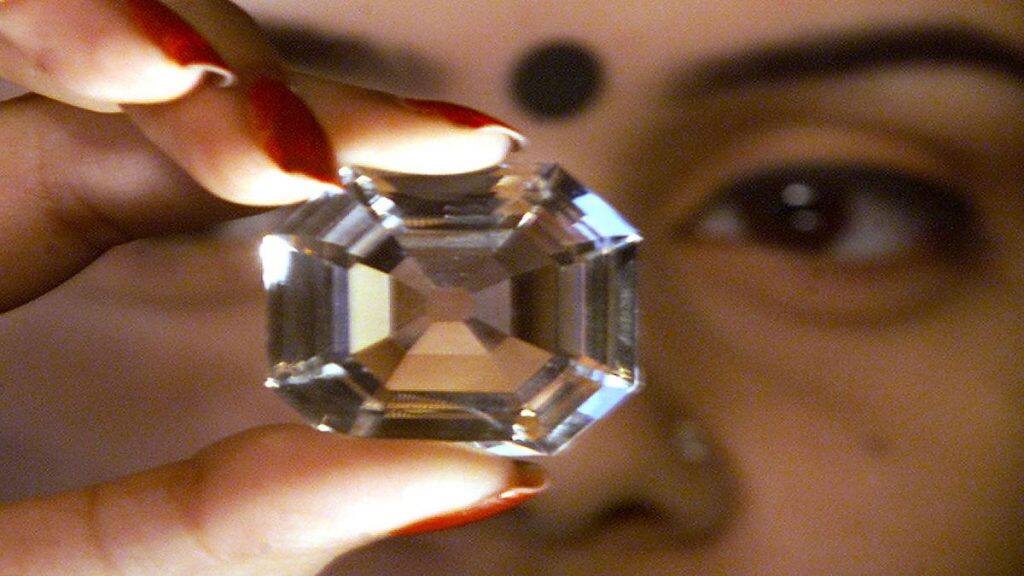
An Indian woman displays a replica of the Kohinoor, during a
diamond exhibition in Kolkata. File image/Reuters
Britain also notes that the diamond wasn’t stolen — even India made this observation in the Supreme Court. Instead, it was procured by a legal treaty. Britain’s former Deputy PM Nick Clegg also spoke of this in an interview to NDTV in 2014, “There is no doubt in our mind that the diamond was relocated to this country under legal conditions which are not in any doubt that there is clarity and sincerity with which the Queen holds the Crown Jewels, all of them, in trust and on behalf of the nations, has done for many generations, and future monarchs will continue to do so.”
Earlier, in 2010, when British Prime Minister David Cameron was asked about the return of Kohinoor, he refused, saying: “If you say yes to one, you suddenly find the British Museum would be empty. It is going to have to stay put.”
Some in Britain also note that if the Kohinoor were to be returned, where would it go? India, Pakistan, and Afghanistan have laid claim to the diamond.
While the Kohinoor doesn’t seem to be returning to India any time soon, Danielle Kinsey, an assistant professor of history with a focus on the history of 19th-century Britain and empire at Carleton University in Ottawa, Ontario, told NBC News that keeping the diamond is only a further headache for the British monarchy.
“To be purely pragmatic about it, at some point the monarchy will understand that keeping the diamond is more of a public relations liability for them than an asset,” she said. “I think the same is true for many, many looted artefacts in Britain today and the institutions that house them. Also, it’s the right thing to do if the royal family is serious about making apologies for the ills of British imperialism and how they profited from it.”
The question is — Is King Charles listening?
With inputs from agencies
Roshneesh is on the Explainers team and loves her job. Apart from the everyday 'explaining', she enjoys tennis and is a Rafa fan for life. She is also a Potterhead.
Tags

Military drones & police check-ups: How Sri Lanka is fighting against worst dengue outbreak in a decade
How Facebook job ad lured 2 Karnataka men into Myanmar cyber scam camp
Why is India seeing 95% cloud cover despite a Super El Niño?
What is CJP’s fourth demand to the government as protests in Delhi intensify?
The new geography of war: Why the Houthis can no longer be ignored