


Military drones & police check-ups: How Sri Lanka is fighting against worst dengue outbreak in a decade
Sri Lanka is fighting its most severe dengue outbreak in nearly a decade, with infections rising sharply across the nation. Military drones have been deployed to tackle the outbreak, which has claimed 56 lives. Health officials said the outbreak is being driven primarily by the DENV-2 variant of the virus

Sri Lanka's worst dengue outbreak in a decade has killed 53 people. In its war against mosquitoes, the Island nation has even deployed military drones.
Since January, the nation has recorded over 76,044 dengue cases. Infections are rising rapidly across the country, with Colombo, the national capital, having so far accounted for the highest number. Sri Lanka’s University of Colombo has reportedly decided to hold some lectures online amid the persisting dengue crisis.
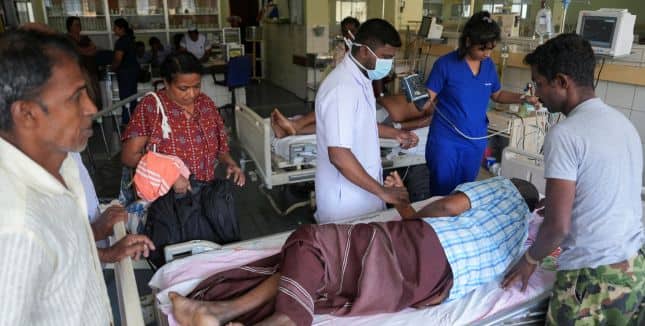
The Sri Lankan Air Force has deployed drones to detect stagnant water on rooftops and other mosquito breeding grounds. Bed capacity is expanding in hospitals. Medical staff's working hours are increasing to cope with the spike of over 18,000 cases in the first two weeks of July.
Reports suggest that this outbreak is nearing the scale of the 2017 epidemic, when over 100,000 infections were recorded.
 More from Explainers
We take a look.
Who is to blame?
Health officials have attributed the latest outbreak to a more virulent strain of the dengue virus. They said it is being driven mainly by the DENV-2 variant of the dengue virus.
Around 75 per cent of reported infections have been linked to this strain, which is known to cause more severe illness and has quickly spread across much of the island.
Military drones for dengue outbreak
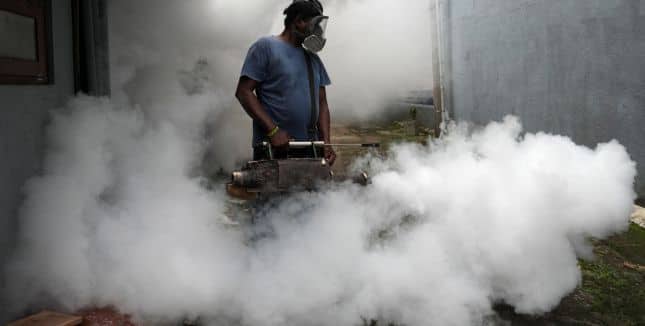
The ministry has deployed air force drones to detect stagnant rooftop pools, accumulated during the monsoon rains. The Anura Kumara Dissanayake government is also pressing police to inspect residences, buildings, and schools in an effort to eradicate mosquito breeding sites.
To cope with the surge of over 18,000 cases reported in the first weeks of July, hospitals added more beds, opened special wards, and extended working hours for doctors and nurses, according to health authorities.
The Independent quoted Prashila Samaraweera, consultant community physician at the National Dengue Control Unit, as saying, "A lot of debris was in our environment, so we noticed a lot of mosquito breeding places, and our entomological indices were high from that time.”
Kapila Kannangara, acting director general of the dengue unit, asserted, “Public health workers were stretched to their limit. The number of patients is high, and the severity of the cases is high.”
Nationwide clean-up campaign launched
Authorities ramped up a nationwide clean-up campaign on July 16. Officials targeted the worst-affected regions, religious institutions, and shops to stamp out mosquito-breeding grounds.
According to a health ministry statement, around 11,000 breeding sites had been cleared this month and over 4,0000 premises were fined after being found to harbour breeding grounds.
Lalindra Dias, a consultant in Negombo, one of the worst-hit areas in Sri Lanka, said, “It's challenging for doctors because it's a rapid increase in patients,” ANewsZ reported.
Dias’ hospital has treated nearly 1,800 dengue patients since June, up from around 1,050 during the same period last year.
8,590 dengue cases were recorded in Sri Lanka in May; 21,537 in June; and 21,650 in the first 20 days of July, according to the news outlet Ada Derana.
In some cases, doctors are asking patients with mild symptoms to recover at home to decrease pressure on hospitals. Shalini Aloka Perera, 23, told Reuters, "The doctor asked me to stay at home because my platelet count had not fallen too much. Then I did my treatment at home because there are too many patients in the hospitals.”
Sri Lanka has not introduced a dengue vaccine so far, but authorities say they are considering the option as health experts caution against the complexity of the infection and multiple circulating strains.
However, hope is also resting on changing weather. Health experts expect infections to slow down as monsoon rains weaken in August, but caution about its comeback from November as rainfall returns to Sri Lanka.
With inputs from agencies

How Facebook job ad lured 2 Karnataka men into Myanmar cyber scam camp
Why is India seeing 95% cloud cover despite a Super El Niño?
What is CJP’s fourth demand to the government as protests in Delhi intensify?
The new geography of war: Why the Houthis can no longer be ignored
Pakistan’s viral ‘cycle ambulance’ mocked online. Here’s a key fact that the internet missed