


Why Israel will pay a ‘heavy price’ if Iran’s nuclear programme doesn’t end | Israel’s ex-deputy NSA decodes
In an exclusive conversation with Firstpost's Shiksha Dev, Israel's former deputy national security advisor (NSA), Chuck Freilich, says that the US-Israel war on Iran has been a military success, but a strategic failure. He also stresses the need to end Iran’s nuclear programme

The West Asia war has stretched beyond two months now. The conflict has sent oil prices soaring and left markets rattling. The ceasefires between Iran and the US, and Israel and Lebanon, hang by a thread. Peace talks remain in limbo.
Who has come out on top in this war? Did Benjamin Netanyahu drag the US in? And does Israel have nukes? In an exclusive conversation with Firstpost, Israel’s former deputy national security advisor (NSA), Chuck Freilich, decodes the conflict and its fallout, while maintaining that the US-Israel war on Iran is a “military success but strategic failure”.
Have the US and Israel achieved their goals in the Iran war?
Freilich said the US and Israel have fallen short of achieving the primary objectives of the war—regime change in Iran and ending their nuclear programme
“There’s no doubt that Iran was hit extremely hard militarily. Their nuclear programme was set back somewhat. The missile programme was set back significantly, especially the industrial base for future missile manufacturing, as well as a variety of other regimes and targets,” Freilich told Firstpost.
 More from Explainers
“However, the primary objectives of the war when it started were, first of all, regime change… that hasn’t happened. Secondly, ending the nuclear programme. That hasn’t happened too,” he added. “In the missile area, the objective may have been achieved.”
Freilich further explained that for Iran, withstanding an American assault is itself a “success”. “The fact that Iran was able to stand up to the United States, a global superpower, and there’s truth to that. It weaponised the closure of the Strait of Hormuz and forced the US and President Trump to end the war before achieving the objectives.”
Why are peace talks yielding no results?
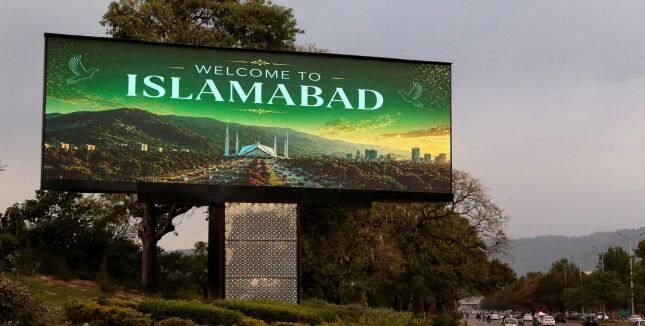
To bring the war to a definitive end, fruitful peace talks are paramount; however, both sides have remained rigid on their terms since the first round ended in a stalemate in Islamabad in early April.
When asked about the stalled talks, Freilich noted that “trust deficit” remains the key point of contention.
“There is definitely a severe trust deficit. I think it was a deficit which was earned well by both sides – the Islamic Republic over the decades and President Trump, by his withdrawal from the 2015 nuclear deal during his first term in 2018,” Freilich observed.
“Iran says that they were negotiating, but the president launched the attacks right in the middle of the negotiations. Hence, there is a lack of trust.”
According to Freilich, that’s not the primary problem. They have opposing positions on several issues.
He explained, “The US is demanding a complete end to Iran’s nuclear programme. No right of enrichment whatsoever. Removing all of the highly enriched uranium from Iran. It’s not just the 440 kilos of 60 per cent that people talk about. There are also a few hundred kilogrammes of 20 per cent, which is also considered highly enriched. The US basically wants a complete end to the nuclear programme. Iran does not agree to that.”
“There’s a Strait issue. There’s the ballistic missile issue. I don’t believe that Washington is demanding a complete end. However, it’s seeking limitations on numbers and ranges.”
Highlighting Iran’s demands, the former deputy NSA noted, “Tehran is seeking the removal of all sanctions. They want various assets of theirs that have been frozen in the US and the West returned to them. At this moment, it’s hard to see any basis for agreement, given all these conflicts and demands.”
Freilich stressed that it took two years of negotiations between the US and Iran to reach the deal in 2015, so “it’s going to take time”.
Is there an end to the Strait of Hormuz crisis?
When asked what would be required to stabilise access to the Strait of Hormuz, Freilich pointed out that the world economy is suffering greatly from this and that, in the end, the Iranian economy is mainly affected. If both sides agree only to open the Strait, then there may be what he calls “a de facto ceasefire”.
“The Iranians didn’t open the straits. They opened it to their own shipping or maybe to Chinese shipping. They didn’t open it to everyone. Trump, much too belatedly, imposed the American blockade. The military options for opening the straits are limited,” he said.
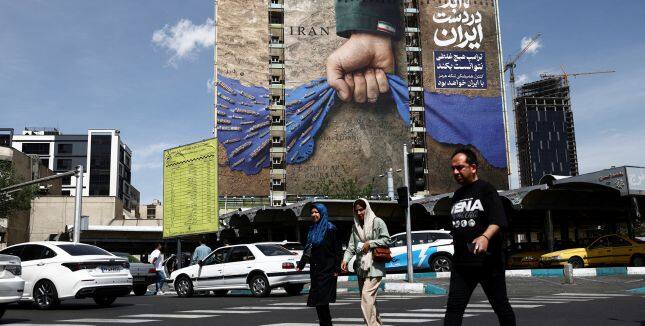
“The Iranian economy is suffering far more from this than any other, as 40 per cent of it comes from oil exports. Both sides have a strong interest here in reaching an agreement,” he added.
“One scenario is that there will be a deal. Another scenario is that they may only agree to open the straits, and then it'll just be a de facto ceasefire. But the situation just sort of dissipates.”
Are Trump and Netanyahu at odds on truce strategy?
Freilich stressed that Israel is a small regional power, while the US is a global superpower. Hence, comparing their approaches may be unrealistic.
“It’s very flattering to Israel that we talk about the United States and Israel in the same sentence. Israel is a country of 10 million people, the population of New York City, just a little bit more. But obviously, there are differences between a global superpower, which has the kind of interest we were talking about and a small regional power,” Freilich said.
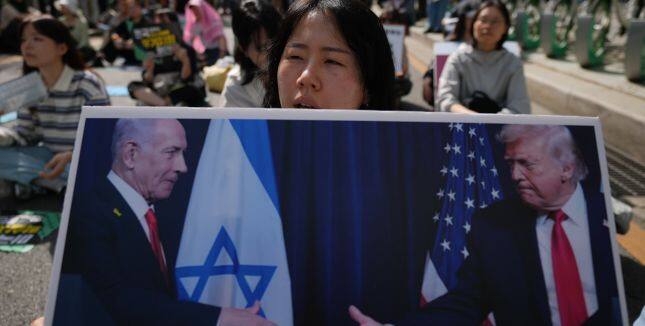
According to him, for Israel, Iran is an “existential threat” as Tehran has called for Israel’s annihilation ever since the foundation of the Islamic Republic. “We view Iran as being an existential threat, a threat to Israel’s very existence. Ever since the Islamic Republic was founded, it has repeatedly declared that its objective is Israel’s annihilation. They have poured untold billions into that objective… They built not just a nuclear programme but a huge missile capability and other military capabilities. So, we take it very seriously.”
He also argued that Israel had long hoped that one day the US, either on its own or together with Israel, would launch a war to put an end to the “heinous Iranian regime and nuclear programme”.
“If the war ends without those objectives being achieved, certainly the nuclear one, for Israel, that’s a heavy price. Therefore, one sees the difference. It’s not that Netanyahu is dying to continue warfare. Israel was significantly hit by the Iranians during the war, and we don’t want to be hit anymore. We want to put an end to the nuclear programme."
Is the claim that this is Netanyahu’s war accurate?
Freilich called out the claims that this was essentially Netanyahu’s war and that he drew Trump and the US into the conflict. “It’s a greatly inflated claim,” he said.
“Netanyahu tried to convince every president. Certainly, since Bush, and I think maybe Clinton… then he wasn’t the prime minister. So, it was Bush, Obama, Trump one, Biden, and now Trump two. Every previous president said no,” Freilich revealed.
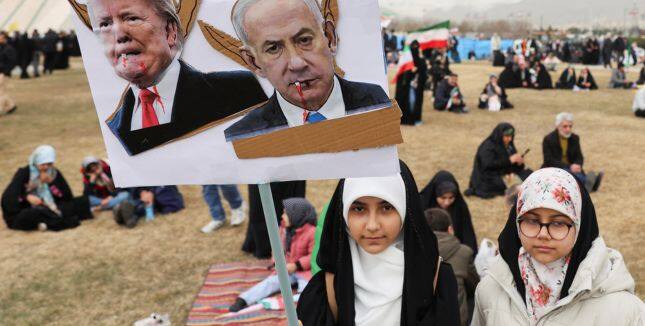
“Netanyahu went to Washington and tried to sell the idea as strongly as possible. But Trump is not a pushover. He is not a very easy person. He has the entire American administration to help him with decision-making.”
He shared, citing reports, that US Secretary of State Marco Rubio and CIA Director John Ratcliffe opposed Netanyahu’s idea. But the Israeli PM managed to convince Trump.
“Then it was up to the US president to make up his own mind. Trump decided what he decided over the objection of his advisors,” Freilich said.
Israel wants Iran nuke programme gone, but what about Israel? Does it have nukes?
Freilich said he is not going to confirm or deny this. “I won’t confirm or deny whether we have it (nukes). That’s been Israel’s position for the last, since about 1970, so over 50 years. No one in the world has ever seen hide or hair of the Israeli nuclear programme.”
“That’s not the case with Iran. There’s a reason that the international community has been very concerned about the Iranian nuclear programme. And by the way, not just because of its threat to Israel but because of the threat that it would pose to the Gulf neighbours.”
“If Iran gets a nuke, we can probably say goodbye to the NPT and to the international effort to prevent the proliferation of nuclear weapons generally,” Freilich noted.
He further added that Israel “has no negative intentions toward Iran”. “We would love to live in peace with Iran… Unfortunately, this really is a one-sided confrontation. Because if Iran were to say, well, we don’t like Israel, but we’re willing to live with it, then from our point of view, the conflict would end. And we had good relations with Iran under the Shah,” he added.
Have Iran or Hezbollah been severely weakened by attacks?
A recent Hebrew University of Jerusalem poll shows that several Israelis believe neither Iran nor Hezbollah have been severely weakened by the recent attacks. To which, Freilich argued, “They have been.”
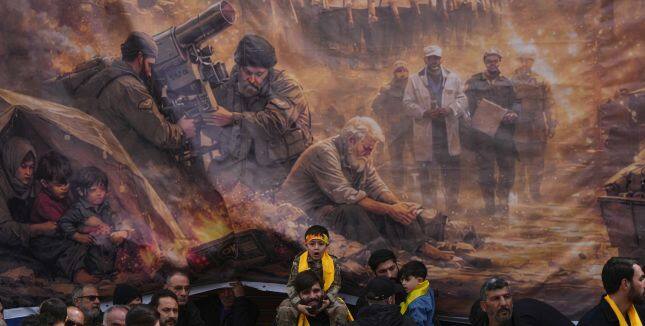
“Iran was significantly weakened now and back in June [2024],” he said, referring to Israel’s operation two years ago. Hezbollah was also weakened tremendously back in 2024. There was ‘Operation Grim Beeper’ and some other operations at the time. Israel assessed that it had destroyed about 80 per cent of the Hezbollah rocket arsenal.”
He added a significant point, “However, if the arsenal was 150,000 and they only had 20 per cent, that leaves them with 30,000 rockets, which is still a mammoth capability. That’s what we’ve been facing for the last almost two months. It has now been reduced, but it hasn’t been eliminated. Hence, the public is disappointed with the results.”
What next for Israel? Will Netanyahu win the 2026 election?
“The military situation is definitely better, although we haven’t achieved any of the objectives completely. I think the negative side of the ledger is that Israel’s international standing took a very heavy hit because of the war in Gaza. Now this war in Iran has added to it.”
Responding to the whole issue of where Israel is domestically, Freilich said Netanyahu’s governance has been “very, very destructive”.
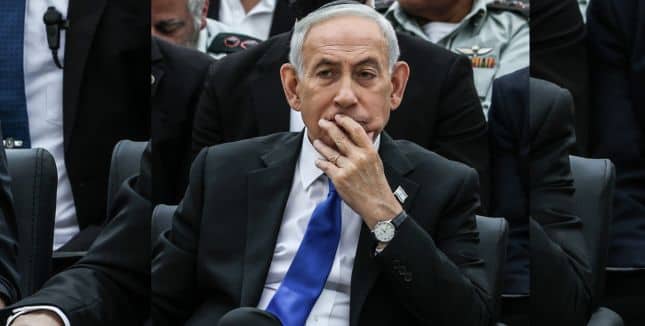
When asked how he assesses Netanyahu’s position in the race in the upcoming polls, the ex-deputy NSA said, “All of the polls since October 7 show that he will not be able to form a coalition… About three weeks since the ceasefire with Iran, and a week since the partial ceasefire with Lebanon, Netanyahu has lost even more ground.”
“At the same time, Netanyahu is nothing if not a master politician. That’s why he’s been Prime Minister for most of the last 20 years. And while there is a reasonable chance that he will not succeed this time, it’s still too early to write him off,” he concluded.
About the Expert:
Professor Chuck Freilich is Israel's former deputy national security advisor (NSA). He was also a former long-time senior fellow at Harvard University's Belfer Center. He is the author of three books on Israeli national security affairs: Zion’s Dilemmas: How Israel Makes National Security Policy (Cornell, 2012), Israeli National Security: A New Strategy for an Era of Change (Oxford, 2018), and Israel and the Cyber Threat: How Israel Became a Cyber Superpower (2021).

Shiksha is a Sub-Editor at Firstpost, where she writes explainers on global affairs and a wide range of other subjects. An aviation enthusiast, she loves reading and writing about aircraft. When not analyzing stories, you can find her diving into painting or getting lost in good books. Follow her on X (@shiksha_dev) and reach out to her at Shiksha.Dev@nw18.com for tips, feedback.

Military drones & police check-ups: How Sri Lanka is fighting against worst dengue outbreak in a decade
How Facebook job ad lured 2 Karnataka men into Myanmar cyber scam camp
Why is India seeing 95% cloud cover despite a Super El Niño?
What is CJP’s fourth demand to the government as protests in Delhi intensify?
The new geography of war: Why the Houthis can no longer be ignored