
Advertisement


Sections
Why is a research paper on room-temperature superconductor causing a stir?
Scientists announced a tantalising advance last week towards the dream of a material that could effortlessly convey electricity in everyday conditions, but it comes from a team facing doubts after a retracted paper on superconductors

Scientists last week announced a tantalising advance toward the dream of a material that could effortlessly convey electricity in everyday conditions. Such a breakthrough could transform almost any technology that uses electric energy, opening new possibilities for your phone, future fusion power plants and magnetically levitating trains.Usually, the flow of electricity encounters resistance as it moves through wires, almost like a form of friction, and some energy is lost as heat. A century ago, physicists discovered materials, now called superconductors, where the electrical resistance seemingly magically disappeared.But these materials only lost their resistance at unearthly, ultracold temperatures, which limited practical applications. For decades, scientists have sought superconductors that work at room temperatures.Last week’s announcement is the latest attempt in that effort, but it comes from a team that faces wide scepticism because a 2020 paper that described a promising but less practical superconducting material was retracted after other scientists questioned some of the data.The new superconductor consists of lutetium, a rare earth metal, and hydrogen with a little bit of nitrogen mixed in. It needs to be compressed to a pressure of 145,000 pounds per square inch before it gains its superconducting prowess. That is about 10 times the pressure that is exerted at the bottom of the ocean’s deepest trenches.But it is also less than one one-hundredth of what the 2020 result required, which was akin to the crushing forces found several thousand miles deep within the Earth.[caption id="attachment_12290582" align="alignnone" width="640"]![]() A diamond, placed in a diamond anvil cell under a microscope, for use in superconductivity experiments in a University of Rochester lab, New York. Lauren Petracca/The New York Times[/caption]That suggests that further investigations of the material could lead to a superconductor that works at ambient room temperatures and at the usual atmospheric pressure of 14.7 pounds per square inch.“This is the start of the new type of material that is useful for practical applications,” Ranga P Dias, a professor of mechanical engineering and physics at the University of Rochester in New York, said to a room packed full of scientists last Tuesday at a meeting of the American Physical Society in Las Vegas.A fuller accounting of his team’s findings was published Wednesday in Nature, the same journal that published, then retracted the 2020 findings.The Rochester team started with a thin foil of lutetium, a silvery white metal that is among the rarest of rare earth elements, and pressed it between two interlocking diamonds.A gas of 99 per cent hydrogen and one per cent nitrogen was then pumped into the tiny chamber and squeezed to high pressures. The sample was heated overnight at 150 degrees Fahrenheit, and after 24 hours, the pressure was released.About one-third of the time, the process produced the desired result: a small vibrant blue crystal.
A diamond, placed in a diamond anvil cell under a microscope, for use in superconductivity experiments in a University of Rochester lab, New York. Lauren Petracca/The New York Times[/caption]That suggests that further investigations of the material could lead to a superconductor that works at ambient room temperatures and at the usual atmospheric pressure of 14.7 pounds per square inch.“This is the start of the new type of material that is useful for practical applications,” Ranga P Dias, a professor of mechanical engineering and physics at the University of Rochester in New York, said to a room packed full of scientists last Tuesday at a meeting of the American Physical Society in Las Vegas.A fuller accounting of his team’s findings was published Wednesday in Nature, the same journal that published, then retracted the 2020 findings.The Rochester team started with a thin foil of lutetium, a silvery white metal that is among the rarest of rare earth elements, and pressed it between two interlocking diamonds.A gas of 99 per cent hydrogen and one per cent nitrogen was then pumped into the tiny chamber and squeezed to high pressures. The sample was heated overnight at 150 degrees Fahrenheit, and after 24 hours, the pressure was released.About one-third of the time, the process produced the desired result: a small vibrant blue crystal.![]() A diamond, placed in a diamond anvil cell under a microscope, for use in superconductivity experiments in a University of Rochester lab led by Ranga Dias in Rochester, New York. Lauren Petracca/The New York Times[/caption]The first known superconductors required temperatures only a few degrees above absolute zero, or minus 459.67 degrees Fahrenheit. In the 1980s, physicists discovered so-called high-temperature superconductors, but even those became superconducting in conditions far more frigid than those encountered in daily use.The standard theory explaining superconductivity predicts that hydrogen should be a superconductor at higher temperatures if it could be squeezed hard enough.But even the most resilient of diamonds break before reaching pressures of that magnitude. Scientists started looking at hydrogen mixed with one other element, surmising that the chemical bonds might help compress the hydrogen atoms.In 2015, Mikhail Eremets, a physicist at the Max Planck Institute for Chemistry in Mainz, Germany, reported that hydrogen sulfide — a molecule with two hydrogen atoms and one sulphur atom — turned superconducting at minus 94 degrees Fahrenheit when squeezed to about 22 million pounds per square inch. That was then a record high temperature for a superconductor.Eremets and other scientists subsequently discovered that lanthanum hydride — a compound containing hydrogen and lanthanum — reached a superconducting temperature of minus 10 degrees Fahrenheit at ultrahigh pressures.Controversial conclusionsIn the research described in the retracted 2020 paper, Dias’ group used hydrogen, sulphur and carbon. With three elements, the scientists said, they were able to adjust the electronic properties of the compound to achieve a higher superconducting temperature.Not everyone believed that, however.Dias’ main antagonist is Jorge Hirsch, a theoretical physicist at the University of California, San Diego. He focused on the measurements that Dias’ group had made of the response of the carbon-sulphur-hydrogen compound to oscillating magnetic fields, evidence of the Meissner effect.The plot seemed too neat, and the scientists did not explain how they had subtracted out background effects in the plot.When Dias released the underlying raw data, Hirsch said, his analysis indicated that it had been generated by a mathematical formula and could not be actually measured in an experiment. “From a measurement, you do not get analytic formulas,” Hirsch said. “You get numbers with noise.”His complaints about Dias grew so persistent and strident that other physicists circulated a letter complaining about decades of disruptive behaviour by Hirsch.[caption id="attachment_12290342" align="alignnone" width="640"]
A diamond, placed in a diamond anvil cell under a microscope, for use in superconductivity experiments in a University of Rochester lab led by Ranga Dias in Rochester, New York. Lauren Petracca/The New York Times[/caption]The first known superconductors required temperatures only a few degrees above absolute zero, or minus 459.67 degrees Fahrenheit. In the 1980s, physicists discovered so-called high-temperature superconductors, but even those became superconducting in conditions far more frigid than those encountered in daily use.The standard theory explaining superconductivity predicts that hydrogen should be a superconductor at higher temperatures if it could be squeezed hard enough.But even the most resilient of diamonds break before reaching pressures of that magnitude. Scientists started looking at hydrogen mixed with one other element, surmising that the chemical bonds might help compress the hydrogen atoms.In 2015, Mikhail Eremets, a physicist at the Max Planck Institute for Chemistry in Mainz, Germany, reported that hydrogen sulfide — a molecule with two hydrogen atoms and one sulphur atom — turned superconducting at minus 94 degrees Fahrenheit when squeezed to about 22 million pounds per square inch. That was then a record high temperature for a superconductor.Eremets and other scientists subsequently discovered that lanthanum hydride — a compound containing hydrogen and lanthanum — reached a superconducting temperature of minus 10 degrees Fahrenheit at ultrahigh pressures.Controversial conclusionsIn the research described in the retracted 2020 paper, Dias’ group used hydrogen, sulphur and carbon. With three elements, the scientists said, they were able to adjust the electronic properties of the compound to achieve a higher superconducting temperature.Not everyone believed that, however.Dias’ main antagonist is Jorge Hirsch, a theoretical physicist at the University of California, San Diego. He focused on the measurements that Dias’ group had made of the response of the carbon-sulphur-hydrogen compound to oscillating magnetic fields, evidence of the Meissner effect.The plot seemed too neat, and the scientists did not explain how they had subtracted out background effects in the plot.When Dias released the underlying raw data, Hirsch said, his analysis indicated that it had been generated by a mathematical formula and could not be actually measured in an experiment. “From a measurement, you do not get analytic formulas,” Hirsch said. “You get numbers with noise.”His complaints about Dias grew so persistent and strident that other physicists circulated a letter complaining about decades of disruptive behaviour by Hirsch.[caption id="attachment_12290342" align="alignnone" width="640"]![]() Hiranya Pasan, a graduate student, makes adjustments to a diamond inside a diamond anvil cell for use with his superconductivity experiment in a University of Rochester lab led by Ranga Dias in Rochester, New York. Lauren Petracca/The New York Times[/caption]Hirsch is a bull-in-a-china-shop contrarian taking aim at BCS theory, which was devised in 1957 by the physicists John Bardeen, Leon N Cooper and J Robert Schrieffer to explain how superconductivity works. BCS, he says, may in many ways “be fundamentally flawed,” unable to explain the Meissner effect. He has come up with his own alternative explanation.Notably, Hirsch has been saying that there cannot be superconductivity in any of these high-pressure materials because hydrogen cannot be a superconductor. He has gained few allies.While Hirsch is careful to say that scientists other than Dias are not committing misconduct, he says they are deluding themselves.“In my opinion, the junk becomes conclusions,” he said.Resistance and reproductionHamlin of the University of Florida also delved into the magnetic measurements and said it looked more as if the raw data had been derived from the published data and not the other way around.Hamlin was also disturbed when he found that several passages from his doctoral thesis, written in 2007, had appeared, word for word, in Dias’ dissertation.
Hiranya Pasan, a graduate student, makes adjustments to a diamond inside a diamond anvil cell for use with his superconductivity experiment in a University of Rochester lab led by Ranga Dias in Rochester, New York. Lauren Petracca/The New York Times[/caption]Hirsch is a bull-in-a-china-shop contrarian taking aim at BCS theory, which was devised in 1957 by the physicists John Bardeen, Leon N Cooper and J Robert Schrieffer to explain how superconductivity works. BCS, he says, may in many ways “be fundamentally flawed,” unable to explain the Meissner effect. He has come up with his own alternative explanation.Notably, Hirsch has been saying that there cannot be superconductivity in any of these high-pressure materials because hydrogen cannot be a superconductor. He has gained few allies.While Hirsch is careful to say that scientists other than Dias are not committing misconduct, he says they are deluding themselves.“In my opinion, the junk becomes conclusions,” he said.Resistance and reproductionHamlin of the University of Florida also delved into the magnetic measurements and said it looked more as if the raw data had been derived from the published data and not the other way around.Hamlin was also disturbed when he found that several passages from his doctoral thesis, written in 2007, had appeared, word for word, in Dias’ dissertation.
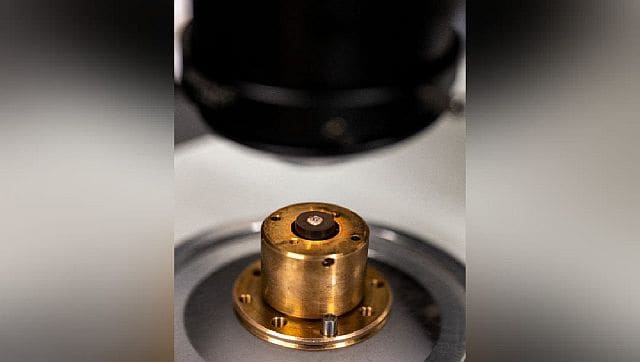 A diamond, placed in a diamond anvil cell under a microscope, for use in superconductivity experiments in a University of Rochester lab, New York. Lauren Petracca/The New York Times[/caption]That suggests that further investigations of the material could lead to a superconductor that works at ambient room temperatures and at the usual atmospheric pressure of 14.7 pounds per square inch.“This is the start of the new type of material that is useful for practical applications,” Ranga P Dias, a professor of mechanical engineering and physics at the University of Rochester in New York, said to a room packed full of scientists last Tuesday at a meeting of the American Physical Society in Las Vegas.A fuller accounting of his team’s findings was published Wednesday in Nature, the same journal that published, then retracted the 2020 findings.The Rochester team started with a thin foil of lutetium, a silvery white metal that is among the rarest of rare earth elements, and pressed it between two interlocking diamonds.A gas of 99 per cent hydrogen and one per cent nitrogen was then pumped into the tiny chamber and squeezed to high pressures. The sample was heated overnight at 150 degrees Fahrenheit, and after 24 hours, the pressure was released.About one-third of the time, the process produced the desired result: a small vibrant blue crystal.
“Doping nitrogen into lutetium hydride is not that easy,” Dias said.In one of the University of Rochester lab rooms used by Dias’ group, Hiranya Pasan, a graduate student, demonstrated the surprising hue-changing property of the material during a reporter’s recent visit. As screws tightened to ratchet up the pressure, the blue turned into a blushing tint.“It is very pink,” Dias said. With even higher pressures, he said, “it goes to a bright red.”Shining a laser through the crystals revealed how they vibrate and unlocked information about the structure.In another room, other members of Dias’ team were making magnetic measurements on other crystals. As the temperatures dropped, the expected squiggles appeared in the data plotted on a computer screen, indicating a transition to a superconductor.“This is a live measurement we’re doing right now,” Dias said.In the paper, the researchers reported that the pink crystals exhibited key properties of superconductors, like zero resistance, at temperatures up to 70 degrees Fahrenheit.“I’m cautiously optimistic,” said Timothy Strobel, a scientist at the Carnegie Institution for Science in Washington who was not involved in Dias’ study. “The data in the paper, it looks great.”“If this is real, it’s a really important breakthrough,” said Paul CW Chu, a professor of physics at the University of Houston who also was not involved with the research.However, the “if” part of that sentiment swirls around Dias, who has been dogged by doubts and criticism, and even accusations by a few scientists that he has fabricated some of his data. The results of the 2020 Nature paper have yet to be reproduced by other research groups, and critics say that Dias has been slow to let others examine his data or perform independent analyses of his superconductors.
The editors of Nature retracted the earlier paper last year over the objections of Dias and the other authors.“I’ve lost some trust in what’s coming from that group,” said James Hamlin, a University of Florida physics professor.Nonetheless, the new paper made it through the peer review process at the same journal.“Having a paper retracted does not automatically disqualify an author from submitting new manuscripts,” a spokesperson for Nature said. “All submitted manuscripts are considered independently on the basis of the quality and timeliness of their science.”At the conference last Tuesday in Las Vegas, so many physicists crowded a narrow meeting room that a moderator asked some to leave so that they wouldn’t have to cancel the presentation.Once the room thinned out, Dias was able to present his findings with no interruptions. As he thanked the crowd, the moderator expressed regret that they had run out of time for questions.Strobel acknowledged the controversy around Dias and the extraordinary claims that have yet to be reproduced.“I don’t want to read into it too much, but there could be a pattern of behaviour here,” Strobel said. “He really could be the best high-pressure physicist in the world, poised to win the Nobel Prize. Or there’s something else going on.”Under pressureSuperconductivity was discovered by Heike Kamerlingh Onnes, a Dutch physicist, and his team in 1911. Not only do superconductors carry electricity with essentially zero electrical resistance, but they also possess the strange ability known as the Meissner effect that ensures zero magnetic field inside the material.[caption id="attachment_12290312" align="alignnone" width="640"]
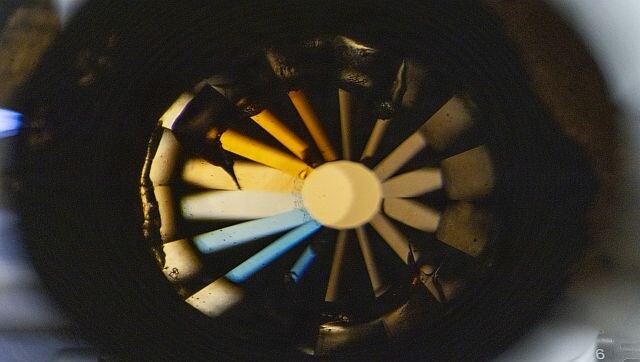 A diamond, placed in a diamond anvil cell under a microscope, for use in superconductivity experiments in a University of Rochester lab led by Ranga Dias in Rochester, New York. Lauren Petracca/The New York Times[/caption]The first known superconductors required temperatures only a few degrees above absolute zero, or minus 459.67 degrees Fahrenheit. In the 1980s, physicists discovered so-called high-temperature superconductors, but even those became superconducting in conditions far more frigid than those encountered in daily use.The standard theory explaining superconductivity predicts that hydrogen should be a superconductor at higher temperatures if it could be squeezed hard enough.But even the most resilient of diamonds break before reaching pressures of that magnitude. Scientists started looking at hydrogen mixed with one other element, surmising that the chemical bonds might help compress the hydrogen atoms.In 2015, Mikhail Eremets, a physicist at the Max Planck Institute for Chemistry in Mainz, Germany, reported that hydrogen sulfide — a molecule with two hydrogen atoms and one sulphur atom — turned superconducting at minus 94 degrees Fahrenheit when squeezed to about 22 million pounds per square inch. That was then a record high temperature for a superconductor.Eremets and other scientists subsequently discovered that lanthanum hydride — a compound containing hydrogen and lanthanum — reached a superconducting temperature of minus 10 degrees Fahrenheit at ultrahigh pressures.Controversial conclusionsIn the research described in the retracted 2020 paper, Dias’ group used hydrogen, sulphur and carbon. With three elements, the scientists said, they were able to adjust the electronic properties of the compound to achieve a higher superconducting temperature.Not everyone believed that, however.Dias’ main antagonist is Jorge Hirsch, a theoretical physicist at the University of California, San Diego. He focused on the measurements that Dias’ group had made of the response of the carbon-sulphur-hydrogen compound to oscillating magnetic fields, evidence of the Meissner effect.The plot seemed too neat, and the scientists did not explain how they had subtracted out background effects in the plot.When Dias released the underlying raw data, Hirsch said, his analysis indicated that it had been generated by a mathematical formula and could not be actually measured in an experiment. “From a measurement, you do not get analytic formulas,” Hirsch said. “You get numbers with noise.”His complaints about Dias grew so persistent and strident that other physicists circulated a letter complaining about decades of disruptive behaviour by Hirsch.[caption id="attachment_12290342" align="alignnone" width="640"]
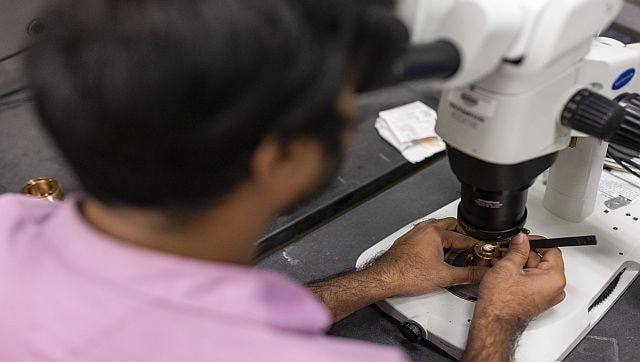 Hiranya Pasan, a graduate student, makes adjustments to a diamond inside a diamond anvil cell for use with his superconductivity experiment in a University of Rochester lab led by Ranga Dias in Rochester, New York. Lauren Petracca/The New York Times[/caption]Hirsch is a bull-in-a-china-shop contrarian taking aim at BCS theory, which was devised in 1957 by the physicists John Bardeen, Leon N Cooper and J Robert Schrieffer to explain how superconductivity works. BCS, he says, may in many ways “be fundamentally flawed,” unable to explain the Meissner effect. He has come up with his own alternative explanation.Notably, Hirsch has been saying that there cannot be superconductivity in any of these high-pressure materials because hydrogen cannot be a superconductor. He has gained few allies.While Hirsch is careful to say that scientists other than Dias are not committing misconduct, he says they are deluding themselves.“In my opinion, the junk becomes conclusions,” he said.Resistance and reproductionHamlin of the University of Florida also delved into the magnetic measurements and said it looked more as if the raw data had been derived from the published data and not the other way around.Hamlin was also disturbed when he found that several passages from his doctoral thesis, written in 2007, had appeared, word for word, in Dias’ dissertation.
Dias dismisses the continuing criticism and says his group provided explanations.“I just felt like it was just noise from the background,” he said. “We try to keep pushing our science forward.”He said that he still stood by the earlier results and that Wednesday’s paper employed a new technique for the magnetic measurements. He said that the paper had gone through five rounds of scrutiny by the reviewers and that all of the raw data underlying the findings were being shared.“It is back again in Nature,” Dias said. “So that tells you something.”Sara Miller, a University of Rochester spokesperson, said that after two university inquiries, “it was determined that there was no evidence that supported the concerns.” She also said that the university had “considered the matter of the September 2022 retraction of the Nature paper and came to the same conclusion.”Of the copying of text from Hamlin’s thesis, Dias said he should have included citations. “It was my mistake,” Dias said.A preprint redoing measurements of the carbon-sulphur-hydrogen material from the retracted paper is circulating, but even that raises questions. “They’re significantly different from the original measurements,” Strobel said. “One could argue they haven’t even reproduced results themselves.”Because the new lutetium-based material is superconducting at much lower pressures, many other researchers will be able to try to reproduce the experiment.Dias said he wanted to provide a more precise recipe for how to make the compound and to share samples, but intellectual property issues need to be resolved first. He has founded a company, Unearthly Materials, that plans to turn the research into profits.Strobel said he would begin work as soon as he returned from the Las Vegas conference. “We can have a result literally within a day,” he said.Hirsch also said that he expected answers to come quickly. “If this is right, it proves my work of the last 35 years wrong,” he said. “Which I would be very happy about, because I would know.”Hirsch added, “But I think I’m right and this is wrong.”Kenneth Chang, c.2023 The New York Times CompanyRead all the Latest News, Trending News, Cricket News, Bollywood News,India News and Entertainment News here. Follow us on Facebook, Twitter and Instagram.
First Published:Mar 14, 2023, 17:02:04 IST
Advertisement
Advertisement

Explorers discover wreckage of plane 72 years later. Will this help in finding MH370?
On April 11, 1952, a Pan Am Flight 526A, crashed into the Atlantic Ocean, killing 52 of the 69 people on board. After decades of effort, explorers have found the wreck of the plane at the bottom of the seabed near Puerto Rico. The discovery offers new hope to families who lost loved ones in the Malaysia Airlines Flight 370 crash in 2014
5 min read
Cruise missiles, drones and more... The deadly arsenal of the Houthis
The Houthis have evolved into one of the world's most formidable non-state military forces, deploying anti-ship ballistic missiles, cruise missiles, drones and explosive boats to threaten Red Sea shipping. Their latest attacks on Saudi oil tankers have raised concerns over shipping through the Bab el-Mandeb Strait amid the Strait of Hormuz crisis
10 min read
Why India may not witness a medal rush at 2026 Commonwealth Games
A 125-strong Indian contingent is in Glasgow for the 2026 Commonwealth Games, starting today (July 23), chasing international glory. However, with a roster of sports such as badminton and wrestling being cut from the event, the country’s medal chances have been drastically reduced
4 min read
Delhi Police asks personnel to wear uniform: What the law says on cops in plainclothes during protests
The Delhi Police has instructed all its personnel to wear uniforms when they report for duty at Jantar Mantar for crowd control. This comes after outrage grew over videos of men in civilian clothes or without name tags hitting protesters in the Capital. Is it legal for the police to ditch uniforms during protests?
4 min read
Military drones & police check-ups: How Sri Lanka is fighting against worst dengue outbreak in a decade
Sri Lanka is fighting its most severe dengue outbreak in nearly a decade, with infections rising sharply across the nation. Military drones have been deployed to tackle the outbreak, which has claimed 56 lives. Health officials said the outbreak is being driven primarily by the DENV-2 variant of the virus
3 min read
Advertisement
Advertisement