


Who is Gadi Eisenkot, the ex-IDF chief emerging as Netanyahu's biggest challenger?
Former IDF chief Gadi Eisenkot has emerged as Israeli Prime Minister Benjamin Netanyahu's strongest political challenger ahead of the election in October. From his military career and the controversial Dahiyeh doctrine to personal tragedy and the rise of his Yashar party, here's everything you need to know

For much of the period following Hamas' October 7, 2023 attack on Israel, the country's conversation revolved around Prime Minister Benjamin Netanyahu, the conduct of the war in Gaza, and whether the veteran leader could withstand mounting domestic criticism over the deadliest security failure in Israel's history.
Nearly three years later, however, another figure has steadily moved to the forefront of Israeli politics.
Former Israel Defense Forces (IDF) Chief of Staff Gadi Eisenkot, a retired general with four decades of military experience and relatively limited political tenure, has emerged as one of Netanyahu's most serious challengers ahead of Israel's next parliamentary election to be held late October this year.
Recent polling has shown his newly established Yashar party rapidly gaining support, while separate surveys measuring public preference for the next prime minister indicate that Eisenkot has begun matching, or in some cases overtaking Netanyahu.
 More from Explainers
How has Eisenkot become one of Netanyahu's biggest challengers?
For much of the period after October 7, opposition politics in Israel centred on former prime ministers Naftali Bennett and Yair Lapid, along with Benny Gantz, the former defence minister and another retired military chief.
Many observers expected that if Netanyahu were eventually defeated, it would be through some form of broad centrist alliance led by those established political figures.
Instead, Eisenkot chose a different route.
After entering politics in 2022 as part of Benny Gantz's National Unity alliance, he eventually broke away and launched his own political movement, Yashar. The Hebrew word translates to "Straight" or "Honest," a name intended to project transparency and straightforward leadership rather than ideological positioning.
The decision has so far paid political dividends.
Opinion polls released in late June 2026 suggest that Yashar has rapidly climbed into contention with Netanyahu's Likud party.
Several surveys project Likud to win around 23 seats in the 120-member Knesset, while Yashar is projected to secure approximately 21 seats. By comparison, the Bennett-Lapid alliance trails with around 17 to 18 seats.
The numbers are significant not merely because they place Eisenkot close to Netanyahu's party, but because they suggest that Yashar could become a more attractive coalition partner for parties across Israel's political spectrum.
Unlike Likud, whose potential governing partners are largely confined to Israel's right-wing and religious parties, Eisenkot's political positioning has left open the possibility of cooperation with centrist and even some left-leaning factions.
Since Israeli governments are formed by assembling a parliamentary majority of at least 61 seats, coalition arithmetic frequently proves more important than which single party finishes first.
Polling has also indicated another big shift. When respondents are asked directly who is better suited to serve as prime minister, Eisenkot has begun drawing level with Netanyahu.
One late-June Channel 12 survey placed Eisenkot at 38 per cent compared with Netanyahu's 36 per cent. Although polling months before an election does not guarantee electoral success, the figures illustrate how dramatically Israel's political conversation has shifted.
For years, Netanyahu cultivated the image of "Mr. Security," portraying himself as the country's indispensable protector against regional threats. That reputation has come under increasing strain.
The October 7 attack dealt a severe blow to public confidence in Israel's security establishment. Subsequent wars in Gaza, Lebanon and Iran have imposed significant military, diplomatic and economic costs, while many Israelis remain dissatisfied that key strategic objectives have not been fully achieved.
According to analysts, dissatisfaction has deepened further following the US-Iran agreement that ended the Iran war. Many Israelis regard the arrangement as leaving Israel strategically constrained because it seeks to limit Israeli military operations against Hezbollah in Lebanon while failing to deliver broader Israeli war aims.
Critics argue that the outcome has increased Israel's isolation and reduced its operational freedom.
Against that backdrop, Eisenkot's longstanding military credentials have become increasingly attractive to voters looking for an alternative leader with extensive national security experience.
Who is Gadi Eisenkot beyond politics?
Born to Moroccan immigrant parents, Eisenkot spent his childhood away from Israel's traditional centres of political influence.
He was born in the Galilee region before growing up in Eilat, Israel's southern Red Sea city. His upbringing differed markedly from that of several prominent Israeli political leaders, many of whom emerged from elite military formations or established political families.
His family belongs to Israel's Mizrahi Jewish community — Jews whose families trace their origins to West Asia and North Africa.
For decades, Mizrahi voters have formed a crucial part of Netanyahu's electoral coalition. Eisenkot's growing popularity among the same demographic therefore represents an important political development.
If elected, he would become Israel's first Mizrahi prime minister.
His personal life has also contributed to his public image. He married his high school sweetheart, and together they raised five children.
Unlike Netanyahu, whose political career has spanned decades and whose public profile is closely associated with international diplomacy and media appearances, Eisenkot cultivated a far quieter image during his military career.
Observers frequently describe him as reserved rather than charismatic. Supporters argue that this understated style has become an advantage rather than a weakness following years of intense political polarisation.
Many Israelis increasingly appear drawn to a leader who projects competence without theatrical rhetoric. Experts say the contrast between Eisenkot and Netanyahu extends beyond personality.
Where Netanyahu is widely regarded as an accomplished communicator with decades of political experience, Eisenkot is viewed as someone whose authority stems primarily from operational leadership and practical decision-making.
His supporters frequently characterise him as an ordinary Israeli whose background feels familiar rather than elite. That perception has strengthened his appeal among voters searching for a different style of leadership after years of political division.
Eitan Shamir, director of the Begin-Sadat Center for Strategic Studies at Bar-Ilan University, believes Eisenkot's personal qualities have become one of his greatest political strengths.
"He comes across as a genuine person," Shamir told Reuters. "He's very likable, not a politician, an everyday person, someone that can be your neighbor or coworker. He's not too sophisticated. People feel they can relate to him."
In many respects, Eisenkot has deliberately presented himself as the opposite of Netanyahu. The branding of his political party reinforces that approach.
Rather than choosing a name associated with ideology, nationalism or security, he selected Yashar — a word conveying honesty and straightforwardness.
One criticism repeatedly raised by Netanyahu's allies concerns Eisenkot's ability to represent Israel on the global stage. Members of the prime minister's political camp have questioned whether Eisenkot possesses the level of fluent English required to manage Israel's relationships with Western allies, particularly the United States.
The issue later became the subject of political exchanges between both camps, eventually prompting one of Eisenkot's most widely quoted responses during the election campaign.
How did four decades in the military shape Eisenkot's identity?
Eisenkot's career in the Israel Defense Forces spanned roughly four decades, taking him from the infantry ranks of the Golani Brigade to the military's highest office as Chief of Staff.
During that time, he was involved in some of Israel's most consequential security decisions, commanding forces in Lebanon, helping shape military doctrine, overseeing force modernisation and navigating the country's increasingly complex regional security environment.
Unlike several prominent Israeli leaders whose military reputations were forged in elite special operations units, Eisenkot's rise came through the regular infantry.
He built his career step by step in the Golani Brigade, one of Israel's best-known combat formations, widely recognised for undertaking demanding frontline assignments.
His progression through the military hierarchy reflected decades of command experience rather than a rapid ascent built on political visibility. That experience ultimately culminated in his appointment as the IDF's Chief of Staff, a position he held from 2015 until 2019.
His elevation to Israel's highest military office was also a deeply personal moment for his family.
According to accounts of the occasion, when Eisenkot became Chief of Staff, his mother's reaction was that she would have preferred her son had chosen the rabbinate instead of a lifetime in uniform — a reflection of the sacrifices and risks that military service had brought to the family over many years.
As chief of staff, Eisenkot focused on strengthening Israel's ground forces while implementing a multi-year programme aimed at modernising the military. His tenure also saw the development of a strategic concept that became known as the "war between wars" approach.
Rather than waiting for adversaries to initiate large-scale conflicts, the strategy called for Israel to conduct sustained covert operations and limited military actions intended to weaken hostile organisations, disrupt weapons transfers and reduce future threats before they developed into full-scale wars.
The concept sought to maintain military pressure without triggering wider regional conflict, reflecting Eisenkot's belief that deterrence could be strengthened through continuous operational activity rather than periodic major wars alone.
What is the 'Dahiyeh doctrine' and why does it remain controversial?
Among military analysts, Gadi Eisenkot's name is closely linked with what has become known as the "Dahiyeh doctrine" — one of the most debated concepts in Israel's modern military history.
The doctrine traces its origins to the 2006 conflict between Israel and the Iran-backed Hezbollah movement in Lebanon. During that war, Israel launched extensive air strikes against Beirut's southern suburbs, particularly the district of Dahiyeh, regarded as Hezbollah's principal stronghold.
The military concept associated with Eisenkot advocates responding to attacks by armed organisations through the application of overwhelming force against infrastructure in areas from which those groups operate.
The objective is not only to destroy military capabilities but also to create a level of deterrence intended to discourage future attacks.
Supporters argue that such an approach strengthens Israel's security by convincing adversaries that any assault would invite an overwhelming response.
Critics, however, contend that the strategy has resulted in extensive destruction of civilian infrastructure and has drawn sustained international criticism over its humanitarian consequences.
Years after the doctrine first entered military discourse, Eisenkot has continued to defend its underlying principles. Speaking at a conference during the current election campaign, he said he had implemented the "Dahiyeh doctrine" through what he himself described as "disproportionate strikes."
Eisenkot has also argued that the Israeli military should retain the ability to strike Hezbollah targets throughout Lebanon whenever operationally necessary. He has criticised the ceasefire sought by US President Donald Trump following the Iran conflict, arguing that the arrangement unnecessarily restricted Israeli military freedom.
According to Eisenkot, the agreement produced an "insane reality" that limited Israel's ability to respond militarily against Hezbollah.
Although he differs sharply from Netanyahu on questions of political leadership and government accountability, Eisenkot has not campaigned as a dove on regional security. Instead, many of his positions reflect a belief that Israel must continue maintaining a robust military posture while improving strategic planning and decision-making at the political level.
That distinction has become central to understanding his appeal.
Many Israelis dissatisfied with Netanyahu are not necessarily seeking a less assertive security policy. Rather, according to political observers, they are looking for a leader who combines military credibility with what they see as greater discipline, accountability and long-term planning.
What leadership decisions defined Eisenkot's years as army chief?
Beyond battlefield doctrine, Eisenkot's years leading the IDF were marked by several decisions that shaped his public reputation inside Israel.
One of the most politically sensitive episodes occurred in 2016 following the killing of a wounded Palestinian attacker in the occupied West Bank. Israeli soldier Elor Azaria shot and killed the disarmed Palestinian after the assailant had already been incapacitated.
Eisenkot strongly supported holding Azaria legally accountable and pushed for the soldier to face the full force of the law. The case quickly became one of the most polarising issues in Israeli public life.
Right-wing politicians and activists rallied behind Azaria, arguing that soldiers confronting terrorism deserved political backing rather than prosecution. The legal proceedings eventually resulted in Azaria being convicted of manslaughter instead of murder.
According to reports, far-right demonstrators even directed death threats toward him during the public backlash surrounding the case.
The episode nevertheless reinforced Eisenkot's reputation as a commander prepared to defend institutional norms even when doing so carried political costs.
How did October 7 shape Eisenkot's public image?
When Hamas launched its unprecedented attack on southern Israel on October 7, 2023, Eisenkot was no longer serving in uniform. By then he had entered politics after winning a seat in the Knesset as an independent member within Benny Gantz's National Unity alliance.
The scale of the attack prompted an emergency political response. Netanyahu invited opposition figures Benny Gantz and Gadi Eisenkot to join a wartime cabinet established to oversee Israel's military campaign.
The move created a rare moment of political unity during one of the country's gravest national crises. Within the newly formed War Cabinet, Eisenkot played an active role in shaping early strategic discussions.
According to accounts from that period, one of the first major decisions involved preventing Israel from immediately opening a second front against Hezbollah in Lebanon. Eisenkot argued that the Israeli military was not adequately prepared to wage simultaneous major campaigns on multiple fronts.
His position prevailed at the time.
As the conflict continued, Eisenkot also became one of the strongest advocates inside the War Cabinet for securing an agreement with Hamas aimed at obtaining the release of the 251 hostages taken into Gaza during the October 7 attack, in which approximately 1,200 people were killed.
Over time, however, disagreements within the wartime leadership became increasingly visible. By June 2024, both Eisenkot and Benny Gantz resigned from the emergency government.
They accused Netanyahu of failing to establish a credible long-term strategy for Gaza after the fighting and argued that the conflict was being unnecessarily prolonged.
Reports from individuals familiar with those discussions suggested that Eisenkot believed the continuation of military operations lacked sufficient strategic direction.
His resignation became one of the defining political moments of the war. Yet even as those disagreements unfolded, Eisenkot experienced profound personal loss.
In December 2023, his 25-year-old son, First Sergeant Major Gal Meir Eisenkot, was killed while serving in Gaza. The tragedy resonated deeply across Israel.
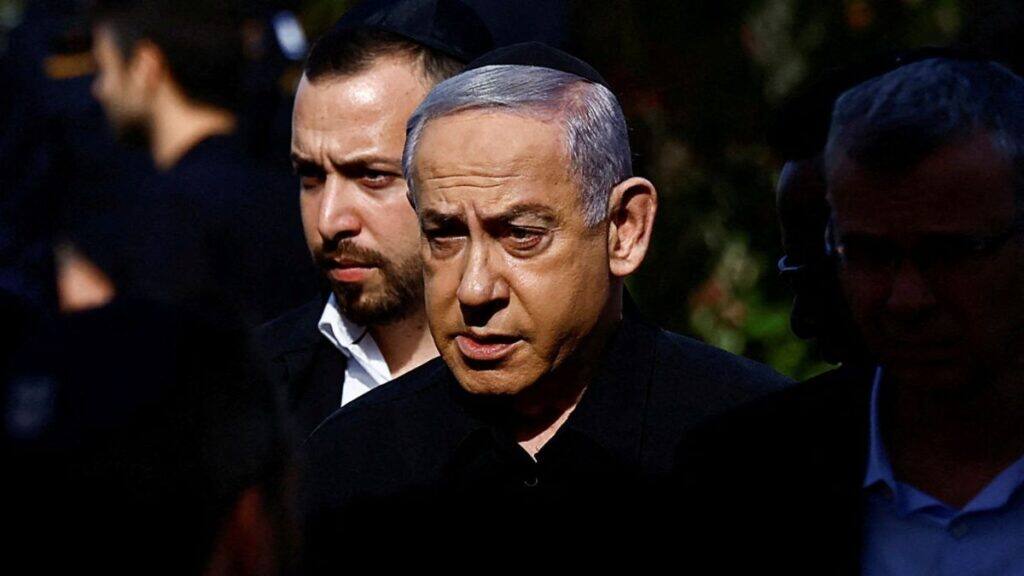
Within days, another devastating blow struck the family when one of Eisenkot's nephews was also killed during the conflict. A second nephew would also lose his life during the war.
Those losses transformed Eisenkot's public image. For many Israelis, he was no longer simply a retired general commenting on national security.
He had become a father who had experienced the human cost of the war firsthand. Political analysts say that personal sacrifice has given Eisenkot a degree of moral credibility that few contemporary Israeli politicians possess.
Rather than projecting himself as a career politician, Eisenkot increasingly came to embody the sacrifices made by countless Israeli families during years of conflict.
That emotional connection, combined with his military record, has become one of the defining foundations of his growing political appeal as Israel approaches one of the most consequential elections in its recent history.
With inputs from agencies

Military drones & police check-ups: How Sri Lanka is fighting against worst dengue outbreak in a decade
How Facebook job ad lured 2 Karnataka men into Myanmar cyber scam camp
Why is India seeing 95% cloud cover despite a Super El Niño?
What is CJP’s fourth demand to the government as protests in Delhi intensify?
The new geography of war: Why the Houthis can no longer be ignored