


US launches new strikes; revokes waiver on oil sanctions: Is the war with Iran back on?
The US-Iran truce is at risk after the American military struck more than 80 targets across Qeshm, Bandar Abbas and Sirik in the Islamic Republic. The US strikes, labelled as a ‘punishment’, came in response to three tankers being struck in the Strait of Hormuz. Tehran has vowed to deliver a ‘crushing response’, putting the Gulf countries on high alert

A month of tenuous peace between the United States and Iran faces its most serious threat after America launched a series of “powerful” strikes on Iran in response to attacks on three commercial vessels in the Strait of Hormuz.
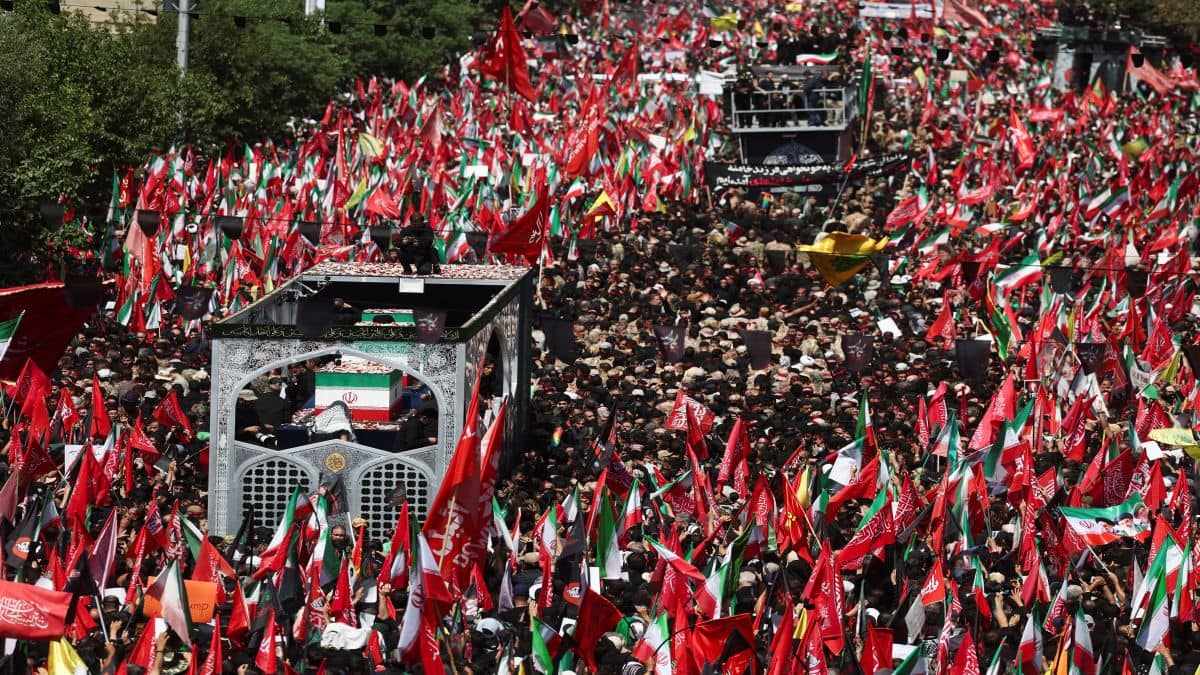
The strikes come amid the days-long funeral for Iran’s Supreme Leader Ayatollah Ali Khamenei, who was killed at the beginning of the war. The strikes will also add to the difficulty of negotiations aimed at fully reopening the strait, rolling back Tehran’s disputed nuclear programme, and reaching a permanent end to the war.
Iran has now warned of retaliation, stating that the US has repeatedly violated its memorandum of understanding, putting the entire region at risk.
Why did US launch new strikes against Iran?
Early Wednesday (July 8), the US Central Command (Centcom) launched a “series of powerful strikes” against Iran.
“US Central Command forces have begun launching a series of powerful strikes against Iran to impose heavy costs for targeting and attacking commercial shipping crewed by innocent civilians in an international waterway,” Centcom said in a post to X. “The US strikes are in response to Iranian attacks on three commercial vessels that were transiting the Strait of Hormuz. Iran’s demonstrated aggression was unwarranted, dangerous, and a clear violation of the ceasefire.”
 More from Explainers
Earlier on Tuesday, three tankers had been struck in the Strait of Hormuz. The United Kingdom Maritime Trade Operations centre noted that one tanker caught fire after projectiles struck it while it was sailing off the coast of Oman. Iranian state television said the liquefied natural gas tanker came under attack after ignoring warnings, but did not directly claim responsibility for the assault.
The UK maritime agency said the other two ships sustained damage but continued their voyages, and no injuries were reported.
According to details released, all three attacks on the ships took place off the coast of Oman or the neighbouring United Arab Emirates, suggesting the vessels were sailing along the route near Oman.
Qatar and Saudi Arabia denounced Iran for the attacks on the ships, with Doha saying it held Iran “fully responsible” for an apparent targeted attack on a vessel called Al-Rekayyat as it transited near the strait.
In a separate social media post, Saudi Arabia’s foreign ministry said Iran had targeted the Saudi tanker Wadyan as it crossed the strait. It added that the assaults were “an attack on the security and safety of international navigation, and the security of global energy supplies”.
How powerful were the US strikes on Iran?
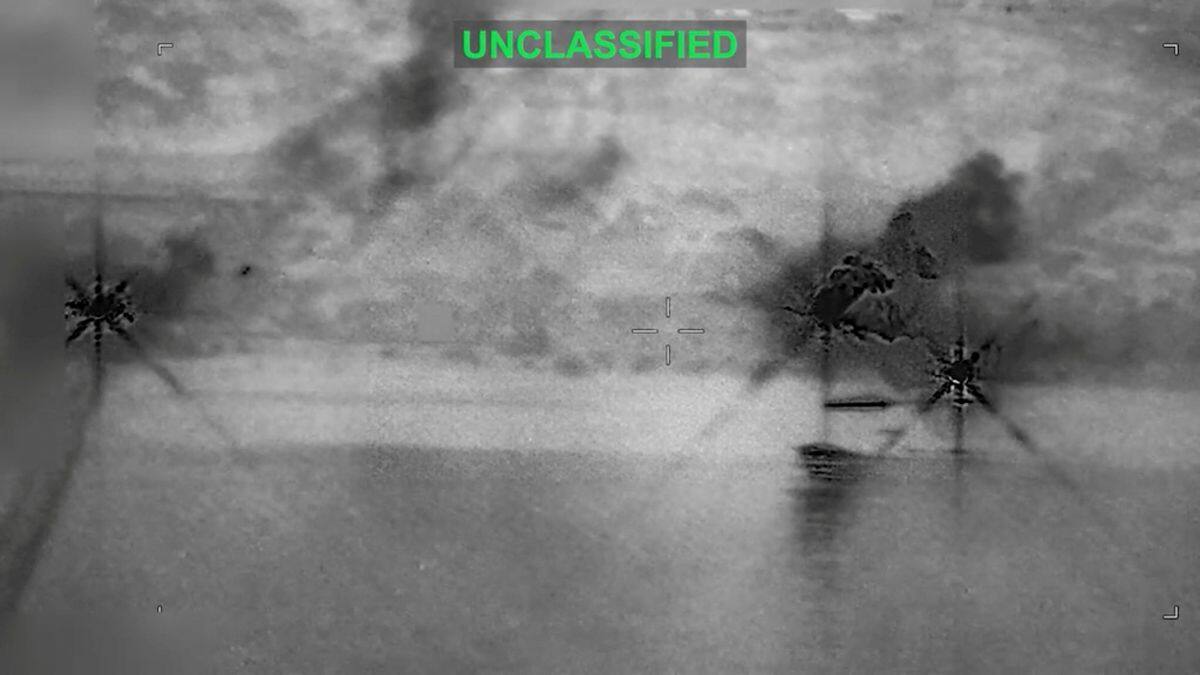
For its Wednesday strikes, the US military targeted Iranian air-defence systems, coastal surveillance systems, surface-to-air missiles, anti-ship cruise missile sites, drone launch sites, and port facilities.
On completion, Centcom noted that it had hit more than 80 targets. “US forces struck Iranian air defense systems, command and control networks, coastal radar sites, anti-ship missile capabilities, and more than 60 Islamic Revolutionary Guard Corps small boats in and near the strait to degrade Iran’s ability to continue attacking international commerce flowing through the international trade corridor,” Centcom wrote on X.
According to one US official, the strikes were four or five times bigger in scope and power than the one carried out 10 days ago. Another official also told CNN that the strikes were a “punishment”.
A third official was quoted as saying, “This response is a direct result of the acts of international terrorism that have been perpetrated by Iran on innocent ships transiting the Strait of Hormuz. The Iranians know the consequences of their ridiculous actions, yet they still chose to carry out these attacks,” the official said.
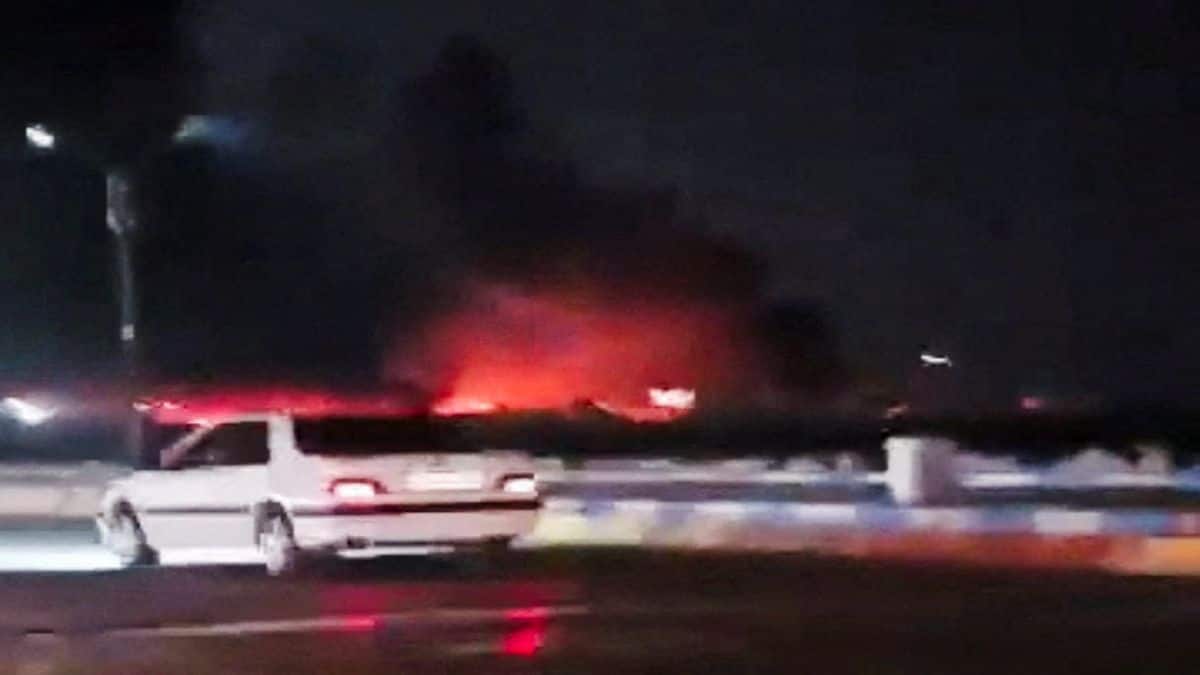
Meanwhile, Iranian media reported explosions in Qeshm, Bandar Abbas, and Sirik. State broadcaster IRIB reported that several people had been injured by shrapnel from the strike on the Sirik pier.
According to one X post, the US strikes caused significant damage to the Bandar Abbas area.
The US strikes also prompted Iranian President Masoud Pezeshkian to travel back to Tehran from Iraq. The president had travelled to the Iraqi city of Najaf for the multi-day funeral of former Iranian Supreme Leader Ayatollah Ali Khamenei, whose body arrived in the city on Tuesday.
What about US sanctions on Iranian oil?
Shortly after the US launched strikes against Iran, the US Treasury Department further announced it was revoking its general licence authorising Iran’s oil sales issued in June. The general licence was issued as part of a ceasefire agreement that serves as a framework to end the war. In the agreement, Iran vowed safe passage for ships through the strait.
“Iran will only reap benefits if they exhibit good behaviour,” a US official told CNBC. “Iran’s actions in the Strait were wholly unacceptable to the United States and will be met with consequences.”
According to the US, this will come into full effect on July 17. This move will have a significant impact on Tehran, whose economy has long been impacted by US sanctions. Half of the Islamic Republic’s revenue comes from oil sales.
What is Iran’s response to the US actions?
Iran has condemned the US strikes, labelling them a “blatant act of aggression”.
“The Armed Forces of the Islamic Republic of Iran will deliver a crushing response to the US aggression and terrorist action,” said Iran’s top joint military command, Khatam al-Anbiya Central Headquarters, according to state broadcaster IRIB.
The command added that it would “under no circumstances, will allow interference in the affairs or management of the Strait of Hormuz.”
Iran’s Deputy Foreign Minister Kazem Gharibabadi has also denounced the US’s decision to revoke the waivers on Iranian oil exports as well as the recent attacks on the country. He said the actions constitute “blatant violations” of Article 1, 2 and 10 of the Islamabad MoU.
Gharibabadi added that “Iran, while issuing a serious warning regarding the consequences of America’s breach of the agreement, will take decisive actions to safeguard its national interests and security.”
Iran’s negotiator Mohammad Bagher Ghalibaf has also noted the “major violations” carried out by the US. He said these are: “Violating Iranian adjustments in the Strait”, “persistent threats of further strikes”, “reinstating oil sanctions”, “attacks on southern Iran” and “continued Zionist aggression” on Lebanon.
One CNN analyst noted that Iran had already launched drones at Bahrain. Additionally, the country's Ministry of Interior has sounded off sirens, urging citizens to “remain calm and head to the nearest safe place.”
Reports have also come in that sirens have been sounded in Kuwait as well. The Kuwaiti army has announced that it is responding to “hostile missile and drone attacks”
What about the ceasefire now?
The US strikes on Iran imperil the shaky truce that the two countries had agreed upon. A few regional allies have sent messages to the US and Iran to prevent further escalation of hostilities and preserve the ceasefire, reported CNN.
Sina Azodi, director of the Middle East Studies Program at the George Washington University, noted that the MoU is a ceasefire, not a peace deal, and skirmishes between the US and Iran are likely until a final settlement is agreed.
“This MoU is not a comprehensive political settlement. Rather, it is really a cessation of hostilities between Iran and the United States on all fronts,” he told Al Jazeera. “So as long as we don’t have that peace agreement, skirmishes like this, miscalculations, even accidental fires have the potential to reignite the conflict between Iran, the US, and quite frankly, the entire region.”
With inputs from agencies

Military drones & police check-ups: How Sri Lanka is fighting against worst dengue outbreak in a decade
How Facebook job ad lured 2 Karnataka men into Myanmar cyber scam camp
Why is India seeing 95% cloud cover despite a Super El Niño?
What is CJP’s fourth demand to the government as protests in Delhi intensify?
The new geography of war: Why the Houthis can no longer be ignored