


World’s first man-made cell can eat, grow, and reproduce. Why this is a big leap for science
Scientists have created the world’s first man-made cell that can eat, grow and reproduce. Called SpudCell, it is the work of Kate Adamala and her team of researchers at the University of Minnesota. This creation gives scientists a better understanding of the origins of life, could help create new medicines, and solve some of the world’s biggest biological problems

A look at this blob and it’s nothing special. It looks like a microscopic water droplet. But it’s also arguably the closest researchers have come to building a living cell from scratch.
Researchers at the University of Minnesota have developed what they describe as the world’s first synthetic cell capable of completing a full life cycle. Called SpudCell, the artificial cell can grow, replicate its DNA, feed, divide, and pass genetic material to the next generation.
But hold on… haven’t there been other such projects? There have been, but those only recreated individual biological functions, whereas SpudCell combines multiple life-like behaviours into a single engineered system.
Are you scratching your head after this? Want to understand what exactly SpudCell is? Why is it significant? Read on.
 More from Explainers
What is SpudCell?
With a strong resemblance to a potato, SpudCell is a cell engineered by researchers in the University of Minnesota. Kate Adamala, a synthetic biologist and professor at the University of Minnesota and leader of this project, states that SpudCell was constructed piece by piece from non-living chemical components.
“I know the full ingredient list of the cell, I know exactly what chemicals, what molecules at what concentrations,” said Adamala. “It is fully defined, which means we can engineer it.”
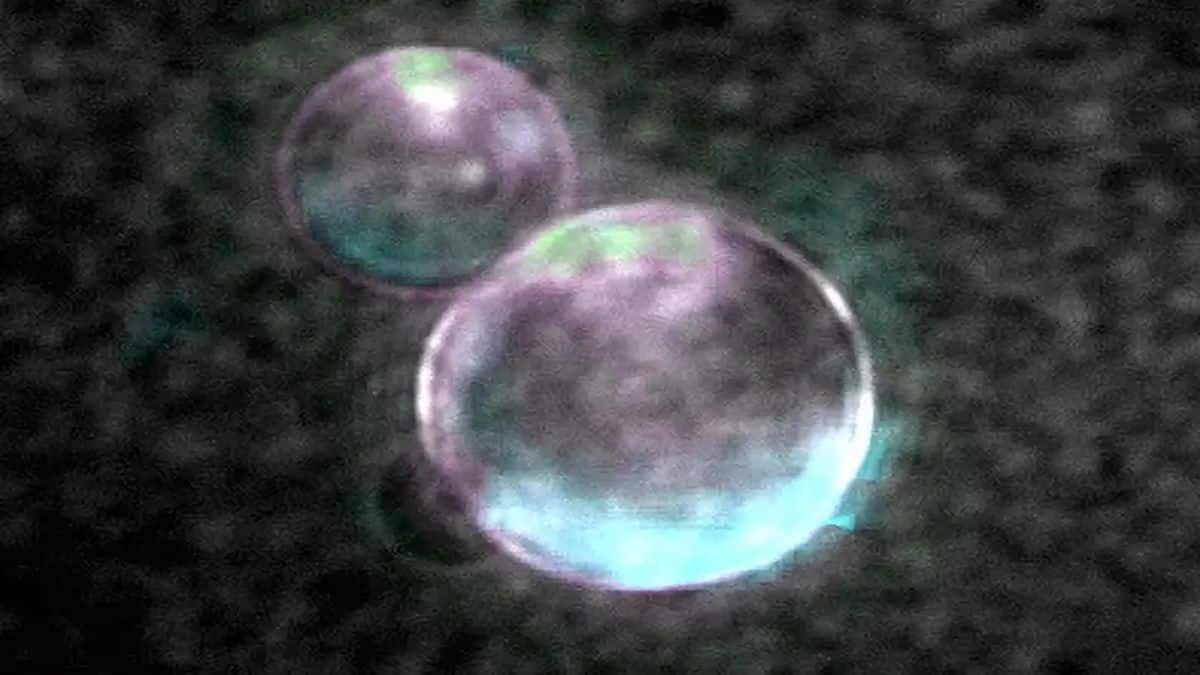
The quivering blob, according to Adamala, can perform some of the functions of a natural cell. It can feed, grow, and replicate like a natural cell. However, Dr Adamala warned, “It is not as robust, as fast, or as good at most of its functions as a natural cell, but it is proof of principle that molecules can reconstitute behaviours that up until now we only associated with natural living cells. If we want to be able to engineer biology, we really have to understand exactly the blueprint, every component of it, so we know what we’re changing.”
When asked about the name, Adamala said that the team originally wanted to name the cell after her. “Call it something that’s not my name, call it a potato for all I care,” she told Science.org. They then used SpudCell in honour of her Polish roots. They also referenced Sputnik, the Russian satellite that launched the space age in the 1950s.
How did scientists create SpudCell?
Unlike past efforts, which modified natural cells, the researchers engineered the synthetic cell from scratch. They started with tiny water-filled spheres called liposomes, which are a few thousandths of a millimetre wide, and added a small amount of synthetic DNA to provide basic functions.
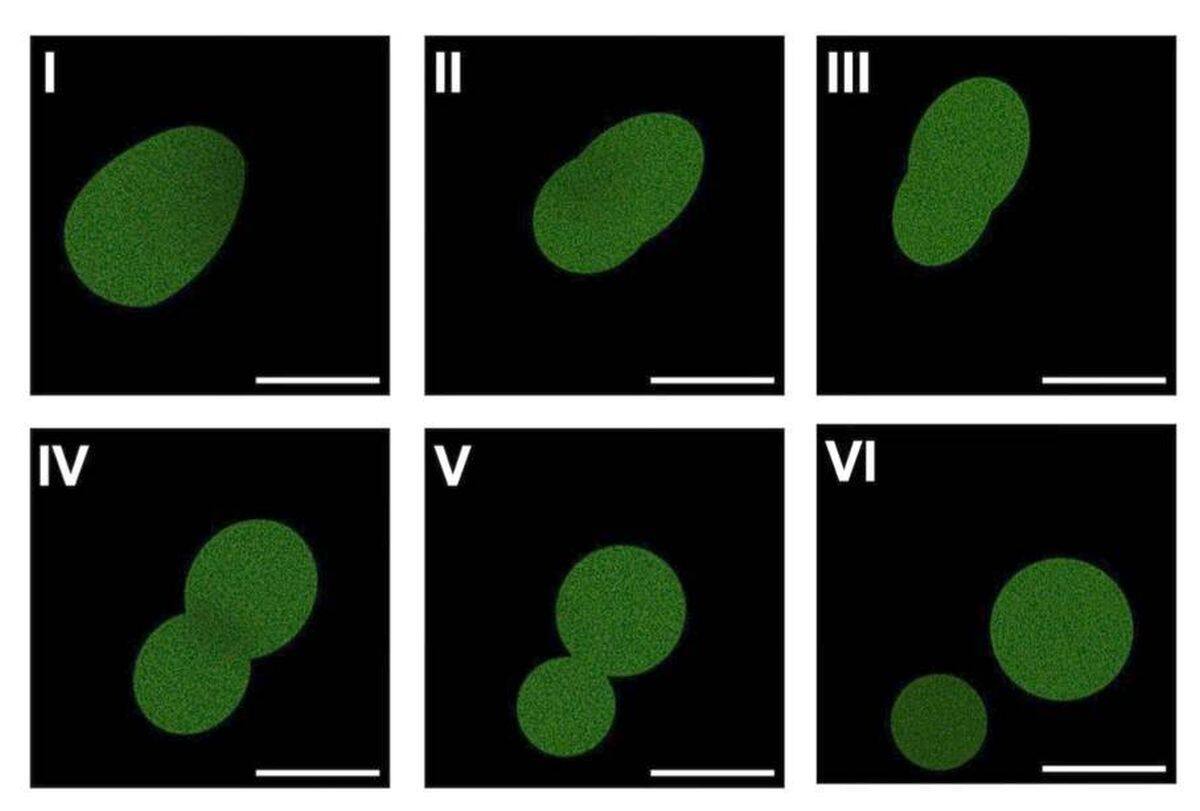
The synthetic cells then acquire resources by fusing with tiny feeder liposomes containing molecules, enzymes, and ribosomes needed to make proteins. As they grow, they replicate their genome before dividing into new cells.
Researchers also demonstrated natural selection within the synthetic system. After introducing a genetic change that increased the production of a fusion protein, the modified cells grew faster and produced more offspring. After five generations, the faster-growing cells outcompeted the original population, with the advantage becoming even greater when nutrients were limited, reports Interesting Engineering.
Speaking on her team’s achievements, Adamala said, “We’ve replicated in chemistry what only used to be possible in biology: the complete set of behaviors of a cell. It proves that the most fundamental functions of life, like growth and replication, do not need a mysterious magical spark.”
Why is SpudCell’s creation significant?
For far too long, scientists have been trying to bioengineer natural cells to solve human problems. It’s scientifically proven that cells are the fundamental blocks of life. They hold the secrets of human life. But they are complex. The human body has 37 trillion cells, and scientists still don’t know how every different cell type works or what exactly they contain.
Tom Ellis, a professor of synthetic genome engineering at Imperial College London, told CNN that the creation of SpudCell was remarkable. “Making a synthetic cell helps us understand the exact minimum requirements for life and how life might have emerged from chemistry — that’s a cool thing to try to understand,” Ellis said.
John Glass, a synthetic biologist at the J Craig Venter Institute in La Jolla, California, also concurred that Adamala’s work was groundbreaking. “Until now, scientists had never mastered the recipe for a cell that can perform so many functions,” he was quoted as telling the New York Times, adding, “Now, we can think about doing chemistry that we’re barely getting our heads around.”
Scientists are of the opinion that synthetic cells such as SpudCell can tell them things about life that aren’t understood to date, including questions such as how many genes are necessary for a minimal form of life.

There’s also a hope that by engineering synthetic cells, they would do things that natural cells can't. For instance, make new kinds of medicine or draw large amounts of carbon dioxide from the atmosphere. As the New York Times reported, in theory, engineered SpudCells might produce a vast range of proteins that natural cells cannot be coaxed to make, or even toxic chemicals like rocket fuel.
However, SpudCell has shortcomings and can’t be described as a living cell. It can’t make its own ribosomes, key parts of a natural cell that make proteins. Instead, it uses E. coli ribosomes that are supplied through feeding.
But as Adamala told CNN, “It’s just the beginning. “It’s a chassis that we’re hoping to build on, and that’s significant, because now we actually can have some reasonable idea of how to build on it.”
Now, Adamala and others are launching an institution called Biotic to pool global expertise and build SpudCells into something more impressive. The goal, according to the co-founder Prof Drew Endy, a bioengineer at Stanford University, is to build “an operating system for life” made from genes and biochemistry.
With inputs from agencies

Military drones & police check-ups: How Sri Lanka is fighting against worst dengue outbreak in a decade
How Facebook job ad lured 2 Karnataka men into Myanmar cyber scam camp
Why is India seeing 95% cloud cover despite a Super El Niño?
What is CJP’s fourth demand to the government as protests in Delhi intensify?
The new geography of war: Why the Houthis can no longer be ignored