


Will decline in snow cover at Hindu Kush Himalaya lead to water shortages in India, Pakistan?
A new report has found that snow cover across the Hindu Kush Himalaya region declined 27.8 per cent below the long-term average for the winter season from November 2025 to March 2026. This has stoked concerns about water security for nearly 200 crore people in eight Asian countries, including India and Pakistan, where the mountain stretch lies

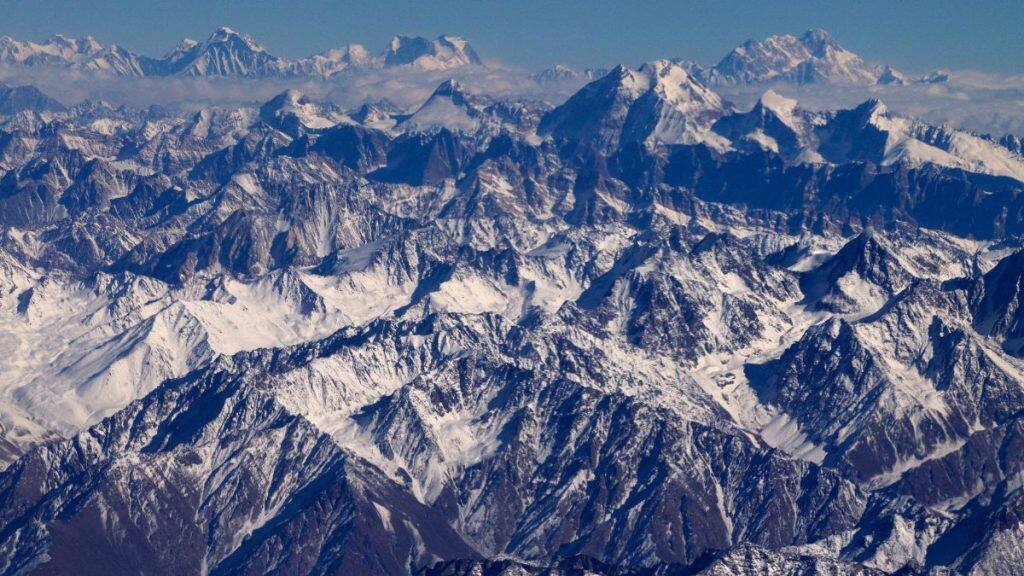
The Hindu Kush Himalaya (HKH), famous as the “Water Tower of Asia”, is losing its snow cover. A recent report has warned that snow persistence in the HKH region has dropped to its lowest in over two decades.
This is the fourth year in a row that snow cover across the mountain stretch running from Afghanistan to Myanmar has plunged. This has raised concerns about water security for more than two billion (200 crore) people.
Let’s take a closer look.
Snow cover across HKH falls
A new report by the International Centre for Integrated Mountain Development (ICIMOD) has found that snow cover across the Hindu Kush Himalaya declined 27.8 per cent below the long-term average for the winter season from November 2025 to March 2026.
As per the Snow Update Report 2026, this is the fourth consecutive year that snow persistence in the HKH has been below normal.
 More from Explainers
ICIMOD defines snow persistence as “the fraction of time snow remains on the ground after snowfall”. This means that winter snow, which acts as a natural water bank, is not staying long enough.
The research organisation, based in Kathmandu, analysed 12 major river basins originating in the HKH region. Of these, only two — the Ganga and Irrawaddy basins — witnessed above-average snow persistence, at 16.3 per cent and 21.8 per cent, respectively.
The maximum snow cover was lost in the Mekong basin (59.5 per cent), followed by the Tibetan Plateau (47.4 per cent) and the Salween basin (41.8 per cent).
The Indus and Helmand recorded drops of around 18 per cent.
“This indicates a persistent decline in seasonal snow reserves at a regional scale and calls for early, coordinated water management and drought preparedness measures, particularly in the snow-dominated western basins such as Amu Darya, Helmand, Indus and Tarim,” ICIMOD said.
Why is this concerning?
The HKH, also referred to as the “Third Pole”, lies across eight countries, extending 3,500 km over Afghanistan, Bangladesh, Bhutan, China, India, Myanmar, Nepal and Pakistan. It covers a high-altitude region of more than 55,000 square km.
As many as 10 major river systems rely on the mountain region, which is home to more than 60,000 glaciers, holding roughly 6,000 cubic kilometres of ice, as per a Down to Earth report.
The HKH holds more ice and snow than all other regions on Earth, except the Arctic and Antarctic.
“The present status of snow persistence is quite alarming at the HKH scale,” Dr Farooq Azam, a cryosphere scientist associated with ICIMOD, told NDTV. He said that snow stayed on the ground 27.8 per cent below normal this winter, the lowest in 24 years.
If not for climate change, snow built during winter would have melted slowly through spring and summer. This water would then feed major rivers that support farming, power plants, and drinking water across South and Central Asia, noted NDTV.
A previous ICIMOD report found that the rate of ice loss in the HKH region has doubled since 2000.
Water scarcity a real threat
The ICIMOD report warned that a fall in snow persistence increases the possibility of drought. “Such steadily declining persistence of seasonal snow, below-normal precipitation in spring may lead to reduced run-offs, further cascading into increased groundwater extraction and risks of droughts across the region,” it stated.
The Hindu Kush Himalaya region feeds ten major river systems, sustaining nearly two billion people. For those living downstream, a reduced snow cover could affect water availability during early summer.
“Reduced snowmelt means lower contributions to river runoff in the early melt season, with likely implications for downstream water supply, agriculture, hydropower generation, and related livelihoods,” the report observed.
On average, about 23 per cent of the water feeding these major rivers comes from melting snow. This melted winter snow is the source of 70-80 per cent of water in the western basins. For the Indus, snowmelt contributes to nearly 40 per cent of the river's flow, according to NDTV.
The risks of drought spike as water from snowmelt that refills these rivers is falling. The situation could worsen if the monsoon is weak or late.
Consecutive low-snow years have not allowed groundwater and soil moisture to replenish, enhancing the chances of future droughts.
“Every dry spell will hit harder,” the report warned. “Regional cooperation on these interconnected issues has now become urgent. We need to shift from emergency response to proactive, science-based governance.”
The magnitude of lower snow persistence will be dependent on how spring and early summer conditions evolve, including the timing and severity of warming, dry spells, precipitation and any extreme weather events, Down to Earth reported, citing ICIMOD.
The report called on authorities to prioritise adaptive water resource management to tackle the impact of potential water scarcity.
With inputs from agencies

Military drones & police check-ups: How Sri Lanka is fighting against worst dengue outbreak in a decade
How Facebook job ad lured 2 Karnataka men into Myanmar cyber scam camp
Why is India seeing 95% cloud cover despite a Super El Niño?
What is CJP’s fourth demand to the government as protests in Delhi intensify?
The new geography of war: Why the Houthis can no longer be ignored