


India’s birth rate is falling, but why is Elon Musk worried?
According to the United Nations Population Fund’s State of World Population Report 2025, India’s total fertility rate (TFR) currently stands at 1.9 births per woman. This is below the replacement level of 2.1 required to maintain a stable population over time. But why are some, including billionaire Elon Musk, worried?

Billionaire Elon Musk has long argued that declining fertility rates pose one of the greatest threats to human civilisation. In recent years, his warnings have focused on ageing societies like Japan and South Korea. Now, he has turned his attention to India, the world’s most populous nation.
“India’s birth rate has fallen below replacement,” Musk wrote on X. “Among those most educated, India’s birth rate fell below replacement many years ago.”
But is his claim correct? Is India’s birth rate indeed falling?
India’s population
First, let’s take a brief look at India’s population. In 1950, just a few years after Independence, India was at around 360 million people. Today, India accounts for approximately 1.45 billion — around one-sixth of the world’s population.
 More from Explainers
Over the years, many had worried about a population explosion, with Prime Minister Narendra Modi himself warning of such a possibility in 2019. In 2023, India overtook China as the world’s most populous nation. However, today India is facing a different challenge altogether.
India’s fertility rate
According to the United Nations Population Fund’s State of World Population Report 2025, India’s total fertility rate (TFR) currently stands at 1.9 births per woman. This is below the replacement level of 2.1 required to maintain a stable population over time.
Notably, the decline has been faster than expected. As demographer Moradhvaj Dhakad of the Max Planck Institute for Demographic Research told The Indian Express, earlier projections had expected India to reach below-replacement fertility between 2030 and 2035, but the country achieved this milestone around 2020.
According to the report, the biggest barriers to having children in India are as follows:
- Financial limitations: 38 per cent
- Housing limitations: 22 per cent
- Unemployment or job insecurity: 21 per cent
- Lack of sufficient or quality childcare options: 18 per cent
Health-related barriers were also highlighted. These included:
- Poor general health or chronic illnesses: 15 per cent
- Barriers to fertility or pregnancy-related medical care: 14 per cent
- Infertility or difficulty conceiving: 13 per cent
Social factors also played into the decision. These included:
- Partner wanting fewer children: 19 per cent
- Lack of a suitable partner: 14 per cent
- Insufficient involvement of a partner in housework or childcare: 14 per cent
As one 18-year-old quoted in the report said, “Finding the right partner is important because I believe that raising a child should be a shared responsibility with emotional and financial support from both parents.”
Urban vs rural divide
The latest Sample Registration System (SRS) also shows the rural–urban divide. According to the SRS data, urban fertility is well below replacement level at roughly 1.6 children per woman. Meanwhile, rural fertility remains around the 2.1 mark, which is closer to the replacement level. In 2014, India’s TFR was at 2.3, with rural India at 2.5 and urban India at 1.8.
Data from the state level is equally revealing. While Kerala’s fertility rate is around 1.7 to 1.8, Tamil Nadu, Karnataka and Maharashtra are in the 1.6 to 1.7 range, approaching levels seen in ageing advanced economies such as Japan, Italy and Germany.
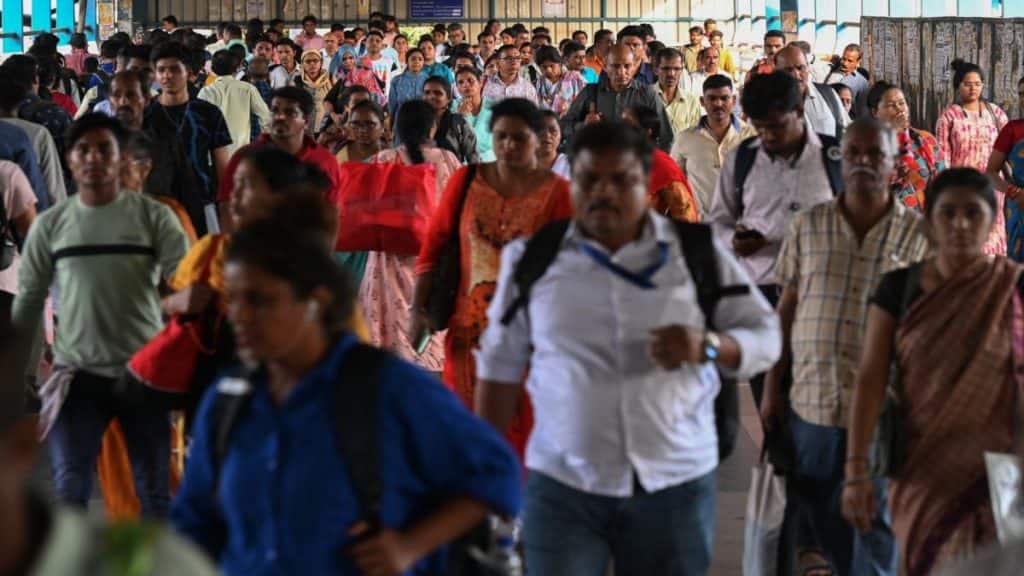
On the other hand, states like Bihar and Uttar Pradesh continue to record significantly higher fertility rates. Bihar remains the highest among major states at around 3.0 children per woman, while Uttar Pradesh is at about 2.4. States like Madhya Pradesh and Rajasthan are in the 2.0 to 2.2 range, indicating they are approaching replacement fertility.
But does that mean India is headed for a population decline anytime soon? The answer is no.
Why India is still growing
The UNFPA’s State of World Population Report 2025 puts India in line with a broader global shift towards declining fertility. With a total fertility rate of around 1.9, India has already fallen below the replacement level, joining a growing number of countries where fewer children are being born per woman. However, the report makes it clear that falling fertility does not automatically translate into a shrinking population.
In India’s case, population growth is being sustained by its age structure. A large and youthful population means millions are entering reproductive age every year. This creates what demographers call population momentum — even if each couple has fewer children, the overall number of births remains high. As a result, India will continue to see population growth for another few decades before it eventually stabilises and begins to decline.
“In India, population will continue to increase because of the population momentum, thanks to a younger population,” Dhakad told Indian Express. “Government population control campaigns such as hum do, hamaare do further spread family planning messaging even among the less educated groups, and in rural areas. Moreover, it has been found that development is the best contraception. For example, a greater focus on improving maternal and child health has helped lower the under-five mortality rate significantly. Parents realise that they do not need to have more children to ensure their survival into adulthood.”
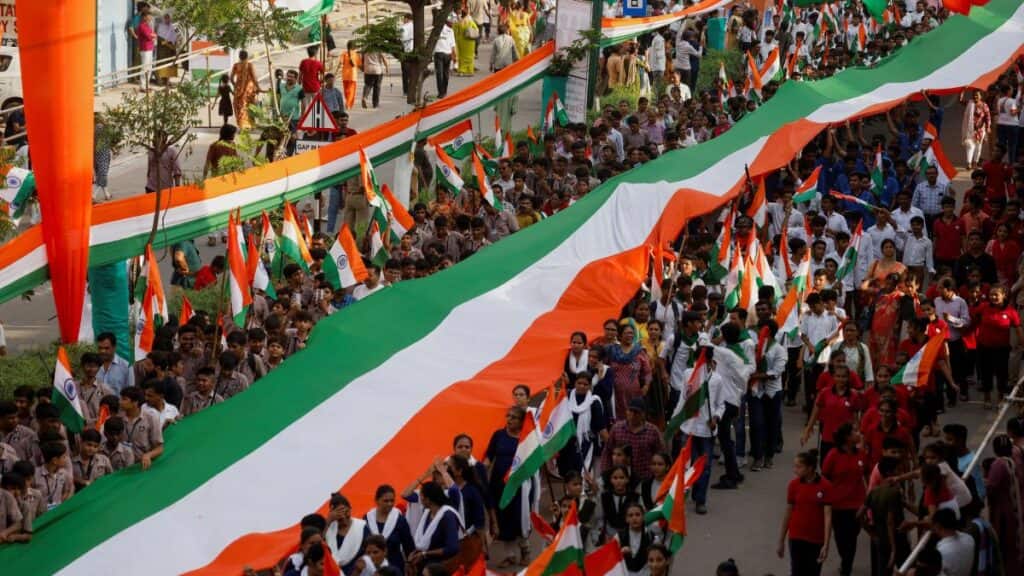
The report also challenges the idea that falling fertility is itself a crisis. Instead, it argues that the real issue is that many people are unable to have the number of children they actually want. In India, this is driven largely by economic and social constraints — financial pressures, housing costs, job insecurity and lack of childcare support. At the same time, changing aspirations and gender roles are reshaping how people approach family and parenthood.
At the same time, cultural factors are playing a growing role. Martin Kolk, Associate Professor at Stockholm University, told The Indian Express that beyond economics and policy, there has been a broader shift in values, with people increasingly prioritising other aspects of life over childbearing.
Taken together, the report’s message is clear: India is not facing a population collapse, but a gradual demographic transition. The focus, it argues, should not be on the size of the population, but on whether individuals have the freedom and support to make informed choices about having children.
The UNFPA report argues that the solution does not lie in trying to push fertility up or down. Instead, it calls for policies that enable individuals to make free and informed reproductive choices.
This includes:
- Expanding access to healthcare and contraception
- Supporting working parents
- Investing in childcare
- Addressing gender inequality
Such measures would not only improve individual well-being, but also create more stable and sustainable demographic outcomes, the report argues.
Experts also caution that reversing this trend is difficult. “Reducing fertility is easier than increasing fertility,” Dhakad told The Indian Express, pointing to the challenges countries face once birth rates fall. So, while India’s birth rate is falling as Musk claims, any notion that the country is facing an imminent population crisis is simply wrong.
FAQs
1. Is India’s birth rate really falling?
Yes. India’s total fertility rate has fallen below the replacement level of 2.1 and currently stands at around 1.9 births per woman.
2. Will India’s population start declining soon?
No. Despite falling fertility, India’s population will continue to grow for the next few decades due to its large and young population.
3. Why are Indians having fewer children?
Economic pressures are the biggest factor. Financial constraints, housing costs, job insecurity and lack of childcare support are among the main reasons people are having fewer children.
With inputs from agencies

Military drones & police check-ups: How Sri Lanka is fighting against worst dengue outbreak in a decade
How Facebook job ad lured 2 Karnataka men into Myanmar cyber scam camp
Why is India seeing 95% cloud cover despite a Super El Niño?
What is CJP’s fourth demand to the government as protests in Delhi intensify?
The new geography of war: Why the Houthis can no longer be ignored