


Earthquakes rock Venezuela, Japan, Afghanistan within days. Are they connected?
Since last Wednesday, the world has seen an increase in seismic activity — seven in five days. First, there were the powerful earthquakes in Venezuela, which have killed over 1,400 people. This was followed by temblors in US’ California, Japan, Afghanistan and Pakistan. Is the timing coincidental?

Last Wednesday, an earthquake doublet rocked Venezuela, causing widespread destruction. Five days later, on Monday (June 29), authorities are still pulling out survivors from the heaps of rubble as the death toll continues to climb — it has now crossed over 1,450.
In the following days, temblors have hit different countries, with seismologists recording seven quakes in the past five days — Japan, California in the US, Pakistan, and Afghanistan.
This has prompted people to ask: are the seismic events connected or simply an extraordinary coincidence?
How many quakes did the world experience in past 5 days?
On the evening of June 24, two powerful quakes, measuring 7.2 and 7.5, hit Venezuela just 39 seconds apart. The rare earthquake doublet caused widespread devastation around Caracas and La Guaira, collapsing buildings, disrupting transport, and triggering a massive international rescue effort.
 More from Explainers
The death toll has surpassed 1,450, and nearly 200 buildings have completely collapsed. But, authorities are still pulling out survivors from the debris, providing hope in an ongoing tragedy that has shaken a country already mired in an economic crisis.
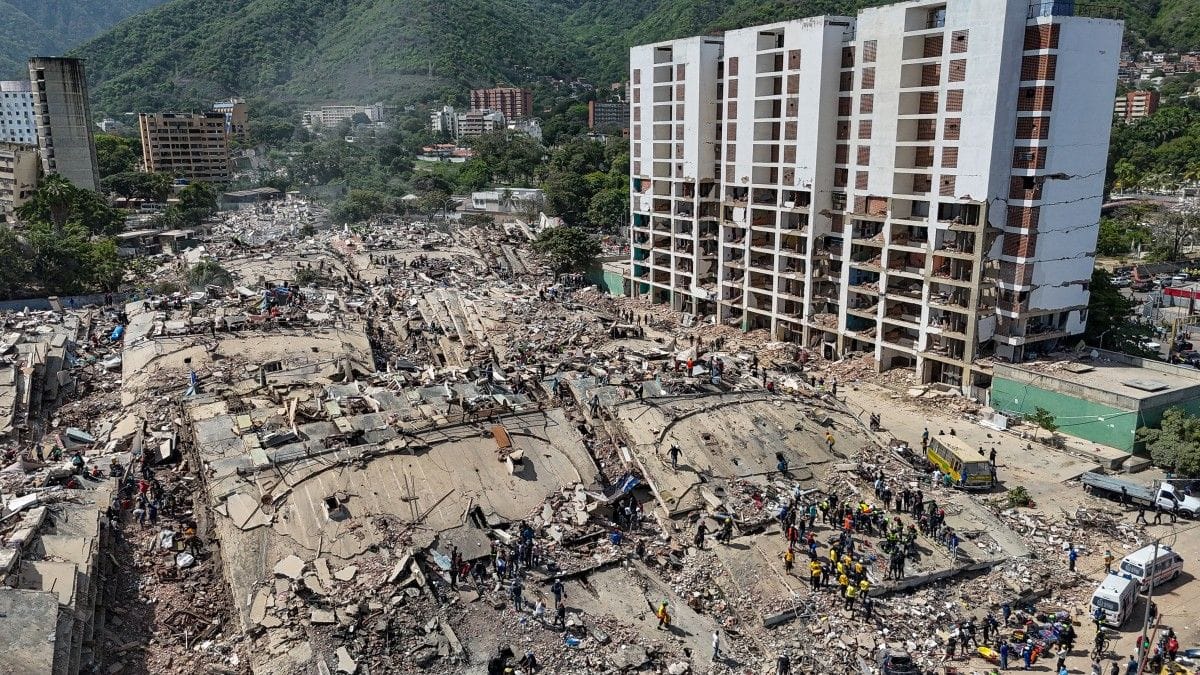
However, this wasn’t the only seismic activity to take place. Following the death and devastation in Venezuela, temblors were experienced in different parts of the world.
It began in Northern California, US. On June 24, a 5.6 earthquake rattled the area, triggering alerts across the Bay Area, according to the United States Geological Survey.
The following day, on June 25, Japan recorded a 7.2 temblor. Tremors were felt several hundred kilometres away in Tokyo from the quake in the sea off Iwate prefecture on the main island of Honshu. No tsunami warning was issued. The Japan Meteorological Agency (JMA) said the magnitude was 6.9 but later revised it to 7.2, saying the epicentre was at a depth of 44 kilometres.
The quake didn’t cause any significant damage, with Japanese television footage showing kitchen saucepans in a heap and goods strewn on the floor in shops. Some bullet train services were suspended, and a primary school principal told NHK that her school in Hashikami was temporarily closed because of the quake.
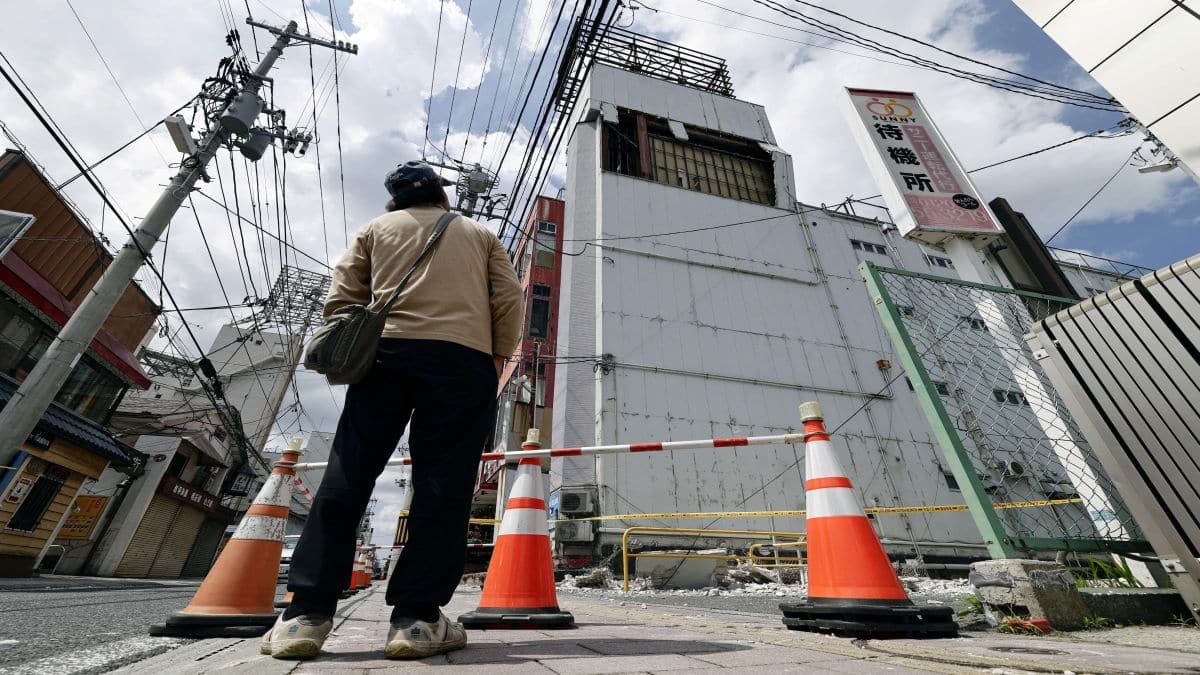
On June 25, a small tremor, measuring 3.8, also struck Nepal, said the National Centre of Seismology.
Two days later, on June 27, quakes struck Pakistan and Afghanistan. In Afghanistan, officials said the temblor measured 6.2. According to a Reuters report, people ran out of their doors in panic in Swat district in northern Pakistan’s Khyber Pakhtunkhwa. There were no reports of casualties.
And on the same day, Pakistan also recorded a 5.5 quake at a depth of 35 kilometres. Tremors were felt in parts of the country, damaging over 100 houses and injuring around 20 people.
Are these quakes connected at all?
The spike in seismic activity got many questioning if the quakes were connected.
To understand this, one must first know the science behind earthquakes. Earth’s outer shell is divided into many tectonic plates that float on the semi-fluid mantle beneath them. These plates move at a rate of only a few centimetres each year, but their interactions create immense pressure. When stress builds up along faults — fractures in the Earth’s crust — the rocks eventually break or slip. The sudden movement releases energy in the form of seismic waves, causing the ground to shake.
In the case of the recent earthquakes, they all occurred within days but on different tectonic plate boundaries. The Pakistan and Afghanistan earthquakes took place along the collision zone between the Indian Plate and the Eurasian Plate.

Venezuela, on the other hand, sits along the boundary where the Caribbean Plate slides past the South American Plate.
This means that these regions sit on different tectonic systems, making the quakes non-related. William Barnhart, assistant coordinator for the US Geological Survey’s earthquake hazards programme, noted that while the episodes do share a similarity in that they all occurred along well-known plate boundaries with high seismic hazard, their timing has been coincidental.
“Earthquakes happen every day all over the world. Most of them happen far from people,” Barnhart told The Guardian. “Yesterday was just a very peculiar day where you had a couple of fairly significant earthquakes happen in areas where people felt them.”
Caltech seismologist Dr Lucy also told CNN that the quakes occurring in quick succession in many countries were purely coincidental. She noted that the temblors occurred on separate fault systems and plate boundaries, adding that large quakes occurring miles away do not increase the likelihood of another quake elsewhere.
Peter Stafford, a professor of engineering seismology at Imperial College London, also concurred with the view that the timing of the quakes was coincidental. “California experiences two to three events like this every year, on average. Japan experiences an event like the recent one roughly once per year on average. These are both ballpark estimates. Rates in Venezuela are harder to constrain, but these large events occur far less frequently, more like once every 50-100 years...
“The fact that they happen to have occurred in close temporal proximity is almost certainly just a statistical coincidence,” he said as per a report in AA.com.
Can one earthquake trigger another?
Seismologists note that a large earthquake can cause tremors elsewhere. However, it’s usually restricted to nearby regions and not locations separated by thousands of kilometres.
As Martin Hudson, an adjunct professor of civil and environmental engineering at UCLA, told The Guardian, it is unusual that such a cascade effect would occur thousands and thousands of kilometres apart. “If you look at the last 100 years of earthquakes, we’ve never seen earthquakes this far apart be related,” he said, adding, “A fault might be ready to go, and then if there’s a nearby earthquake, it causes it to tip over the edge.”
Are quakes on the rise?
The many earthquakes, one after another, have also raised concerns about whether earthquakes are on the rise. But scientists note that there’s no evidence to suggest the same. The USGS states that short-term increases or decreases in seismic activity are part of normal fluctuations in earthquake rates and do not indicate an approaching major event.
According to the National Earthquake Information Centre now locates about 20,000 earthquakes globally each year, or roughly 55 per day. But this, according to the USGS, is owing to better detection than an actual rise in seismic activity.
With inputs from agencies

Military drones & police check-ups: How Sri Lanka is fighting against worst dengue outbreak in a decade
How Facebook job ad lured 2 Karnataka men into Myanmar cyber scam camp
Why is India seeing 95% cloud cover despite a Super El Niño?
What is CJP’s fourth demand to the government as protests in Delhi intensify?
The new geography of war: Why the Houthis can no longer be ignored