


Why uranium deal with Australia is a game-changer for India's nuclear energy ambitions
India and Australia have finalised a landmark uranium export agreement during Prime Minister Narendra Modi's visit to Melbourne, unlocking a long-delayed nuclear partnership. Here's why Australian uranium is crucial for India's clean energy goals, nuclear expansion plans and its target of achieving 100 GW of nuclear capacity by 2047

During the 3rd India-Australia Annual Summit in Melbourne on Thursday, Prime Minister Narendra Modi and Australian Prime Minister Anthony Albanese finalised a landmark administrative arrangement.
This breakthrough successfully operationalises the long-stalled framework for the commercial export of Australian uranium to India for peaceful, civilian energy use.
This development marks the resolution of a decade-long diplomatic and legal stalemate, unlocking a vital energy corridor between the world's largest repository of uranium and one of its fastest-growing energy consumers.
Speaking after the agreement was concluded, Australian Prime Minister Anthony Albanese described the relationship between the two countries as one built on growing trust and shared interests.
"Australia and India are close partners and even closer friends," Albanese told reporters in Melbourne.
"The arrangement facilitates Australian uranium exports to India to help increase the share of non-fossil fuel power capacity, providing an additional market for the Australian resources sector."
 More from Explainers
Modi said the partnership offered significant opportunities in multiple sectors beyond nuclear energy. "We have historic opportunities to cooperate in this field," he said, while encouraging Australian businesses to expand investments in India's infrastructure sector.
"India provides a safe, stable and sustainable growth option for your funds," he added.
How the agreement breaks a decade-long deadlock
Although India and Australia signed a Civil Nuclear Cooperation Agreement in 2014-15, commercial uranium exports never gained momentum because the two sides had yet to complete the administrative mechanisms governing nuclear fuel transfers.
Australia, a signatory to the Nuclear Non-Proliferation Treaty (NPT), has traditionally imposed strict safeguards on uranium exports, generally restricting sales to fellow NPT members.
India, however, has remained outside the treaty, arguing that it unfairly recognises only countries that tested nuclear weapons before 1967 as legitimate nuclear weapon states.
The newly concluded administrative arrangement bridges that gap without altering either country's broader nuclear policy. Instead, it creates the monitoring framework necessary for Australian uranium to be supplied exclusively for India's civilian nuclear energy programme.
Under the arrangement, all uranium exported from Australia will remain under International Atomic Energy Agency (IAEA) safeguards and will be subject to strict tracking mechanisms to ensure it is used solely for peaceful electricity generation and cannot be diverted for military or weapons purposes.
The agreement effectively operationalises the broader civil nuclear pact that had remained largely dormant for more than a decade.
Why India wants Australian uranium
The agreement comes as India prepares for a massive expansion of nuclear power over the next two decades. New Delhi has set an ambitious target of achieving 100 GW of installed nuclear power capacity by 2047 as part of its wider clean energy transition.
Achieving that objective requires a reliable supply of uranium, an area where India faces domestic limitations despite possessing vast thorium reserves.
Coal continues to dominate India's electricity generation, accounting for around three-fourths of power production and about 42 per cent of installed generation capacity.
Although renewable energy from solar and wind has expanded rapidly, these sources remain intermittent and cannot always meet demand during peak consumption periods.
Nuclear power offers an alternative source of continuous, low-carbon baseload electricity capable of operating regardless of weather conditions, making it a crucial component of India's long-term decarbonisation strategy and its commitment to achieve net-zero emissions by 2070.
The uranium imports will also support India's long-term three-stage nuclear programme. The first two phases of that programme depend on uranium-fuelled reactors to generate plutonium, which is eventually intended to support the country's extensive thorium-based nuclear energy ambitions.
What India's nuclear expansion plans look like
India currently operates 24 nuclear reactors spread across seven major sites, with a combined installed capacity of 8,780 MW (8.78 GW). Nuclear energy presently contributes about 3.1 per cent of India's electricity generation.
Several new Pressurised Heavy Water Reactors (PHWRs) and Light Water Reactors (LWRs) are under construction under a fleet-mode expansion programme, with installed nuclear capacity expected to increase to around 22 GW by 2031-32.
The government's long-term Nuclear Energy Mission aims to raise that figure to 100 GW by 2047, enough to supply clean electricity to nearly 60 million homes.
A significant milestone in that roadmap was achieved on April 6 this year, when the 500 MWe Prototype Fast Breeder Reactor (PFBR) at Kalpakkam in Tamil Nadu attained first criticality, advancing India into the second phase of its three-stage nuclear programme.
The government has also sought to accelerate domestic nuclear development through the SHANTI Act and has allocated Rs 20,000 crore for indigenous Small Modular Reactors (SMRs), encouraging greater collaboration between public and private sector entities.
As India's reactor fleet expands, securing multiple international sources of uranium has become increasingly important to guarantee uninterrupted fuel supplies.
Why Australia is a crucial partner
Australia is uniquely positioned to meet India's growing uranium demand. The country possesses the world's largest identified recoverable uranium reserves, estimated at roughly 28 to 33 per cent of global resources, amounting to approximately 1.7 million tonnes of contained uranium metal.
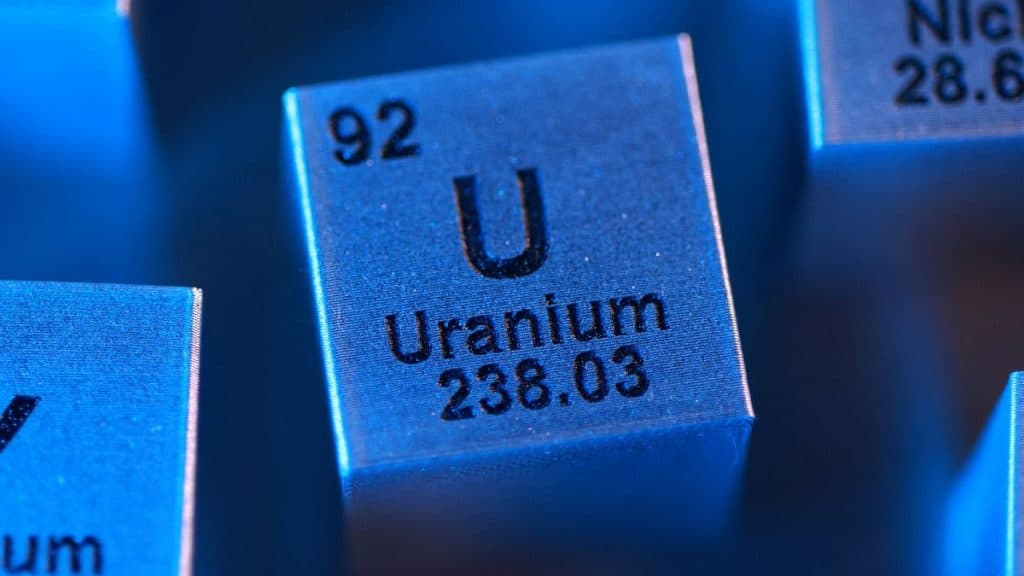
Unlike many other uranium-producing nations, Australia does not operate domestic nuclear power plants and has no nuclear weapons programme. As a result, virtually all uranium mined in the country is intended for export.
Major deposits, including BHP's Olympic Dam in South Australia and the Four Mile mine, have made uranium an important component of Australia's mining sector.
Opening the Indian market therefore provides Canberra with a valuable opportunity to diversify its export destinations while reducing excessive dependence on China, its largest trading partner.
The agreement also complements broader Australia-India cooperation in renewable energy, critical minerals, green hydrogen and other clean energy technologies, reinforcing both countries' ambitions to strengthen supply chains across the Indo-Pacific.
Beyond nuclear power
Beyond nuclear cooperation, the two prime ministers also discussed deeper collaboration in renewable energy, green hydrogen, critical minerals and low-carbon manufacturing.
Modi said Australia's technological expertise, investment capacity and natural resources could support India's energy transition, while also highlighting opportunities for cooperation in low-carbon aluminium production.
He urged Australian investors to participate in India's expanding infrastructure sector, including roads, ports, railways and urban development projects.
The growing economic relationship was reflected in a fresh investment announcement by AustralianSuper, Australia's largest pension fund, which said it would invest an additional A$500 million (approximately $347 million) in India's National Investment and Infrastructure Fund.
Following his meeting with Modi, Albanese described the Indian prime minister as a "living bridge" between the two nations and said Modi's vision had helped reshape Australia's economic engagement with India.
India is currently Australia's fifth-largest trading partner, behind China, Japan, the United States and South Korea.
The countries are also linked by strong people-to-people ties, with around one million Australians claiming Indian ancestry in a national population of approximately 28 million.
Modi arrived in Australia after concluding a visit to Indonesia, where he signed agreements covering agriculture, defence cooperation and the BrahMos cruise missile system. He is scheduled to travel to New Zealand before returning to India.
The uranium export arrangement is expected to become one of the defining outcomes of the Australia visit, providing India with a long-term source of nuclear fuel while giving Australia access to one of the world's fastest-growing clean energy markets.
It is a win-win for India as well as Australia:
| Attribute | India's profile | Australia's profile |
| Nuclear stance | Operates nuclear energy; non-NPT state under strict IAEA safeguards. | Zero domestic nuclear energy; strict NPT compliance. |
| Resource status | Rich in thorium, critically deficient in domestic uranium. | Holds the world's largest known uranium resources (~28%). |
| Strategic goal | Scale nuclear capacity to 100 GW by 2047 to phase out coal. | Expand export markets and secure clean energy trade partnerships. |
It also reflects a broader strategic convergence as both countries seek stronger economic integration, resilient supply chains and closer cooperation in advancing the Indo-Pacific's energy transition.
Also Watch:
With inputs from agencies
Inhaling global affairs daily, Anmol covers foreign policy & defence with the occasional piece in lifestyle and the thrilling sport of polo, to keep things light when they get too tense. He has far too many disparate interests with a constant itch for travel. You can follow him on X (AnmolSingla001); and please feel free to reach out to him at anmol.singla@nw18.com for interviews, tips, feedback or travel recommendations.

Military drones & police check-ups: How Sri Lanka is fighting against worst dengue outbreak in a decade
How Facebook job ad lured 2 Karnataka men into Myanmar cyber scam camp
Why is India seeing 95% cloud cover despite a Super El Niño?
What is CJP’s fourth demand to the government as protests in Delhi intensify?
The new geography of war: Why the Houthis can no longer be ignored