


The tale of Pablo Escobar’s ‘cocaine hippos’ that Anant Ambani wants to save
Following Colombia’s decision to cull 80 ‘cocaine hippos’, Indian billionaire Anant Ambani has announced that he is willing to care for them at his private wildlife sanctuary, Vantara. These animals are part of drug kingpin Pablo Escobar’s legacy; he had imported them from the US in the 1980s. Over the years, the population of these hippos has exploded, posing an environmental threat

Anant Ambani can be described in many ways. He’s the son of India’s richest man, Mukesh Ambani, and a wildlife rescuer. Now, he could also be the saviour of hippopotamuses.
The billionaire’s son has now offered to help Colombia get rid of a problem it has grappled with for years — a herd of ‘cocaine hippos’ linked to notorious drug lord Pablo Escobar, the founder of the Medellín drugs cartel in the 1980s.
On Tuesday (April 28), 31-year-old Anant announced that he is “willing to receive and care for” the animals at his private Vantara zoo in India’s western state of Gujarat. Colombia has not yet commented on the offer.
But why are these animals known as ‘cocaine hippos’ — what’s their story?
 More from Explainers
Tale of Escobar’s ‘cocaine hippos’
In the 1980s, notorious drug lord Pablo Escobar, known as the ‘king of cocaine’ for his vast drug cartel, imported a group of hippopotamuses illegally from a US zoo to keep in his private estate in Antioquia province in northwestern Colombia.
At the height of his wealth and power, Escobar bought a big patch of property near the Magdalena River, which is the longest river in Colombia. Soon, he transformed it into his private playground and began importing all sorts of animals — there were kangaroos, zebras, giraffes, and flamingoes.
He also imported four hippos — three females and one male, from a zoo or some sort of wildlife refuge, or an animal breeder in either Texas or California.
Then, in 1993, the drug kingpin was killed by the police, forcing authorities to relocate all the animals from his property. However, the hippos weren’t moved, as they were deemed too difficult to handle and were left behind. Authorities thought they would die; they did not.
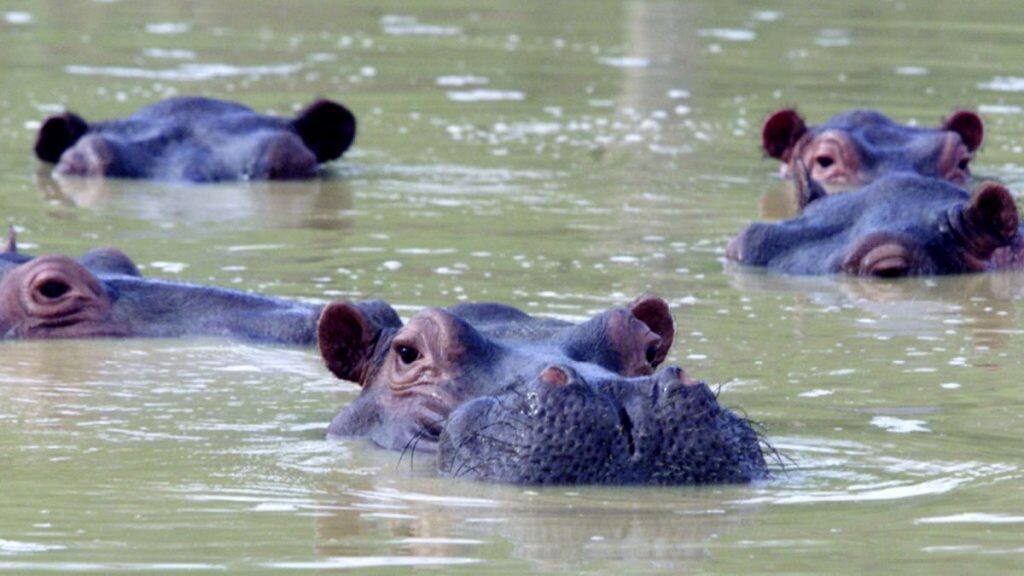
The animals began to fend for themselves and also began procreating. They also began to spread beyond Escobar’s Hacienda Napoles ranch. Over the years, they have multiplied to a few hundred and are posing a threat to the country’s ecosystem.
‘Cocaine hippos’ become a nuisance in Colombia
Termed as ‘cocaine hippos’ owing to their link to Escobar, the expanding hippos soon became a tourist attraction as well as a nuisance. There are currently 160 of them, and they are estimated to grow to 1,000 by 2035. And if nothing is done, there will be 1,300 by 2060.
These 9,000-pound animals began to eat everything in their sight, displacing other animals and affecting the flora and fauna of the region. In 2022, Carlos Correa, who was then Colombia’s environment minister, blacklisted hippos as an invasive species.
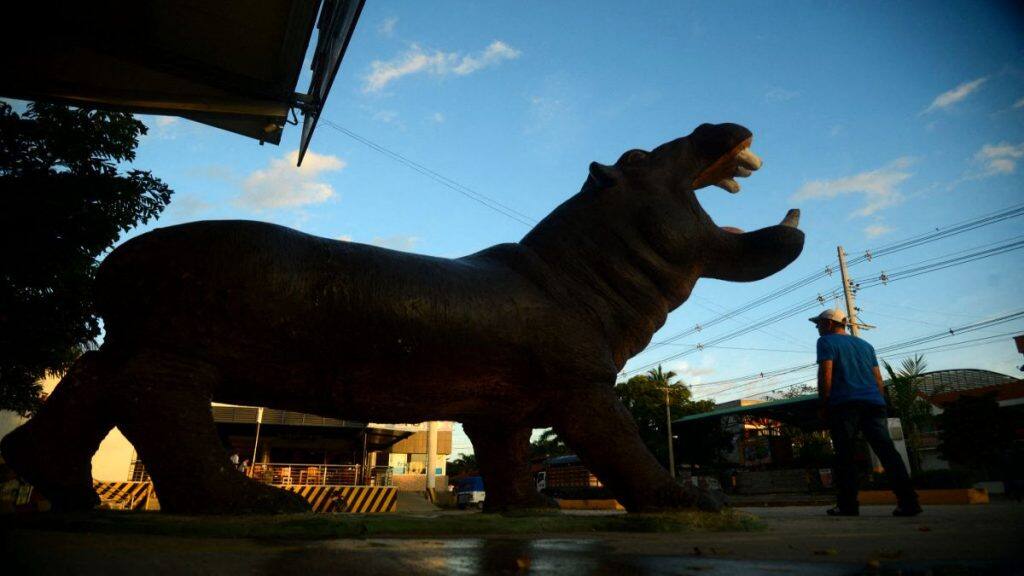
“They’re highly dangerous and territorial,” he told a news conference. “We are calling on people to be very careful. These are not pets. They can do a lot of damage.”
The presence of these animals in Colombia has also resulted in violent encounters. The ‘cocaine hippos’ have attacked farmers and destroyed crops. They have also ambled into the yard of a school, sending frightened teachers and children running for cover.
The ‘cocaine hippos’ also pose a threat to the country’s ecosystem. A single hippo produces up to nine kilogrammes of faeces. Experts fear that these faeces could result in the killing of aquatic life. A report in Nature magazine quotes a 2019 paper that showed that lakes with hippos contain more nutrients and organic matter that favour the growth of cyanobacteria, aquatic microbes associated with toxic algal blooms. These blooms can reduce water quality and cause mass fish deaths, affecting local fishing communities.
Moreover, they could displace otters, West Indian manatees, capybaras, and turtles. “If I lived in Colombia, I would be worried,” Rebecca Lewison, an ecologist at San Diego State University’s Coastal and Marine Institute, was quoted as telling The Guardian. “Colombia has great biodiversity, and this is not a system that has evolved to support a mega-herbivore.”
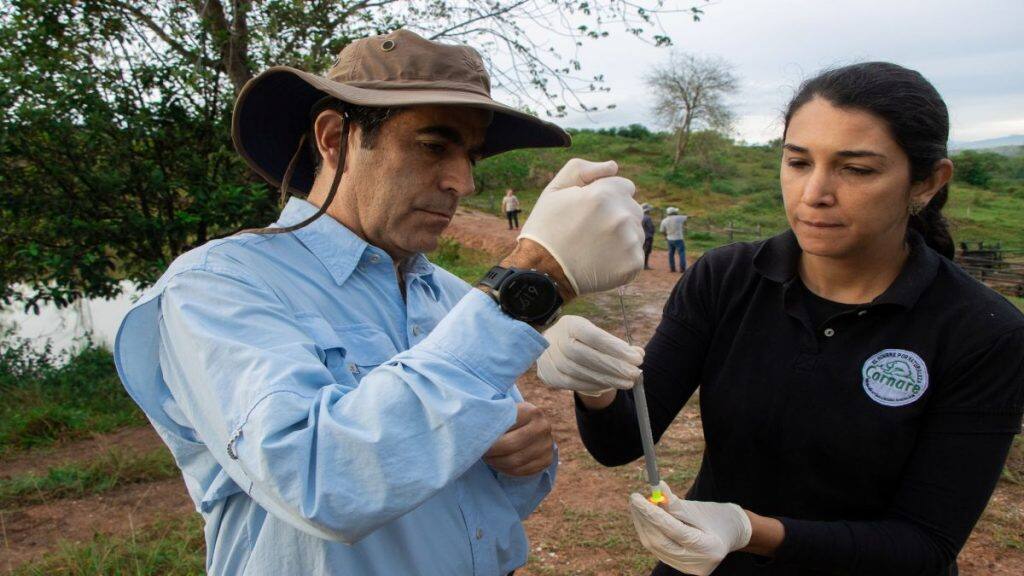
As a result of this, Colombia began to sterilise the hippos in 2021. However, after two years of failed attempts at relocation and sterilisation, the nation announced, two weeks ago, that it would euthanise 80 of the ‘cocaine hippos’.
“Without this action, it is impossible to control them,” said Colombia’s Environment Minister Irene Vélez at a press conference.
However, this move has attracted criticism from animal lovers ad activists. Andrea Padilla, a senator and animal rights activist, described the plan to cull the hippos as a “cruel” decision and accused government officials of trying to take the easy way out.
“Killings and massacres will never be acceptable,” Padilla wrote on X. “These are healthy creatures who are victims of the negligence of government entities.”
Anant Ambani steps in to save ‘cocaine hippos’
Following Colombia’s decision to cull 80 hippos, Indian billionaire Anant Ambani announced that his wildlife sanctuary, Vantara, was willing to take in the animals and event sent a formal proposal for the translocation of the animals.
“These 80 hippos did not choose where to be born, nor did they create the circumstances they now face,” said Ambani in a social media post. These animals “are living, sentient beings, and if we have the capacity to save them through a safe and humane solution, we have the responsibility to try.”
Vantara’s CEO, Vivaan Karani, also said in a statement: “We are willing to receive and care for these hippos in a specially designed and enriched environment, conceived to guarantee their well-being and, at the same time, reflect the key characteristics of their current habitat.”
The vast zoo in Gujarat is already home to hundreds of elephants, as well as 50 bears, 160 tigers, 200 lions, 250 leopards, and 900 crocodiles, among other animals, according to India’s Central Zoo Authority.
As of now, Colombia’s government has yet to respond to Ambani’s offer to save the ‘cocaine hippos’. We will have to wait and watch to see what the future holds for these ‘cocaine hippos’.
With inputs from agencies

Military drones & police check-ups: How Sri Lanka is fighting against worst dengue outbreak in a decade
How Facebook job ad lured 2 Karnataka men into Myanmar cyber scam camp
Why is India seeing 95% cloud cover despite a Super El Niño?
What is CJP’s fourth demand to the government as protests in Delhi intensify?
The new geography of war: Why the Houthis can no longer be ignored