


Ferrari unveils first-ever EV with ex-Apple designer’s touch, internet calls it ‘ugly’
After years of anticipation, Ferrari has finally entered the electric era with the launch of the Luce, a radical five-seater EV designed with former Apple design chief Jony Ive’s agency. The luxury car has already divided opinion online, while signalling Ferrari’s boldest design and engineering gamble in decades.

Ferrari has finally done what many enthusiasts once believed the company would resist for as long as possible: it has built a fully electric car.
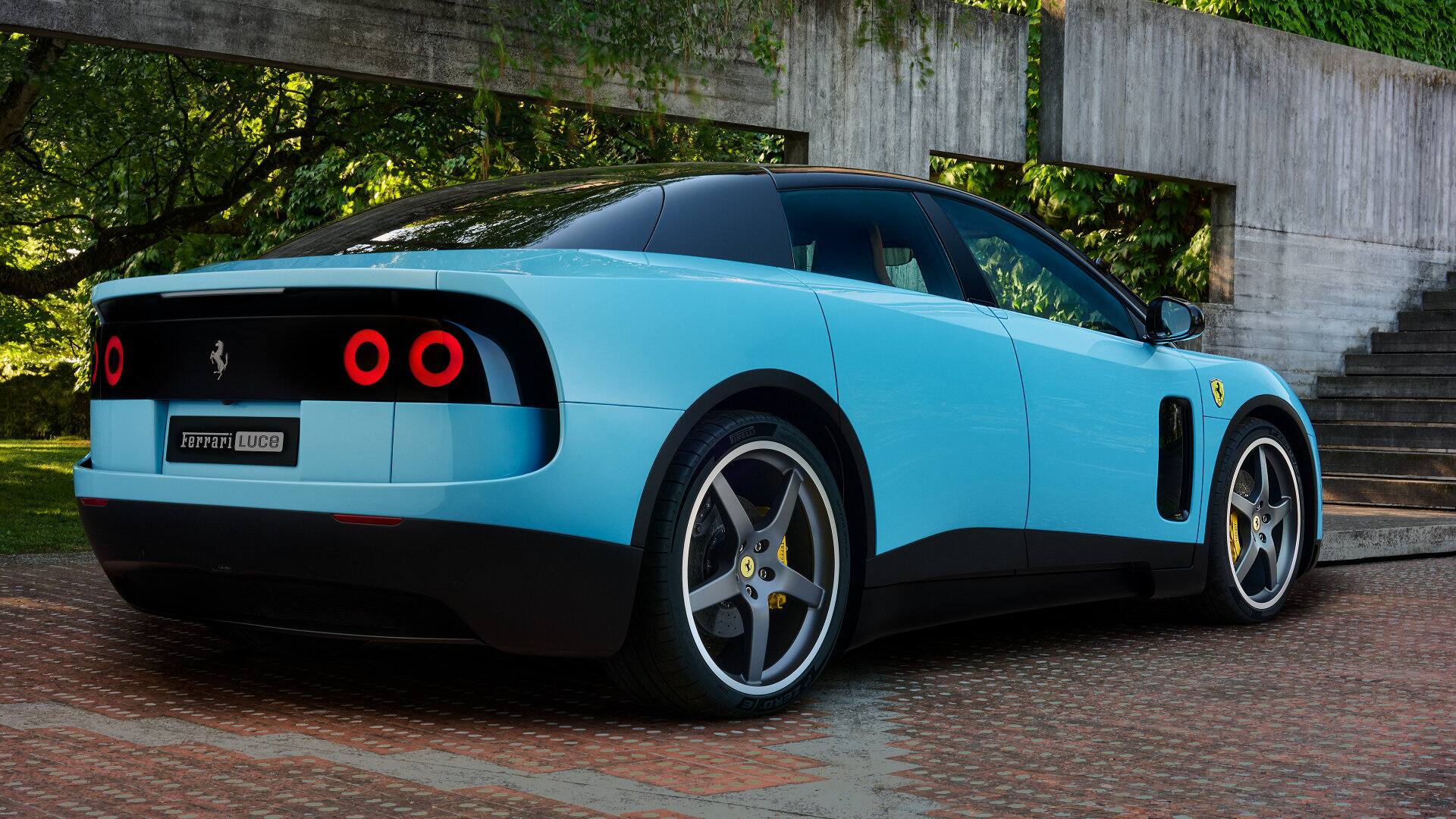
But rather than cautiously easing into the EV era, the Italian marque has arrived with something dramatically different. The new Ferrari Luce, priced at around $640,000 (£474,320), is not only the company’s first electric vehicle but also its first-ever five-seater road car, marking one of the biggest departures from Ferrari tradition in decades.
The launch in Rome immediately triggered intense debate online. Some users praised the design as “an absolute masterclass”, while others dismissed it as “straight to the junkyard trash”. That polarised reaction may be exactly what Ferrari expected.
After all, the Luce was never designed to blend quietly into the background.
 More from Auto
Ferrari’s eight-year journey to an EV
The roots of the Luce stretch back to 2018, when former Ferrari chairman Sergio Marchionne first hinted that the company could eventually challenge Tesla in the electric supercar space.
“If there is an electric supercar to be built, then Ferrari will be the first,” Marchionne declared at the Detroit Auto Show.
Ferrari, however, did not become the first luxury performance brand to embrace electrification. Rivals including Porsche, Tesla and Rimac reached the market sooner, while Lamborghini and several other supercar manufacturers later slowed their EV ambitions amid weaker-than-expected demand and growing competition from Chinese automakers.
Ferrari instead spent years refining the project behind closed doors.
Chief executive Benedetto Vigna revealed that the Luce took roughly five years to develop. During that period, Ferrari gradually teased details about the vehicle, from its powertrain to its unusual design collaboration with LoveFrom, the creative agency founded by former Apple design chief Sir Jony Ive and designer Marc Newson.
That partnership alone signalled that Ferrari wanted the Luce to feel less like a traditional supercar and more like a complete reinvention of what a Ferrari could become in the electric age.
Hypercar performance in a five-seat body
Despite its unconventional appearance, Ferrari insists the Luce still delivers the performance expected from the prancing horse badge.
The EV uses four electric motors, one powering each wheel, generating a combined output of more than 1,000 horsepower in Boost mode. Ferrari claims the car can sprint from 0 to 62 mph in around 2.5 seconds before reaching a top speed of 192 mph.
Underneath sits a massive 122 kWh battery pack paired with an 800-volt architecture capable of charging at up to 350 kW. Ferrari says the Luce can travel more than 329 miles on a single charge.
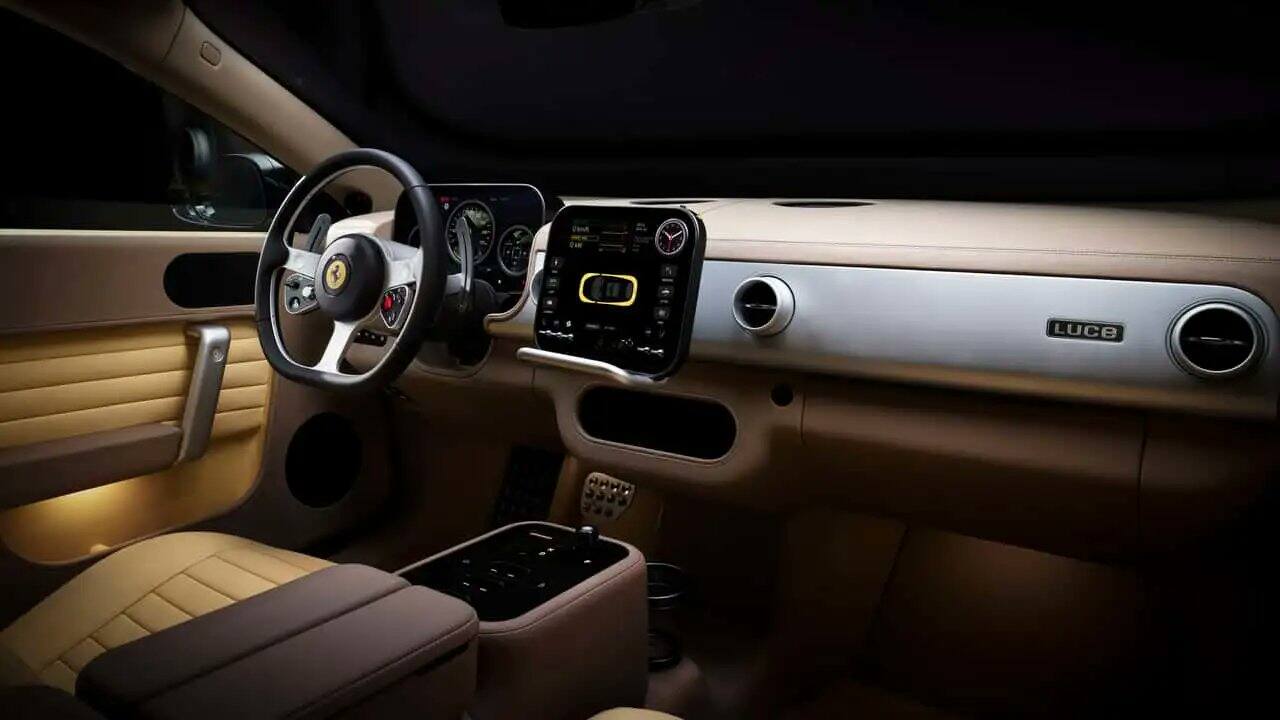
The company has also focused heavily on handling technology. Each wheel receives independently controlled steering, braking, suspension and power delivery, while rear-wheel steering allows additional agility despite the vehicle’s nearly 2,260 kg weight.
Ferrari engineers even developed a new approach to sound. Rather than artificially creating fake engine noise through speakers, the Luce uses an accelerometer mounted to the rear axle that captures vibrations from the motors and transforms them into audio inside the cabin.
Ferrari sound quality manager Antonio Palermo described the setup as “an instrument”.
Jony Ive’s influence changes Ferrari’s design language
Perhaps the most controversial element of the Luce is its design.
Ferrari rarely allows outside creative influence over its cars, yet the company gave LoveFrom significant freedom to shape the EV’s visual identity. The result is a vehicle that looks unlike any Ferrari before it.
The sweeping glass-heavy silhouette extends unusually far down the nose, improving aerodynamics while creating what Ferrari calls its “lowest drag coefficient” ever for a road car. To maintain the uninterrupted glass design, the windscreen wipers were moved from their traditional lower position to the sides near the A-pillars.
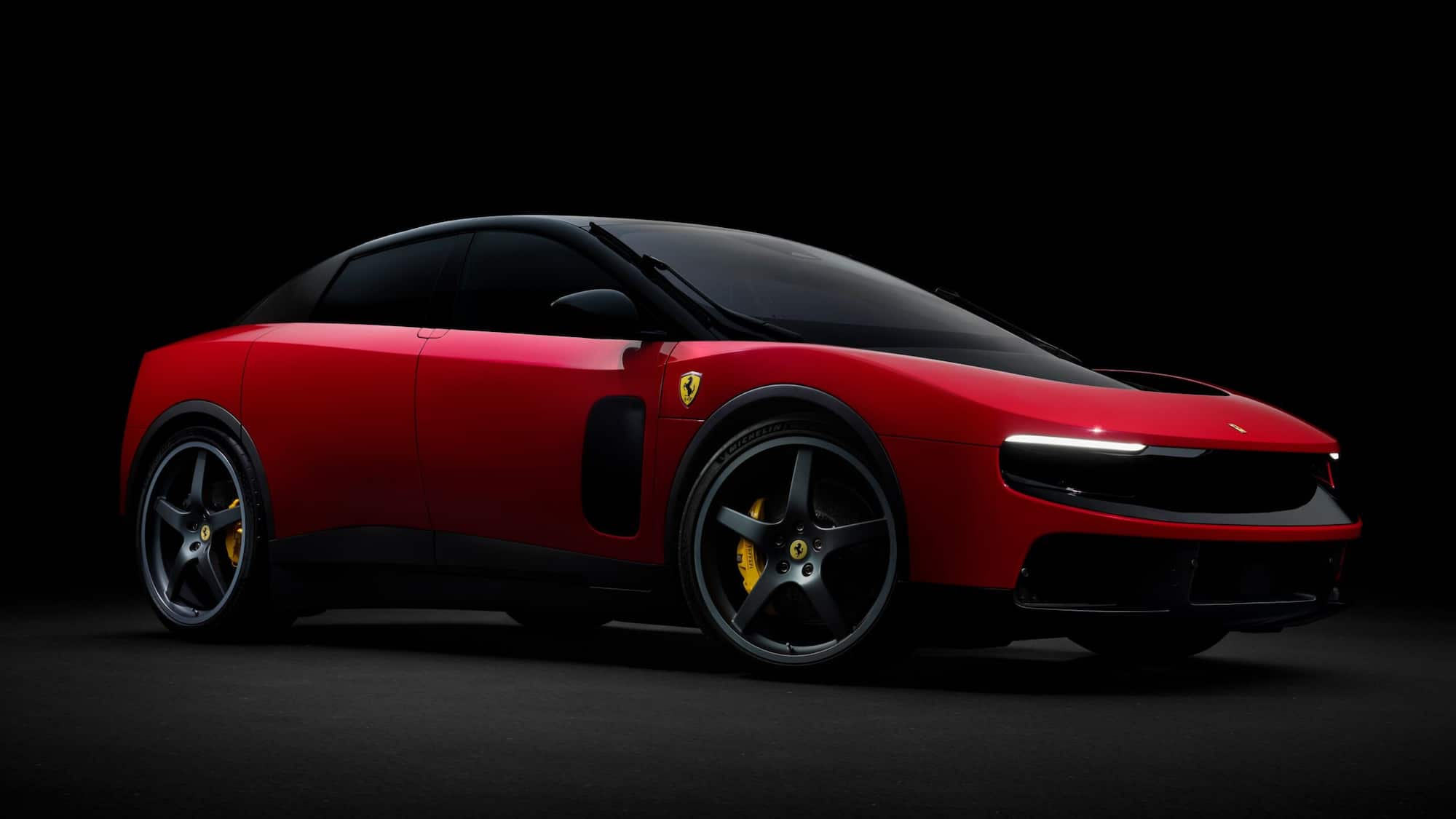
The Luce also features massive staggered wheels — 23 inches at the front and 24 inches at the rear — alongside transparent light panels, halo-inspired rear lamps and rear suicide doors.
Some observers see traces of Tesla, Alfa Romeo and classic Ferrari styling blended together. Others view it as a dramatic break from Ferrari’s identity.
Over the top, X users are also posting AI-generated images of how it could have been better than it actually is.
Ferrari disagrees with the criticism. The company says working with LoveFrom introduced a fresh design perspective while still delivering “an authentic Ferrari experience”.
Whether traditional Ferrari loyalists embrace the Luce remains uncertain. But after years of hesitation around EVs, Ferrari has now made one thing clear: its electric future will not play safe.

Tesla's Cybercab to feature built-in Starlink antenna, bringing satellite internet to robotaxis
US rejects Tesla bid to avoid recall of nearly 20,000 vehicles over headlight issue
IIT Kanpur study finds no evidence E20 petrol damages engines, says mileage impact is minimal
As Nissan expands its line-up from one model to four, the carmaker is betting on affordable SUVs, exports and ICE volumes before making its EV play
Volkswagen layoffs could hit 1 lakh as CEO warns of deeper cost overhaul