


Inside the Delhi EV Policy 2026-30 draft and the road to total electrification
As Delhi unveils its ambitious EV Policy 2026-30, Firstpost explores the ground reality of the city's electric transition. Featuring exclusive insights from Mahindra dealer Chetan Virmani, we dive into premium segment growth, infrastructure challenges, and the impact of upcoming mandates on Delhi’s automotive landscape

The expiration of Delhi’s foundational Electric Vehicle (EV) Policy, the Government of the National Capital Territory (GNCTD) has officially unveiled the draft for its successor: the Delhi EV Policy 2026-30.
This 4-year roadmap arrives at a critical moment for the city, which currently leads the country in EV registration density but faces a stubborn reliance on internal combustion engine (ICE) vehicles in the mass-market segments.
The draft policy, currently under public review, proposes a radical shift in the city’s mobility landscape, including a contentious mandate to ban the registration of new petrol-powered two-wheelers by April 1, 2028.
To understand the ground reality of this transition, Firstpost spoke with Chetan Virmani, owner and managing director of Indraprastha Automobiles Pvt Ltd — Delhi’s leading Mahindra vehicle dealerships and a prominent dealer for Jawa motorcycles.
 More from Auto
The data tells a tale of two segments
The numbers from the last financial year (FY 2025-26) suggest that Delhi is no longer just "testing the waters" with electric mobility.
According to industry data, total EV registrations in the capital jumped 29 per cent to reach 1.07 lakh units. However, the internal metrics from top dealerships like Indraprastha Automobiles reveal a more nuanced story of market penetration.
In the previous financial year, Mahindra Electric Automobile Limited (MEAL) recorded 3,811 sales in Delhi. In a near-neck-and-neck race for market leadership, Tata Motors’ electric division recorded 4,289 sales in the same period.
For both titans of the Indian automotive industry, EV penetration in Delhi has settled at approximately 14.5 per cent — meaning for every 100 vehicles sold by Mahindra or Tata in the city, nearly 15 are now fully electric.
"At our dealership alone, we have sold more than 1000 EV cars since the inception of MEAL," Virmani notes during the conversation with Firstpost. "So we have already crossed the 1,000-unit milestone. This is a significant indicator of intent."
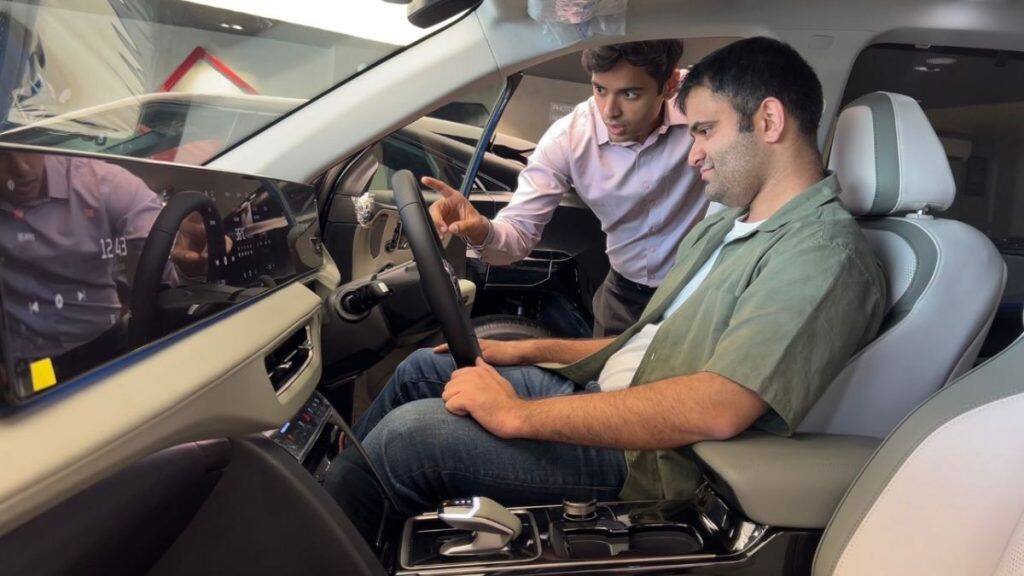
The most striking data point, however, lies in the 25 lakh+ premium segment. Last year, Delhi saw the sale of approximately 21,000 vehicles priced above 25 lakh. Out of these, 3,430 were Mahindra EVs.
This places MEAL’s market share in the high-end bracket between 15-20 per cent.
"EV adoption today is strongest in the 25 lakh+ segment because these customers can easily manage home charging," Virmani explains.
"The demand is clearly there. The real 'unlock' for the rest of the market will happen only as public charging infrastructure scales to meet the confidence levels of the premium buyer."
From "secondary" to "primary" status
A year ago, the prevailing wisdom was that an EV was a "city runabout" — a second or third car in a wealthy household. Virmani insists that this narrative has fundamentally shifted in the last six months.
"In our experience, EV adoption in Delhi is actually happening faster than it appears on the surface," he says.
"Within Mahindra, for most of last year, we had only two EV products compared to a much wider ICE portfolio of nearly seven product lines. Despite that, we’ve seen EV penetration reach close to 15 percent, which is a strong start."
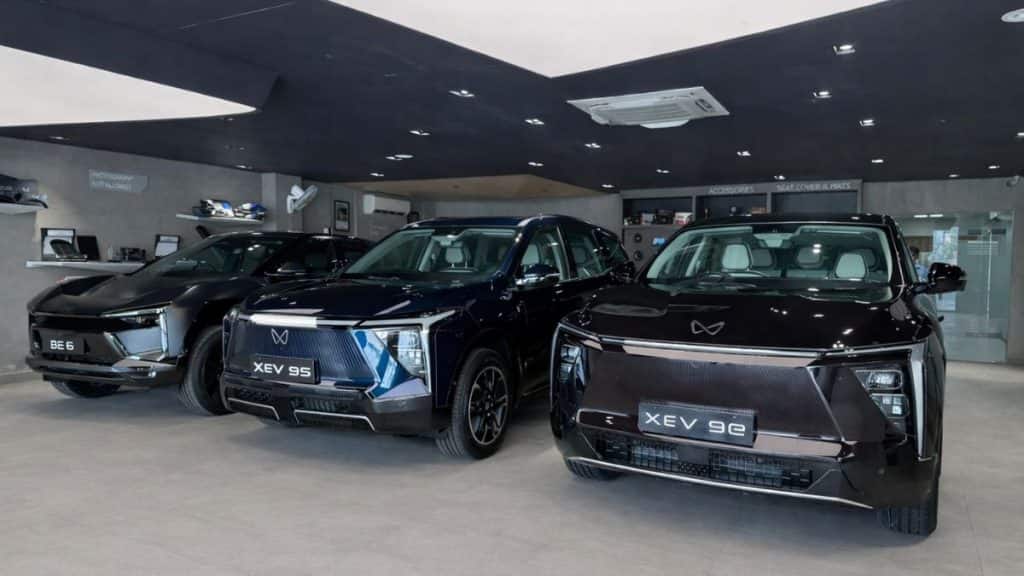
Virmani points out that in the second half of the last financial year, customers began evaluating EVs as their primary vehicle. This shift has forced dealerships to abandon traditional sales tactics in favour of "experience-led" marketing.
"We realised early on that EVs are not an impulse purchase. Customers need time behind the wheel to truly understand the product," Virmani says.
"One thing we’ve done very differently is focus heavily on extended, real-world experiences. Instead of short city runs, we organised curated long-drive experiences where potential customers would drive the vehicle to our Sonipat outlet. This allowed them to experience range, comfort, and usability in real conditions. Once a customer spends that kind of time with the vehicle, the decision-making becomes much easier."
To support this, Indraprastha Automobiles and other MEAL-affiliated outlets have created dedicated EV teams. The rationale is that EV customers understandably require more time to understand the nuances of regenerative braking, charging cycles, and software-led features.
Inside the 2026-30 EV draft
The draft policy released by the Delhi Transport Department on April 11 seeks to institutionalise this growth.
Delhi Transport Minister Pankaj Kumar Singh has proposed a "graded incentive structure" that prioritises early adoption while signalling a long-term withdrawal of subsidies as the market matures.
Key highlights of the draft EV Policy 2026-30 include:
- Two-wheeler mandate: From April 1, 2028, only electric two-wheelers will be permitted for new registration in Delhi.
- Three-wheeler mandate: A tighter deadline of January 1, 2027, has been set for the 100 per cent electrification of new three-wheeler (L5) registrations.
- Subsidies: For electric 2-wheelers (up to ₹2.25 lakh ex-factory), the subsidy starts at ₹10,000 per kWh (capped at ₹30,000) in the first year, dropping to ₹3,300 per kWh by the third year.
- Tax exemptions: 100 per cent exemption from road tax and registration fees for electric cars priced up to ₹30 lakh until March 31, 2030.
- Scrappage bonus: Incentives of up to ₹1 lakh for those scrapping old BS-IV or older vehicles to buy a new EV.
Following the draft's release, Singh said, "The policy has been crafted with a citizen-first approach, ensuring maximum benefits, especially for middle- and lower-income groups, while eliminating any inconvenience or financial strain."
Delhi Chief Minister Rekha Gupta has also sought to assure the transparency of the process, stating, "Under this policy, all purchase incentives will be provided directly to eligible beneficiaries through Direct Benefit Transfer (DBT). This will include individuals, proprietorship firms, agencies, and companies that are residents of Delhi and whose vehicles are registered in Delhi."
Why a blanket ban might stumble
While the policy is being hailed as "ambitious" by environmental groups, automotive veterans like Virmani are raising potential red flags regarding the 2028 two-wheeler mandate — particularly for non-commuter motorcycles.
"Overall, the draft policy is quite comprehensive," Virmani admits.
"But as a dealer for Jawa, I see a specific challenge. The non-commuter segment, especially 250cc-plus motorcycles, is very different from daily-use scooters. Today, there are very limited EV options in this category that can match the performance, range, or soul of a classic motorcycle," he opines.
"A blanket rule could impact this segment unfairly. A separate or phased approach here would make the transition smoother."
This sentiment is echoed by many in the industry who argue that "Technology Neutrality" — allowing for hybrids or carbon-neutral fuels in high-performance segments — might be a more pragmatic approach than an outright registration ban.
The infrastructure gap calls for reliability over quantity
The GNCTD has made significant strides in charging infrastructure, with over 2,300 public charging points currently operational and another 900 in the pipeline. However, for a city with over 1.07 lakh EVs, the density remains low.
Virmani argues that the conversation needs to move beyond just the number of chargers.
"On charging infrastructure, the intent is strong, but it would help to have clearer targets," he says.
"For example, how many chargers should be available in a certain area, how quickly they will be installed, and what level of uptime or fast-charging access is expected? Reliability is just as critical as expansion. Customers need to know that chargers will be operational when required. There has been clear improvement in uptime over the past year, but further consistency will help build trust."
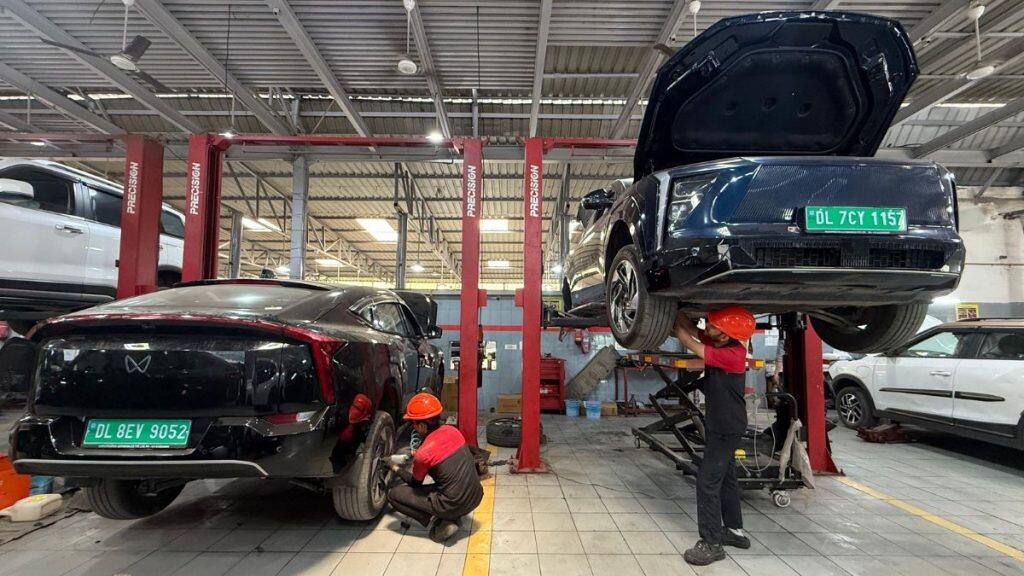
The draft policy does attempt to address this by giving Delhi Transco Limited (DTL) a central role in planning a "Right to Charge" framework, which would mandate residential societies to allow the installation of charging points.
However, the implementation of such mandates in Delhi’s complex housing landscape remains to be seen.
The road to 2030
The success of the 2026-30 policy will ultimately depend on whether the government can bridge the gap between the premium early adopters and the price-sensitive mass market.
Currently, petrol and ethanol-blended vehicles still dominate 73.1 per cent of Delhi’s total vehicle registrations.
The "real-world" data from dealerships like Indraprastha Automobiles suggests that the appetite for EVs is no longer in question.
With 12.7 per cent of all new registrations in Delhi already being electric, the city is well on its way to its internal targets.
But as Virmani notes, the "below 15 lakh" segment remains the final frontier.
"The EV adoption seems slow because it has not penetrated well in the wider segment yet. That may be due to the lack of reliable options in that range," Virmani concludes.
As the 30-day public window for feedback on the draft policy remains open, the Delhi government must push the envelope on air quality through strict mandates while ensuring that the automotive ecosystem — from dealers to the average commuter — is not left stranded by a transition that moves faster than the technology can support.
Also Watch:
Inhaling global affairs on a daily basis, Anmol likes to cover stories that intrigue him, especially around history, climate change and polo. He has far too many disparate interests with a constant itch for travel. You can follow him on X (_anmol_singla), and please feel free to reach out to him at anmol.singla@nw18.com for tips, feedback or travel recommendations

Tesla's Cybercab to feature built-in Starlink antenna, bringing satellite internet to robotaxis
US rejects Tesla bid to avoid recall of nearly 20,000 vehicles over headlight issue
IIT Kanpur study finds no evidence E20 petrol damages engines, says mileage impact is minimal
As Nissan expands its line-up from one model to four, the carmaker is betting on affordable SUVs, exports and ICE volumes before making its EV play
Volkswagen layoffs could hit 1 lakh as CEO warns of deeper cost overhaul