
Advertisement


Sections
Will the agreement on food supply result in a moratorium in Russia-Ukraine war?
The agreement between Russia and Ukraine to export food grains to the international market is a welcome move but it is early to say that this agreement will provide any tangible steps towards resolving the dispute

Russia and Ukraine finally reached an agreement to ensure the supply of food grains to the global market after the war broke out in January 2022. This agreement between the two countries was brokered by United Nations. Though they reached an agreement to deliver foodgrains, the two countries are however in no mood to end the war. This war reminds the protracted war between Iraq-Iran in the 1980s. However, the agreement between Russia and Ukraine over the supply of foodgrains generates specific hypothetical questions. These are:![UN Secretary General Antonio Guterres speaks during a UN Security Council high-level meeting on COVID-19 recovery focusing on vaccinations. AP]() UN secretary-general Antonio Guterres. AP[/caption]As has been observed over time, the Black Sea region in which both Russia and Ukraine are located because of its location and connectivity with the Mediterranean Sea, provided a significant artery for the supply of food grains to West Asia, North Africa and Europe. Historically, the Black Sea was also a significant corridor for transporting Russian energy to the European market. However, the onset of war resulted in a massive crisis for these regions, as the UN Global Crisis Response Group report suggests. Highlighting the impact of the Russia-Ukraine War on the global food crisis, the UN Report mentions that “An estimated 1.6 billion people in 94 countries are exposed to at least one dimension of the crisis, and about 1.2 billion of them live in ‘perfect-storm’ countries which are severely vulnerable to all three dimensions – food, energy and finance – of the cost-of-living crisis”. If one goes by the UN Report, it can be highlighted that the disturbing picture emerging from the war and has implications for global food security. Studies suggest that the food crisis's severity took place mainly because of three counts. These are a) onset of war between Russia-Ukraine at harvesting time. This affected to a large extent food production; b) most of the ports of Ukraine and Russia are under the vortex of war which to a great extent affected their transportation to the destined markets including Africa and Europe; c) even the onset of war and the subsequent sanctions also greatly affected the transhipment of food grains to the international market.All these three factors, as mentioned above are responsible for the global food crisis. But the moot question that requires closer attention is whether the present agreement signed between Russia and Ukraine for exporting food grains to the world market is the first step toward peace-building exercises or whether war may continue further. This is the unresolved issue which needs to be looked into further to locate the security situation in the Slavic part of post-Soviet Eurasia.[caption id="attachment_10717081" align="alignnone" width="640"]
UN secretary-general Antonio Guterres. AP[/caption]As has been observed over time, the Black Sea region in which both Russia and Ukraine are located because of its location and connectivity with the Mediterranean Sea, provided a significant artery for the supply of food grains to West Asia, North Africa and Europe. Historically, the Black Sea was also a significant corridor for transporting Russian energy to the European market. However, the onset of war resulted in a massive crisis for these regions, as the UN Global Crisis Response Group report suggests. Highlighting the impact of the Russia-Ukraine War on the global food crisis, the UN Report mentions that “An estimated 1.6 billion people in 94 countries are exposed to at least one dimension of the crisis, and about 1.2 billion of them live in ‘perfect-storm’ countries which are severely vulnerable to all three dimensions – food, energy and finance – of the cost-of-living crisis”. If one goes by the UN Report, it can be highlighted that the disturbing picture emerging from the war and has implications for global food security. Studies suggest that the food crisis's severity took place mainly because of three counts. These are a) onset of war between Russia-Ukraine at harvesting time. This affected to a large extent food production; b) most of the ports of Ukraine and Russia are under the vortex of war which to a great extent affected their transportation to the destined markets including Africa and Europe; c) even the onset of war and the subsequent sanctions also greatly affected the transhipment of food grains to the international market.All these three factors, as mentioned above are responsible for the global food crisis. But the moot question that requires closer attention is whether the present agreement signed between Russia and Ukraine for exporting food grains to the world market is the first step toward peace-building exercises or whether war may continue further. This is the unresolved issue which needs to be looked into further to locate the security situation in the Slavic part of post-Soviet Eurasia.[caption id="attachment_10717081" align="alignnone" width="640"]![A worker displays grains of wheat inside a mill of refined wheat flour at Khanna in Punjab. AFP]() Representational image. AFP[/caption]As reported, despite the agreement to cease hostility in and around ports mainly located in the Black Sea, the conflict between the two countries continues. This shows the futility of the agreement. It has been observed that the war between the two countries intensified soon after the agreement was signed. The worst hit, however, is the Ukrainian port of Odessa, considered the major port on the Black Sea Coast, which traditionally transports food grains worldwide. With both sides blaming each other for the escalation of conflict along with the violation of the UN Agreement, there is uncertainty over the future of war and the supply of foodgrains to the world market.Along with the foodgrains, the other sector hit severely due to the War is the energy supply to Europe. In fact, the EU countries are hardest hit because of oil and gas supply disruption. As reported in the news papers, the supply cut by Gazprom to Germany poses a severe threat to the German economy, and common people are the worst hit. This led to the escalation of energy prices in Europe. Though the EU members are adopting mechanisms to reduce their energy dependency on Russia, it appears unlikely to look at their greater reliance over time on Russia. Thus Russia uses energy as a tool of geopolitical leverage over Europe. However, if this process of disrupting the energy supply chain to Europe by Russia continues, it will have a four-fold implications for Europe’s energy sector. These are a) Europe will seek alternative energy market which includes the US and other West Asian countries particularly from the Eastern Mediterranean Region ; b) as reported the EU countries are also seeking to augment energy supply from the Caspian Basin reserves. It has been reported that the Southern Gas corridor linking Caspian Basin with Europe is emerging as the most lucrative one looking at the current situation. In 2022 it will deliver “ 10.5 BCM” of gas. This may temporarily ease Europe’s gas demand. Similarly, Kazakhstan is also looking to export its energy through the Trans-Caspian pipeline to Europe. Though Asthana’s move in this regard irked Russia; c) under extreme situation EU countries may rethink over for nuclear energy though they have abandoned it for long ;d) EU countries are also increasingly focussing on newable energy to meet their energy requirement. At the global level, the energy price is skyrocketing because of the onset of the war.One must mention here that the war is showing no sign of ending at the strategic level. On the other hand, one is witnessing Russia intensifying its attack on the Eastern parts of Ukraine, including Donetsk and Luhansk. It is also true that the Western arms aid to Ukraine has also seen a marked increase in recent months. [caption id="attachment_10880911" align="alignnone" width="640"]
Representational image. AFP[/caption]As reported, despite the agreement to cease hostility in and around ports mainly located in the Black Sea, the conflict between the two countries continues. This shows the futility of the agreement. It has been observed that the war between the two countries intensified soon after the agreement was signed. The worst hit, however, is the Ukrainian port of Odessa, considered the major port on the Black Sea Coast, which traditionally transports food grains worldwide. With both sides blaming each other for the escalation of conflict along with the violation of the UN Agreement, there is uncertainty over the future of war and the supply of foodgrains to the world market.Along with the foodgrains, the other sector hit severely due to the War is the energy supply to Europe. In fact, the EU countries are hardest hit because of oil and gas supply disruption. As reported in the news papers, the supply cut by Gazprom to Germany poses a severe threat to the German economy, and common people are the worst hit. This led to the escalation of energy prices in Europe. Though the EU members are adopting mechanisms to reduce their energy dependency on Russia, it appears unlikely to look at their greater reliance over time on Russia. Thus Russia uses energy as a tool of geopolitical leverage over Europe. However, if this process of disrupting the energy supply chain to Europe by Russia continues, it will have a four-fold implications for Europe’s energy sector. These are a) Europe will seek alternative energy market which includes the US and other West Asian countries particularly from the Eastern Mediterranean Region ; b) as reported the EU countries are also seeking to augment energy supply from the Caspian Basin reserves. It has been reported that the Southern Gas corridor linking Caspian Basin with Europe is emerging as the most lucrative one looking at the current situation. In 2022 it will deliver “ 10.5 BCM” of gas. This may temporarily ease Europe’s gas demand. Similarly, Kazakhstan is also looking to export its energy through the Trans-Caspian pipeline to Europe. Though Asthana’s move in this regard irked Russia; c) under extreme situation EU countries may rethink over for nuclear energy though they have abandoned it for long ;d) EU countries are also increasingly focussing on newable energy to meet their energy requirement. At the global level, the energy price is skyrocketing because of the onset of the war.One must mention here that the war is showing no sign of ending at the strategic level. On the other hand, one is witnessing Russia intensifying its attack on the Eastern parts of Ukraine, including Donetsk and Luhansk. It is also true that the Western arms aid to Ukraine has also seen a marked increase in recent months. [caption id="attachment_10880911" align="alignnone" width="640"]![Representational image. AFP]() Representational image. AFP[/caption]This greatly augmented Ukraine’s military capability in its war against Russia. The Western countries are also interested in putting Russia on a backfoot. The present war also provides a historic opportunity them to in waging a proxy war with Russia through Ukraine. This can be evident from NATO’s policy posture towards Russia. As the Bloc underlines, “The Alliance will continue to respond to Russian threats and hostile actions in a united and responsible way”. Similarly, the EU also took a hostile position against Russia despite the UN-brokered agreement for exporting food grains. As EU Representative Josep Borrell welcomed the move as the “critical step forward in efforts to overcome the global food insecurity” but at the same time he took a dig at Russia when he criticized “Russia’s unprovoked and unjustified military aggression against Ukraine is having a devastating global impact”.Thus, in the coming days, one may see a marked increase in the intensity of the conflict between the two sides. The UN mediation may not likely have any significant impact on the war. Russia is also not in a mood to give up its justification for war against Ukraine. In an interview with the Russian News Agency RT, Russia's Foreign Minister Sergei Lavrov squarely blamed the West for Russia’s war with Ukraine. He stated “For many years, we have been cautioning the West against turning Ukraine into an anti-Russia, with NATO infiltrating that country, against creating direct military threats to our security. Everyone is perfectly aware of this”.However, a moot question that needs to be discussed is whether the war will continue further or whether both sides are taking steps to bring an amicable settlement to the disputes. In this regard, it is pertinent to mention that there are three distinct possibilities that may arise that may end the current war between Russia and Ukraine. These measures are:
Representational image. AFP[/caption]This greatly augmented Ukraine’s military capability in its war against Russia. The Western countries are also interested in putting Russia on a backfoot. The present war also provides a historic opportunity them to in waging a proxy war with Russia through Ukraine. This can be evident from NATO’s policy posture towards Russia. As the Bloc underlines, “The Alliance will continue to respond to Russian threats and hostile actions in a united and responsible way”. Similarly, the EU also took a hostile position against Russia despite the UN-brokered agreement for exporting food grains. As EU Representative Josep Borrell welcomed the move as the “critical step forward in efforts to overcome the global food insecurity” but at the same time he took a dig at Russia when he criticized “Russia’s unprovoked and unjustified military aggression against Ukraine is having a devastating global impact”.Thus, in the coming days, one may see a marked increase in the intensity of the conflict between the two sides. The UN mediation may not likely have any significant impact on the war. Russia is also not in a mood to give up its justification for war against Ukraine. In an interview with the Russian News Agency RT, Russia's Foreign Minister Sergei Lavrov squarely blamed the West for Russia’s war with Ukraine. He stated “For many years, we have been cautioning the West against turning Ukraine into an anti-Russia, with NATO infiltrating that country, against creating direct military threats to our security. Everyone is perfectly aware of this”.However, a moot question that needs to be discussed is whether the war will continue further or whether both sides are taking steps to bring an amicable settlement to the disputes. In this regard, it is pertinent to mention that there are three distinct possibilities that may arise that may end the current war between Russia and Ukraine. These measures are:
- a) Whether the agreement on food supply by both Moscow and Kyiv is a sign of ending the ongoing war?
- b) How far will European Union (EU) members view the agreement between the two?
- c) If an agreement between Russia and Ukraine is reached to end the hostility, will the status quo prevail before the beginning of the war is restored?
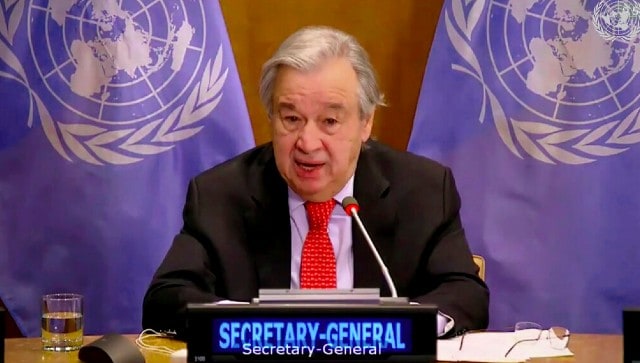 UN secretary-general Antonio Guterres. AP[/caption]As has been observed over time, the Black Sea region in which both Russia and Ukraine are located because of its location and connectivity with the Mediterranean Sea, provided a significant artery for the supply of food grains to West Asia, North Africa and Europe. Historically, the Black Sea was also a significant corridor for transporting Russian energy to the European market. However, the onset of war resulted in a massive crisis for these regions, as the UN Global Crisis Response Group report suggests. Highlighting the impact of the Russia-Ukraine War on the global food crisis, the UN Report mentions that “An estimated 1.6 billion people in 94 countries are exposed to at least one dimension of the crisis, and about 1.2 billion of them live in ‘perfect-storm’ countries which are severely vulnerable to all three dimensions – food, energy and finance – of the cost-of-living crisis”. If one goes by the UN Report, it can be highlighted that the disturbing picture emerging from the war and has implications for global food security. Studies suggest that the food crisis's severity took place mainly because of three counts. These are a) onset of war between Russia-Ukraine at harvesting time. This affected to a large extent food production; b) most of the ports of Ukraine and Russia are under the vortex of war which to a great extent affected their transportation to the destined markets including Africa and Europe; c) even the onset of war and the subsequent sanctions also greatly affected the transhipment of food grains to the international market.All these three factors, as mentioned above are responsible for the global food crisis. But the moot question that requires closer attention is whether the present agreement signed between Russia and Ukraine for exporting food grains to the world market is the first step toward peace-building exercises or whether war may continue further. This is the unresolved issue which needs to be looked into further to locate the security situation in the Slavic part of post-Soviet Eurasia.[caption id="attachment_10717081" align="alignnone" width="640"]
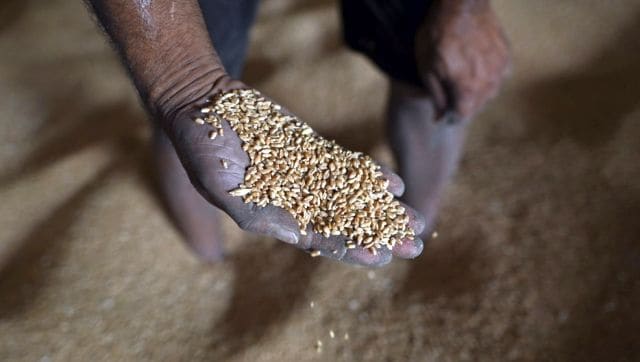 Representational image. AFP[/caption]As reported, despite the agreement to cease hostility in and around ports mainly located in the Black Sea, the conflict between the two countries continues. This shows the futility of the agreement. It has been observed that the war between the two countries intensified soon after the agreement was signed. The worst hit, however, is the Ukrainian port of Odessa, considered the major port on the Black Sea Coast, which traditionally transports food grains worldwide. With both sides blaming each other for the escalation of conflict along with the violation of the UN Agreement, there is uncertainty over the future of war and the supply of foodgrains to the world market.Along with the foodgrains, the other sector hit severely due to the War is the energy supply to Europe. In fact, the EU countries are hardest hit because of oil and gas supply disruption. As reported in the news papers, the supply cut by Gazprom to Germany poses a severe threat to the German economy, and common people are the worst hit. This led to the escalation of energy prices in Europe. Though the EU members are adopting mechanisms to reduce their energy dependency on Russia, it appears unlikely to look at their greater reliance over time on Russia. Thus Russia uses energy as a tool of geopolitical leverage over Europe. However, if this process of disrupting the energy supply chain to Europe by Russia continues, it will have a four-fold implications for Europe’s energy sector. These are a) Europe will seek alternative energy market which includes the US and other West Asian countries particularly from the Eastern Mediterranean Region ; b) as reported the EU countries are also seeking to augment energy supply from the Caspian Basin reserves. It has been reported that the Southern Gas corridor linking Caspian Basin with Europe is emerging as the most lucrative one looking at the current situation. In 2022 it will deliver “ 10.5 BCM” of gas. This may temporarily ease Europe’s gas demand. Similarly, Kazakhstan is also looking to export its energy through the Trans-Caspian pipeline to Europe. Though Asthana’s move in this regard irked Russia; c) under extreme situation EU countries may rethink over for nuclear energy though they have abandoned it for long ;d) EU countries are also increasingly focussing on newable energy to meet their energy requirement. At the global level, the energy price is skyrocketing because of the onset of the war.One must mention here that the war is showing no sign of ending at the strategic level. On the other hand, one is witnessing Russia intensifying its attack on the Eastern parts of Ukraine, including Donetsk and Luhansk. It is also true that the Western arms aid to Ukraine has also seen a marked increase in recent months. [caption id="attachment_10880911" align="alignnone" width="640"]
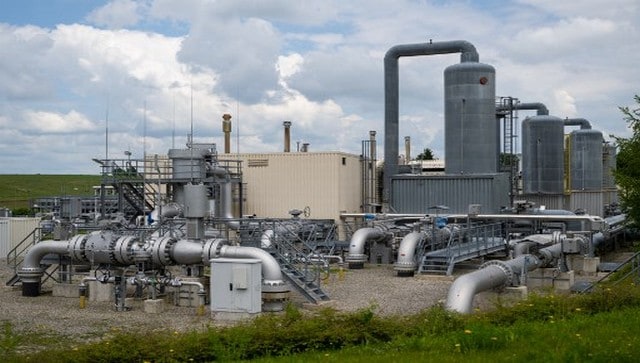 Representational image. AFP[/caption]This greatly augmented Ukraine’s military capability in its war against Russia. The Western countries are also interested in putting Russia on a backfoot. The present war also provides a historic opportunity them to in waging a proxy war with Russia through Ukraine. This can be evident from NATO’s policy posture towards Russia. As the Bloc underlines, “The Alliance will continue to respond to Russian threats and hostile actions in a united and responsible way”. Similarly, the EU also took a hostile position against Russia despite the UN-brokered agreement for exporting food grains. As EU Representative Josep Borrell welcomed the move as the “critical step forward in efforts to overcome the global food insecurity” but at the same time he took a dig at Russia when he criticized “Russia’s unprovoked and unjustified military aggression against Ukraine is having a devastating global impact”.Thus, in the coming days, one may see a marked increase in the intensity of the conflict between the two sides. The UN mediation may not likely have any significant impact on the war. Russia is also not in a mood to give up its justification for war against Ukraine. In an interview with the Russian News Agency RT, Russia's Foreign Minister Sergei Lavrov squarely blamed the West for Russia’s war with Ukraine. He stated “For many years, we have been cautioning the West against turning Ukraine into an anti-Russia, with NATO infiltrating that country, against creating direct military threats to our security. Everyone is perfectly aware of this”.However, a moot question that needs to be discussed is whether the war will continue further or whether both sides are taking steps to bring an amicable settlement to the disputes. In this regard, it is pertinent to mention that there are three distinct possibilities that may arise that may end the current war between Russia and Ukraine. These measures are:
- Status-Quo will prevail, and Russia may retreat from Ukraine’s territory.
- United Nations may involve itself in resolving all outstanding disputes between Russia and Ukraine.
- Russia may likely keep the Eastern part of Ukraine under its sphere of influence.
First Published:Aug 18, 2022, 05:30:54 IST
Advertisement
Advertisement

When Manila and Tokyo draw a line, Beijing draws a red line
What should have been a routine maritime-boundary negotiation between Japan and the Philippines has become a contest over China’s power to veto its neighbours’ strategic choices
6 min read
Bangladesh gets a new envoy to reset its India ties
The selection of a serving foreign secretary underscores the seriousness with which Dhaka now views its relationship with New Delhi
3 min read
Escalation trap to an exit strategy: How can the Iran war end?
This war is no longer about outright victory; it is about finding an exit without appearing to lose
7 min read
India must seize its demographic dividend before it fades
Adequate funding for universal education, leak-proof exams and job creation are vital to leverage India's demographic dividend before it’s too late
4 min read
Bangladesh’s instability has sharpened India’s ‘Chicken Neck’ challenge
India could consider notifying a union territory around the Siliguri Corridor consisting of parts of all bordering districts
8 min read
Advertisement
Advertisement