


The Mao syndrome: Jaishankar exposes Western paradox of trusting dictators, doubting democracies
Jaishankar’s critique of Western double standards finds a striking historical parallel in the West’s disastrous misreading of Mao Zedong

Speaking in Finland this week, External Affairs Minister S Jaishankar offered a pointed reminder of the double standards that often shape Western foreign policy. He noted that while Indian weapons have never harmed Europe, the same was not true the other way round. “No European country has been attacked with Indian weapons. I wish I could say that for European weapons vis-à-vis India,” he said.
Jaishankar’s remarks touched upon a broader pattern in international politics: democracies are frequently subjected to greater scrutiny than authoritarian regimes. Worse, democracies themselves, especially those in the West, often reserve their sharpest criticism for fellow democracies in the East while exhibiting remarkable indulgence towards authoritarian regimes.
This contradiction is neither new nor accidental. Author and historian Frank Dikötter offers a powerful reminder of this tendency in his newly released book, Red Dawn Over China. He writes that Mao Zedong’s China would not have come into existence but for liberal ambivalence, if not support.
 More from Opinion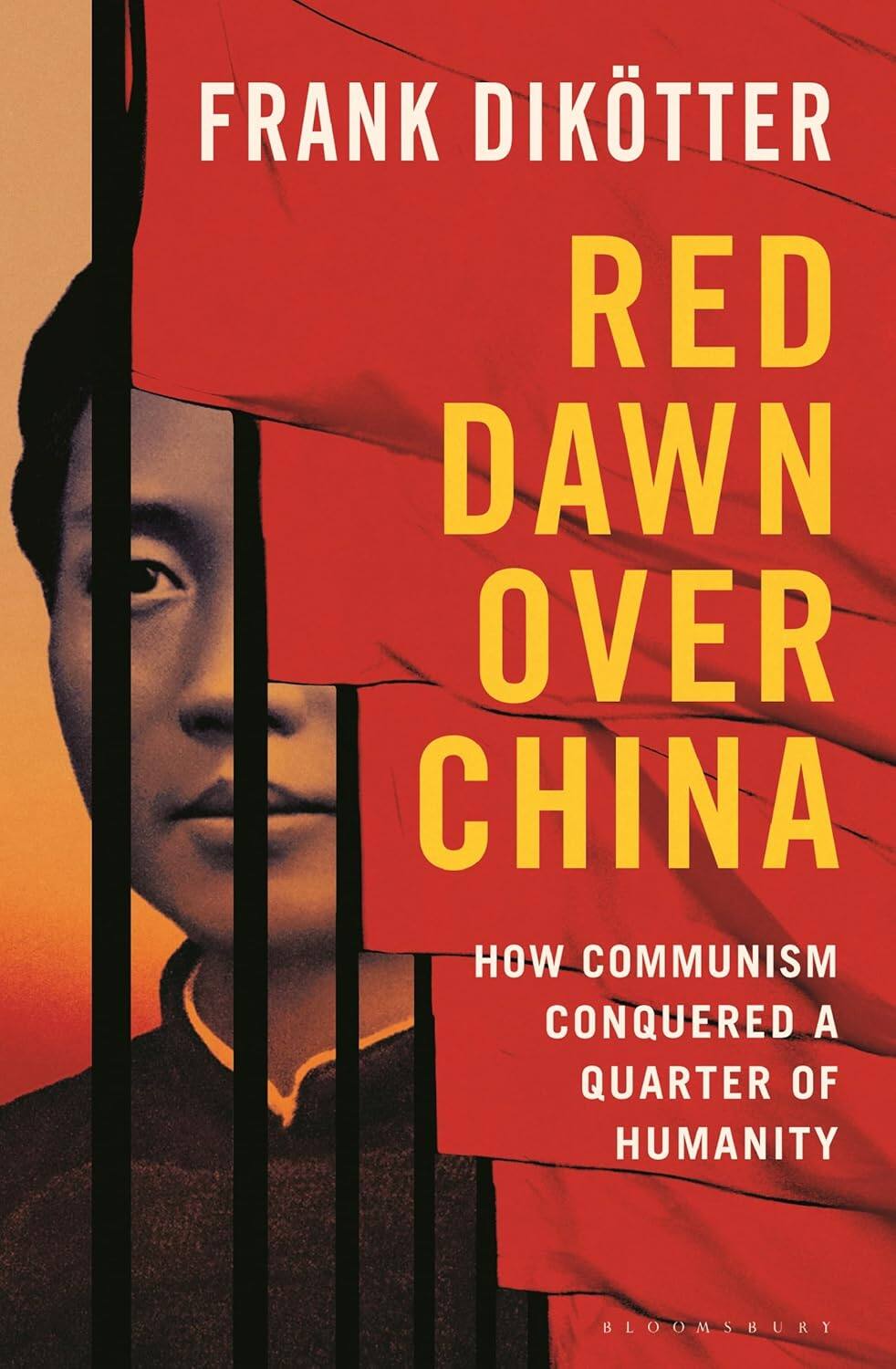
For much of the 1920s and ’30s, Mao was politically insignificant. The Chinese Communist Party was tiny, fragmented and largely irrelevant across much of China. Dikötter writes that even in the relatively industrial city of Wuxi, north of Shanghai, where more than 100,000 labourers worked in factories, the Communist Party had barely 25 members in 1929. Dikötter, in fact, shares an interesting comparison when he notes that communists in that era were more popular in Europe than in China.
“Almost every European country, with the exception of Nazi Germany, boasted a larger number of Communists as a proportion of their overall population than any province in China. Even Portugal, despite ferocious repression under António de Oliveira Salazar, had some 25,000 members in 1934, or one person in 280, while in China before 1940 the figure was no more than one in 1,700,” he writes.
Yet, within two decades, Mao would rule China and, with it, one-fourth of humanity. How?
The standard answer focuses on the failures of Chiang Kai-shek’s Nationalist government. No doubt, corruption, incompetence and economic mismanagement weakened Chiang’s government. But that explanation is incomplete.
Mao’s rise depended on a series of extraordinary external events. Japan’s invasion crippled Nationalist forces while leaving Communist bases comparatively intact. Also, Stalin repeatedly intervened to ensure Mao’s survival and eventual success. Soviet forces, for instance, handed strategic advantages to Communist armies in Manchuria after the Second World War.
But there was another, oft-ignored factor: the willingness of influential Western liberal observers not just to believe Mao’s propaganda but also to sell it to the wider world, projecting him as a “farmer”, “revolutionary” and “liberator”. One needs only to look at the role played by American intellectual Edgar Snow in bolstering Mao’s global image. Mao personally organised Snow’s visit. “Every detail of the encounter was dictated: security, secrecy, warmth and red carpet. Snow spent several months at the Communist base, enthralled by the mythical version Mao offered of himself and his Party… Red Star Over China, a book-length account of Mao and the Communist Party, followed a year later, becoming an instant bestseller, translated into many languages,” Dikötter writes.
The consequences were profound. Many in Washington — and also in several European capitals — came to view Mao as a pragmatic reformer pursuing a uniquely Chinese path that might evolve into a Sinicised version of Western democracy. No wonder, within the Truman administration, influential voices increasingly advocated a compromise between the Nationalists and the Communists. General George Marshall’s diplomatic mission sought to broker a coalition government between the two sides. For Chiang Kai-shek, heavily dependent on American economic and military support, rejecting such efforts was difficult. For Mao, however, negotiations offered valuable time to consolidate power and strengthen his forces.
Dikötter, in another of his books, The Tragedy of Liberation: A History of the Chinese Revolution 1945-57, has shown how Mao used the suave and unassuming Zhou Enlai to cultivate close ties with General Marshall and present the Communists as “agrarian reformers keen to learn from democracy”. When the Soviet Red Army pulled out of Manchuria, obviously after Mao’s men were strong enough to hold on to it, Marshall came to believe that Stalin had given up on China. With this, the American willingness to help Chiang wavered even further.
While the Russians were helping the Communists transform their ragtag army of guerrilla fighters into a formidable war machine, the Americans became both disinterested in and disillusioned with the Nationalists and started cutting off deliveries of armaments. So much so that in September 1946, President Truman imposed an arms embargo, which lasted until July 1947. The Nationalist game was over by then.
The 20th-century Chinese saga was, therefore, not just a story of Communist strength. It was also a story of Western self-deception. And the lesson extends far beyond China. That pattern remains visible today. Large sections of Western academia, media and policy circles view New Delhi primarily through the prism of democratic decline, majoritarianism and religious polarisation. Sweden’s V-Dem Institute, in its 2026 report, has gone so far as to call the world’s largest democracy an “electoral autocracy”, while the US Commission on International Religious Freedom (USCIRF) has designated it a “Country of Particular Concern”, casually lumping it alongside authoritarian and failed states.
When elected governments are subjected to harsher standards than authoritarian regimes, the consequences can be catastrophic. That was the fatal error many Western observers made with Mao. They asked endless questions of Chiang Kai-shek and almost none of Mao. They scrutinised the flaws of a failing democracy while romanticising an emerging dictatorship. The West, especially America, danced with Mao and paid immensely for this monumental blunder. It still dances with the likes of a military field marshal, and not long ago with a political opportunist in the garb of a Nobel laureate — despite 9/11 and more — and hopes that, this time, it will lead to a different outcome.
The West calls it the democracy’s way of functioning. Einstein reportedly called it insanity: doing the same thing over and over again and expecting different results. But then that’s what you do when you are down with the Mao syndrome.
(The views expressed in this piece are personal and solely those of the author. They do not necessarily reflect Firstpost’s views.)
The author is Opinion Editor, Firstpost and News18. He can be reached at: utpal.kumar@nw18.com

When Manila and Tokyo draw a line, Beijing draws a red line
Bangladesh gets a new envoy to reset its India ties
Escalation trap to an exit strategy: How can the Iran war end?
India must seize its demographic dividend before it fades
Bangladesh’s instability has sharpened India’s ‘Chicken Neck’ challenge