


Book Extract | Giorgia’s Vision: Europe is losing its soul, must return to its roots
There is a major dichotomy between the historical Europe and today’s European Union. This leads to a growing divide between the sense of being a European citizen and the actual policies of the EU

Let’s be clear. Italy leaving Europe is not on the table. We are Europe — more than two thousand years ago, everything was born right here. It should come as no surprise that we were among the founders of the European Community. Without Italy, there would be no European Union.
Europe is the cradle of the West. And what is the West? Let’s simplify it as much as we can: the West is everything that Ancient Greece protected by establishing a frontier — a space within which, era after era, the foundational principles of who we are were shaped and then consolidated — and not without difficulty. Principles like freedom and equality of human beings. But also principles like the inseparable bond between faith and reason — a legacy of Christianity — that sets us apart from other cultures and religions. Pope Benedict XVI expressed this perfectly in his famous Regensburg address, which was, unsurprisingly, opposed by those who deny the centrality of Western culture. We Westerners tend to see our values-freedom, equality, democracy, individual rights, and the meeting point between reason and transcendence — as universal. But if we look around us, we have to admit that these are not universal values. They are characteristic of the culture of a specific part of the world.
 More from Opinion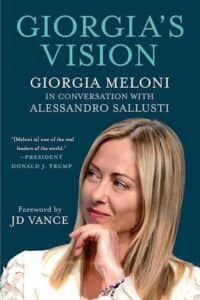
It is our identity as Europeans and Westerners, as heirs to classical and Judeo-Christian culture. This is what the Conservatives have always sought to defend. Our critique of the European Union stems from the belief that Europe should not be reduced to an aseptic, supranational organisation — sort of exclusive club that one can only join with the right credentials and be thrown out of if other members disapprove. But Europe is far more than rules and labels. It’s a shared history among peoples. It’s the desire to build a common future. My criticism of the European Union arises from the desire to defend these cornerstones — in a word, identity — from an approach that can sometimes be too invasive and self-referential. In other words, I don't want to distance myself from Europe. On the contrary, I don’t want Europe to distance itself from its own roots. That’s why I fight those in Europe who deny who we are and work hard to weaken our identity.
I am pro-European, much more than many of those self-proclaimed pro-Europeans.
The real choice is not between being pro-sovereignty and being pro-European, as some like to suggest, only to fuel division. It's between a federation and a confederation.
Let me explain... We need to be very clear on this — because even on these issues, there’s a war of words that risks playing into the hands of the Left. Today, those who are widely labelled in the dominant narrative as pro-European are, in fact, European federalists — supporters of a model in which the individual member states gradually lose their sovereignty, concentrating power increasingly in Brussels. So, if you look closely, the term federalism applied to the European community model actually encapsulates an idea that is diametrically opposed to the one we have about federalism in Italy. For us, federalism refers to the devolution of power from the centre toward the peripheries — for example, from the state to the regions. In Europe, however, federalism means the devolution of power from the periphery to the centre — for instance, from the national states to the commission. Strictly speaking, those who advocate for this model shouldn't be called federalists but European centralists. See how much better that sounds?
Meanwhile, those labelled in common discourse as Euro-sceptics or even anti-Europeans (excluding the few who genuinely oppose sharing) are in reality conservatives. They are people like me who advocate for a confederal Europe. The confederal model opposes the centralisation of the powers in the EU’s central institutions. It does so based on the principle of subsidiarity enshrined in the treatises: a collaboration among different institutional levels, where responsibility is assigned to the authority closest to the citizen and the most capable of governing that dimension and that specific material. In practical terms, this means that the most mundane areas closest to citizens’ everyday life should remain in the hands of individual member states. This not only protects cultural diversity but also, for example, the unique economic characteristics of each nation.
Meanwhile, European institutions should focus on global issues — those dimensions where no individual state can be competitive on its own. Brussels should not attempt to do what Rome can do better, and vice versa. These are not radical ideas. Many of the founding fathers of Europe believed in the confederal model. It’s only today that a sort of ideological single-mindedness has emerged: anyone advocating for a federal Europe is labelled a friend, and anyone supporting a confederal Europe is branded an enemy. And this doesn't make any sense — not just because we are talking about governance models, where ideology should give way to pragmatic debate-but also because, in practice, the centralising model promoted by so-called pro-Europeans is proving to be deeply flawed.
Look around you. They told us everything was fine, but when real crises hit — I’m talking about the pandemic and the Russian invasion of Ukraine — we realised just how fragile this construction was. We didn’t have a foreign policy strong enough to help prevent the war. We lost control over supply chains — from energy to microchips to active ingredients. We were weak on defence, we didn't have a strategy to defend the continent. Meanwhile, there was no shortage of regulations covering every minor aspect of our everyday lives — from the size of vegetables to how insects should be cooked. I believe that Europe should deal with foreign policy, safe borders, a single market, energy, migration. Individual countries should manage the smaller things, preserving their diversity.
In short, I believe that European rules should be less invasive. And it’s not a contradiction to say that you can be more Italian, just as you can be more French and more German — and still be European.
Right from the start. The unification project was not coherent with Europe’s history or with the true needs of its peoples. From the creation of the Economic Coal and Steel Community onward, we have expanded our borders and skills in a disorderly and chaotic manner. Today, the Union is a hybrid: we find ourselves dealing with a bureaucratic giant — which we didn’t need — without the political giant we desperately do need. And I believe this is also the result of denying its identity from the beginning. Now, the Union has lost any clear sense of its role in history.
It is undeniable that Europe’s first borders were drawn by the Benedictine monasteries. And the results are clear to see. I support a secular state —there’s no doubt about that. But the Europe that hides crucifixes, bans the use of the word Christmas in its official correspondence, and yet allows entire neighbourhoods to fall under Islamic law or hosts exhibitions with blasphemous imagery in institutional venues — what exactly is it doing? What I see is a major dichotomy between the historical Europe and today’s European Union. Consequently — and unfortunately inevitably — this leads to a growing divide between the sense of being a European citizen and the actual policies of the EU.
(The article is an edited extract from the book, ‘Giorgia’s Vision’, by Italian Prime Minister Girogia Meloni in conversation with Alessandro Sallusti. The book has been published in India by Rupa.)
Giorgia Meloni is the prime minister of Italy.

When Manila and Tokyo draw a line, Beijing draws a red line
Bangladesh gets a new envoy to reset its India ties
Escalation trap to an exit strategy: How can the Iran war end?
India must seize its demographic dividend before it fades
Bangladesh’s instability has sharpened India’s ‘Chicken Neck’ challenge