


Book review | 'ULFA: The Mirage of Dawn' is a gripping narrative on unknown stories of insurgent outfits in North East
Senior journalist Rajeev Bhattacharyya’s “ULFA: The Mirage of Dawn” is a treasure trove of exclusive information not only on ULFA but also other insurgent outfits in the North East and their overseas activities about which very little was known earlier

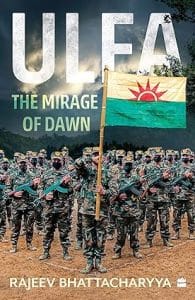
ULFA: The Mirage of Dawn by Rajeev Bhattacharyya; HarperCollins, 409pp (Paperback)[/caption]The new book “ULFA: The Mirage of Dawn” by journalist Rajeev Bhattacharyya takes a deep dive into the rebel organisation through extensive field research across Assam, North East and the neighbouring countries. The book traces the roots of insurgency in Assam in the late 70s, the emergence of ULFA and its eventual spread and survival in the midst of intensive counter-insurgency operations and how it established bases and training facilities in the neighbouring countries.Much of what has been written in each of the ten chapters are a sort of revelation on the insurgent group and its extensive linkages with the governments and security agencies of the neighbouring countries. For instance, very sketchy details of Operation Golden Bird — the endeavour by three rebel groups from the North East in 1995 to ferry weapons and ammunition from Bangladesh to India through Myanmar — had been published till date. It was supposedly a joint-operation between the Indian and Myanmar's armed forces to thwart the rebels’ plan to ferry the weapons. That it was not and how the episode was linked to other incidents have been narrated in great detail in the chapter ‘March of Death.’There are other sub-chapters that will prompt the reader to think afresh about many episodes that had hogged the limelight years ago. The disappearance and suspected murder by ULFA of eminent social activist Sanjoy Ghose by ULFA, the Chittagong Arms Haul of 2004 that led to the confiscation of ten trucks of weapons and the ‘secret killings’ of the late 90s that rocked Assam can be cited as examples.The book delineates the reasons why the separatist outfits from India’s North East were able to set up camps and hideouts in Bhutan, Bangladesh and Myanmar (where it still exists). It was the outcome of an interplay of many aspects including the domestic situations in the host countries that shaped the policies of the respective government towards these groups. Bhutan launched Operation All Clear in 2003 to demolish the camps; Bangladesh followed suit albeit in a different and selective manner in 2009 but Myanmar could not be convinced to adopt a tough stance consistently against the camps and training facilities that still exist in the country.The camps still exist in Myanmar and the networks of these groups in other countries but their capacity to sustain the campaign for independence has lost steam. As the book reveals, there has been a drastic decline in insurgency related incidents in the North East — by as much as 70 per cent between 2013–19.A separate chapter analysing the factors would have added an extra punch which is missing in the book. Since the book is based on years of field research, the author might as well have devoted time to unearth more about counter-insurgency operations and how the tactics have changed over the years.Overall, and despite its limitations, the book can be considered a significant addition to the scant literature that exists on insurgency in the North East. It is a treasure trove of exclusive information not only on ULFA but also other insurgent outfits in the North East and their overseas activities about which very little was known earlier.The author is a policy professional, columnist and writer with a special focus on South Asia. Views expressed in the above piece are personal and solely that of the author. They do not necessarily reflect Firstpost’s views.Read all the Latest News, Trending News, Cricket News, Bollywood News,India News and Entertainment News here. Follow us on Facebook, Twitter and Instagram.

When Manila and Tokyo draw a line, Beijing draws a red line
Bangladesh gets a new envoy to reset its India ties
Escalation trap to an exit strategy: How can the Iran war end?
India must seize its demographic dividend before it fades
Bangladesh’s instability has sharpened India’s ‘Chicken Neck’ challenge