


Book Excerpt | For China, talks and conflict are part of the same strategy
In his latest book, 'China’s Wars: The Politics and Diplomacy Behind Its Military Coercion', former ambassador and noted China watcher Vijay Gokhale observes how Beijing combines military pressure, grey-zone tactics, and negotiations into a single strategy to achieve political objectives without fighting major wars, and that India should expect this coercive pattern to continue

China sees negotiation as a continuum of conflict, and there is no dividing line between war and peace. For Beijing, the combination of military, diplomatic and psychological pressure is intended to force the target state to negotiate on China’s terms and conditions. All the case studies demonstrate that China does not fight for primarily territorial or military objectives, nor does it seek prolonged conflict. Prolonged wars, as per the PLA’s Science of Military Strategy (2020), involve high political, economic and diplomatic costs; damage China’s peace-loving image and affect its relations with others, aside from the risk of military escalation. As Kissinger puts it, having demonstrated military resolve, rather, China seeks negotiation. Negotiation allows China to secure on the table what it might have been unable to secure on the battlefield.
There are two kinds of tactics that the PRC adopts in a negotiation. In the first, China prefers to achieve negotiated outcomes ‘peacefully’: the ‘talk-and-take’ approach. This tactic permits China to gradually secure its goals in contested areas while it simultaneously engages in long-drawn-out negotiation with the target states. The South China Sea situation is a classic example of ‘talk-and-take’ by the PRC. The dialogue between China and the ASEAN group of nations on a Code of Conduct in the South China Sea has been going on for more than two decades. During this time, the PRC has seized several maritime features through ‘creeping annexation’, creating a dilemma for the target states (ASEAN) on how to respond without risking escalation because they fear the consequences of an open military confrontation with China. In its more extreme form, the talk-and-take tactic is combined with an actual threat, display or use of force, as is the case with the Philippines. Also known as the ‘boiling frog’ strategy, it wears down the target state by constantly threatening the use of force if it does not negotiate, but without the ‘victim’ being able to judge when the force will be applied. It thus dilutes the resolve of the target state to resist while also keeping other potential players outside the arena by refusing or rejecting offers of mediation or of playing the good Samaritan.
 More from Opinion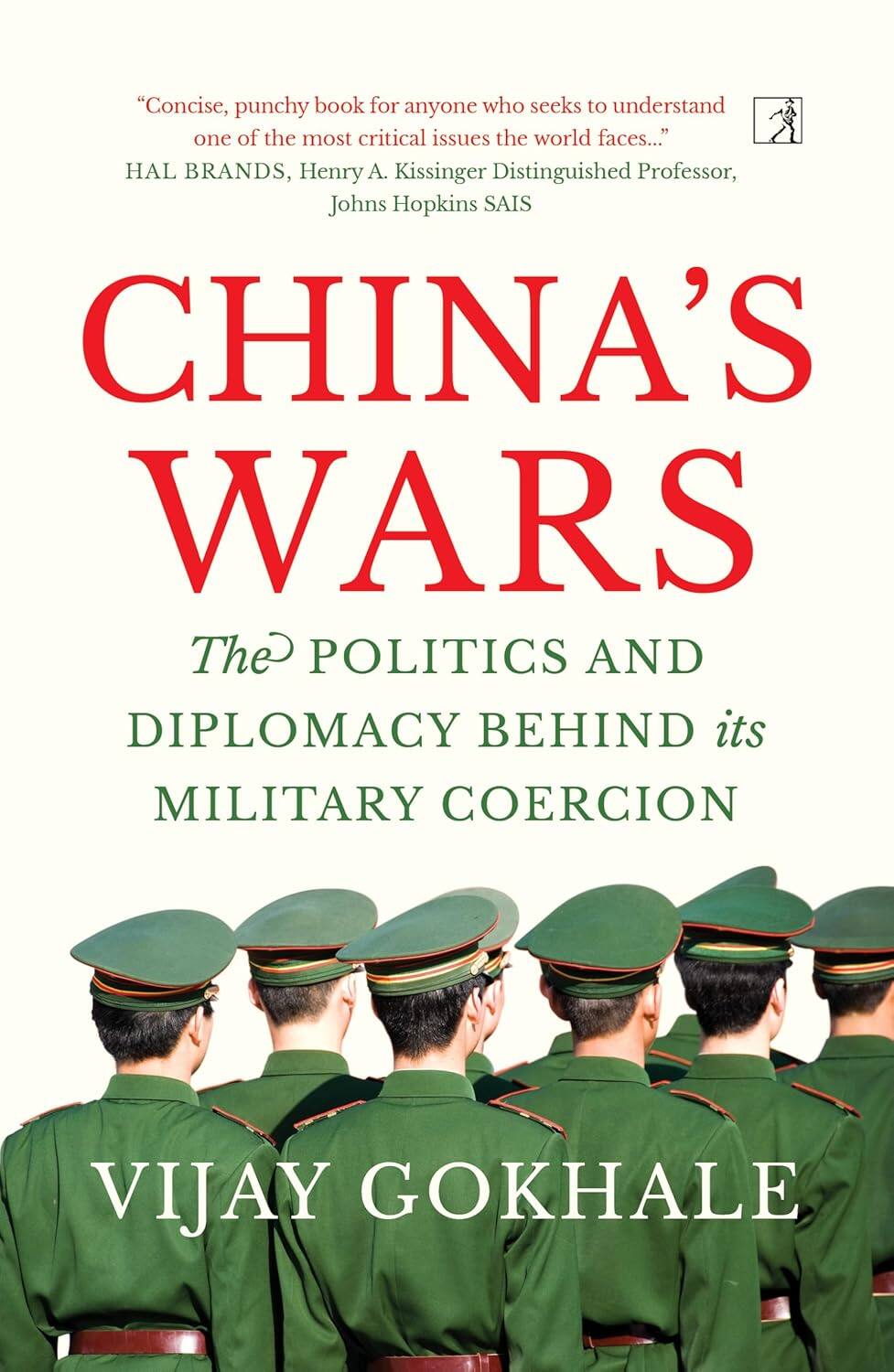
In India’s case, however, the PRC adopts a different variant of the same tactic, known as ‘fight-and-talk’. This idea was developed during the Taiwan Strait crisis of 1958. It is aimed at creating two arenas – a fighting arena and a talking arena – in order to retain the initiative in the military crisis through the selective application of force at the times of China’s choosing, while simultaneously forcing a desirable outcome through the negotiations. This is the tactic that the PRC has generally employed in all grey-zone coercion with India after 2013. In each case – Depsang (2013), Chumar (2014), Doklam (2017) and Galwan (2020) – China initiated the grey-zone conflict. It encroaches on territory along the LAC through gradualist or ‘salami slicing’ measures, using ‘civilians’ like herdsmen (Demchok) or on the pretext of building civilian infrastructure (Doklam). Such actions raise the bar for India to resist the intrusions without escalating or suffering reputational damage for attacking Chinese civilians. In the meantime, the PRC is able to create the impression of India as the party that precipitated the crisis, proposes negotiations even as it builds up military pressure in order to dilute India’s resolve to resist, and creates a strategic narrative to justify its so-called ‘counter-attack in self-defence’ in case India does match coercion with coercion. Once it has achieved its limited objective in the ‘fighting arena’, the PRC quickly opens a ‘talking arena’ to resolve the matter in order to solidify the new status quo. It does not entirely shut the ‘fighting arena’ down, but only lowers the temperature from time to time, and retains the capacity of ratchetting up the temperature if India does not seem inclined to accept the Chinese offer of an exit ramp. Strategies and tactics to deal with the ‘fight-and-talk’ tactics of the PRC, especially after 2012, should be carefully analysed so that counter-strategies and tactics can be refined based on the recent experiences during the Doklam and Galwan crises.
From the case studies certain inferences may be drawn for future use.
First, grey-zone warfare is likely to be adopted against India more frequently by the PRC in the future. Such methods of coercion are fundamentally pre-emptive, not defensive, in nature because China’s idea of deterrence involves pre-emption. China uses the term ‘defence’ to justify coercion and assertion of military power.
Second, its considerations are primarily political. Military gains are of secondary importance. China rarely, if ever, wants a large-scale conflict, but only just enough to achieve its political goals. The case studies show that the PRC’s intention of using force is usually to upset the adversary’s calculations in order to force it to radically re-evaluate its position and acquiesce in a new status quo that is more favourable to China.
Third, its preference is to secure political objectives through the threat or display of force, but without actually using it. In the instances where it needs to deploy actual force, it prefers to force the adversary to initiate military action in order to justify its own military plans as ‘defensive’. It tries to tightly manage the subsequent military action so that it does not lead to large-scale war. Large-scale war is neither manageable nor predictable, and hence better avoided.
Fourth, in any form of military coercion, China always tests the case for the use of force before it is deployed. Tension is created in advance of the military action for two specific purposes: to probe the adversary’s resolve to fight and to determine the likely arena of action and the possible counter-response from the adversary if force is applied by the Chinese. Thus, coercion generally commences with several seemingly random incidents involving quasi-military or border-guarding forces, and escalates only when the PRC has decided that it has a good assessment of the adversary’s resolve and military capabilities.
Fifth, once China decides to deploy grey-zone coercion, it combines the element of surprise (involving deceit or deception) with the scale and speed of the military operation, giving little opportunity for the adversary to regroup and counter-respond. Again, there are two objectives that China pursues in grey-zone coercion. One is to erode the adversary’s morale and confidence through the sudden and massive application of force. The other is to force the adversary into negotiations in order to end hostilities.
Sixth, for this outcome to happen, China will work to ensure that geopolitical backlash from the target state is minimised. One way of doing this is to play on the international community’s fears of general war should other states get involved in the conflict. Another tactic is to create rifts between the target state and its partners or allies, or to build sympathy for the Chinese case with the neutral states. In either case, its core purpose is to ensure that the geopolitical context, if any, is limited and the target state has no external support or endorsement. A key concern for the PRC is to limit the reputational damage it might suffer in the wider international community through the application of force against the target state. Diplomacy and propaganda are put into action as part of the broader political-military plan to deal with such situations.
Seventh, China is an opportunistic power. It has the capacity to quickly seize an opportunity to advance its goals. That means India cannot afford to let its guard down at any time. Eighth, domestic politics in China have a definite bearing on decisions in the threat, display and use of force. Therefore, close monitoring of domestic politics and media is critical in assessing whether China intends to merely threaten the use of force or to actually use it.
Lastly, the PRC’s preference is still to win without actually fighting. But if it feels it must, it will not hesitate to use force against stronger adversaries or by going against the international community.
The application of military coercion against India has brought very mixed results for the PRC. In 1962, it was able to deliver a psychological political blow. However, it was not able to achieve its broader political goal of legitimising a new status quo along the India–China boundary, a goal that has eluded it since. Nor did subsequent attempts to militarily coerce India lead to correcting the tilt in Indian foreign policy. Indeed, on the occasions that China did resort to military coercion, India has tended to tilt to a greater degree towards another major power. There is, however, no indication so far that the PRC has drawn this lesson from its military coercion against India. Hence, the continuation of grey-zone conflict is likely to be the most likely path in the near to medium term.
The PLA’s Science of Military Strategy highlights three factors – comprehensive national strength or power (weishe shili), the resolve or the will to fight (jue xin) and credible signalling (weishe qinqi chuandi) that the adversary does not see as a bluff – as keys to its strategy of military coercion. Dealing with China in the future requires India to work out strategies and tactics to deal with each of them. India is one of the few countries that has hands-on experience of grey-zone coercion over the past decade or more. The vast military and diplomatic experience that India has gained of dealing with China needs to be properly harnessed to build durable policies to deal with future Chinese grey-zone coercion. This book will hopefully provide learnings from China’s previous wars and grey-zone conflicts in order to develop policies and strategies to deal with Beijing’s military coercion in the future.
(Edited extract from Amb Vijay Gokhale’s book, ‘China’s Wars: The Politics and Diplomacy Behind its Military Coercion’. Published with the approval of the publishers, Simon & Schuster. Views expressed are personal.)

When Manila and Tokyo draw a line, Beijing draws a red line
Bangladesh gets a new envoy to reset its India ties
Escalation trap to an exit strategy: How can the Iran war end?
India must seize its demographic dividend before it fades
Bangladesh’s instability has sharpened India’s ‘Chicken Neck’ challenge