


Super Bowl is our ‘Word of the Week’ courtesy of Bad Bunny
Bad Bunny brought his Puerto Rican flair to the Super Bowl stage this week. The Latin musician electrified the audience with a performance unlike any other. Along the way, the halftime show became one of the most-watched performances at the event. For this and more, the Super Bowl is our choice for Word of the Week

The second Sunday in February is a big day for America. Why? It’s Super Bowl Sunday when the National Football League (NFL)’s annual championship game, is played.
But American football aside, the Super Bowl is all about the halftime show. Thirty minutes in between the actual game is what has got the world obsessed, as global pop stars and their cinematic production take centre stage. In fact, the intermission filler has evolved into a global spectacle, hosting era-defining performances — think Michael Jackson in 1993 to Rihanna in 2023.
This year’s Super Bowl was no different. The National Football League chose Bad Bunny to be their lead performer, placing Latin culture and Spanish-language music at the centre of America’s most-watched television event.
And, we have got to say, Bad Bunny didn’t disappoint. He brought Latin spice to the halftime show, giving audiences a party they didn’t expect. His energetic, high-octane performance made some records along the way — it was the fourth-most-watched Super Bowl halftime show in history, trailing Kendrick Lamar’s performance at Super Bowl 59 (133.5 million viewers) and Michael Jackson’s Super Bowl 27 halftime show (133.4 million viewers).
 More from Explainers
For the records and the buzz that Bad Bunny made with his half-time performance, we have chosen Super Bowl as our ‘Word of the Week’.
Superbowl’s halftime history
The halftime show has been a part of Superbowl culture right from the inception of this football tournament. However, the first halftime show which took place on January 15, 1967, was a far cry from the pop-star-studded extravaganzas of today.
That inaugural intermission featured two university marching bands from the University of Arizona and Grambling State University, a historically Black college; men whizzing around in hydrogen-peroxide-powered jetpacks, and hundreds of pigeons and thousands of helium balloons being released into the sky.
After the inaugural Super Bowl, the organisers kept bringing back other marching bands, drill teams, and dance and song performances. However, none of those acts were considered huge draws.
In the ’80s, the halftime shows got better and bigger. At Super Bowl XX in 1986, Up with People, a choir-style touring group, brought on a production called “Beat of the Future.” The show featured a massive 81,000-square-foot set, with ESPN reporting that this was the first halftime show to cost the NFL $1 million to produce.
Halftime shows get the superstar treatment
However, as the Super Bowl’s popularity soared, the NFL wanted the halftime show to grow in the same capacity. And in 1993, that big moment arrived with the performance of ‘the king of pop’ Michael Jackson. He moonwalked across the stage and performed hits including Billie Jean, Black or White and Heal the World.
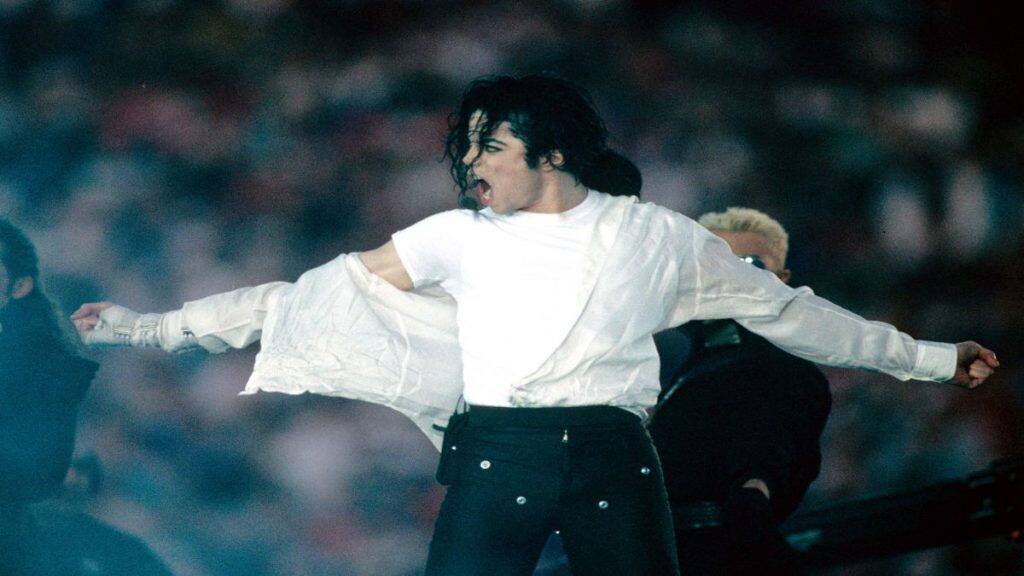
His high-octane performance changed the proverbial game and set the tone for all other halftime performers.
And year after year, the shows have gotten bigger, better, more entertaining and even more expensive. In fact, the 2022 halftime show featuring Dr Dre, Mary J. Blige, Eminem, and 50 Cent is reportedly the most expensive intermission, costing around $20 million. The next is The Weeknd’s 2021 performance, reportedly a staggering $17 million.
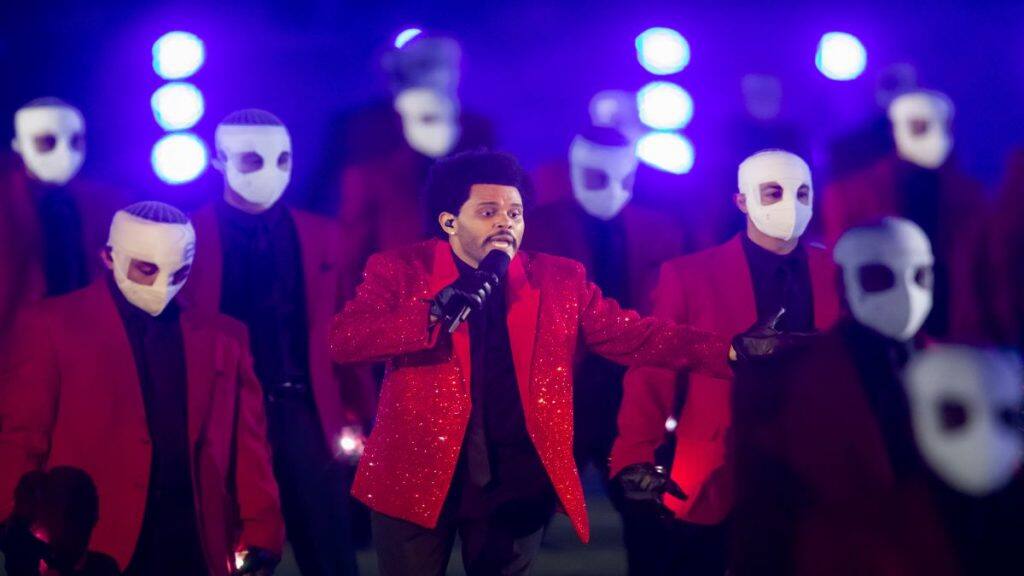
Bad Bunny takes over the Super Bowl
Riding on a Grammy high, Bad Bunny — his official name is Benito Antonio Martínez Ocasio — emerged from a row of towering sugar cane stalks to kick off his Super Bowl halftime show performance.
And what a show it was! It was an all-Spanish affair with special performances by Lady Gaga and Ricky Martin. And more than that, there was also a real-life wedding.
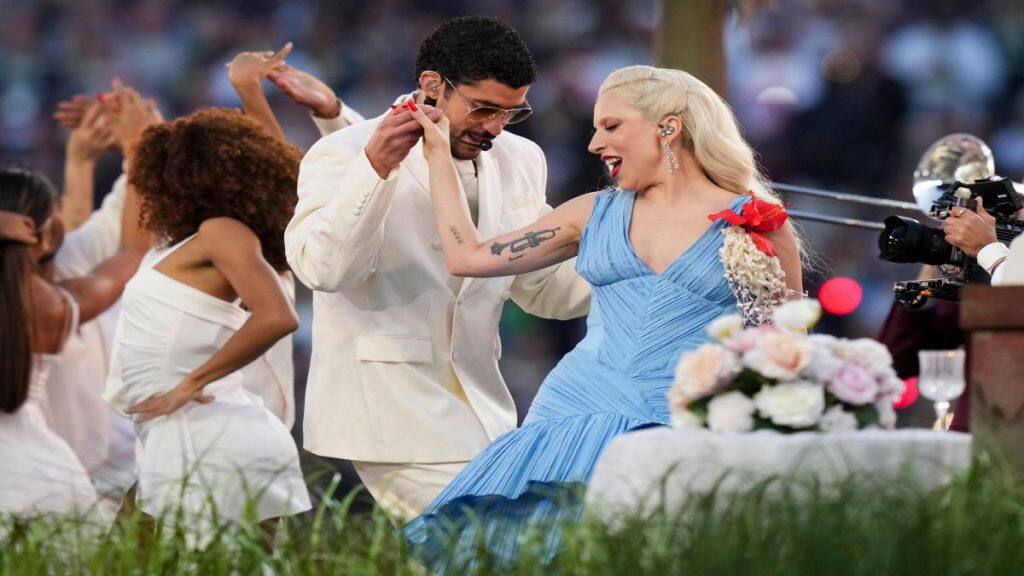
The show gave the world the essence of Puerto Rico through the stage and scenery. It paid tribute to Bunny’s family and Latin America, and it gave the fans a reason to get moving in the midst of a game that was paced by defence and field goals through the first half.
And this halftime show wasn’t just entertaining; it also gave the message of unity and love — which is especially poignant in the US right now. At the conclusion, Bad Bunny said, “God Bless America,” and then named countries in the Americas: “Chile, Argentina, Uruguay, Paraguay, Bolivia, Peru, Ecuador, Brazil” and so on, including the United States and Canada.
“And my motherland, mi patria, Puerto Rico, seguimos aquí.” In English, “My homeland, Puerto Rico, we are still here.”
Behind him, a screen read “The only thing more powerful than hate is love” in English text, a direct reference to one of his recent speeches at the 2026 Grammys.
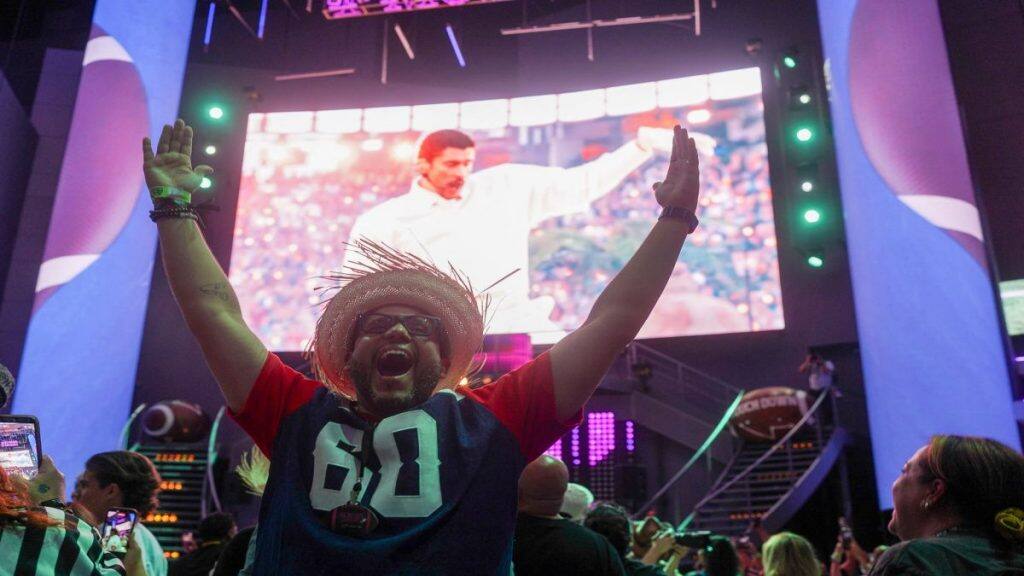
Bad Bunny’s entertaining yet symbolically-laden performance resonated with the world; data published by Nielsen reveals that it is now the fourth-most watched halftime show behind Kendrick Lamar (133.5 million - 2025), Michael Jackson (133.4 million - 1993) and Usher (129.3 million - 2024).
He also very easily exceeded the numbers of Turning Point USA’s rival All-American halftime show, headlined by Kid Rock. The alternative Maga event was held in protest of Bad Bunny’s selection as the 2026 Super Bowl halftime star.
An NBC press released also stated that Bad Bunny’s Super Bowl halftime show generated more than four billion views on social media within the first 24 hours after the performance. This means that the performance was “the most-consumed halftime show of all-time on NFL social platforms”.
But not everyone was enthused about Bad Bunny’s performance at the Super Bowl. US President Donald Trump dismissed it as “absolutely terrible, one of the worst, ever”.

Military drones & police check-ups: How Sri Lanka is fighting against worst dengue outbreak in a decade
How Facebook job ad lured 2 Karnataka men into Myanmar cyber scam camp
Why is India seeing 95% cloud cover despite a Super El Niño?
What is CJP’s fourth demand to the government as protests in Delhi intensify?
The new geography of war: Why the Houthis can no longer be ignored