


Word of the Week: Gymkhana — the remnants of the British Raj and symbol of India’s ‘elite’
This week, gymkhanas became part of debates in India after the Centre issued an order to the over 100-year-old Delhi Gymkhana club to vacate by June 5. It has spared a row on privilege, elitism and heritage. But do you know the history of gymkhanas in the country?

It has outlasted the British Raj. It survived the India-Pakistan Partition. Governments have come and gone, but it has remained untouched. However, all of this may change on June 5 after the Government of India ordered the Delhi Gymkhana Club to vacate the premises on Delhi’s Safdarjung Road.
The Delhi Gymkhana Club, spread over 27.3 acres, is unlike any other institution in India. While been known for being a watering hole for Indian bureaucrats, diplomats, military officers, and influential Delhi families, many believe it to be another power centre of the country.
The government’s order to vacate the land has set off not only a legal battle but also one online, with many deeming it a struggle between the elite and the non-elites. It has reignited debates about privilege, heritage and public space.
Simultaneously, it has also triggered an unexpected wave of nostalgia for certain members of the club. Moreover, it has sparked interest in other such ‘gymkhanas’ across the country. For these reasons and more, gymkhana is our ‘word of the week’.
 More from Explainers
Origins of the word ‘gymkhana’
While the word Delhi Gymkhana Club has been thrown around quite profusely this week, few may know where the word has come from. A combination of the English word ‘gym’ (short form of gymnasium) and the Persian ‘khana’ (house), the word gymkhana has been an enigma for lexicographers and linguists.
The Merriam-Webster dictionary notes that the word gymkhana originated in 19th-century India. The word is probably an alteration of the Hindi ‘gedkhana,’ which describes a ball-playing area similar to a racket ball court, with the first syllable influenced by the word gymnasium. The first gymkhanas were displays of athletics and equestrian skill.
As per the Concise Oxford English Dictionary (COED), the gymkhana is a ‘public place with facilities for athletics; athletic-sports display’.
While dictionaries and linguists still argue on the exact meaning of gymkhana, most common people will agree today that a gymkhana is a club for all kinds of sports.
Gymkhana culture comes a-knockin' in India
When the British came to India, they found that they didn’t have adequate space to play sports and hold social gatherings. As a result, they founded these gymkhanas all across the country, such as the Madras Club (1832), the Royal Calcutta Turf Club (1847), Bombay Gymkhana (1875), and even the Delhi Gymkhana Club (1913).
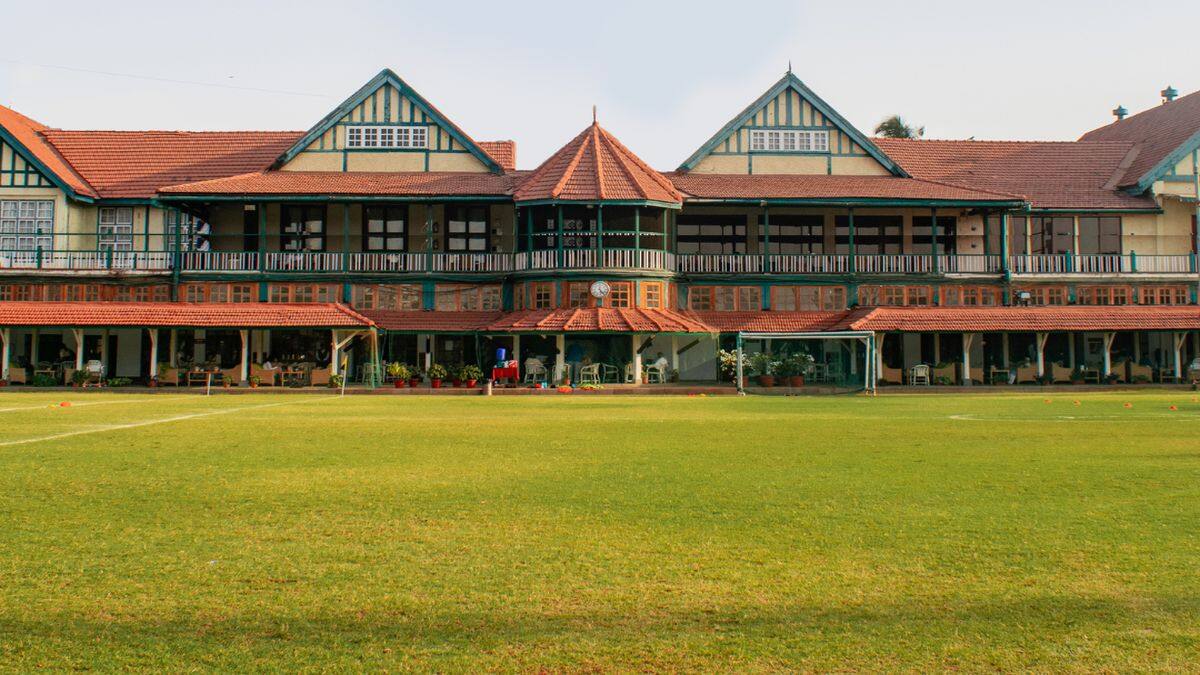
The British eyed these spaces as private members-only institutions that mixed sport, networking, bureaucracy, and, well, social prestige. As a result, many of them were designed less like modern gyms and more like sprawling lifestyle clubs, complete with tennis courts, bars, libraries, card rooms, cottages, banquet halls, and manicured lawns.
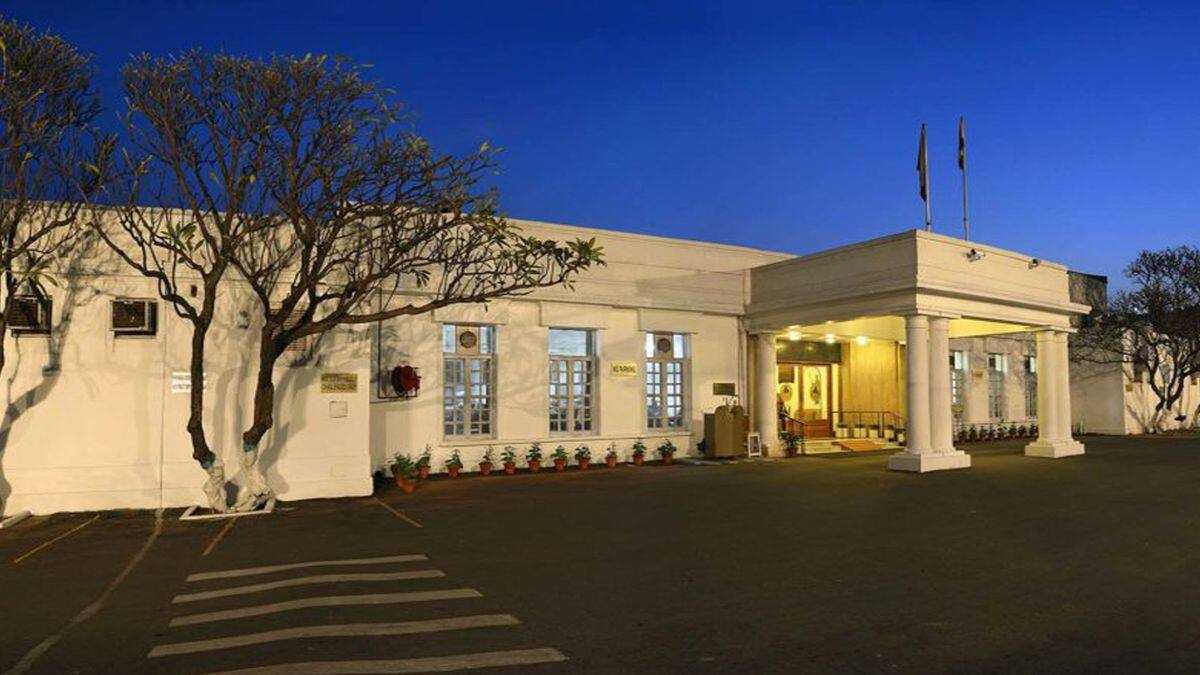
Take, for instance, the much-talked-about Delhi Gymkhana Club. In 1913, soon after the British decided to move the capital from Kolkata to Delhi, the British began work on the Delhi Gymkhana, which was then known as the Imperial Delhi Gymkhana Club. It first operated from the Coronation Grounds in Civil Lines, serving British administrators and military officers, before being allotted its present site on Safdarjung Road in 1928.
When created the club was meant for British officials, but after Independence, it became a space for members of the Indian bureaucracy, judiciary and armed forces, among others. Moreover, it dropped the Imperial from its name and became Delhi Gymkhana Club.
Centre’s takeover of Delhi Gymkhana Club
It was this week that the term gymkhana entered everyone’s lexicon after the Centre ordered the over 100-year-old club to vacate its leased premises on Safdarjung Road by June 5. In a May 22 letter, the Union Ministry of Housing and Urban Affairs’s Land and Development Office (L&DO) said it required the 27.3-acre plot for defence infrastructure. The L&DO letter cited clause 4 of the lease that allows the government to “re-enter” the land for a “public purpose”.
“Whereas, it has been determined that the said premises, located in a highly sensitive and strategic area of Delhi, is critically required for the strengthening and securing of Defence infrastructure and other vital public security purposes. The land is essential to fulfil urgent institutional needs, governance infrastructure, and public-interest projects, integrated with the resumption of adjoining government lands,” the L&DO said.
This left over 5,600 members and around 500 staff in distress. Many of the staff at Delhi Gymkhana have worked there for decades and have families living in nearby slums and housing colonies.
In response to the government’s order, the club dispatched a letter, raising four core concerns: would an alternative, suitably located plot of land be offered to facilitate relocation? The committee said the club’s 14,000 members, who have been paying fees regularly, and 500 employees would be impacted by the L&DO’s decision. Its governing body also sought a personal meeting with the Land Development Officer to discuss a way forward.
Since then, multiple petitions have been filed by members and employees alike in court. On Tuesday, May 26, the court recorded a statement from Solicitor General Tushar Mehta that due process of law would be followed in any eviction proceedings.
The Delhi gymkhana and the struggle of elites vs non-elites
The Modi government has termed this to be a valid move, with many of his supporters even terming the outrage to be reeking of elitism. As one user wrote on X that the club was “built by highly privileged people, for the enjoyment of highly privileged people, on government land”.
“The issue is that the club is reportedly charging membership fees in lakhs, while the club itself pays only around ₹1,000 per year in rent to the government for 27 acres of prime land.”
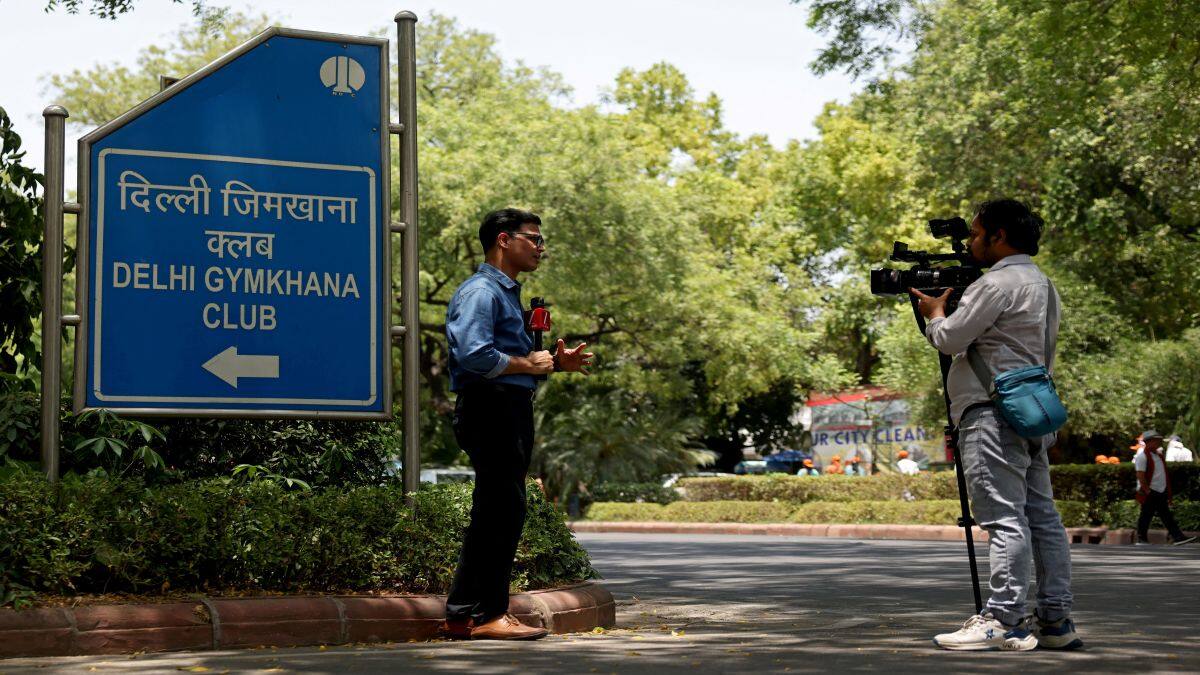
In fact, being a member of the Delhi Gymkhana Club is no child’s play. According to one staff member, government-category applicants have to typically wait between 15 and 20 years and pay around Rs 5.5 lakh. Non-government applicants can wait between 35 and 40 years and pay roughly Rs 22 lakh.
Noted journalist Prabhu Chawla also criticised the Gymkhana and other clubs, calling it exclusionary institutions operating on heavily subsidised public land.
But there are others who mourn the government’s move. Kiran Bedi, a former top police officer and Puducherry governor, called it “unfortunate and tragic”, describing the Gymkhana as part of the capital’s sporting and institutional heritage.
Former diplomat KC Singh also said such clubs historically gave civil servants and military officers affordable recreational spaces despite modest government salaries.
But maybe historian Swapna Liddle put across the issue in the right context. Speaking to PTI, she noted that while the institution undeniably had elitist roots, the focus should be on reforming it and making it more accessible and relevant to a wider section of people. “It is a pity that cultural institutions are shrinking; they must evolve, not ossify,” she said.
And in a separate interview with India Today, she cited the club’s first-rate sports facilities and library as having cultural value to the city. “So, I would be sorry to see [it getting erased] ... I can understand arguments that are made against ... elitism ... but the fact is it is an important cultural institution, as well as [being] very historic. It’s a heritage space, it’s part of the New Delhi landscape.”
What happens next in the Delhi Gymkhana saga remains to be seen. Until then, the attention has spread from the Delhi institution to others across the country.

Military drones & police check-ups: How Sri Lanka is fighting against worst dengue outbreak in a decade
How Facebook job ad lured 2 Karnataka men into Myanmar cyber scam camp
Why is India seeing 95% cloud cover despite a Super El Niño?
What is CJP’s fourth demand to the government as protests in Delhi intensify?
The new geography of war: Why the Houthis can no longer be ignored