


Word of the Week: Ceasefire — the shaky truce between US and Iran to stop West Asia conflict
After five weeks of fighting, the United States and Iran agreed to a two-week ceasefire. The pause was expected to bring relief from the fighting. However, the ceasefire is very fragile, with Tehran and Washington contradicting each other on what’s been agreed to and what comes next

“A whole civilisation will die tonight, never to be brought back again. I don’t want that to happen, but it probably will,” wrote Donald Trump on Tuesday, just hours before his Strait of Hormuz deadline was to end.
Hours later, in a shocking reversal, Donald Trump announced a two-week ceasefire with Iran, saying that the US would suspend bombing of Iran for two weeks, if Tehran completely reopens the vital Strait of Hormuz.
“Subject to the Islamic Republic of Iran agreeing to the complete, immediate, and safe opening of the Strait of Hormuz, I agree to suspend the bombing and attack of Iran for a period of two weeks,” wrote the US president on his social media site, adding, “This will be a double-sided ceasefire!”
 More from Explainers
The news of the ceasefire was received with relief; countries across the world were thankful that a possible de-escalation in the fighting was on the horizon.
However, in the following days, the ceasefire has appeared fragile, on the verge of collapsing over a number of factors.
In our weekly series of ‘Word of the Week’, we examine just how ceasefires have helped warring countries and put an end to military hostilities.
What does ceasefire mean?
The term ceasefire means a temporary or permanently halting of war or conflict. It is implemented when two or more parties (such as countries, armies, or groups) agree to stop firing, attacking, and engaging in military actions.
The Oxford Dictionary describes a ceasefire as a command or signal to cease active hostilities.
The word ceasefire has been derived from French and Old English; “cease” comes from French (and before that, Latin), which means “come to an end, stop, cease; give up, desist, and “fire” from Old English.
Originally, a ceasefire was a military command to stop firing your guns.
The first written example of the word being used was in Caledonian Mercury of 1844: “I was obliged to sound the ‘Halt’ and ‘Cease fire’.” Meanwhile, the first written use of the term to mean an end to hostilities was in the Times on November 12, 1918: “The cease fire of yesterday must be universal and final.” As we know, that was the end of the “war to end all wars” – although it turned out not to be.
Why are we talking about a ceasefire now?
Starting Tuesday evening, the word ceasefire grabbed attention and headlines around the world when US President Donald Trump announced that the US would suspend bombing of Iran for two weeks as part of a ceasefire deal.
Writing on his Truth Social site, Trump wrote, “The reason for doing so is that we have already met and exceeded all military objectives, and are very far along with a definitive agreement concerning long-term peace with Iran, and peace in the Middle East.”
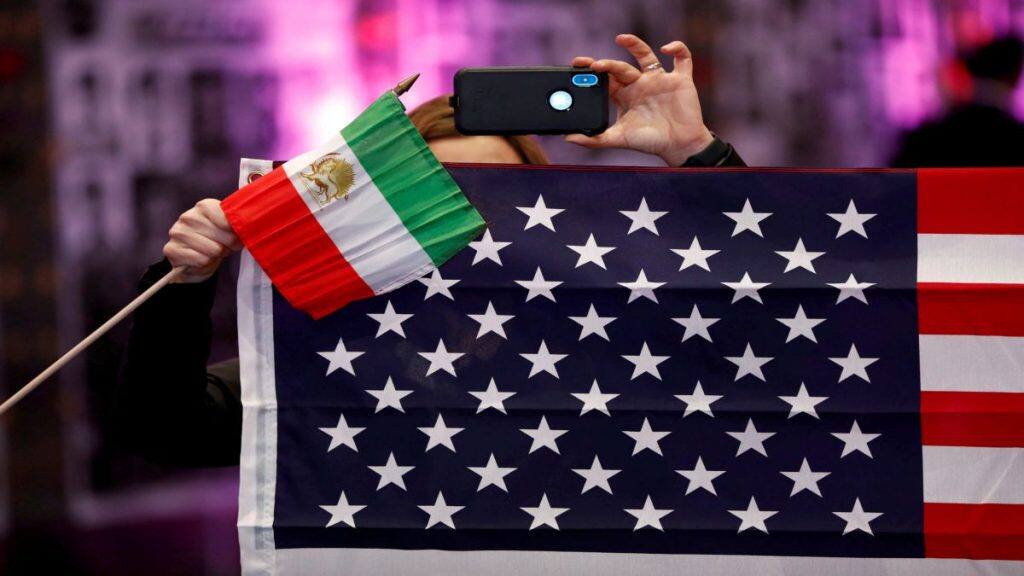
Shortly later, Pakistan’s Prime Minister Shehbaz Sharif announced the United States and Iran — and their allies had — agreed to a ceasefire “everywhere” following mediation by his government. Sharif said the two-week ceasefire — which Trump and Tehran had announced earlier — would next lead to talks in the Pakistan capital, scheduled for April 11.
However, hours after the announcement, the ceasefire brokered by Pakistan as well as efforts from China, seemed to be on very fragile ground, owing to contradictions and confusion.
One of the biggest issues that has compounded the US-Iran ceasefire has been Lebanon. The ceasefire covers attacks on Iran, but Israel claims it does not cover its operations against Hezbollah in Lebanon — and Israel has continued attacks there. It was only Thursday that Israel’s Benjamin Netanyahu announced that his country would begin negotiations with Lebanon “as soon as possible,” aimed at disarming Hezbollah and reaching a full peace agreement between the countries.
There’s also confusion over the conditions that both sides will negotiate if and when they meet in Islamabad. Earlier, it was believed that the US would use Tehran’s 10-point proposal as the base to hammer out a long-term peace plan. However, on Wednesday, Trump published a post on Truth Social that didn’t refer to the Iranian 10 points, but rather to the US 15-point proposal for negotiations, which Iran previously rejected. He claimed there was agreement on many of them.
Tehran’s 10-point programme includes demands of compensation for damages suffered by Iran during the war, a commitment to non-aggression by the US, Iran retaining its leverage over the Strait of Hormuz, and acceptance of Iran’s nuclear enrichment. However, some of these seem to be a non-starter for Washington. Iran’s nuclear programme has long been the basis of the enmity between the two nations. Also, allowing Tehran to control the vital Strait of Hormuz seems very unlikely for Washington.
Now, the future of the talks in Islamabad is uncertain.
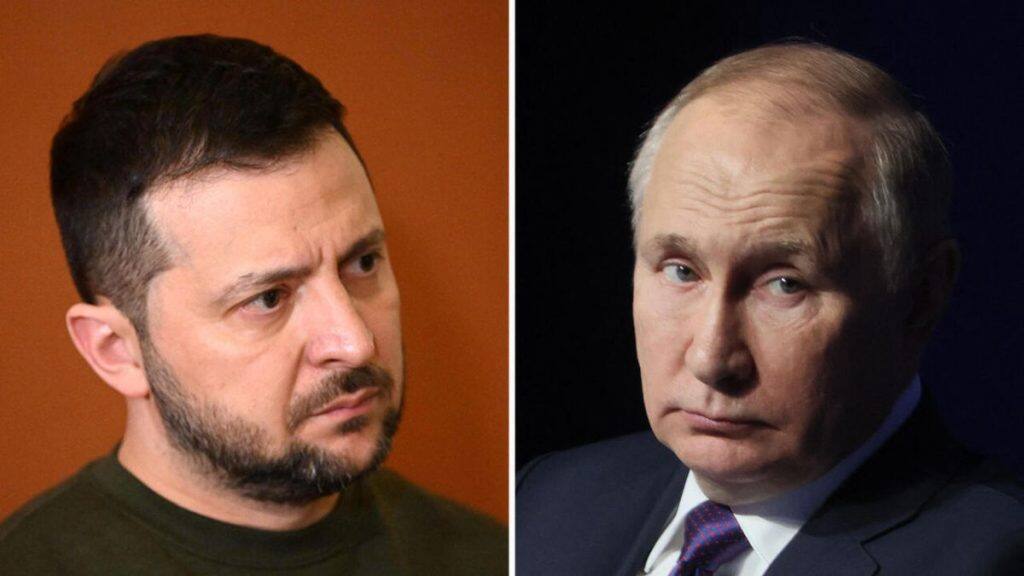
But the US-Iran ceasefire hasn’t been the only truce to take place this week. On Thursday, Russia’s President Vladimir Putin announced a 32-hour ceasefire for Orthodox Easter, with President Volodymyr Zelenskyy confirming that Ukraine will honour it.
The Kremlin said that the pause in fighting will begin at 4 pm Moscow time (13:00GMT) on Saturday and run until midnight on Sunday, covering celebrations observed in both countries. This weekend’s planned ceasefire echoes a similar, short-lived pause declared by Moscow last year, which both sides accused each other of breaching.
This is indicative that ceasefires are fragile, and do not necessarily announce the intended end of a conflict, unlike an armistice. Ceasefires are usually meant to be temporary but binding, in contrast to a truce or a cessation of hostilities.
It’s left to be seen if the US-Iran ceasefire, although shaky, translates into long-term peace.

Military drones & police check-ups: How Sri Lanka is fighting against worst dengue outbreak in a decade
How Facebook job ad lured 2 Karnataka men into Myanmar cyber scam camp
Why is India seeing 95% cloud cover despite a Super El Niño?
What is CJP’s fourth demand to the government as protests in Delhi intensify?
The new geography of war: Why the Houthis can no longer be ignored