


Word of the Week is CBSE... as India’s largest school board faces its biggest crisis in years
The removal of CBSE’s top leadership amid the On-Screen Marking controversy has raised questions about accountability, exam reforms, and governance. As millions of students await results, Firstpost takes a look at how CBSE evolved into India’s largest school education board and why it is under the scanner now

India’s academic community is witnessing a top-tier bureaucratic purge that has completely changed the leadership of the Central Board of Secondary Education (CBSE).
The axe of accountability fell heavily on CBSE chairman Rahul Singh and secretary Himanshu Gupta, who were abruptly removed from their posts earlier this week. They have been replaced by Lokhande Prashant Sitaram and Varun Bhardwaj respectively.
As the board prepares to announce the highly anticipated Class 10 second phase results next week, it finds itself caught in an institutional storm that compromises its reputation as India’s premier central testing authority.
The latest controversy at CBSE
The latest flashpoint centres on the On-Screen Marking (OSM) system, a mechanism introduced for the 2026 Class 12 board exams where physical, pen-and-paper answer scripts are digitally scanned and evaluated by teachers on computer monitors.
 More from Explainers
While online evaluation platforms are designed to enhance speed and eliminate totalling errors, the implementation by CBSE left lakhs of students and parents in distress following the result declaration on May 13.
For weeks, high-scoring students found themselves looking at single-digit marks or failing grades in core subjects. As students began receiving scanned copies of their checked sheets through the re-evaluation portal, the systemic failures of the OSM interface became obvious.
Dozens of instances emerged where entire multi-page answers were never viewed by evaluators due to software lagging and loading glitches.
Rushed scans rendered student handwriting blurry, leading to unfair point deductions.
Investigations revealed that the contract for the digital evaluation platform was awarded to a private vendor just 74 days before the board exams commenced on February 17, leaving almost no time for system stress testing or proper evaluator training.
Over 4.04 lakh students applied for digital copies of their answer books, overwhelming the system and forcing Union Education Minister Dharmendra Pradhan to intervene publicly.
“Certain discrepancies have come to our notice, and I take responsibility for them. These issues will be rectified, and appropriate solutions will be worked out. We will not leave any student's question unresolved,” Pradhan announced after a high-level review meeting.
To salvage public trust, the ministry has directed technical experts from IIT Madras and IIT Kanpur to immediately step in and overhaul CBSE's backend code infrastructure.
The weight of a century
To understand why this failure cuts so deep, Firstpost, as part of its ongoing Word of the Week series, takes a look at the sheer footprint and history of the institution. CBSE isn't just an administrative body, it is a sprawling educational network operating across the globe.
CBSE by the numbers in 2026:
- Total Affiliated Schools: 29,000+ globally
- International Footprint: 240+ schools across 28 foreign countries (primarily in the GCC region)
- Class 12 Student Cohort (2026): Over 18.5 lakh applicants
- Class 10 Phase 2 Cohort: Over 6.68 lakh students currently awaiting their term marks
The body stands as the architectural backbone of school education in India. For decades, it has dictated the academic rhythms, examination anxieties, and pedagogical benchmarks for millions of students.
The 1921 prelude
The modern school board format in India owes its foundational architecture to the Sadler Commission (also known as the Calcutta University Commission of 1917-1919).
The commission recommended separating intermediate education from universities and placing it under the governance of distinct boards.
In response, the first school board was established in 1921: the United Provinces Board of High School and Intermediate Education.
This board initially covered a vast territory, including the United Provinces (now Uttar Pradesh), Rajputana, Gwalior, and Central India.
The 1929 expansion
As the administrative load grew unwieldy, the United Provinces Board limited its jurisdiction to its local boundaries.
To ensure that students in princely states and central provinces still had access to standardised qualifications, the Government of India passed a resolution to create a unified system.
On August 12, 1929, the Board of High School and Intermediate Education, Rajputana was formed. Headquartered in Ajmer, its jurisdiction included:
- Ajmer-Merwara
- Central India
- Gwalior
- The princely states of Rajputana
The board began with just 70 high schools and 12 intermediate colleges, conducting its first public examinations in 1930 for 3,091 candidates.
The post-Independence transition
Following India’s independence in 1947, the landscape changed rapidly as princely states integrated into the Indian Union, and several states began forming their own localised school boards.
By 1950, the Rajputana Board's jurisdiction had shrunk significantly, covering only Ajmer, Bhopal, and Vindhya Pradesh.
To adapt to the needs of a newly independent nation, the board’s constitution was amended in 1952. Its scope was extended to all Part-C and Part-D territories, and the institution was given its modern name: the Central Board of Secondary Education (CBSE).
The 1962 reconstitution
The defining moment that gave CBSE its modern national mandate occurred on July 1, 1962. The board was completely reconstituted by the Government of India to address a specific socio-economic challenge: the schooling of children whose parents held transferable central government jobs.
Families moving across state borders frequently struggled with fragmented school syllabi and varying regional languages.
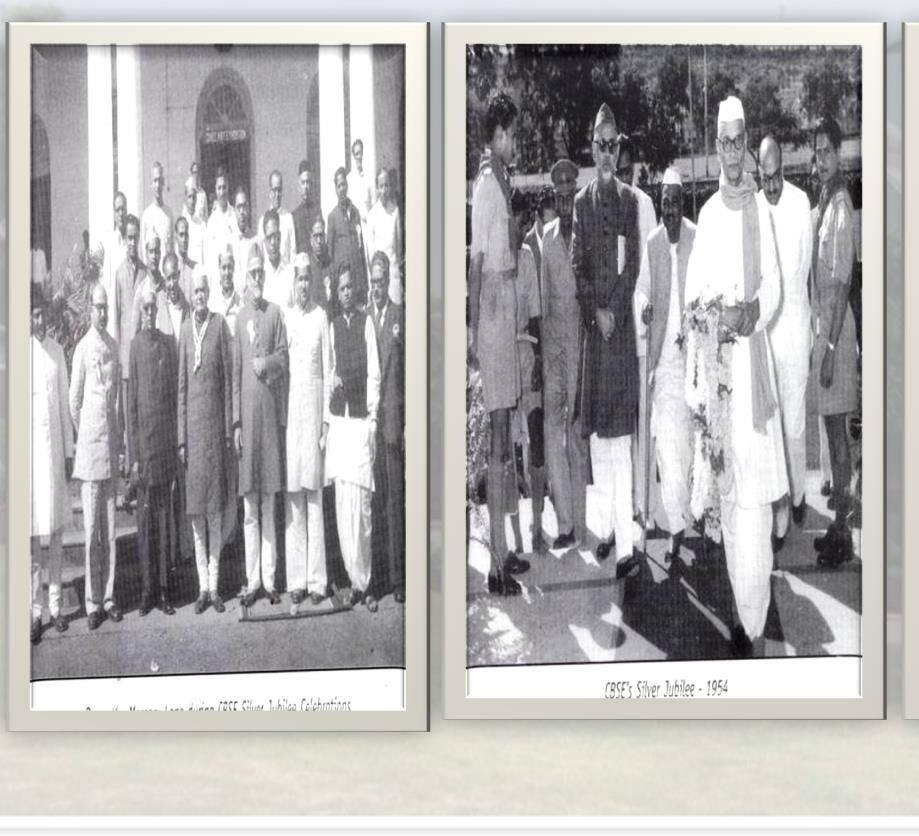
To provide a continuous, standardised curriculum across the country, the Delhi Board of Higher Secondary Education was merged into CBSE, and the board’s headquarters were permanently shifted to New Delhi.
How the CBSE functions
CBSE operates as an autonomous body, yet it remains directly under the strategic oversight and funding of the Ministry of Education, Government of India.
Leadership & administration
The executive head of the board is the chairperson, a senior Indian Administrative Service (IAS) officer. The chairperson works alongside a Governing Body composed of representatives from:
- The Ministry of Education
- The Directorate of Education (Delhi)
- The Kendriya Vidyalaya Sangathan (KVS)
- The Navodaya Vidyalaya Samiti (NVS)
- Various state education departments and university professors
The affiliation ecosystem
CBSE does not manage schools directly; instead, it serves as an affiliating and examining authority. As of recent institutional audits, the board boasts a network of over 29,000 affiliated schools within India and 240 schools operating across 28 foreign countries.
These institutions fall into four primary categories:
| School Type | Administrative/Funding Body | Typical Student Base |
| Kendriya Vidyalayas (KVs) | Kendriya Vidyalaya Sangathan (Central Govt) | Children of defence personnel and central employees |
| Jawahar Navodaya Vidyalayas (JNVs) | Navodaya Vidyalaya Samiti (Central Govt) | Talented rural students selected via entrance exams |
| Government Schools | State/UT Administrations (e.g., Delhi Government) | General public within local territories |
| Independent/Private Schools | Private Trusts, Societies, or Corporate Foundations | Broad urban and semi-urban demographics |
To maintain its affiliation, a school must strictly adhere to the infrastructure, safety, teacher-qualification, and fee-disclosure norms specified in the CBSE Affiliation Bye-Laws.
Affiliation across international borders
The board’s external operations are managed via its specialised regional framework. Schools operating outside India are bound to the same curriculum, text material schedules, and affiliation codes as domestic schools.
The Gulf Cooperation Council (GCC) region — including the United Arab Emirates, Saudi Arabia, Oman, and Qatar — holds the highest concentration of international CBSE schools, catering to millions of non-resident Indians (NRIs).
There are special foreign cells in over 240 Schools in 28 countries like Japan and Singapore as well as nations in Africa.
The certifications issued by the board are recognised by major international evaluation bodies, allowing students to transition directly into global universities.
How the CBSE-NCERT relationship functions
A common point of confusion is the relationship between CBSE and NCERT. They are distinct entities that operate in a tightly locked academic partnership:
NCERT (National Council of Educational Research and Training): The academic body responsible for designing the National Curriculum Framework (NCF), writing textbooks, and formulating pedagogical research.
CBSE: The regulatory and examining board that mandates the use of NCERT-designed materials, conducts the assessments, and certifies student performance.
All schools affiliated with CBSE must follow the NCERT curriculum, especially from Class 9 through Class 12.
This alignment ensures that CBSE evaluations match the syllabi of national-level undergraduate entrance tests, such as the Joint Entrance Examination (JEE) for engineering and the National Eligibility cum Entrance Test (NEET) for medicine.
Additionally, CBSE stands out for its linguistic diversity, offering academic courses in 40 different languages, ranging from standard Indian languages like Hindi, Sanskrit, and Tamil to foreign options including Arabic, French, German, and Japanese.
How CBSE is implementing NEP 2020 reforms
The traditional model of Indian school education — defined by 10 years of general schooling followed by 2 years of stream-segregated higher secondary education — is being dismantled.
CBSE is currently acting as the primary testbed for the National Education Policy (NEP) 2020, introducing major structural changes to classrooms and exam halls.
The 5+3+3+4 curricular shift
The board has phased out the old structural timeline in favour of a modern, developmental model split into four distinct stages:
- Foundational Stage (5 Years): Covering ages 3 to 8, this stage spans 3 years of preschool/anganwadi followed by Classes 1 and 2. The pedagogical focus rests entirely on play-based and activity-oriented learning, eliminating early examination anxiety.
- Preparatory Stage (3 Years): Encompassing Classes 3 to 5 (ages 8 to 11), this phase transitions students into structured textbooks while retaining a high degree of interactive, discovery-based classroom styles.
- Middle Stage (3 Years): Spanning Classes 6 to 8 (ages 11 to 14), this stage introduces abstract subject-matter frameworks across sciences, mathematics, social sciences, and humanities, accompanied by experiential vocational training.
- Secondary Stage (4 Years): Combining Classes 9 through 12 (ages 14 to 18), this integrated phase abandons the strict, rigid boundaries between Science, Commerce, and Arts streams. Students can opt for multidisciplinary combinations, focusing on deep critical thinking and flexible choices.
Biannual board exams for class 10
The most momentous change to hit the Indian examination landscape is the introduction of twice-a-year board examinations for Class 10. To ease the intense psychological pressure of a single high-stakes exam, CBSE has fundamentally overhauled its testing calendar.
Under this new layout:
- The board now schedules two distinct assessment windows. The first phase is held from mid-February to early March, while the optional second phase is held across May.
- Appearing for the February Phase 1 exams is compulsory for all enrolled regular students. The May Phase 2 exams act as an elective improvement or supplementary framework. Students can choose to sit for all subjects, specific subjects, or skip Phase 2 entirely if they are satisfied with their initial marks.
- If a student decides to sit for both phases, the board automatically retains the higher score of the two attempts in the final grade card, ensuring that taking the second test carries no academic penalty.
- To prevent administrative exhaustion for schools, internal assessments and practical evaluations are conducted only once per academic year, ahead of the Phase 1 theory papers.
For Class 12, the traditional single annual testing model remains in place, running from February through mid-April, though discussions are underway to expand the biannual format to higher secondary tiers in the coming academic cycles.
The National Credit Framework (CrF) integration
Another quiet revolution in the works is the pilot implementation of a credit-based school education system.
Similar to European and American high school credits, CBSE students accumulate academic credits based on formal learning hours, vocational training, and extracurricular performances.
These credits are digitally logged into a student’s Academic Bank of Credits (ABC), linked to their unique Aadhaar identity, creating a smooth pathway between school education and university systems.
The major controversies that have plagued CBSE
Operating a system that evaluates millions of students every year comes with significant challenges.
Apart from the current ongoing OSM controversy, which coincidentally is occurring right alongside the National Testing Agency's (NTA) cancellation of the NEET-UG 2026 exam over physical paper leaks, the CBSE has historically faced pushback mostly over systemic vulnerabilities.
The history of paper leaks
Long before the creation of the NTA, CBSE was responsible for conducting the All India Pre-Medical Test (AIPMT).
In 2015, the Supreme Court ordered a full cancellation and re-conduct of the exam after a multi-state network leaked the answer keys using customised Bluetooth-enabled vests and electronic devices inside exam centres.
In March 2018, the board faced protests when the Class 10 Mathematics paper and Class 12 Economics paper leaked on WhatsApp hours before the scheduled exam times.
The incident forced CBSE to re-examine over one million Class 12 students and led to a complete overhaul of their security protocols, including the introduction of encrypted, geo-locked question papers printed directly at exam centres.
The syllabus deletion rows
Between 2022 and 2025, CBSE faced criticism from academics and historians over its extensive syllabus "rationalisation" programme.
Done in coordination with NCERT to reduce the student workload during the post-pandemic recovery phase, the board permanently removed several critical chapters from its history, political science, and sociology textbooks.
Major controversial deletions reportedly included:
- Chapters covering the history of the Mughal courts in India.
- Sections analysing the Cold War era, the Rise of Popular Movements, and democratic dissent.
- Paragraphs discussing the sociological impacts of caste discrimination and industrial protests.
While the Ministry of Education defended these moves as necessary steps to avoid overlapping content and reduce academic pressure, critics argued the omissions were ideologically driven efforts to alter historical and civic narratives for the younger generation.
The marks moderation & grade inflation policy
For years, CBSE has been accused of fueling artificial grade inflation through its controversial Marks Moderation Policy.
Designed as a statistical tool to level the playing field for students who face unusually difficult sets of question papers, moderation has often been misused to artificially spike marks.
The practice of giving "grace marks" to push students over competitive cut-offs led to an inflation spike where thousands of students began scoring above 95 per cent, causing unmanageable cut-off scores for admissions at premier institutions like Delhi University.
Despite multiple consensus agreements with state boards to phase out the artificial inflating of marks, the practice continues to spark controversy over the true value of high board percentages.
Also Watch:
With inputs from agencies
Inhaling global affairs daily, Anmol covers foreign policy & defence with the occasional piece in lifestyle and the thrilling sport of polo, to keep things light when they get too tense. He has far too many disparate interests with a constant itch for travel. You can follow him on X (AnmolSingla001); and please feel free to reach out to him at anmol.singla@nw18.com for interviews, tips, feedback or travel recommendations.

Military drones & police check-ups: How Sri Lanka is fighting against worst dengue outbreak in a decade
How Facebook job ad lured 2 Karnataka men into Myanmar cyber scam camp
Why is India seeing 95% cloud cover despite a Super El Niño?
What is CJP’s fourth demand to the government as protests in Delhi intensify?
The new geography of war: Why the Houthis can no longer be ignored