


Beyond connectivity: Why Zojila Tunnel is India’s counter to China and Pakistan
The Zojila Tunnel will provide all-weather connectivity between Jammu and Kashmir and Ladakh. The tunnel also has major strategic and security implications as Ladakh borders both China to the east and Pakistan to the west

India has made a significant breakthrough today (June 9).
The Zojila Tunnel, which will link Jammu and Kashmir with Ladakh, had its final breakthrough today. The development occurred in the presence of Union Road Transport and Highways Minister Nitin Gadkari, Jammu and Kashmir Lieutenant Governor Manoj Sinha, and Chief Minister Omar Abdullah.
This project is both strategically important to India and one of the country’s most ambitious projects. But what do we know about this tunnel? Why is it significant?
Let’s take a closer look.
What do we know about Zojila Tunnel?
The Zojila Tunnel will be 13.15 kilometres long. Being constructed by Megha Engineering and Infrastructure Ltd (MEIL) for the National Highways & Infrastructure Development Corporation Limited (NHIDCL), it is the world’s longest single-tube bi-directional road tunnel. It has also been built at the highest altitude anywhere in the world, at 11,578 feet above sea level. It is being built in the Zojila region, which is between Baltal in Sonamarg and Meenamarg in the Drass and Kargil sector in Jammu and Kashmir.
 More from Explainers
However, according to News18, the total project length is around 31 kilometres. This comprises approach roads, bridges and associated infrastructure, as well as the Nilgrar tunnel system. This comprises two-tube tunnels measuring 457.35 metres and 1,953.63 metres respectively, which serve as a key approach corridor to the Zojila main tunnel. Seven cut-and-cover structures around 2.35 kilometres, a 450-metre snow gallery, and three major bridges at a combined length of 460 metres are also included.
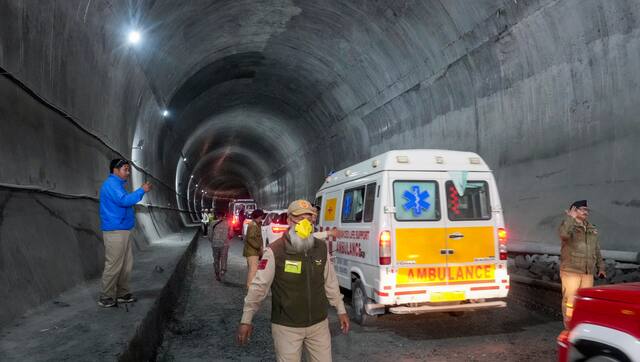
According to the report, one of the most impressive engineering features is the tunnel's ventilation and safety system. Since the tunnel has no separate escape bore, engineers had to build three large vertical shafts for ventilation and emergency access. The largest, on the western side, extends 474.3 metres into the mountain, making it the longest vertical shaft in India.
According to India Today, the tunnel will cut down travel time between Jammu and Kashmir and Ladakh from around three and a half hours to just 20 minutes.
Peda Subbaiah, Director of the Zojila Project, said they used the Austrian drill-and-blast method. "This was the most challenging project, be it the altitude, weather issues. We adopted the Austrian drill-and-blast method, which means shaping the tunnel on the go. This is the world's longest high-altitude tunnel," he said. Subbaiah said the project comprised several difficult hurdles, including extreme weather and difficult terrain at a high altitude.
The project is expected to be completed by the end of 2027. "After the big breakthrough of completing the tunnelling work, we hope to complete the interior work within 24 months," CEO and project head Harpal Singh told the outlet.
Why is it significant?
For many reasons.
First, it will provide round-the-year connectivity from Jammu and Kashmir to Ladakh. This route, along the Himalayan corridor, is impassable for long stretches around the year because of heavy snow, avalanches and extreme weather. This is particularly true during the winter season, when the region can be cut off for up to six months. The tunnel will improve travel for residents, tourists and businesses.
There are also security implications. Ladakh, being close to India’s border with China to the east and Pakistan to the west, is important for India’s military and operational preparedness.
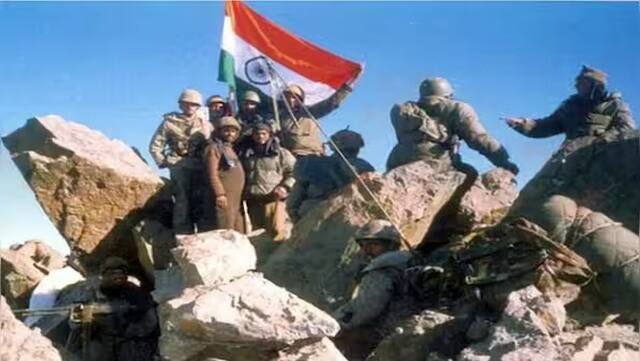
Ladakh was at the centre of the 1999 Kargil War, when Pakistani forces disguised as Kashmiri terrorists infiltrated on the Indian side of the Line of Control and took over the Indian Army's winter-vacated posts, as part of an operation code-named "Operation Badr". The aim was to cut the link between Kashmir and Ladakh, to isolate Indian Army troops on the Siachen Glacier, and force India to negotiate a settlement on Kashmir.
In 2020, Indian and Chinese forces clashed at the Line of Actual Control in eastern Ladakh at Galwan Valley. The Zojila Tunnel will help India improve troop mobility in the region, as well as transport equipment smoothly.
“At the national level, the tunnel strengthens operational mobility and logistics preparedness in a strategically important frontier corridor, underlining its role not only as an infrastructure project but also as a national connectivity and security asset,” MEIL said on Monday.
It is also a feat of remarkable engineering. Officials told The Tribune the Zojila Tunnel “represents one of the most significant engineering achievements in India’s mountain infrastructure sector”.
News18 quoted Gadkari as saying, “We made Zojila Tunnel in Rs 7,000 crore against an estimated budget of Rs 12,000 crore. We saved Rs 5,000 crore. When I was BJP president many years ago, I thought this tunnel must be made as the road was shut for six months in a year. When I became Union Highways Minister later in 2014, we decided to go ahead with the Zojila project under the vision of PM Modi.”
FAQs
1. When will the Zojila Tunnel be completed?
The project is expected to be fully completed by the end of 2027, with interior work likely to take around two years after the breakthrough.
2. How much time will the tunnel save?
It will reduce travel time between Jammu and Kashmir and Ladakh from approximately 3.5 hours to just 20 minutes.
3. Why is the tunnel strategically important?
It ensures year-round connectivity to Ladakh and significantly improves military logistics and troop movement in a sensitive border region near China and Pakistan.
With inputs from agencies

Military drones & police check-ups: How Sri Lanka is fighting against worst dengue outbreak in a decade
How Facebook job ad lured 2 Karnataka men into Myanmar cyber scam camp
Why is India seeing 95% cloud cover despite a Super El Niño?
What is CJP’s fourth demand to the government as protests in Delhi intensify?
The new geography of war: Why the Houthis can no longer be ignored