


Why Trump is facing a May 1 deadline to end the Iran war
US President Donald Trump is facing a May 1 deadline by which he has to gain the approval of Congress under the War Powers Resolution or end the Iran war. But what happens if he overlooks it?

Will US President Donald Trump have to wrap up the Iran war by May 1?
The conflict began on February 28 with joint air strikes by Israel and the United States on Iran that took out a wave of top leaders from Tehran, including Ayatollah Ali Khamenei.
While peace talks have stalled and Trump has warned Iran to ‘get smart soon’, the United States is currently spending billions of dollars on the war per day. More importantly, Trump is facing a deadline by which to gain the approval of Congress under the War Powers Resolution or the War Powers Act, or end the war.
But what do we know? Is Trump under increasing pressure to wrap up the war?
Let’s take a closer look.
War Powers Resolution
First, let’s take a closer look at the War Powers Resolution.
Congress passed the War Powers Resolution in 1973. It did so while overriding the veto from then President Richard Nixon. It passed the War Powers Resolution in the aftermath of US troops leaving Vietnam.
 More from Explainers
The idea behind the Act was to restrict the ability of the US president to send troops abroad or get America entangled in foreign conflicts without the express authorisation of Congress. It essentially re-endorses Article I, Section 8 of the US Constitution, which gives Congress the power to “declare war”.
Its provisions are as follows:
- The US President must get a declaration of war or specific authorisation from Congress before sending troops overseas unless the United States or its armed forces are attacked.
- If the President initiates an attack overseas, he can only do so for a period of 60 days. The conflict must end unless authorised by Congress.
If Congress does not declare war or authorise the president to do so within the period, Congress can mandate that the president end the conflict.
Any member of the House or Senate can demand a vote on the matter by raising Section 5(c) of the War Powers Resolution. Under the rules, this vote must be held within 15 days in the House and 10 days in the US Senate. It essentially allows Congress to check the president’s use of force overseas.
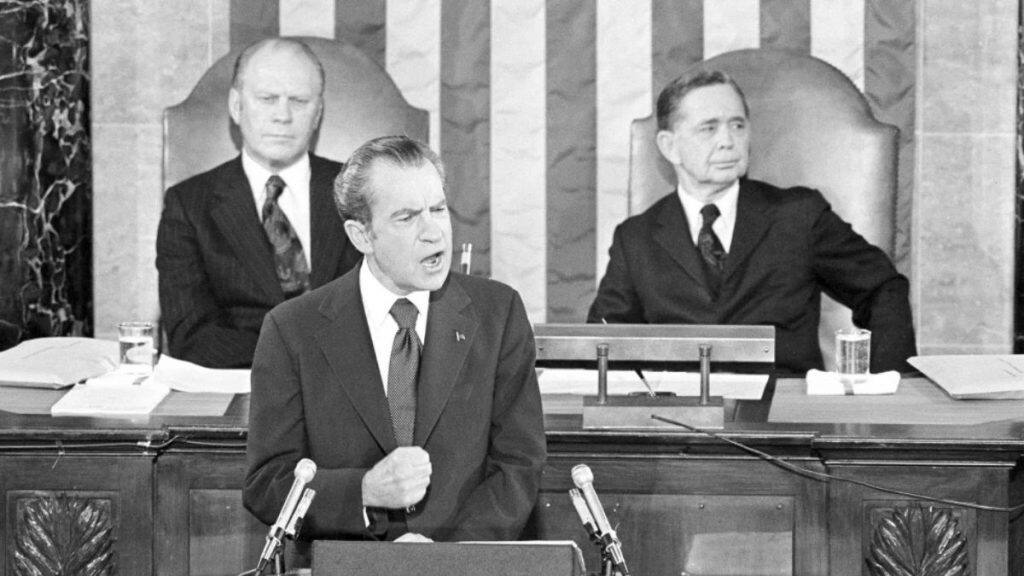
The idea behind this Act was to prevent the President from acting unilaterally and usurping the rights of Congress when it comes to declaring war. It essentially sought to prevent the United States from any ‘future Vietnams’.
Is Trump under increasing pressure to end the war?
According to Al Jazeera, Trump could request a 30-day extension from Congress to withdraw troops. However, this Authorisation for Use of Military Force (AUMF) does not allow for any offensive actions.
Maryam Jamshidi, an associate professor of law at Colorado Law School, told the outlet Trump must give Congress, in writing, that the extension is an “unavoidable military necessity”.
Unfortunately, history shows that after the 60-day deadline has passed, Congress has usually failed to act against presidents. The last time Congress officially declared war was during World War II. Since then, the United States has become entangled in multiple conflicts overseas, including Korea, Vietnam, Iraq and Afghanistan.
According to CNN, then President Ronald Reagan in 1983 reached a compromise with US lawmakers to keep US troops in Lebanon. In 2011, then President Barack Obama, meanwhile, overruled his own Justice Department to keep the US involved in bombing Libya. Presidents George HW Bush and George W Bush both obtained authorisations for the use of military force for the wars in Iraq. Clinton too kept US troops in Kosovo for over 60 days.
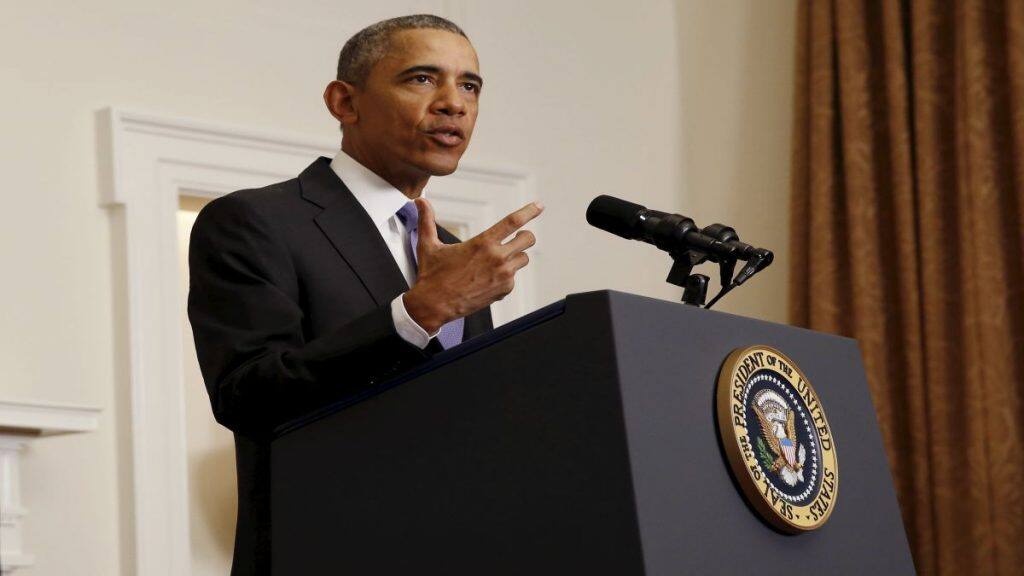
A number of US lawmakers have insisted they will not authorise the war beyond 60 days. “We should not fail to note how extraordinary it is that our Senate Republican leadership has declined to do any oversight of a war that is costing billions of dollars every week,” Democrat Senator Chris Murphy said.
Republican Senator John Curtis wrote: “I support the president’s actions taken in defence of American lives and interests. However, I will not support ongoing military action beyond a 60-day window without congressional approval. I take this position for two reasons – one is historical, and one is constitutional.”
“By law, we’ve got to either approve continued operations or stop,” Republican Congressman Don Bacon added. “If it’s not approved, by law, they have to stop their operations.”
What do experts say?
Experts do not think Congress will intervene.
David Janovsky, acting director of the Constitution Project at the Project on Government Oversight (POGO), told Al Jazeera this is the end result of Congress sitting on its hands in the face of executive action.
“One of the reasons we have gotten to this place is that for decades, Congress and the country have kind of shrugged their shoulders when presidents have pushed the boundaries of military intervention,” Janovsky said. “This is hard to write off as any sort of limited military action. This is a war.”
Don’t expect the courts to try and stop Trump either. “The courts historically have really, really tried to stay out of this kind of question,” Janovsky told Al Jazeera. “Which means it’s ultimately, more likely than not, going to be for the political branches to sort out.”
Jamshidi too does not appear upbeat about Congress acting.
“There is no clear legal avenue for Congress to successfully force the president to abide by this termination requirement and, indeed, past presidents have refused to do so, claiming that this part of the War Powers Resolution is unconstitutional,” Jamshidi said.
The White House has been dismissive of the Act.
According to The Conversation, Trump in his formal notification to Congress on March 2 said he was acting under his “constitutional authority as Commander in Chief and Chief Executive”. However, this does not allow him to take America to war unilaterally.
“The War Powers Act is fundamentally a fake and unconstitutional law,” Vance said. “It’s not going to change anything about how we conduct foreign policy over the next couple of weeks, the next couple of months. And that will continue to be how we approach things.”
Given that Trump, even more than most US presidents, has been content to sideline Congress and flex the power of the executive branch, don’t expect the war to wind down anytime soon.
FAQs
1. What is the War Powers Resolution?
The War Powers Resolution is a 1973 US law that limits the US president’s ability to engage in military conflict without Congressional approval, typically enforcing a 60-day limit unless authorised.
2. What happens if the 60-day deadline expires?
In theory, the president must end military operations unless Congress grants approval. However, historically, presidents have often continued military actions without formal authorisation.
3. Is Donald Trump likely to end the Iran war by May 1?
Experts suggest it is unlikely, as Congress rarely enforces the deadline and courts tend to avoid intervening in such matters.
With inputs from agencies

Military drones & police check-ups: How Sri Lanka is fighting against worst dengue outbreak in a decade
How Facebook job ad lured 2 Karnataka men into Myanmar cyber scam camp
Why is India seeing 95% cloud cover despite a Super El Niño?
What is CJP’s fourth demand to the government as protests in Delhi intensify?
The new geography of war: Why the Houthis can no longer be ignored