


Why Shashi Tharoor’s West Asia war remarks have sparked a political debate in India
Congress leader Shashi Tharoor in an opinion piece, called the Modi government’s position on the Iran war ‘responsible statecraft’. His view puts him at odds with his party, which has criticised India’s 'silence' on the death of Supreme Leader Ayatollah Ali Khamenei

Shashi Tharoor’s remarks on the war in West Asia have sparked a political debate in India.
While the Congress has been slamming the government of Prime Minister Narendra Modi over its position on the Iran war, some senior leaders of the party, including Tharoor, chairman of the Parliamentary Standing Committee on External Affairs, are backing the Centre.
Tharoor, a Lok Sabha member from the Thiruvananthapuram constituency in Kerala, in an op-ed on Thursday, called the Modi government’s position on the Iran war “responsible statecraft". India has consistently called for “dialogue and diplomacy” while also condemning Iranian strikes across the Gulf.
But what happened? What did Tharoor write? How are his remarks at odds with the Congress?
 More from Explainers
Let’s take a closer look.
What did Tharoor write?
Tharoor on Thursday penned a piece in The Indian Express newspaper. He began by saying that the war cannot be justified under international law and that it is against the principles of respect for sovereignty, non-aggression, and peaceful resolution of disputes that India has long championed. He also said New Delhi should have promptly issued condolences on the death of Iran’s late Supreme Leader.
“But I will not condemn the government for choosing silence over confrontation,” he wrote. “India’s diplomacy has always been about balancing principle with pragmatism. Jawaharlal Nehru’s policy of non-alignment was not a refusal to take moral positions, but a recognition that India’s sovereignty and survival depended on avoiding entanglement in Cold War hostilities.”
He mentioned that India too, over the years, has been reluctant to condemn the Soviet Union’s actions in Hungary, Czechoslovakia and Afghanistan. He said the same logic applies today for the Iran war.
“To indulge in sanctimonious moralising by condemning the US-Israeli war on Iran would risk destabilising these relationships. It would jeopardise remittances that sustain millions of Indian households, energy supplies that fuel our economy, and trade ties that underpin our growth. Silence, in this context, is not cowardice. It is a sober recognition of the interconnectedness of our national interests with the realities of the region,” Tharoor wrote.
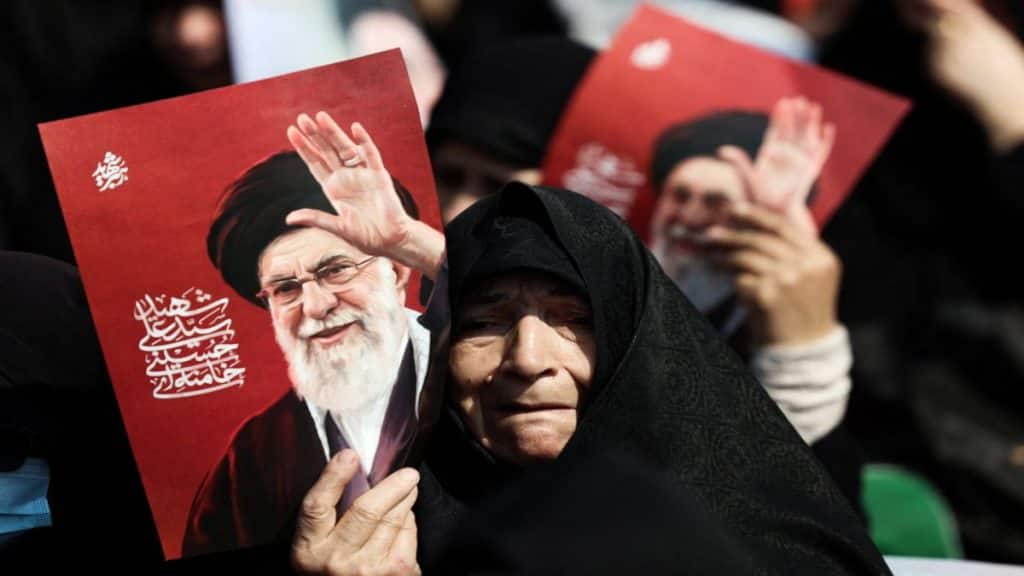
He argued that restraint allows India to safeguard interests while keeping channels open with all sides. “Silence, in the absence of leverage, can be a strategy. It allows us to preserve our interests while keeping open the possibility of quiet diplomacy. It avoids unnecessary confrontation while preserving the channels of communication with both sides that might permit constructive action in favour of peace,” Tharoor added.
Tharoor reiterated the point in an interview with ANI, saying “restraint is not surrender; it’s a strength.”
“If I were advising a Congress government, my advice would be to act with restraint at this time. Restraint is not surrender; it’s a strength, a way of showing that we know what our interests are and will act first and foremost to protect them," Tharoor was quoted as saying.
Tharoor isn’t alone. Congress leader Manoj Tewari has also come out in favour of the government’s stance on the Iran war.
According to News18, Tewari noted that India has historically been a ‘marginal player’ in West Asia. He added that New Delhi should avoid being drawn into conflicts that are not of its making. He said that taking sides would not achieve any tangible outcomes for India, nor serve its national interest. He underlined India’s “strategic autonomy" and said New Delhi is doing “the right thing".
“Well, it’s not our war. We’ve always been rather marginal players in the greater Middle East, and the problems of the region did not start today,” Tewari said.
"Since we have a huge diaspora, close to 48 million people, in addition to that, of course, the imperatives of our energy security, not limited to crude oil and natural gas, but also fertiliser, which is extremely important for our food security. If we are circumspect, I think probably we are doing the right thing, because that is really what strategic autonomy is about, the ability to protect your interests and navigate, if I may put it in those words, contradictory impulses," Tewari added.
What about Sonia and Congress?
A number of high-profile Congress leaders, including Sonia Gandhi, Mallikarjun Kharge, Rahul Gandhi, Jairam Ramesh and Pawan Khera, have all slammed the Centre for its stance over the war.
Earlier in March, Sonia Gandhi wrote a column in The Indian Express slamming the Centre’s ‘silence’ on the death of Khamenei.
“When the targeted killing of a foreign leader draws no clear defence of sovereignty or international law from our country and impartiality is abandoned, it raises serious doubts about the direction and credibility of our foreign policy,” Sonia wrote. “Silence, in this instance, is not neutral.”
She also added that Modi had returned from a visit to Israel days before Khamenei’s assassination. “At a time when much of the Global South, along with major powers—and India’s partners in BRICS such as Russia and China—have kept their distance, India’s high-profile political endorsement without moral clarity marks a visible and troubling departure. The consequences of this event extend beyond geopolitics. The ripples of this tragedy are visible across continents. And India’s stance is signalling tacit endorsement of this tragedy,” she wrote.
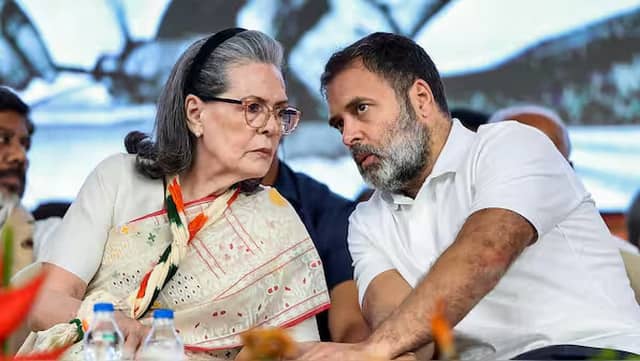
Meanwhile, Rahul Gandhi, the LoP in the Lok Sabha, said India must be "morally clear" in the military action. Rahul, in the aftermath of Khomeini’s death, had questioned the Prime Minister’s "silence" on the death of a head of state.
Congress president Mallikarjun Kharge was deeply critical of the Centre. “Given this, the conflict in West Asia is deeply antithetical to our commitment to ‘Vasudhaiva Kutumbakam’ (the world is one family), Mahatma Gandhi’s doctrine of ‘ahimsa’ (non-violence), and (former) Prime Minister Jawaharlal Nehru’s policy of non-alignment,” Kharge said.
Congress’ media and publicity department head Pawan Khera went even further, calling it a “complete betrayal” of all that India has stood for.
“The silence of the Modi Govt on the targeted assassination of Ayatollah Khamenei and other Iranian leaders demonstrates its abdication of moral leadership and its reluctance to say anything remotely critical of the US and Israel. It is a complete betrayal of all that India has stood for. India has never before looked this weak,” Khera wrote on X.
Meanwhile, Priyanka Gandhi Vadra said the killing of the leadership of a sovereign nation by the “so-called leaders of the democratic world” and the killing of multitudes of innocent people is “despicable” and deserves strong condemnation.
Congress MP Tariq Anwar, calling Tharoor’s remarks his personal views, added that the Centre must make India’s position clear. “This may be his personal opinion… it is still not clear what our role is,” Anwar said.
The bottom line
This isn't the first time Tharoor has broken from the Congress party line. Tharoor earlier praised the Centre during Operation Sindoor and even joined a multi-party global outreach delegation.
In fact, Tharoor has time and again been seen to be at odds with his party leadership. Arguably the most high-profile example of this came in 2022 when Tharoor took on Kharge for the Congress party leadership. Tharoor at the time was going for greater reform within the party.
Tharoor in 2020 was also part of the “G-23” group of senior leaders who wrote to the top brass to urge reforms. Tharoor's latest remarks are sure to further increase tensions between himself and his colleagues and the top Congress leadership.
Faqs
1) Why have Shashi Tharoor’s remarks triggered a political debate?
Shashi Tharoor’s remarks have sparked a debate because they diverge from the Congress party’s official stance on the Iran war.
2) What did Shashi Tharoor say about India’s stance on the war?
In his Indian Express op-ed, Tharoor said the conflict violates international law but argued diplomacy requires balancing principle with pragmatism.
3) How has the Congress leadership responded?
Senior Congress leaders, including Sonia Gandhi, Mallikarjun Kharge, Rahul Gandhi, Jairam Ramesh and Pawan Khera, have criticised the Centre.
With inputs from agenciest

Military drones & police check-ups: How Sri Lanka is fighting against worst dengue outbreak in a decade
How Facebook job ad lured 2 Karnataka men into Myanmar cyber scam camp
Why is India seeing 95% cloud cover despite a Super El Niño?
What is CJP’s fourth demand to the government as protests in Delhi intensify?
The new geography of war: Why the Houthis can no longer be ignored