


Why Pakistan's ISI is directing terror operatives to join Indian political parties
From directing overground workers (OGWs) in Jammu and Kashmir to infiltrate national political parties in India to grooming next-generation leaders of terror outfits operating from its territory, mapping Pakistan’s evolving strategy to expand its terror network

Pakistan is at it again. This time, the infamous Inter-Services Intelligence (ISI) is attempting to inject terror into the political bloodstream.
According to reports, the spy agency has ordered its overground workers (OGWs) in Jammu and Kashmir to infiltrate national political parties.
But what do we know about Pakistan’s plans? What are authorities in India saying?
Let’s take a closer look.
Inside Pakistan's plan
According to NDTV, the Jammu and Kashmir police cracked the plan by questioning OGWs they had nabbed. Investigators became suspicious after finding membership cards of national parties in their pockets. The idea is to use politics as a shield for their terror activities by embedding terror sympathisers, who provide critical logistical support, recruitment and funding to terror outfits, in legitimate political parties.
 More from Explainers
Officials say that the OGWs often show basic membership cards of national political parties in order to try to avoid being taken in by the authorities during a crackdown. According to NDTV, this is straight out of an old playbook. In the late 1990s and the 2000s, several instances of OGWs using party membership cards in this manner had emerged.
In July 2020, villagers in Reasi caught Talib Hussein, a wanted Lashkar-e-Taiba terrorist. Hussein was found to be an active member of the BJP, as well as the party’s Minority Morcha social media in-charge in Jammu. Two AK rifles, several grenades and other arms and ammunition were recovered from Hussein. He even used his membership to get photographs with the top leadership of the party.
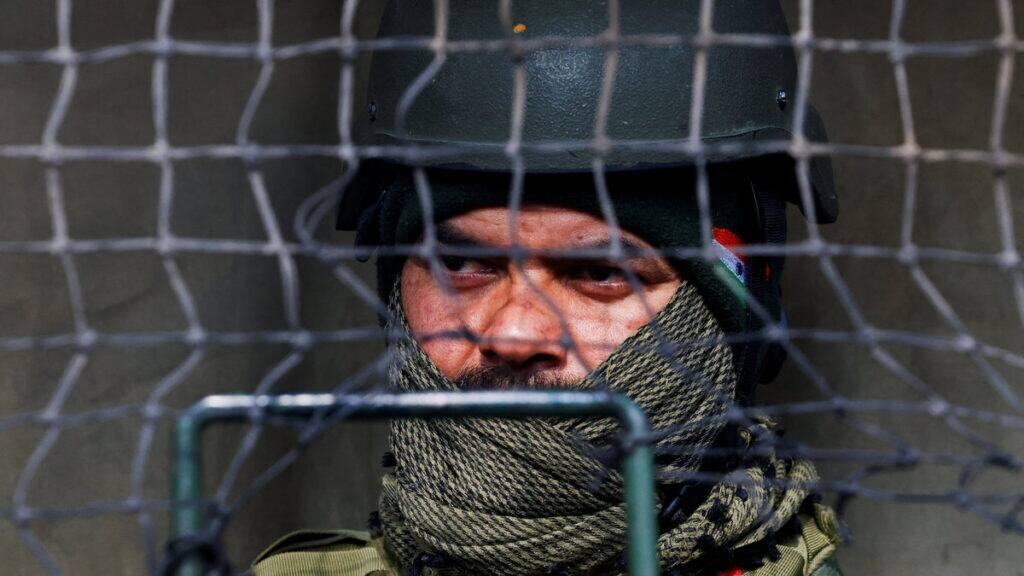
Former DGP SP Vaid told the outlet that this ploy will, to some extent, shield OGWs from scrutiny by security forces. “The membership card becomes a shield during searches,” he said. “We have had cases where OGWs exploited party membership to transport arms,” he added.
However, officials have clarified that no political parties have ever intervened to save these OGWs. Terrorists have also previously used voter ID and fake Aadhaar cards. A Lashkar module in Punjab’s Malerkotla was an example of how Pakistani terrorists operated in India for well over a decade under the radar of the authorities.
Pakistan grooming next generation of terror leaders
That’s not all.
The Pakistani deep state is also eyeing pushing forward next-generation leaders of terror outfits operating from its country, according to New Indian Express.
Intelligence agencies have informed the Centre of Lashkar-e-Taiba’s attempts to build a large covert maritime capability to carry out attacks against India. According to the report, the Pakistan Markazi Muslim League (PMML) – the LeT’s political front – has thus far trained more scuba divers and professional swimmers than any other terror outfit in Asia. These activities are being carried out across major cities in Pakistan and Pakistan-occupied Kashmir under fake “water rescue” banners.
Intelligence agencies have said that PMML Deputy Secretary General Harish Dar has been present and supervising these specialised training programmes. This includes scuba diving, professional swimming, high-speed boat handling and social media operations. Officials added that several large pools, rivers, canals, lakes and coastal zones in Pakistan are being used for the training.
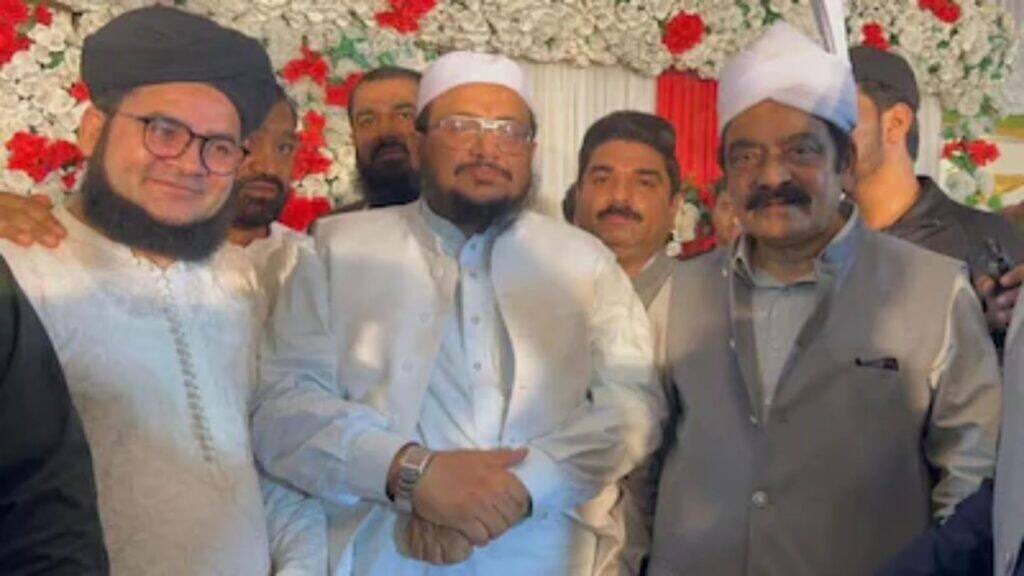
Intelligence also said a high-level meeting was recently held in Bahawalpur between the ISI and the Pakistani Army. Senior commanders from several terror groups, including many who are thought to be the next generation of leadership, were present. The idea was to plan a large-scale infiltration into Jammu and Kashmir and coordinate future terror attacks.
Senior LeT operatives Talha Saeed and Saifullah Kasuri, and Jaish-e-Mohammad (JeM) commander Abdur Rauf, were present at the meeting. They then held a secret meeting with Masood Azhar. Intelligence noted that similar meetings took place ahead of the Pahalgam terror attack. Security agencies say that the ISI is shifting tack from terror leaders such as Hafiz Saeed and Masood Azhar. The ISI will also sponsor and fund these operatives to ensure the terror outfits continue to function.
OGWs reviving defunct outfits
In a related development, OGW activities have been seen in reviving outfits that had become largely defunct after 1993. Security agencies are now closely tracking the resurfacing of names of terror groups that defined the initial, bloody phase of terrorism in Jammu and Kashmir in the 1990s and early 2000s, including Al-Umar Mujahideen, Al Badr and Tehreek-ul-Mujahideen.
By attempting to revive these older, home-grown banners, the ISI aims to project a false narrative that the terror violence in Jammu and Kashmir is an internal, home-grown movement rather than a proxy war orchestrated from across the border, officials said.
While the high command of these revived terror groups remains safely sheltered in Pakistan and Pakistan-occupied Kashmir, their ground-level networks are attempting to become active in propaganda, funding and radicalisation.
Officials said that central intelligence agencies are maintaining a tight vigil on these developments and ensuring the neutralisation of the logistical networks being spun by these resurfaced OGWs. At the same time, they are aggressively combating the ideological subversion of youths by terror sympathisers, as this will be critical in sustaining the hard-earned peace and stability in the region.
FAQs
1. What is Pakistan allegedly planning according to reports?
Pakistan’s ISI is reportedly attempting to infiltrate Indian political parties using overground workers (OGWs) to support terror activities under the cover of legitimate politics.
2. How are OGWs using political affiliations?
OGWs are said to carry membership cards of national parties to avoid suspicion during security checks and facilitate logistics like transport, recruitment and funding.
3. What new strategy are intelligence agencies concerned about?
Agencies have flagged efforts to groom next-generation terror leaders and develop maritime attack capabilities, along with reviving older terror outfits to create a false narrative of local insurgency.
With inputs from agencies

Military drones & police check-ups: How Sri Lanka is fighting against worst dengue outbreak in a decade
How Facebook job ad lured 2 Karnataka men into Myanmar cyber scam camp
Why is India seeing 95% cloud cover despite a Super El Niño?
What is CJP’s fourth demand to the government as protests in Delhi intensify?
The new geography of war: Why the Houthis can no longer be ignored