


Why Pakistan is rattled over Chenab–Beas tunnel and its link to the Indus Waters Treaty
After India announced it would move ahead with work on the Chenab–Beas project, Pakistan has claimed that the project has 'dangerous implications for Pakistan’s economy' and that it could violate the Indus Waters Treaty. But what do we know about the project?

The Chenab–Beas tunnel project has rattled Pakistan.
Islamabad has claimed that the project has “dangerous implications for Pakistan’s economy” and that it could violate the Indus Waters Treaty.
This came after reports that India has moved ahead with work on the Chenab–Beas project. India, after the Pahalgam terror attack, had announced that the Indus Waters Treaty would be kept “in abeyance”. Prime Minister Narendra Modi at the time said that “blood and water cannot flow” together.
But what do we know about the development? Why has it spooked Pakistan?
Let’s take a closer look.
Chenab–Beas tunnel project
The Chenab–Beas Link Tunnel Project is an infrastructure scheme connected with the Chenab River. According to GKToday, it will be built in Himachal Pradesh at an estimated cost of Rs 2,532 crore.
 More from Explainers
According to News18, it is also known as the Link-3 project. It comprises an 8.7-kilometre tunnel to divert extra water from the Chenab basin to the Beas River. It is linked to the Indus river system, which comprises the Chenab, Jhelum, Ravi, Beas, and Sutlej rivers.
Phase 1 of the project will also comprise a 19-metre-high barrage on the Chandra River. This is near Koksar village in Himachal Pradesh’s Lahaul Valley.
According to the South Asia Network on Dams, Rivers and People blog, the 19-metre-high concrete barrage – to be built at an elevation of 10,300 feet – and stilling basin will be built atop a deep upstream plastic concrete cut-off trench, fortified bank-side power intake structures.
The 8.7-kilometre water diversion tunnel will go through the Pir Panjal Range and will be supported during construction by horizontal access adits that will later be sealed with permanent concrete adit plugs. The water tunnel will be near the Atal Tunnel at Rohtang Pass.
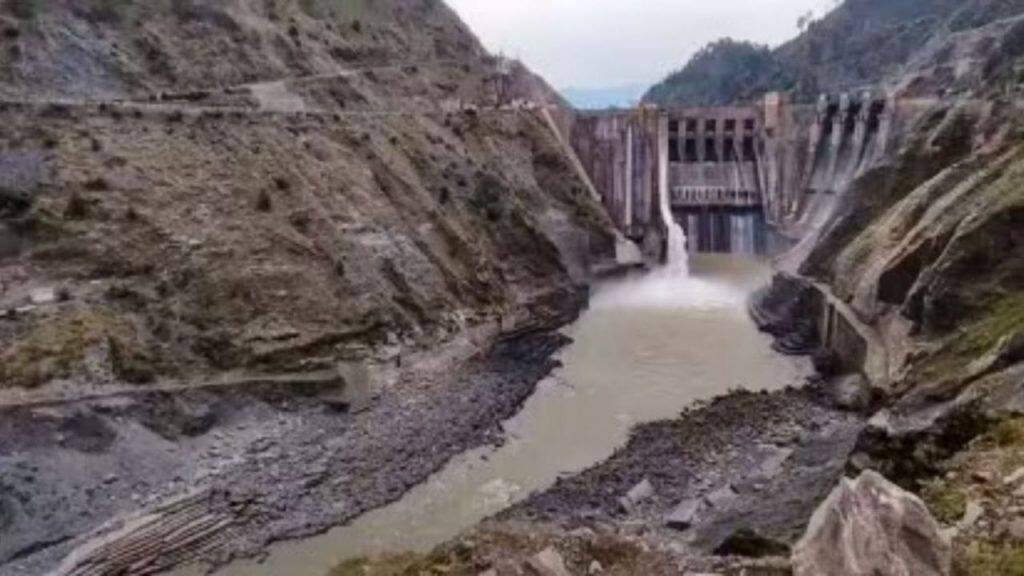
The project is being undertaken by the National Hydroelectric Power Corporation (NHPC). It will generate 4,000 MW of extra hydropower in Himachal Pradesh. According to Moneycontrol, work on the project is set to commence on August 1, 2026. The Centre is eyeing its completion by July 31, 2029.
As per News18, India has also approved a new sediment management tunnel at the Salal Dam. This Rs 268 crore project, which will also be undertaken by the NHPC, will take place at the Salal hydroelectric project in Jammu and Kashmir.
The Salal reservoir has been facing severe siltation for decades due to the sheer volume of sediment that the Chenab River carries from the Himalayas. Engineers say this has brought down storage capacity, affected turbine efficiency, and complicated water-flow management over the years. They say the project will divert water when needed and also remove accumulated sediment from the reservoir via a bypass mechanism.
What is Pakistan saying?
Pakistan has slammed India over these projects.
“India has neither officially communicated nor shared any notice about these projects. These projects confirm that India seeks to weaponise water; this carries dangerous implications for Pakistan’s economy…,” the Pakistan Foreign Ministry said, as per News18.
Islamabad claimed that the project violates the Indus Waters Treaty.
“We have seen this media report and the public tender document issued by the Government of India for the Chenab–Beas link project with the intention of transferring 1.9 million acre-feet of water from the Chenab River to the Beas. Such an inter-basin project constitutes a grave violation of the Indus Waters Treaty,” the Pakistan Foreign Ministry said. It called the project at the Salal Dam a “deeply concerning development”.
Why is Pakistan concerned?
Pakistan has essentially accused India, which is looking to maximise its resources, of violating the Indus Waters Treaty.
India and Pakistan had signed the Indus Waters Treaty on September 19, 1960. It divided up six rivers of the Indus basin between the two countries. Under its provisions, the three eastern rivers, namely the Ravi, Beas, and Sutlej, were granted to India, while the three western rivers, which include the Indus, Jhelum, and Chenab, were assigned to Pakistan.
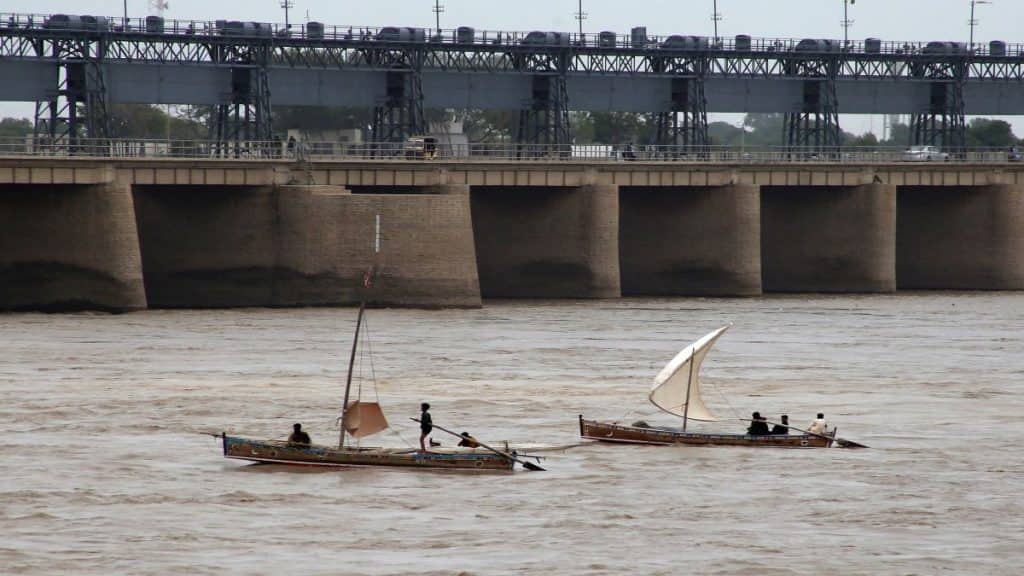
This division gave India control over about 20 per cent of the basin’s waters and Pakistan about 80 per cent. Despite the division, India retained limited rights for non-consumptive uses such as irrigation, hydropower generation, and navigation on the western rivers.
Pakistan has frequently objected to India’s dams and hydropower projects on the western rivers, citing potential adverse impacts on its water security. As of now, the Indus Waters Treaty remains suspended following the Pahalgam attacks.
What do experts say?
Some experts have cited environmental reasons to urge caution about the area in which the Chenab–Beas project is being built.
The South Asia Network on Dams, Rivers and People blog noted that the region has been facing unprecedented climate disasters over the past few years. These include landslides, flash floods, cloudbursts, glacial lake outburst floods (GLOFs), earthquakes, and rapidly changing river flows due to climate change.
The blog quoted scientists as saying that a glacial lake outburst flood (GLOF) “is an emerging threat in the Chandra basin”. In November 2025, the Lahaul-Spiti Deputy Commissioner warned, “We are sitting on a GLOF.”
“…this might be one of the most disaster-prone regions in the Indian Himalayas for such a project. It witnesses multiple risks which do not sit side by side, but routinely mix with each other, magnifying the impact of the disaster,” the blog warned.
It warned that “the safety of thousands of Indians and the future of the Indian Himalayan region” is at stake.
FAQs
1. What is the Chenab–Beas tunnel project?
It is a proposed 8.7-kilometre tunnel that will divert water from the Chenab basin to the Beas basin in Himachal Pradesh, along with a barrage and related infrastructure.
2. Why is Pakistan opposing the project?
Pakistan claims the project could reduce water flows from the Chenab River and violate the Indus Waters Treaty, which governs river water sharing between the two countries.
3. What are the environmental concerns?
Experts warn that the project is located in a fragile Himalayan region prone to landslides, floods, earthquakes, and glacial lake outburst floods, raising questions about safety and long-term sustainability.
With inputs from agencies

Military drones & police check-ups: How Sri Lanka is fighting against worst dengue outbreak in a decade
How Facebook job ad lured 2 Karnataka men into Myanmar cyber scam camp
Why is India seeing 95% cloud cover despite a Super El Niño?
What is CJP’s fourth demand to the government as protests in Delhi intensify?
The new geography of war: Why the Houthis can no longer be ignored