


Why 'meat-loving' Kashmir is facing a mutton shortage
The mutton crisis in Kashmir is caused by Punjab's levy on vehicles carrying livestock to the Valley. Chief Minister Omar Abdullah has written to his Punjab counterpart, Bhagwant Singh Mann, urging an end to the 'illegal' imposition of a fee of up to Rs 25,000 on each truck. This has led to supply disruption amid peak wedding season

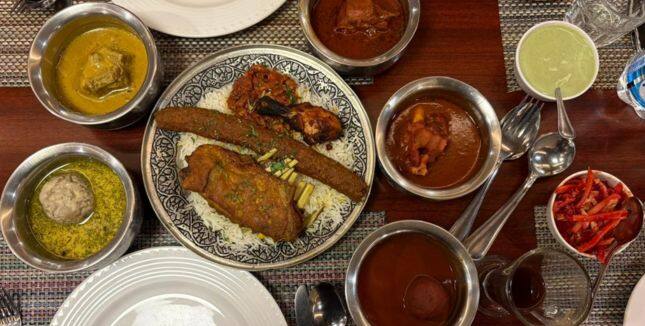
The 'meat-loving' Kashmir is facing a mutton crisis. The shortage is leading mutton dishes to disappear from Kashmir's multi-course meal, Wazwan, and is directly impacting the shadi season.
Who is to blame for that? According to Kashmir wholesale and retail mutton dealers, the dearth is caused by Punjab's levy on vehicles carrying livestock to the Valley. They called it a "forced collection" of fees from trucks en route to Kashmir carrying livestock from Rajasthan and Haryana by contractors in Punjab.
The disruption has prompted Chief Minister Omar Abdullah to write to his Punjab counterpart, Bhagwant Singh Mann, seeking intervention to ensure the “smooth, secure and unhindered” movement of livestock transport vehicles. Calling the levy “illegal and arbitrary," Abdullah wants Mann to end the imposition of the fee on Kashmir-bound trucks.
 More from Explainers
We take a look.
The mutton crisis in meat-loving Kashmir
According to official data, close to 90 per cent of Kashmir's population is meat-eaters, making it one of the country's highest per capita mutton-consuming regions, with more than 600 lakh kg per year. Over half of this arrives from sheep brought in from Haryana, Delhi and Rajasthan.
April to October is the peak wedding season in Kashmir, and the crisis could not have come at a worse time, directly hitting the mutton market during marriages.
Abdul Rashid Bhat, a local Kashmiri whose daughter is set to get married in two weeks, is extremely worried after learning of the shortage.
"Our butcher has informed us about the crisis. We have delayed the distribution of invitation cards for now. We hope the issue will be resolved by the time she gets married," Bhat told Indian Express.
Traders claim Punjab highway contractors impose a transit fee of Rs 20,000-25,000 per truck carrying livestock, resulting in mutton becoming more expensive — Rs 750 per kg, up from Rs 700.
Explaining the ground situation, Meraj-ud-din Ganaie, general secretary of the Kashmir Mutton Dealers Association, told Indian Express, "Our sheep mandis (markets) are closed for the ninth straight day today. Our sheep mandis (markets) are closed for the ninth straight day today."
The tax issue at the heart of the tussle
Mutton dealers import 40-50 vehicles carrying sheep (around 8,000 animals) per day; during wedding season, the demand takes a hit to 60-70 vehicles (around 11,000 sheep), traders note.
For its part, Punjab officials contend it is a ‘cattle mandi tax ’--a levy states put on livestock purchased from local markets.
A Punjab official explained: "The issue is not about the imposition of any new tax, but relates to alleged evasion of mandi fees and other prescribed charges in Punjab’s cattle markets. In several cases, cattle are being transported to other states without adherence to regulations, leading to revenue losses," the report noted.
However, J&K traders contest this, arguing that here, Punjab is only a transit state and therefore, they are not liable to pay the tax.
"Our livestock vehicles coming from Haryana, Delhi and other states are stopped at the entry and exit points in Punjab. This has been happening for a year. Earlier, they would charge Rs 5,000, but with every passing day, they are raising the tax," a trader said, adding that charges are as high as Rs 25,000 and becoming "untenable."
Mutton dealers say that despite Abdullah's letter to Mann, no changes are visible on the ground, and the levy fee imposed by Punjab contractors on Kashmir-bound trucks persists. Hilal Ahmad, a mutton dealer, asked, "We have no option but to go on a strike. How can we transport livestock in such a situation?" NDTV reported.
Ahmad said they are trying to improve local production; however, the availability remains far below consumer demand.
'Gunda tax': Mutton dealers over Punjab transit fee
Khazir Mohammad Regoo, President of All Kashmir Wholesale and Retail Mutton Dealers Association, described the levy as a “gunda tax," adding that the burden has impacted the livestock supplies to the Valley.
“It’s a ‘gunda tax’. We already pay tax in Delhi when purchasing mutton. This extra 4 per cent burden is unjustified and has choked supply lines to Kashmir,” Regoo said as reported by FreePress Kashmir. He also added that a meeting with the Punjab chief minister is expected in the coming days.
CM Abdullah assured mutton dealers: “I have taken up this issue with the Punjab government, seeking immediate intervention to ensure the unhindered movement of livestock transport vehicles through Punjab."
Officials from both states will meet shortly to resolve the issue, a Punjab government official also confirmed, according to reports.
"The meeting will be held at the director level in the Animal Husbandry and related departments of Punjab and Jammu & Kashmir. Only after this discussion will the Punjab government send a formal response to the letter received from the J&K chief minister,” IE reported, quoting an official.
“Punjab is keen to settle the matter through coordination between the two states," the official added.
With inputs from agencies

Military drones & police check-ups: How Sri Lanka is fighting against worst dengue outbreak in a decade
How Facebook job ad lured 2 Karnataka men into Myanmar cyber scam camp
Why is India seeing 95% cloud cover despite a Super El Niño?
What is CJP’s fourth demand to the government as protests in Delhi intensify?
The new geography of war: Why the Houthis can no longer be ignored