


Why Mamata lost Bhabanipur prestige battle to BJP’s Suvendu Adhikari
Though the contest in West Bengal had been decided earlier, much of the focus was on Bhabanipur, where a see-saw battle was unfolding between incumbent Chief Minister Mamata Banerjee and the BJP’s Suvendu Adhikari. Mamata was defeated by her former aide by over 15,000 votes in the constituency considered her home bastion in south Kolkata

The BJP has already made history in West Bengal.
After winning a massive 209 seats in the 148-seat Assembly, the party will form the government in the state for the first time. Prime Minister Narendra Modi described it as a victory for democracy and hailed the BJP’s lotus for “blooming everywhere”.
Yet, the focus remained on Bhabanipur, where a see-saw battle unfolded between Chief Minister Mamata Banerjee and the BJP’s Suvendu Adhikari. Now, Mamata Banerjee has been defeated by Adhikari by over 15,000 votes.
But why does this result in Bhabanipur matter for Mamata and Adhikari? How and why did Mamata lose the prestige battle to Adhikari?
 More from Explainers
Let's take a closer look:
What happened
Bhabanipur became the defining contest of the day.
After 20 rounds:
Adhikari — 73,463 votes.
Mamata — 58,349 votes.
Margin — over 15,000 votes.
- Catch live updates from election results 2026 here
The big picture: Experts point to multiple factors — the RG Kar Medical College rape-murder case impacting her image on women’s safety, the SIR process and voter scrutiny, Bhabanipur’s demographic composition, and a wider anti-incumbency wave against the TMC.
For Mamata
For Mamata
For Mamata, the significance of losing Bhabanipur cannot be overstated. The constituency was considered her home bastion in south Kolkata and a veritable fortress, having been a Trinamool Congress seat since 2011.
Mamata had returned to Bhabanipur after her narrow defeat in Nandigram in 2021, where she lost to Adhikari by less than 2,000 votes. She subsequently won Bhabanipur by a large margin to retain her position as chief minister. The constituency includes Kalighat, where she resides, and where she first developed her political base as a Youth Congress leader.

What changed: This time, the trend shifted. Analysts highlight anti-incumbency, voter scrutiny, demographic factors, and BJP vote consolidation as key reasons. The defeat — at the hands of a former trusted lieutenant — may signal a broader political shift in Bengal.
For Adhikari
For Adhikari, the victory is significant both symbolically and politically. Defeating Mamata in her stronghold reinforces the BJP’s argument that her dominance in West Bengal may be waning.
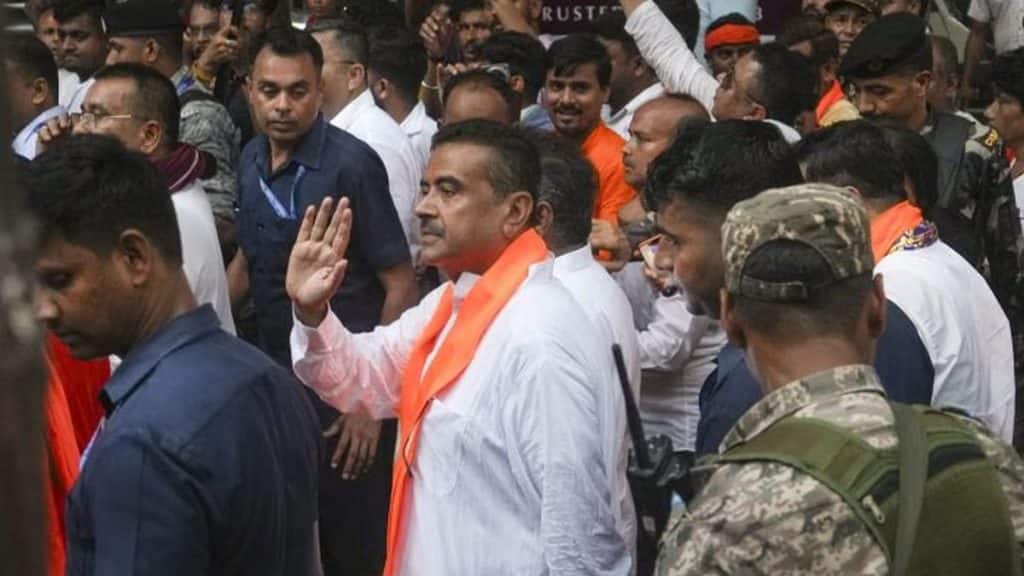
The BJP had pushed for this direct contest, with Adhikari contesting both Nandigram and Bhabanipur. The strategy was to keep Mamata on the defensive, limit her statewide influence, and reduce her impact on other TMC candidates.
The takeaway: The result delivers not just a win, but also a psychological advantage for the BJP.
Suryaneel Suvendu, chief election agent, confirmed the outcome, saying: “We have won by more than 15,000 votes. Mamata Banerjee has done drama here.”
How the counting unfolded
The counting process was marked by sharp swings.
Early trend: Mamata led, building a 1,996-vote advantage in the first round. Adhikari briefly moved ahead in the second round by 1,558 votes. By the seventh round, Mamata had extended her lead to over 17,000 votes.
The shift: The margin steadily narrowed — 15,494 after the eighth round, 12,131 after the tenth, and 7,184 after the twelfth. By the fourteenth round, the lead had dropped to 3,830 votes.
Endgame: By round sixteen, Mamata was trailing by 563 votes. From there, Adhikari maintained the lead and went on to win.
What she said: Bhabanipur witnessed intense activity throughout the day, with both leaders present at the counting centre. Mamata later questioned the credibility of the process, calling it an “immoral victory” and alleging irregularities. “We will bounce back,” she said, accusing the Election Commission of bias and claiming that complaints had not been addressed. She also alleged that she was “pushed and berated” inside the counting centre.
FAQs
1. Why is Mamata Banerjee’s loss in Bhabanipur important?
Because it was her stronghold, making the defeat both politically and symbolically significant.
2. What factors contributed to her defeat?
Anti-incumbency, voter scrutiny, demographic factors, and the impact of the RG Kar Medical College case are seen as key reasons.
3. What does this result mean for the BJP?
It strengthens the BJP’s position in West Bengal and suggests a possible shift in the state’s political landscape.
With inputs from agencies

Military drones & police check-ups: How Sri Lanka is fighting against worst dengue outbreak in a decade
How Facebook job ad lured 2 Karnataka men into Myanmar cyber scam camp
Why is India seeing 95% cloud cover despite a Super El Niño?
What is CJP’s fourth demand to the government as protests in Delhi intensify?
The new geography of war: Why the Houthis can no longer be ignored