


Why is the Amarnath ice Shivling melting within days of the yatra?
Several news reports and devotees’ accounts show that the ice Shivling has melted dramatically within the first week of the Amarnath Yatra. The rapid melting of the lingam is not solely due to the weather or climate change. The combined effects of expanding infrastructure and increasing human activity in this ecologically fragile region may be affecting the cave’s delicate microclimate, according to reports

As this year’s Amarnath Yatra draws record numbers of pilgrims, attention is also shifting to the sacred ice lingam, also known as Baba Barfani. Alarming reports point to a 90 per cent meltdown of that very ice shivling; some reports even suggest that it has almost disappeared just five days into the 57-day Yatra.
The Amarnath Yatra began on July 3 this year amid heightened security, in the wake of the April 2025 terror attack in Pahalgam that killed 26 innocent tourists and civilians. According to a Hindu report, over 32,000 devotees offered prayers by July 5 and more than 20,000 pilgrims visited the shrine on the second day alone. The second day footfall was considered the highest in many years.
 More from Explainers
People on social media, some of whom even visited the shrine, claimed that the ice lingam of one of India's largest pilgrimages had shrunk. People's Democratic Party (PDF) leader Iltija Mufti also raised an alarm, alleging that the naturally formed ice lingam at the Amarnath Cave shrine had melted just a week after the annual Yatra commenced.
"Only a week into the Amarnath Yatra and the naturally formed lingam has already melted. Climate change, driven by mindless tree felling, illegal mining, poor waste management and the dangerous depletion of water levels, is a major factor," she wrote on X.
Shri Amarnath Barfani Langars Organisation (SABLO) also expressed concerns over the early melting of the ice Shivling and called for a comprehensive scientific probe into the matter.
So, has the Amarnath ice lingam melted? If so, what's causing the shrinking? We take a look.
Is the sacred Amarnath ice lingam shrinking?
Several news reports and devotees’ accounts show that the ice Shivling has melted dramatically within the first week of the Yatra. India Today quoted its Srinagar journalist, who posted on X on July 6: "Once again, the naturally formed Shiv lingam at Holy Amarnath Cave has melted within the first week of Amarnath Yatra.”
Vineet Kaul, a Srinagar-based entrepreneur, wrote on X, saying that the Amarnath ice lingam "has not melted like this for the first time", noting that similar episodes of shrinking occurred in years such as 2004, 2006, 2007, 2016 and 2020. But he stressed that this instance must not be used to ignore the issue.
Kaul also called for a proposed ropeway near the Amarnath shrine “abhorrent.” He argued that efforts to enhance infrastructure and safety must go hand in hand with protecting the area’s ecology and sanctity.
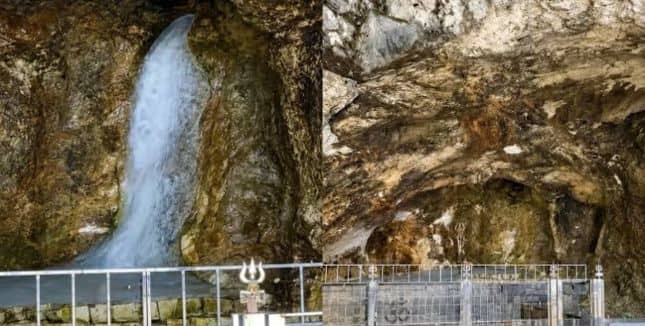
It is pertinent to note that while some claim that ice formation has melted or completely shrunk, there is no scientific evidence quantifying the extent of the melting.
“The shrinking of the ice was clearly visible,” a devotee from Madhya Pradesh who visited the cave shrine told IT. "The ice lingam has melted to some extent. This year, it has melted a little earlier than usual. The changing weather is also affecting people's faith in a way, because earlier Baba would give darshan to devotees for around 40 to 45 days. In recent years, however, the duration has reduced to barely five to seven days. This time, we had darshan on the fourth day of the Yatra, but the ice lingam had already melted significantly. It has become much smaller," he said.
What is the biggest factor?
According to scientists, the Himalayas are warming much faster than any other mountain system worldwide. An increase in average temperatures, shifting snowfall patterns, and retreating glaciers are visible across Jammu and Kashmir.
News reports this week noted abnormally warm conditions around the cave and surrounding glaciers as one of the key causes for the rapid melting of the ice stalagmite.
Situated at an altitude of nearly 3,900 metres, the Amarnath cave remains highly sensitive to environmental changes. Even modest increases in ambient temperature and fluctuations in humidity inside the cave can easily affect the formation and survival of the naturally occurring ice structure.
Can climate change be solely blamed?
The rapid melting of the lingam is not solely due to weather or climate change.
In recent years, the Amarnath route has witnessed significant transformation. These changes include the widening of roads, the expansion of temporary accommodation, and the establishment of community kitchens, also called langars, which have come closer to the shrine.
Electricity, solar lighting, and improved access measures are being introduced. The Centre has also recently approved a ropeway project, while the government is mulling over a proposed tunnel connecting Sheshnag and Panchtarni, India Today reported.
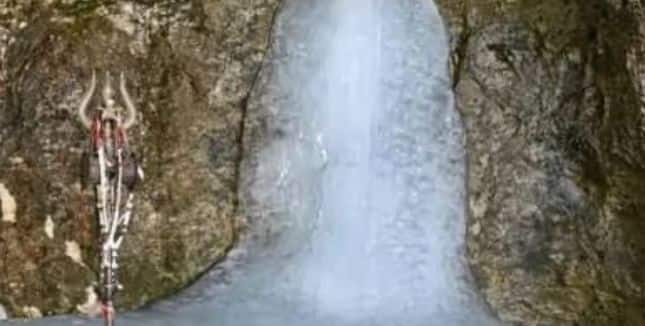
Now, all these developmental moves have ensured safety and direct access to the pilgrimage. But the combined effects of expanding infrastructure and increasing human activity in this ecologically fragile region may be affecting the cave’s delicate microclimate.
Congress national spokesperson Ashwani Handa has appealed to Lieutenant Governor Manoj Sinha to order an “independent scientific study” to analyse whether the rain shelter built near the cave was “altering the local microclimate and contributing to the faster melting of the Holy Ice Lingam”.
On X, Handa wrote that a "transparent, evidence-based assessment" was required to secure both the shrine's sanctity and the sensitive Himalayan environment.
What is Amarnath langar’s association demanding?
SABLO President Rajan Gupta said that the Langar Association has submitted a detailed representation to the Shri Amarnath Shrine Board, which oversees the annual pilgrimage, raising concerns over the untimely melting of the ice lingam at the cave shrine, due to which “the majority of pilgrims will be deprived of the darshans of the sacred ice-lingam”.
Gupta called for an independent multidisciplinary panel of experts in glaciology, geology, climate science, environmental science, cave climatology, and structural engineering to conduct a comprehensive probe into the factors affecting the formation and preservation of the naturally formed ice lingam, the New Indian Express reported.
Stressing that the ice lingam is not merely a natural ice formation but the focal point of faith for millions of devotees across India, SABLO called for all possible scientific, environmental, and administrative measures to safeguard the cave's sanctity while ensuring the safety of pilgrims.
The sacred shrine is located at an altitude of about 3,888 metres (12,756 feet) in the Himalayas of J&K’s Anantnag district.
With inputs from agencies

Military drones & police check-ups: How Sri Lanka is fighting against worst dengue outbreak in a decade
How Facebook job ad lured 2 Karnataka men into Myanmar cyber scam camp
Why is India seeing 95% cloud cover despite a Super El Niño?
What is CJP’s fourth demand to the government as protests in Delhi intensify?
The new geography of war: Why the Houthis can no longer be ignored