


Why the Canada wildfires continue to burn with no respite in sight
Canada's wildfire season has turned into a major North American crisis, with hundreds of fires burning across multiple provinces and smoke spreading into the US. Here's why Canada's vast boreal forests, extreme weather and unique fire behaviour make this blaze so difficult to extinguish

What initially appeared to be a relatively manageable wildfire season in Canada has transformed into a continent-wide environmental and health emergency.
Hundreds of wildfires have been burning simultaneously across multiple Canadian provinces, with many remaining beyond the control of firefighting agencies despite the deployment of extensive personnel, aircraft and specialised equipment.
Smoke generated by the fires has drifted thousands of kilometres across North America, reducing visibility, triggering air quality alerts in major cities, disrupting outdoor activities, forcing community evacuations and affecting millions of residents in both Canada and the United States.
How extensive is Canada's wildfire crisis?
Canada's wildfire season has escalated dramatically since late spring, with fire activity increasing rapidly as summer temperatures climbed across large parts of the country.
 More from Explainers
By mid-July, Canadian authorities placed the number between approximately 850 and 897 active fires with hundreds of those blazes being classified as "out of control" or remained under active observation because firefighters had not been able to fully suppress them.
According to the Canada Interagency Forest Fire Centre, active wildfires have been recorded in British Columbia, Yukon, Alberta, the Northwest Territories, Saskatchewan, Manitoba, Ontario, Quebec, Newfoundland and Labrador, New Brunswick, Nova Scotia, Prince Edward Island, as well as within Parks Canada.
Among these regions, Ontario, Quebec and the Northwest Territories have emerged as some of the worst-affected jurisdictions.
Ontario alone reported 191 active wildfires during one of the latest provincial updates. Officials said 81 of those fires were considered out of control, while another 88 remained under observation. Eleven fires had been classified as contained and another 11 were under control.
The response effort has been extensive. Canadian authorities have deployed more than 150 fire brigades supported by helicopters, water bombers and specialised firefighting equipment in an attempt to slow the spread of the fires and protect threatened communities.
Some of the largest fires are burning north of Lake Superior in remote parts of Ontario, including areas located within or close to national parks and First Nation communities.
One of the communities to suffer severe destruction has been the Namaygoosisagagun First Nation in northern Ontario, where a wildfire tore through the area with little warning, leaving the tribal community devastated.
The wildfire emergency is not confined entirely to Canada. Across the border in Minnesota, approximately 15 fires have continued burning near the state's northern edge, prompting authorities to declare an emergency to accelerate suppression efforts.
Officials in the United States also closed the Boundary Waters area while crews battled several active fires. Although these American fires are far smaller than the Canadian wildfire complex, they have added to the smoke affecting parts of the Upper Midwest.
Why has the wildfire season spread so rapidly?
Wildfires occur every year in Canada, particularly within its vast boreal forest ecosystem, but several environmental conditions have combined to accelerate fire activity during this summer.
The wildfire season began with what many viewed as a relatively calm spring. However, conditions changed quickly as prolonged periods of unusually hot weather developed across northern regions.
Meteorologists and fire agencies have linked the sharp increase in fire activity to sustained high temperatures during late June, especially across northern Ontario, combined with significantly below-average rainfall.
This combination removed moisture from forests, peatlands and grasslands over large areas, leaving vegetation increasingly dry and highly combustible.
Much of the abnormal heat has been associated with a persistent heat dome. A heat dome develops when a strong high-pressure weather system becomes trapped over a region.
The high-pressure system compresses and heats the air beneath it while limiting cloud formation and rainfall. As a result, temperatures remain elevated for extended periods and the landscape becomes progressively drier.
Because the weather pattern remains relatively stationary, smoke produced by the fires can also become trapped within the atmosphere before being carried over long distances by prevailing winds.
The equation of extreme heat with limited rainfall has created an environment where vegetation acts as an abundant source of fuel. Trees, shrubs, grasses and other plant material lose moisture during prolonged hot spells, allowing fires to ignite more easily and spread more rapidly.
Fire scientists have also noted that hot atmospheric conditions can become unstable, increasing the likelihood of thunderstorms capable of producing strong winds.
These winds can dramatically increase wildfire intensity by pushing flames across new terrain while simultaneously carrying burning embers ahead of the main fire front.
Lightning associated with these storms presents another challenge. In Canada, roughly half of all wildfires are started naturally by lightning strikes, while the remaining fires result from human activity.
During periods of prolonged drought, lightning-caused fires are especially difficult to manage because multiple ignitions may occur across remote landscapes within a very short period.
Environment and Climate Change Canada has warned that above-average temperatures are expected to persist through August across several regions, including Manitoba, northwestern Ontario and parts of British Columbia.
Unless widespread and sustained rainfall develops over these areas, authorities expect active wildfire conditions to continue well into the remainder of the summer.
Why has it been so difficult to extinguish Canada's wildfires?
If Canada possesses modern firefighting aircraft, highly trained emergency crews and extensive wildfire experience, why can't authorities simply extinguish the fires? The answer is considerably more complicated than it might first appear.
Canada's wildfire agencies face multiple challenges simultaneously.
Canada's forests are enormous — and many fires burn far from civilisation
One of the biggest obstacles is the location of many of the fires. Large sections of Canada's boreal forest are among the most remote landscapes in North America.
Unlike fires occurring near towns or cities, many of the current blazes are burning hundreds of kilometres from permanent settlements. Road access often does not exist.
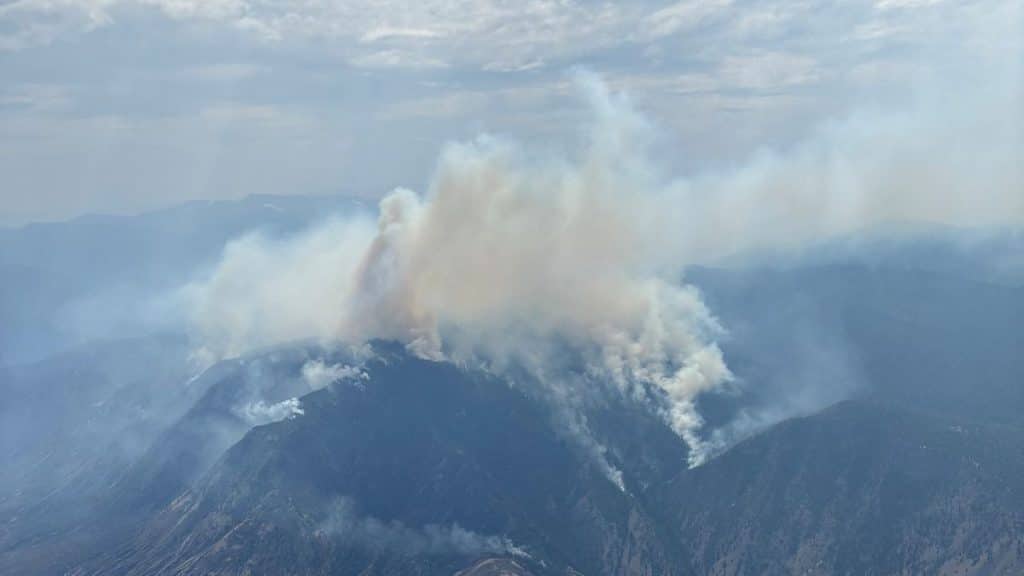
There are no nearby fire hydrants, municipal water systems or extensive transport networks capable of supporting conventional firefighting operations. As a result, emergency crews cannot simply drive fire engines directly to the fire line.
Instead, firefighters, equipment and supplies frequently have to be transported by helicopters, floatplanes or specialised aircraft capable of operating in isolated wilderness areas.
Canada also relies on smokejumpers — highly trained firefighters who parachute directly into remote fire zones that cannot be reached by conventional transport. Deploying personnel into these areas requires extensive logistical planning and significant financial resources before suppression operations can even begin.
Fires simply monitored instead of extinguished
When fires occur deep within remote wilderness areas and pose no immediate danger to people, infrastructure, highways or commercially important forests, authorities may classify them as being under observation or monitored rather than launching an aggressive suppression campaign.
This does not mean the fires are ignored. Instead, they are continuously tracked using satellite imagery, aerial surveillance and ground-based monitoring.
The strategy reflects the reality that Canada's wildfire agencies must prioritise limited personnel and equipment. Attempting to attack every remote wildfire simultaneously would rapidly exhaust available firefighting resources.
Instead, crews are concentrated around communities, evacuation zones, power infrastructure, transportation corridors and other locations where lives and property face the greatest immediate threat.
"Zombie fires" make suppression even harder
Another challenge exists beneath the forest floor. Unlike many forests elsewhere in the world, Canada's boreal forests often sit atop thick layers of peat and other partially decomposed organic material accumulated over centuries.
When wildfires become particularly intense, they do not simply consume trees and vegetation above ground. The heat can penetrate deep into the peat layer, allowing fires to continue burning underground long after surface flames appear to have diminished.
These underground fires are often referred to as "zombie fires" because they can continue smouldering beneath the soil for months. In some cases, they even survive beneath winter snow before re-emerging the following year once temperatures rise and the ground dries again.
This makes complete suppression exceptionally difficult. Even if aircraft drop millions of litres of water onto burning forests, underground hotspots may continue burning beneath the surface, allowing fires to reignite later.
Wildfires create their own weather systems
One of the least understood aspects of large wildfires is that, under the right conditions, they can begin influencing the atmosphere around them.
When an exceptionally large fire releases enormous amounts of heat, the hot air rises rapidly, carrying smoke, ash and moisture high into the atmosphere. In some cases, this process results in the formation of towering pyrocumulonimbus clouds — massive smoke-driven thunderstorm systems generated by the fire itself.
Unlike ordinary storm clouds, pyrocumulonimbus formations are directly linked to the intensity of the wildfire beneath them.
These fire-generated storms create a dangerous feedback loop. Strong and often unpredictable winds produced by the storm can suddenly change the direction or speed of the advancing fire front, making it much harder for firefighters to anticipate where flames will move next.
A fire that appears to be travelling in one direction can quickly shift course if winds generated by the storm intensify.
Another major concern is lightning. Pyrocumulonimbus clouds are capable of producing dry lightning — lightning that occurs with little or no accompanying rainfall.
Instead of helping extinguish existing fires, these strikes can ignite entirely new blazes several kilometres away from the original fire, forcing emergency responders to divide their attention across multiple fire fronts.
This phenomenon helps explain why wildfire suppression becomes increasingly difficult as fires grow larger. Rather than behaving like isolated incidents, the biggest fires can evolve into highly dynamic systems that continuously generate new challenges for firefighters on the ground.
How has wildfire smoke spread across North America?
Smoke generated by the blazes has travelled hundreds — and in many cases thousands — of kilometres, carried south and east by prevailing atmospheric winds.
Large plumes originating in northwestern Ontario and western Canada have crossed the Great Lakes before spreading across densely populated regions in both Canada and the United States.
Satellite imagery over recent days has shown smoke drifting southeast across Ontario, reaching Toronto before continuing into New York State and extending as far as Boston.
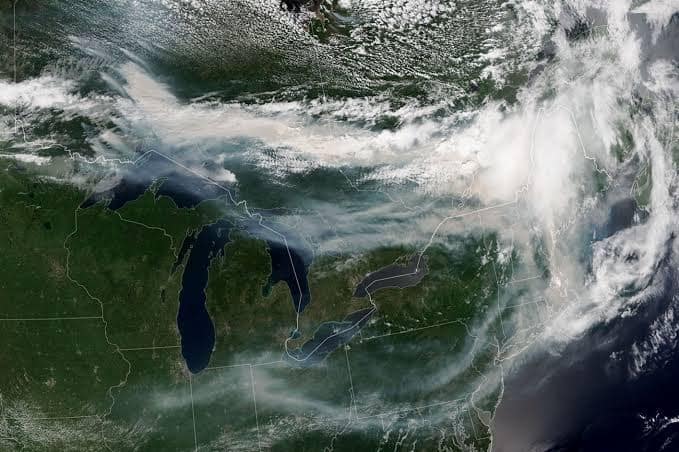
Changing wind patterns are expected to carry smoke even farther south, increasing exposure across Virginia and parts of North Carolina. The result has been deteriorating air quality across numerous metropolitan areas.
Toronto briefly recorded the worst air quality among major cities worldwide earlier in the week as thick smoke enveloped the city.
IQAir, which monitors air quality globally, also ranked Detroit, Toronto and Minneapolis among the cities experiencing some of the world's poorest air quality because of the lingering wildfire haze.
On Friday, several other major cities — including Detroit, Chicago, Washington DC and New York — also topped global air pollution rankings, prompting health officials to advise residents to reduce outdoor activities.
The smoke transformed normally clear summer skies into hazy grey and yellow landscapes, obscuring city skylines and reducing visibility across wide areas.
In many locations, residents resumed wearing face masks outdoors as smoke concentrations increased. Authorities activated emergency air-quality protocols in numerous cities.
New York introduced emergency measures as dense smoke spread across the state, while Chicago experienced hazardous concentrations of airborne particles severe enough for officials to close public beaches.
Air quality warnings were expected to remain in effect through Saturday across large parts of the Chicago metropolitan area and elsewhere in the United States. Officials have cautioned that smoke conditions are unlikely to disappear quickly because the source fires continue burning across remote areas of Canada.
How should you be prepared for wildfire smoke?
Wildfire smoke poses far greater health risks than many people realise. Rather than consisting solely of visible ash, the smoke contains a complex mixture of microscopic pollutants and gases produced as vegetation — and in some cases buildings or synthetic materials — burn.
Among the most concerning pollutants are PM2.5 particles. These fine particulate pollutants are small enough to bypass many of the body's natural defences, penetrate deep into the lungs and even enter the bloodstream.
The smoke also contains carbon monoxide, volatile organic compounds (VOCs), nitrogen dioxide and other harmful substances released during combustion.
Because of this combination, smoke exposure affects far more than the respiratory system.
According to the World Health Organization, wildfire smoke can aggravate existing respiratory illnesses while also worsening heart, kidney and eye conditions.
Medical experts have observed increases in emergency department visits during severe smoke events, including patients suffering asthma attacks, respiratory distress, cardiovascular emergencies and strokes.
The situation becomes even more dangerous when dense smoke coincides with prolonged heatwaves. Extreme heat places additional stress on the cardiovascular and respiratory systems.
At the same time, residents face an uncomfortable dilemma. Opening windows helps cool homes during hot weather but allows polluted air to enter. Keeping windows closed reduces smoke exposure but can make indoor temperatures increasingly uncomfortable during periods of intense heat.
Certain groups face particularly elevated risks. Emergency responders working outdoors experience prolonged smoke exposure while carrying out physically demanding tasks.
Children are considered especially vulnerable because they breathe more rapidly than adults and are physically closer to the ground, where smoke particles can become more concentrated.
Older adults and individuals living with chronic illnesses are also at greater risk of developing serious complications following prolonged exposure.
Governments therefore issue health advisories based on local air-quality measurements.
During orange-level alerts, residents are advised to avoid strenuous outdoor activities, remain indoors whenever possible, keep windows closed, wear well-fitting N95 or KN95 masks outdoors and seek immediate medical attention if they develop symptoms such as wheezing, shortness of breath or chest pain.
Properly fitted N95 and KN95 masks are capable of filtering approximately 95 per cent of these fine particles, although authorities note that wearing a mask does not eliminate every health risk associated with prolonged smoke exposure.
To reduce public exposure, several cities have also begun distributing masks through community centres while implementing emergency air-quality response plans.
How long could the smoke and fires continue?
Meteorologists caution that predicting smoke movement remains difficult because conditions depend heavily on changing wind patterns. Some regions may experience temporary relief if rainfall develops or if winds shift away from populated areas.
Forecasters also point out that improvements in one city do not necessarily indicate the wildfire emergency itself is easing. As long as hundreds of fires continue burning across Canada, smoke production will continue.
Officials believe parts of the Chicago area are likely to experience recurring smoke through at least the weekend, while changing atmospheric circulation could expose additional regions farther south.
New York officials have also warned residents to prepare for prolonged smoke impacts.
Attention has also focused on the FIFA World Cup final scheduled to be played at MetLife Stadium in New Jersey on Sunday, an open-air venue where smoke was initially expected to remain a concern.
Forecasts later suggested that rainfall combined with a change in wind direction could improve air quality before the match.
Looking farther ahead, however, Canada's fire outlook remains concerning. Environment and Climate Change Canada expects above-average temperatures and continued dry conditions across Manitoba, northwestern Ontario and parts of British Columbia through August.
Similarly, longer-term wildfire outlooks indicate that above-normal fire activity is likely to persist across Ontario, Quebec and the Northwest Territories during both July and August.
With inputs from agencies

Military drones & police check-ups: How Sri Lanka is fighting against worst dengue outbreak in a decade
How Facebook job ad lured 2 Karnataka men into Myanmar cyber scam camp
Why is India seeing 95% cloud cover despite a Super El Niño?
What is CJP’s fourth demand to the government as protests in Delhi intensify?
The new geography of war: Why the Houthis can no longer be ignored