
Advertisement


Sections
Why India’s first Arctic winter expedition is significant
India’s first winter expedition in the Arctic commences and now its research base Himadri in Norway’s Svalbard will be manned around the year. But what is India exploring in the frigid region, where temperatures fall to minus 14 degrees Celsius and polar nights last longer than 24 hours?

India is making significant strides in the field of science. It is now set to explore one of the coldest regions on Earth. On Tuesday, India commences its first winter expedition in the Arctic with year-round observations in Norway’s Svalbard, the world’s northernmost settlement.India’s National Centre for Polar and Ocean Research (NCPOR), the nodal agency for India’s polar expeditions, has a research station, Himadri at the Ny-Alesund research base. Himadri, which is located at a distance of 1,200 kilometres from the North Pole, will only be the fourth research station in the region that will be manned around the year.We take a look at India’s expedition and what to expect from it.What’s the aim of India’s expedition?Earth Sciences Minister Kiren Rijiju on Monday flagged off the winter science expedition to the Arctic region in a bid to maintain a year-long presence at the Himadri.A team of four scientists will embark on the journey on Tuesday to the research station in the Ny-Alesund town on the Brogger peninsula. The expedition and other experiments will continue until the end of March; each research team will spend a month in the frigid region.Thamban Meloth, director of NCPOR, said that the research will help in collecting data on atmospheric processes like the aurora borealis (northern lights), atmospheric electricity during winter, and other space-specific studies.The scientists will conduct atmospheric observations during the polar nights, monitor variations in sea ice, and study the role of precipitation on climate change, and the role of aerosols on climate change.“The Arctic is warming dramatically, and the impact is seen the world over, so it is important to collect data throughout the year and ensure there are no knowledge gaps,” Meloth was quoted as saying by The Times of India (ToI).The work of the scientists is expected to provide valuable insights into the complex interactions between the Arctic climate and the Indian monsoon system and contribute to the broader understanding of global warming effects, reports India Today.[caption id="attachment_13520942" align="alignnone" width="640"]![]() Scientists drive their snowmobiles cross the arctic during dawn near Ny-Alesund, Svalbard, Norway in April 2023. File photo/Reuters[/caption]The first team of scientists from Bengaluru-based Raman Research Institute (RRI) will focus on characterising the radio frequency environment in Svalbard. It is led by Girish BS from the electronic engineering group at RRI. The other teams to follow belong to the Indian Institute of Tropical Meteorology, Pune, IIT-Mandi, and the Goa-based NCPOR.“This historic venture holds immense significance as we navigate the Arctic’s critical influence on global climate, sea levels, and biodiversity for the first time,” said Kiren Rijiju.Why is exploring the Arctic important?The Arctic Region, which includes a vast ice-covered ocean, is one of the least explored and understood places on the planet. Climate change is causing the ice cover to diminish and scientists believe that it is important to study this region to understand the Arctic environment and the impact it will have on the world in the future.Over the last 100 years, temperatures in the Arctic have risen by four degrees Celsius on average. The sea ice in the region has been declining at 13 per cent every decade, according to the Intergovernmental Panel on Climate Change. If this continues, the region could become ice-free in less than 20 years.Also read: Why India must keep its foothold in ArcticThe rise in sea levels can affect atmospheric circulation. An increase in tropical sea surface temperatures could lead to increased precipitation in the tropics, a shift in the Inter Tropical Convergence Zone, and high chances of an increase in extreme rainfall events, according to a report in The Indian Express.If the temperature becomes milder because of global warming, it could make the Arctic more habitable. This could see a rush to explore the resources in the region, the report says.Why are Arctic explorations challenging? The extreme climate is one of the biggest challenges in the Arctic – the climate is harsh and darkness continues for months. Polar bears can also be dangerous.February is the coldest month in Ny-Alesund, where the temperatures drop to minus 14 and in July, which is the warmest, it hovers around five degrees Celsius.“While the Antarctic is harsher and more remote for exploration, the Arctic is challenging mainly because of the limited space for independent studies,” Meloth told The Indian Express.[caption id="attachment_13520962" align="alignnone" width="640"]
Scientists drive their snowmobiles cross the arctic during dawn near Ny-Alesund, Svalbard, Norway in April 2023. File photo/Reuters[/caption]The first team of scientists from Bengaluru-based Raman Research Institute (RRI) will focus on characterising the radio frequency environment in Svalbard. It is led by Girish BS from the electronic engineering group at RRI. The other teams to follow belong to the Indian Institute of Tropical Meteorology, Pune, IIT-Mandi, and the Goa-based NCPOR.“This historic venture holds immense significance as we navigate the Arctic’s critical influence on global climate, sea levels, and biodiversity for the first time,” said Kiren Rijiju.Why is exploring the Arctic important?The Arctic Region, which includes a vast ice-covered ocean, is one of the least explored and understood places on the planet. Climate change is causing the ice cover to diminish and scientists believe that it is important to study this region to understand the Arctic environment and the impact it will have on the world in the future.Over the last 100 years, temperatures in the Arctic have risen by four degrees Celsius on average. The sea ice in the region has been declining at 13 per cent every decade, according to the Intergovernmental Panel on Climate Change. If this continues, the region could become ice-free in less than 20 years.Also read: Why India must keep its foothold in ArcticThe rise in sea levels can affect atmospheric circulation. An increase in tropical sea surface temperatures could lead to increased precipitation in the tropics, a shift in the Inter Tropical Convergence Zone, and high chances of an increase in extreme rainfall events, according to a report in The Indian Express.If the temperature becomes milder because of global warming, it could make the Arctic more habitable. This could see a rush to explore the resources in the region, the report says.Why are Arctic explorations challenging? The extreme climate is one of the biggest challenges in the Arctic – the climate is harsh and darkness continues for months. Polar bears can also be dangerous.February is the coldest month in Ny-Alesund, where the temperatures drop to minus 14 and in July, which is the warmest, it hovers around five degrees Celsius.“While the Antarctic is harsher and more remote for exploration, the Arctic is challenging mainly because of the limited space for independent studies,” Meloth told The Indian Express.[caption id="attachment_13520962" align="alignnone" width="640"]![]() A resident rides a bike next to a Norwegian flag fluttering in the wind in Ny-Alesund, Svalbard, on April 2023. File photo/Reuters[/caption]The area above the Arctic Circle is part of eight nations that make up the Arctic Council. These include the United States, Canada, Denmark, Finland, Iceland, Norway, Sweden and Russia. Research in the region is governed by the Svalbard Treaty of 1920, the UN Convention on the Law of the Seas, and individual jurisdictions of the Arctic countries.Meloth told the newspaper that because of the ongoing Russia-Ukraine war, the Russian Arctic is inaccessible to the world.Also read: The Arctic is getting wetter: How shifting seasons will affect the wildlife and ecosystemWhat has India been doing so far in the Arctic?While India signed the Svalbard Treaty, the first Indian expedition to the region was undertaken in 2007. Five scientists visited the International Arctic Research Facilities at Ny-Alesund to study microbiology, atmospheric sciences, and geology in the region.[caption id="attachment_13520982" align="alignnone" width="640"]
A resident rides a bike next to a Norwegian flag fluttering in the wind in Ny-Alesund, Svalbard, on April 2023. File photo/Reuters[/caption]The area above the Arctic Circle is part of eight nations that make up the Arctic Council. These include the United States, Canada, Denmark, Finland, Iceland, Norway, Sweden and Russia. Research in the region is governed by the Svalbard Treaty of 1920, the UN Convention on the Law of the Seas, and individual jurisdictions of the Arctic countries.Meloth told the newspaper that because of the ongoing Russia-Ukraine war, the Russian Arctic is inaccessible to the world.Also read: The Arctic is getting wetter: How shifting seasons will affect the wildlife and ecosystemWhat has India been doing so far in the Arctic?While India signed the Svalbard Treaty, the first Indian expedition to the region was undertaken in 2007. Five scientists visited the International Arctic Research Facilities at Ny-Alesund to study microbiology, atmospheric sciences, and geology in the region.[caption id="attachment_13520982" align="alignnone" width="640"]![]() The Kongsfjord and the Kongsbreen glacier are seen near Ny-Alesund, Svalbard, Norway, April 2023. Climate change is causing the ice cover to diminish in the region. File photo/Reuters[/caption]India’s permanent station Himadri started operations in July 2008. This station was opened keeping in mind the sustained interest shown by Indian scientists in pursuing scientific studies in the Arctic. Himadri provides extensive field and laboratory support required for pursuing research activities in the Arctic, according to NCAOR.It has been quipped for observations during polar nights, which last longer than 24 hours and has special gear and transport for extreme weather.The Indian government unveiled its Arctic Policy last year, which aims to have more research stations and satellite ground stations in the region.So far, only 10 countries have permanent facilities at the International Arctic Research base.With inputs from agencies
The Kongsfjord and the Kongsbreen glacier are seen near Ny-Alesund, Svalbard, Norway, April 2023. Climate change is causing the ice cover to diminish in the region. File photo/Reuters[/caption]India’s permanent station Himadri started operations in July 2008. This station was opened keeping in mind the sustained interest shown by Indian scientists in pursuing scientific studies in the Arctic. Himadri provides extensive field and laboratory support required for pursuing research activities in the Arctic, according to NCAOR.It has been quipped for observations during polar nights, which last longer than 24 hours and has special gear and transport for extreme weather.The Indian government unveiled its Arctic Policy last year, which aims to have more research stations and satellite ground stations in the region.So far, only 10 countries have permanent facilities at the International Arctic Research base.With inputs from agencies
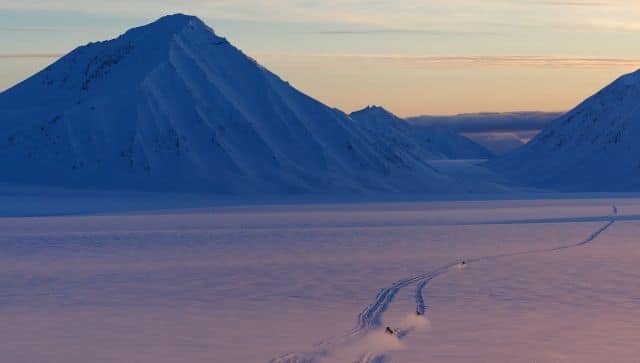 Scientists drive their snowmobiles cross the arctic during dawn near Ny-Alesund, Svalbard, Norway in April 2023. File photo/Reuters[/caption]The first team of scientists from Bengaluru-based Raman Research Institute (RRI) will focus on characterising the radio frequency environment in Svalbard. It is led by Girish BS from the electronic engineering group at RRI. The other teams to follow belong to the Indian Institute of Tropical Meteorology, Pune, IIT-Mandi, and the Goa-based NCPOR.“This historic venture holds immense significance as we navigate the Arctic’s critical influence on global climate, sea levels, and biodiversity for the first time,” said Kiren Rijiju.Why is exploring the Arctic important?The Arctic Region, which includes a vast ice-covered ocean, is one of the least explored and understood places on the planet. Climate change is causing the ice cover to diminish and scientists believe that it is important to study this region to understand the Arctic environment and the impact it will have on the world in the future.Over the last 100 years, temperatures in the Arctic have risen by four degrees Celsius on average. The sea ice in the region has been declining at 13 per cent every decade, according to the Intergovernmental Panel on Climate Change. If this continues, the region could become ice-free in less than 20 years.Also read: Why India must keep its foothold in ArcticThe rise in sea levels can affect atmospheric circulation. An increase in tropical sea surface temperatures could lead to increased precipitation in the tropics, a shift in the Inter Tropical Convergence Zone, and high chances of an increase in extreme rainfall events, according to a report in The Indian Express.If the temperature becomes milder because of global warming, it could make the Arctic more habitable. This could see a rush to explore the resources in the region, the report says.Why are Arctic explorations challenging? The extreme climate is one of the biggest challenges in the Arctic – the climate is harsh and darkness continues for months. Polar bears can also be dangerous.February is the coldest month in Ny-Alesund, where the temperatures drop to minus 14 and in July, which is the warmest, it hovers around five degrees Celsius.“While the Antarctic is harsher and more remote for exploration, the Arctic is challenging mainly because of the limited space for independent studies,” Meloth told The Indian Express.[caption id="attachment_13520962" align="alignnone" width="640"]
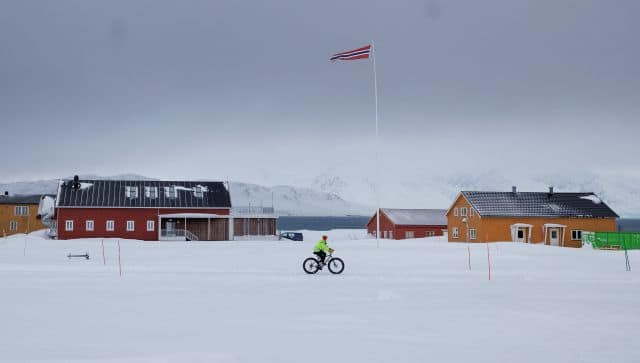 A resident rides a bike next to a Norwegian flag fluttering in the wind in Ny-Alesund, Svalbard, on April 2023. File photo/Reuters[/caption]The area above the Arctic Circle is part of eight nations that make up the Arctic Council. These include the United States, Canada, Denmark, Finland, Iceland, Norway, Sweden and Russia. Research in the region is governed by the Svalbard Treaty of 1920, the UN Convention on the Law of the Seas, and individual jurisdictions of the Arctic countries.Meloth told the newspaper that because of the ongoing Russia-Ukraine war, the Russian Arctic is inaccessible to the world.Also read: The Arctic is getting wetter: How shifting seasons will affect the wildlife and ecosystemWhat has India been doing so far in the Arctic?While India signed the Svalbard Treaty, the first Indian expedition to the region was undertaken in 2007. Five scientists visited the International Arctic Research Facilities at Ny-Alesund to study microbiology, atmospheric sciences, and geology in the region.[caption id="attachment_13520982" align="alignnone" width="640"]
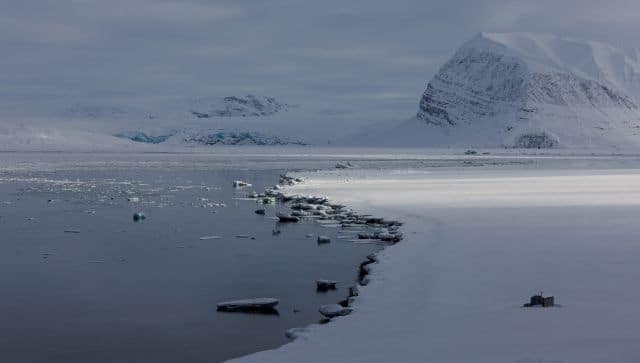 The Kongsfjord and the Kongsbreen glacier are seen near Ny-Alesund, Svalbard, Norway, April 2023. Climate change is causing the ice cover to diminish in the region. File photo/Reuters[/caption]India’s permanent station Himadri started operations in July 2008. This station was opened keeping in mind the sustained interest shown by Indian scientists in pursuing scientific studies in the Arctic. Himadri provides extensive field and laboratory support required for pursuing research activities in the Arctic, according to NCAOR.It has been quipped for observations during polar nights, which last longer than 24 hours and has special gear and transport for extreme weather.The Indian government unveiled its Arctic Policy last year, which aims to have more research stations and satellite ground stations in the region.So far, only 10 countries have permanent facilities at the International Arctic Research base.With inputs from agencies
 First Published:Dec 19, 2023, 13:48:02 IST
Advertisement
Advertisement

Military drones & police check-ups: How Sri Lanka is fighting against worst dengue outbreak in a decade
Sri Lanka is fighting its most severe dengue outbreak in nearly a decade, with infections rising sharply across the nation. Military drones have been deployed to tackle the outbreak, which has claimed 56 lives. Health officials said the outbreak is being driven primarily by the DENV-2 variant of the virus
3 min read
How Facebook job ad lured 2 Karnataka men into Myanmar cyber scam camp
The Karnataka Cyber Command has rescued two youths from a scam compound in Myanmar operated by Chinese fraudsters. The duo from Karnataka were lured on the pretext of data-entry jobs. They were asked to work for 16 hours a day and were expected to sleep for six hours daily
4 min read
Why is India seeing 95% cloud cover despite a Super El Niño?
India is witnessing nearly 95 per cent cloud cover despite a Super El Niño, a climate event usually linked to weaker monsoons. Regional weather systems, cyclonic circulations, the monsoon trough and moisture from two seas are temporarily overpowering one of the world's strongest climate phenomena
5 min read
What is CJP’s fourth demand to the government as protests in Delhi intensify?
The protest by the Cockroach Janta Party at Delhi’s Jantar Mantar refuses to die down. The group have made a fourth demand to the Centre, asking that no FIRs are filed against the agitators and that no legal action be taken. The government has expressed willingness to speak to the protesters, but refused to accede on the resignation of Education Minister Dharmandra Pradhan
5 min read
The new geography of war: Why the Houthis can no longer be ignored
The rise of the Houthis marks the emergence of a new geography of war — one in which influence flows not only from capitals and conventional armies, but also from rugged mountains overlooking vital sea lanes
6 min read
Advertisement
Advertisement