


Why Hong Kong police can now demand phone and computer passwords
Authorities in Hong Kong can now demand phone and computer passwords after amending the National Security Law (NSL), which was passed in the aftermath of pro-democracy protests in Hong Kong

Police in Hong Kong can now demand phone and computer passwords.
This came after authorities made amendments to the National Security Law (NSL), which was passed in the aftermath of pro-democracy protests in Hong Kong. The wide-ranging law calls for terms up to life imprisonment for certain acts, including subversion and collusion with foreign forces.
Hong Kong passed a second set of national security laws, Article 23, in 2024, to plug what authorities called "loopholes" in the national security regime. Authorities have long contended the law, which was passed using powers to bypass the city’s legislature, was needed to establish order. However, critics in the Special Administrative Region (SAR) have accused authorities of trying to squash dissent. The announcement was made by Hong Kong leader John Lee.
 More from Explainers
But what happened? What do we know?
Let’s take a closer look
What we know about new amendments
According to China Daily, the 2026 Implementation Rules for Amending the Implementation Rules for Article 43 of the Law of the People's Republic of China on Safeguarding National Security in the Hong Kong Special Administrative Region (HKSAR) took effect on Monday.
According to the BBC, Hong Kong police can now demand phone or computer passwords from those whom they suspect have run afoul of the NSL. Anyone who refuses the demand faces up to a year in prison. They can also be fined $12,700 (Rs 11.90 lakh). Those who give the police "false or misleading information" can serve as much as three years in jail.
This comes after authorities in Hong Kong made amendments to a bylaw under the NSL that the government gazetted on Monday. Under the amendment, officials have also been given the power to seize devices that contain ‘seditious intention’.
According to The Guardian, the amendments call for the individual to provide “any reasonable and necessary information or assistance” to the police. It states that the police can act irrespective of whether any individual has been arrested for an offence endangering national security because of the said items. Like the NSL in 2020, these amendments too were notified by authorities over the head of the legislature.
The BBC quoted Hong Kong authorities as saying that the amendments ensure that "activities endangering national security can be effectively prevented, suppressed and punished, and at the same time the lawful rights and interests of individuals and organisations are adequately protected".
Officials will brief lawmakers on Tuesday (March 24), a government statement said.
What do experts say?
Experts have slammed the law.
Urania Chiu, a law lecturer in the UK researching Hong Kong, told The Guardian that the new amendments contravene fundamental liberties, including the privacy of communication and the right to a fair trial.
“The sweeping powers given to law enforcement officers without any need for judicial authorisation are grossly disproportionate to any legitimate aim the bylaw purports to achieve,” Chiu told the outlet.
ABC.net reported that analysts have claimed that the biggest issue is the wide-ranging scope of the law. The terms as to what constitutes national security are broad and flexible and can be misused by authorities. They said the law could even apply to foreign companies doing business in Hong Kong.
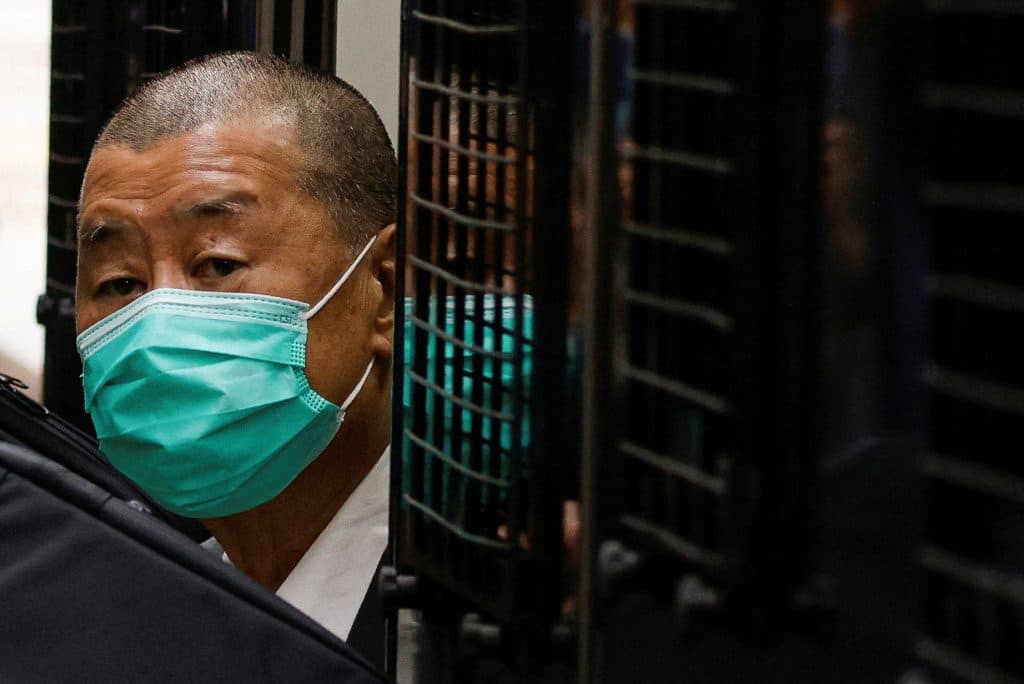
Hong Kong Watch senior policy adviser Thomas Benson told ABC.net, “Practically anything can become a matter of national security concern and that gives tremendous latitude for the Hong Kong government, and for the organs of the mainland People's Republic of China state that operate in Hong Kong, to apply a national security condition and compel practically anyone."
"There's always this concern with these laws about how they can be used to respond to the wider geopolitical picture of economic competition between China and the United States, but also Europe, Australia, New Zealand, and other countries."
"The big issue, of course, is that in the UK or Australia, there are checks and safeguards in place and a narrow understanding of what national security means that is much less open to abuse," he said. "In Hong Kong, the definition of national security is taken wholesale from mainland Chinese law, from Xi Jinping's comprehensive national security thought, and transposed from mainland China's national security law."
Data from the Security Bureau show that 386 people thus far have been arrested for national security crimes. Of these, 176 people and four companies have been convicted. In February, the Hong Kong media tycoon Jimmy Lai was sentenced to 20 years in prison for colluding with foreign forces and sedition. The development sparked criticism around the world.
In February, a Hong Kong court sentenced the father of a wanted pro-democracy activist to eight months in prison under the city’s national security law, after he attempted to terminate her insurance policy and withdraw the funds.
Kwok Yin-sang, 69, was found guilty on February 11 for "attempting to deal with, directly or indirectly, any funds or other financial assets or economic resources" belonging to an "absconder" under the city's homegrown national security law, also known as Article 23.
He is the first person in the city to be charged and convicted of the offence. He had pleaded not guilty and did not testify at the trial. His daughter, Anna Kwok, helps lead the Washington-based advocacy group Hong Kong Democracy Council and is one of 34 overseas activists wanted by Hong Kong national security police.
She is accused of colluding with foreign forces and police have offered a bounty of $128,000 (Rs 1,20,02,560) for her arrest. "To sentence my father under the pretext that his actions lowered the 'likelihood' of my return to stand trial is not justice; it is a judicial farce," Anna Kwok said after the sentencing.
"My father was convicted and sentenced under the guise of 'national security'," she said. "In truth, this is guilt by blood, this is hostage-taking. This is transnational repression."
Magistrate Andy Cheng said Kwok's case was a serious one under the national security law and had nothing to do with family ties.
"There is no such thing as ... collective punishment, and it has absolutely nothing to do with whether the defendant and the fugitive are family," Cheng said.
FAQs
1) What powers do Hong Kong police now have under the new amendments?
Hong Kong police can demand phone and computer passwords from individuals suspected of violating the National Security Law. They can also seize electronic devices and require individuals to provide any “reasonable and necessary” assistance, even without an arrest.
2) What are the penalties for refusing to comply with police demands?
Those who refuse to provide passwords or assistance can face up to one year in prison and a fine of $12,700 (Rs 11.90 lakh). Providing false or misleading information can lead to a prison term of up to three years.
3) Why are the new national security amendments controversial?
Critics argue that the amendments grant sweeping powers to authorities without sufficient judicial oversight. Experts say the broad definition of national security could be misused, potentially affecting individuals, activists, and even foreign businesses operating in Hong Kong.
With inputs from agencies
Tags

Military drones & police check-ups: How Sri Lanka is fighting against worst dengue outbreak in a decade
How Facebook job ad lured 2 Karnataka men into Myanmar cyber scam camp
Why is India seeing 95% cloud cover despite a Super El Niño?
What is CJP’s fourth demand to the government as protests in Delhi intensify?
The new geography of war: Why the Houthis can no longer be ignored