


Why Ebola vaccines won’t stop the latest outbreak: The Bundibugyo problem explained
The Ebola outbreak in Central Africa has left hundreds dead. Though there are vaccines for the virus, the problem is that this latest flare-up is being driven by the little-seen Bundibugyo strain. Experts say there are two potential vaccine candidates, but neither of them has undergone clinical trials

News of the Ebola outbreak in Central Africa has left the world shaken. Infections are spiking and hundreds of people have already been left dead in DR Congo.
Already, there are worries that there was a ‘super spreader’ event in May and that cases across the world may soon start popping up. Now, Dr Tedros Adhanom Ghebreyesus, the director-general of the WHO, has announced that no Ebola vaccines will be available for at least the next six to nine months.
“There are no doses of this which are currently available for clinical trial … The information that we have is this is likely to take six to nine months," Ghebreyesus said.
But what do we know? Why is this the case despite vaccines being available for Ebola?
Let’s take a closer look.
 More from Explainers
What we know about Ebola
First, let’s briefly examine Ebola.
Ebola, which was discovered in 1976, is a severe and often fatal illness. It infects both human beings and primates. According to the WHO, it is transmitted to human beings via fruit bats, porcupines and non-human primates. It then spreads among humans through blood, secretions, bodily fluids, bedding and clothing. The disease has a fatality rate of around 50 per cent.
The most recent and deadly Ebola outbreak occurred in West Africa a little over a decade ago. The 2014 outbreak, which left 11,000 people dead across the world and saw authorities scrambling for a response, occurred with the Zaire strain of Ebola. This outbreak saw more cases and deaths than all the others in history. It also began in Guinea before crossing to Sierra Leone and Liberia.
If left untreated, the Zaire strain has a death rate of 90 per cent, which is why authorities rushed to make vaccines for that particular strain. As per NPR, there are currently two vaccines as well as monoclonal antibodies designed to treat the Zaire strain.
The Bundibugyo strain
The problem is that this latest outbreak is of the little-seen Bundibugyo variety. According to the BBC, there are four known strains of Ebola in humans, including Zaire and Bundibugyo. Thus far, there have been only two known outbreaks of the Bundibugyo strain. The first occurred in Uganda in 2007 and the next in DR Congo in 2012. Around a third of those infected in these outbreaks were killed by the Bundibugyo variety of Ebola.
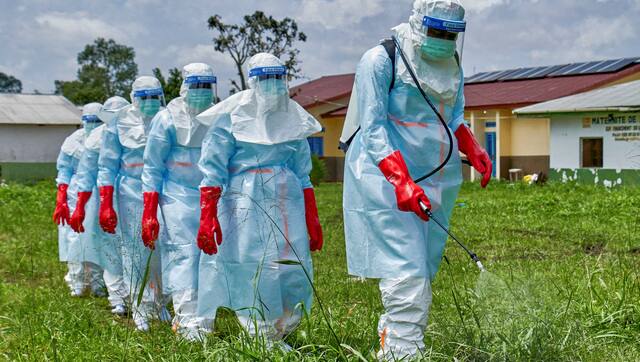
WHO adviser Dr Vasee Moorthy this week said there are two possible "candidate vaccines" being developed against Bundibugyo Ebola. However, he added that neither has yet undergone clinical trials. Moorthy said that the best vaccine being worked on for the Bundibugyo type of Ebola is based on the same method used in vaccines for the Zaire strain, which is why "this needs to be prioritised as the most promising Bundibugyo candidate vaccine," Moorthy added, as per the BBC.
As per India Today, this is based on the recombinant vesicular stomatitis virus (rVSV) platform. It is the same platform that Ervebo, the licensed vaccine for the Zaire strain of Ebola, uses. Though there are around 500,000 doses of Ervebo available, its efficacy against the Bundibugyo version of Ebola remains unproven.
Moorthy noted that the second vaccine, which works similarly to the AstraZeneca jab which targets Covid-19, uses the ChAdOx platform, is being manufactured.
According to India Today, this vaccine is the one that the Serum Institute of India (SII) is getting ready to produce with the University of Oxford and the Coalition for Epidemic Preparedness Innovations (CEPI).
However, its efficacy remains untested even on animals. "It is possible that doses of that could be available for clinical trial in two to three months, but there is a lot of uncertainty," Moorthy said. He added that animal trials are needed to determine whether it could be considered "a promising candidate research vaccine" for Bundibugyo.
Which explains why the WHO has given the six to nine months timeline for developing a vaccine against the Bundibugyo strain.
What do experts say?
Experts have noted the seriousness of the issue.
As Krutika Kuppalli, associate professor at the Infectious Diseases and School of Public Health at UT Southwestern Medical Center in Dallas, Texas, told Al Jazeera, “While Bundibugyo has caused fewer outbreaks historically, it is still a very serious pathogen. Prior outbreaks have had case fatality rates ranging from approximately 30–50 per cent, and the current outbreak is particularly concerning because there are currently no licensed vaccines or specific therapeutics for Bundibugyo virus disease.”
"This is an example of a perfect storm," Dr Abraar Karan, an infectious disease physician and faculty member at Stanford University, told NPR. The good news is that Ebola outbreaks usually don’t last. "It doesn't transmit by the airborne route," Dr Karan said. "So, it's not nearly as contagious as COVID-19 or measles."
Dr Nahid Bhadelia, who has treated over 500 Ebola patients, agreed. "The number of people that one person [with Ebola] infects is about two, as opposed to measles where the number is about 18," she says. "Measles is a lot more transmissible, although the mortality rate of many of the Ebola species is much, much higher."
The United States’ Secretary of State Marco Rubio has already slammed the WHO for being a ‘little late’ in tackling this outbreak. Ironically, it was the Trump administration which withdrew from the WHO earlier this year.
Ghebreyesus responded to Rubio’s remarks, saying they reflected “a lack of understanding". “Maybe on what the secretary said, it could be from a lack of understanding of how IHR [international health regulations] works, and the responsibilities of WHO and other entities. We don’t replace the country’s work, we only support them," he said.
The WHO last week had declared the Ebola outbreak a public health emergency. WHO assesses the risk of the epidemic as high at the national and regional levels, and low at the global level.
FAQs
1. Why are existing Ebola vaccines not being used for this outbreak?
Because current vaccines are designed for the Zaire strain, while this outbreak involves the Bundibugyo strain.
2. How long will it take to develop a vaccine for the Bundibugyo strain?
The WHO estimates it could take six to nine months before a vaccine is ready.
3. Is Ebola highly contagious like COVID-19?
No, Ebola is less contagious as it does not spread through the air, but it has a much higher fatality rate.
With inputs from agencies

Military drones & police check-ups: How Sri Lanka is fighting against worst dengue outbreak in a decade
How Facebook job ad lured 2 Karnataka men into Myanmar cyber scam camp
Why is India seeing 95% cloud cover despite a Super El Niño?
What is CJP’s fourth demand to the government as protests in Delhi intensify?
The new geography of war: Why the Houthis can no longer be ignored