
Advertisement


Sections
Why does Mumbai keep struggling with waterlogging year after year?
Mumbai’s topography, its colonial-era stormwater drainage system that the BMC continues to struggle to keep unclogged and properly desilted, and encroachment are among the main reasons the financial capital comes to a standstill every monsoon

Rains have brought Mumbai, India’s financial capital to a standstill yet again.Low-lying areas were waterlogged and local trains running late.The India Meteorological Department (IMD) has predicted even more showers on the way with moderate to intense rain spells in isolated places.The BMC has also predicted the possibility of ‘heavy to very heavy’ rainfall over the next few days and ordered officials to visit low-lying areas and take prompt action.But why does Mumbai keep struggling with waterlogging year after year?Let’s take a closer look:According to NDTV, one major reason for Mumbai’s continued struggles is its topography – some low-lying areas as well as some high areas.This results in water naturally flowing areas such as Sion, Andheri Subway, Milan Subway, and Khar Subway – and worse only draining out after the downpour stops.“Most parts of Mumbai city is reclaimed. However, while the process of reclamation was carried out, low-lying areas like Hindmata in Parel, were not filled in adequately and continue to remain in the shape of a saucer, which causes water to accumulate due to heavy rains,” Chandrashekhar Prabhu, architect and urban planning expert, told The Quint.![]() Mumbai continues to struggle with waterlogging. PTI[/caption]Though the 2005 Mumbai floods which 500 lives were lost forced the government and the civic body to take notice of the issue, the BMC has not been able to properly address the issue.According to Times Now, the BMC in April invited tenders to clean the storm drains to increase their capacity and to try to prevent waterlogging.This, after the civic body got 63 km of storm water drains cleaned between 2019 and 2022.“The underground drains were laid during the British era. These are difficult to clean completely. We used to clean only under the manholes and around them. It was not possible to clean the entire drain as there are poisonous gases in it. But the BMC decided to get them cleaned. It started systematic cleaning of 63 km storm water drains in 2019. This clean-up went on till 2022. Now we have invited tenders for cleaning of the remaining 97 km of underground drains. Some years back, while repairing 25 km underground drains, those were also cleaned,” a BMC official told the outlet.The official added that the BMC spent Rs 57 crore on cleaning the drains in the first phase.“Through systematic cleaning, the sludge and waste from closed and underground drains were sucked out with the help of pipes, at the same time, the drains were also cleaned by water jets. The toxic gases were removed with the help of a machine. The cleaned drains were then monitored with the help of CCTV cameras. Proper cleaning will help restore flow capacity of these channels, allowing rapid drainage of rainwater,” the official explained.But according to Indian Express, it is a lack of proper desilting that results in clogging.
Mumbai continues to struggle with waterlogging. PTI[/caption]Though the 2005 Mumbai floods which 500 lives were lost forced the government and the civic body to take notice of the issue, the BMC has not been able to properly address the issue.According to Times Now, the BMC in April invited tenders to clean the storm drains to increase their capacity and to try to prevent waterlogging.This, after the civic body got 63 km of storm water drains cleaned between 2019 and 2022.“The underground drains were laid during the British era. These are difficult to clean completely. We used to clean only under the manholes and around them. It was not possible to clean the entire drain as there are poisonous gases in it. But the BMC decided to get them cleaned. It started systematic cleaning of 63 km storm water drains in 2019. This clean-up went on till 2022. Now we have invited tenders for cleaning of the remaining 97 km of underground drains. Some years back, while repairing 25 km underground drains, those were also cleaned,” a BMC official told the outlet.The official added that the BMC spent Rs 57 crore on cleaning the drains in the first phase.“Through systematic cleaning, the sludge and waste from closed and underground drains were sucked out with the help of pipes, at the same time, the drains were also cleaned by water jets. The toxic gases were removed with the help of a machine. The cleaned drains were then monitored with the help of CCTV cameras. Proper cleaning will help restore flow capacity of these channels, allowing rapid drainage of rainwater,” the official explained.But according to Indian Express, it is a lack of proper desilting that results in clogging.![]() Representational image. PTI[/caption]Environmentalist Dharmesh Barai told the outlet, “The administration and local politicians ignore our repeated alerts about encroachments in new areas.”The BMC on Thursday said a tree collapse incident claimed a man’s life in suburban Malad.In the 24 hours since previous morning, there were 26 incidents of tree fall, 15 incidents of short-circuit and five incidents of collapse or partial collapse of houses, the BMC said.Rains also pounded neighbouring Thane city, leading to waterlogging and incidents of wall and house collapse.Kaushal Doshi (38) was severely injured in a tree fall at Mamledarwadi junction in the western suburb of Malad. He was rushed to the civic-run Shatabdi Hospital where the doctors declared him `brought dead’, a BMC official said.Ironically, though the city has been receiving heavy rains over the last two-three days, the BMC has decided to implement a 10 per cent water cut from July 1 as the stock in the lakes supplying water to the city is down to about seven per cent.In Thane, a 36-year-old woman was injured when a portion of a single-storey chawl (tenement) collapsed on Tuesday evening in Mahagiri Koliwada area, authorities said.The protection wall of a housing society in Chandanwadi locality collapsed around 11 on Wednesday morning due to heavy rains but nobody was injured in the incident.With inputs from agenciesRead all the Latest News, Trending News, Cricket News, Bollywood News, India News and Entertainment News here. Follow us on Facebook, Twitter and Instagram.
Representational image. PTI[/caption]Environmentalist Dharmesh Barai told the outlet, “The administration and local politicians ignore our repeated alerts about encroachments in new areas.”The BMC on Thursday said a tree collapse incident claimed a man’s life in suburban Malad.In the 24 hours since previous morning, there were 26 incidents of tree fall, 15 incidents of short-circuit and five incidents of collapse or partial collapse of houses, the BMC said.Rains also pounded neighbouring Thane city, leading to waterlogging and incidents of wall and house collapse.Kaushal Doshi (38) was severely injured in a tree fall at Mamledarwadi junction in the western suburb of Malad. He was rushed to the civic-run Shatabdi Hospital where the doctors declared him `brought dead’, a BMC official said.Ironically, though the city has been receiving heavy rains over the last two-three days, the BMC has decided to implement a 10 per cent water cut from July 1 as the stock in the lakes supplying water to the city is down to about seven per cent.In Thane, a 36-year-old woman was injured when a portion of a single-storey chawl (tenement) collapsed on Tuesday evening in Mahagiri Koliwada area, authorities said.The protection wall of a housing society in Chandanwadi locality collapsed around 11 on Wednesday morning due to heavy rains but nobody was injured in the incident.With inputs from agenciesRead all the Latest News, Trending News, Cricket News, Bollywood News, India News and Entertainment News here. Follow us on Facebook, Twitter and Instagram.
Another issue is Mumbai’s colonial-era stormwater drainage system.As per NDTV, 90 per cent of the stormwater is drained out through dedicated drains.But even if the stormwater drains are working at their peak it isn’t enough.As Prabhu told The Quint, the stormwater drains, even when working at their peak performance, have the capacity to empty out 50 mm of water per hour.But if it rains more than that, then you’re simply out of luck.On Thursday, two locations in Mumbai recorded over 100 mm of rain – Dahisar (148.5mm) and Bhayander (122.5 mm)Colaba, Santacruz and Dahisar received 75.6 mm, 74.2, and 148.5 till 2.30 pm respectively.“If the drains, however, are not cleaned or desilted, then you can’t call it an accident. It is human error,” Prabhu added.[caption id="attachment_12787012" align="alignnone" width="640"]
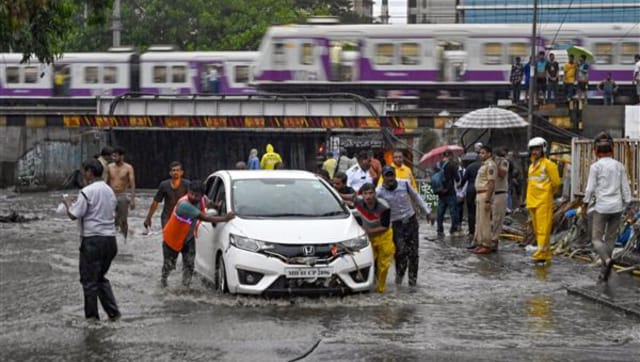 Mumbai continues to struggle with waterlogging. PTI[/caption]Though the 2005 Mumbai floods which 500 lives were lost forced the government and the civic body to take notice of the issue, the BMC has not been able to properly address the issue.According to Times Now, the BMC in April invited tenders to clean the storm drains to increase their capacity and to try to prevent waterlogging.This, after the civic body got 63 km of storm water drains cleaned between 2019 and 2022.“The underground drains were laid during the British era. These are difficult to clean completely. We used to clean only under the manholes and around them. It was not possible to clean the entire drain as there are poisonous gases in it. But the BMC decided to get them cleaned. It started systematic cleaning of 63 km storm water drains in 2019. This clean-up went on till 2022. Now we have invited tenders for cleaning of the remaining 97 km of underground drains. Some years back, while repairing 25 km underground drains, those were also cleaned,” a BMC official told the outlet.The official added that the BMC spent Rs 57 crore on cleaning the drains in the first phase.“Through systematic cleaning, the sludge and waste from closed and underground drains were sucked out with the help of pipes, at the same time, the drains were also cleaned by water jets. The toxic gases were removed with the help of a machine. The cleaned drains were then monitored with the help of CCTV cameras. Proper cleaning will help restore flow capacity of these channels, allowing rapid drainage of rainwater,” the official explained.But according to Indian Express, it is a lack of proper desilting that results in clogging.
The newspaper found that all major and minor drains it visited were choked with solid waste.This, after the civic body claimed it managed to meet 100 per cent of its pre-monsoon desilting target a week before the deadline.Another major issue is encroachment.As Govandi resident Shoaib Qureshi told Indian Express “The drains aren’t properly desilted because the vehicles cannot reach the interior areas due to encroachments. There is hardly any space for two persons to walk side-by-side,” adds Qureshi.“Even if all the waste is removed today, the drains will again get clogged by solid waste by tomorrow. Those living here treat the drain as a landfill and throw all the garbage into it,” added Faiyaz Alam Shaikh, another Govandi resident.Activists told Scroll that though the loss of huge amounts of mangrove cover receive attention in the media, it is the dumping of debris and encroachments on land – eventually overtaken by real estate developers that is a major issue.[caption id="attachment_12731652" align="alignnone" width="640"]
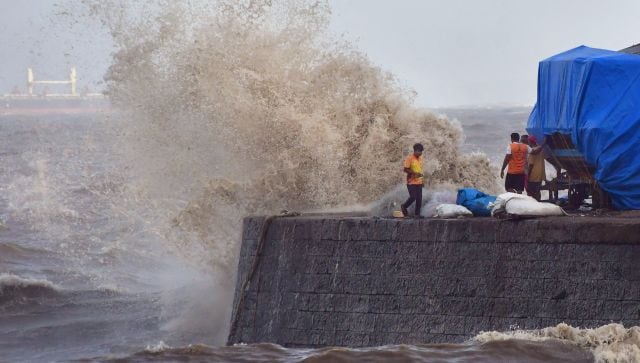 Representational image. PTI[/caption]Environmentalist Dharmesh Barai told the outlet, “The administration and local politicians ignore our repeated alerts about encroachments in new areas.”The BMC on Thursday said a tree collapse incident claimed a man’s life in suburban Malad.In the 24 hours since previous morning, there were 26 incidents of tree fall, 15 incidents of short-circuit and five incidents of collapse or partial collapse of houses, the BMC said.Rains also pounded neighbouring Thane city, leading to waterlogging and incidents of wall and house collapse.Kaushal Doshi (38) was severely injured in a tree fall at Mamledarwadi junction in the western suburb of Malad. He was rushed to the civic-run Shatabdi Hospital where the doctors declared him `brought dead’, a BMC official said.Ironically, though the city has been receiving heavy rains over the last two-three days, the BMC has decided to implement a 10 per cent water cut from July 1 as the stock in the lakes supplying water to the city is down to about seven per cent.In Thane, a 36-year-old woman was injured when a portion of a single-storey chawl (tenement) collapsed on Tuesday evening in Mahagiri Koliwada area, authorities said.The protection wall of a housing society in Chandanwadi locality collapsed around 11 on Wednesday morning due to heavy rains but nobody was injured in the incident.With inputs from agenciesRead all the Latest News, Trending News, Cricket News, Bollywood News, India News and Entertainment News here. Follow us on Facebook, Twitter and Instagram.
First Published:Jun 28, 2023, 21:00:18 IST
Advertisement
Advertisement

Military drones & police check-ups: How Sri Lanka is fighting against worst dengue outbreak in a decade
Sri Lanka is fighting its most severe dengue outbreak in nearly a decade, with infections rising sharply across the nation. Military drones have been deployed to tackle the outbreak, which has claimed 56 lives. Health officials said the outbreak is being driven primarily by the DENV-2 variant of the virus
3 min read
How Facebook job ad lured 2 Karnataka men into Myanmar cyber scam camp
The Karnataka Cyber Command has rescued two youths from a scam compound in Myanmar operated by Chinese fraudsters. The duo from Karnataka were lured on the pretext of data-entry jobs. They were asked to work for 16 hours a day and were expected to sleep for six hours daily
4 min read
Why is India seeing 95% cloud cover despite a Super El Niño?
India is witnessing nearly 95 per cent cloud cover despite a Super El Niño, a climate event usually linked to weaker monsoons. Regional weather systems, cyclonic circulations, the monsoon trough and moisture from two seas are temporarily overpowering one of the world's strongest climate phenomena
5 min read
What is CJP’s fourth demand to the government as protests in Delhi intensify?
The protest by the Cockroach Janta Party at Delhi’s Jantar Mantar refuses to die down. The group have made a fourth demand to the Centre, asking that no FIRs are filed against the agitators and that no legal action be taken. The government has expressed willingness to speak to the protesters, but refused to accede on the resignation of Education Minister Dharmandra Pradhan
5 min read
The new geography of war: Why the Houthis can no longer be ignored
The rise of the Houthis marks the emergence of a new geography of war — one in which influence flows not only from capitals and conventional armies, but also from rugged mountains overlooking vital sea lanes
6 min read
Advertisement
Advertisement