


Why Disease X is being discussed at Davos 2024
The World Health Organisation describes disease X as an ‘unknown pathogen that could cause a serious international epidemic.’ Experts say that the session at the World Economic Forum is a ‘thought experiment’ and that the public need not be concerned

As per the WHO, it “indicates an unknown pathogen that could cause a serious international epidemic.”“Disease X represents the knowledge that a serious international epidemic could be caused by a pathogen currently unknown to cause human disease. The R&D Blueprint explicitly seeks to enable early cross-cutting R&D preparedness that is also relevant for an unknown “Disease X”.The WHO added Disease X to their list of diseases and pathogens prioritised for research and development in public health emergency contexts in 2017.The list includes
- COVID-19
- Crimean-Cong haemorrhagic fever
- Ebola virus disease
- Marburg virus disease
- Lassa fever
- Middle East respiratory syndrome (MERS)
- Severe Acute Respiratory Syndrome (SARS)
- Nipah and henipaviral diseases
- Rift Valley fever
- Zika
But others are not so sanguine.Kate Bingham, who headed up UK's Vaccine Taskforce from May to December 2020, in an interview with Daily Mail warned that Disease X could result in a repeat of the 1919-1920 Spanish flu."Let me put it this way: the 1918-19 flu pandemic killed at least 50 million people worldwide, twice as many as were killed in World War I. Today, we could expect a similar death toll from one of the many viruses that already exist," Bingham said.[caption id="attachment_13528512" align="alignnone" width="640"]
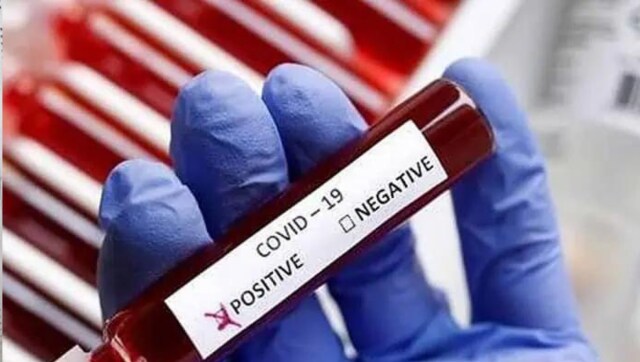
Some experts say humanity got lucky that the COVID-19 toll wasn't worse.[/caption]If the world has to tackle the threat from Disease X, "the world will have to prepare for mass vaccination drives and deliver the doses in record time", she added."In a sense, we got lucky with Covid-19, despite the fact that it caused 20 million or more deaths across the world. The point is that the vast majority of people infected with the virus managed to recover... Imagine Disease X is as infectious as measles with the fatality rate of Ebola. Somewhere in the world, it's replicating, and sooner or later, somebody will start feeling sick," said Bingham.Bingham also explained why humans are likely to witness more pandemics."The increase in outbreaks is the price we're having to pay for living in the modern world. First, it's increasingly connected through globalisation. Second, more and more people are cramming into cities, where they often come into close contact with others," she added.What are scientists doing?As per Bloomberg, groups like the Coalition for Epidemic Preparedness Innovations (CEPI) are supporting rapid response vaccine platforms that could develop new vaccines within 100 days of a virus with pandemic potential.Other efforts underway include:
- Updating the International Health Regulations and developing a new global agreement to protect the world from future emergencies.
- A new fund, approved by the World Bank, for pandemic prevention, preparedness and response.
- A WHO Hub for Pandemic and Epidemic Intelligence in Berlin that aims to speed access to key data, and develop analytic tools and predictive models to assess potential threats.
- The Global Virome Project that aims to discover zoonotic viral threats and stop future pandemics.
- A $5 billion US government initiative to develop next-generation vaccines and treatments for Covid-19, called Project NextGen.
- $262.5 million in funding for a US national network for detecting and responding more efficiently to public health emergencies. Establishment of global center for pandemic therapeutics.

Military drones & police check-ups: How Sri Lanka is fighting against worst dengue outbreak in a decade
How Facebook job ad lured 2 Karnataka men into Myanmar cyber scam camp
Why is India seeing 95% cloud cover despite a Super El Niño?
What is CJP’s fourth demand to the government as protests in Delhi intensify?
The new geography of war: Why the Houthis can no longer be ignored