


Why are US stores keeping toothpaste and deodorant under lock?
According to Walgreens and Rite Aid, the problem of organised retail crime — rings of thieves who steal merchandise from stores and typically resell them on internet marketplaces — is forcing companies to lock up more products and close some stores

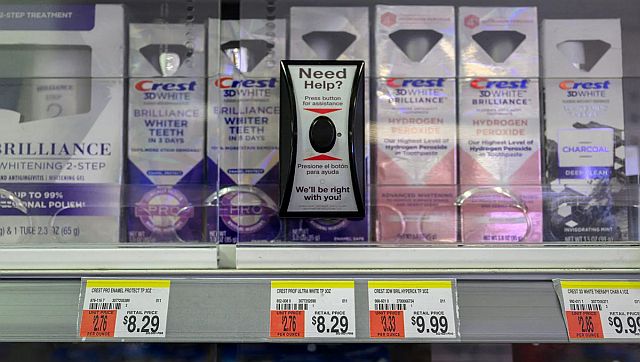
According to the National Retail Federation's 2022 retail security survey, retailers lost an estimated $94.5 billion (Rs 7.81 lakh crore) nationwide to "shrink" in 2021 alone. AFP[/caption]Residents in Queens have also launched a petition surrounding unsafe conditions in several CVS outlets.According to media reports, some retailers are asking their staff not to intervene in the event of theft and not to contact the police, for their own safety.Some are considering closing sites, with Giant mulling the closure of a Washington supermarket where theft and violence "is significant, and getting worse."It is becoming increasingly difficult to operate under these conditions, a spokesman told AFP, adding that other locations were also affected.Shoplifters frequently target smaller items with higher price tags, known as "hot products," which stores usually lock up. The most often stolen items in US stores are cigarettes, health and beauty products, over-the-counter medications, contraception, alcohol, teeth-whitening strips, and other items.As per CNN, a criminologist coined the acronym CRAVED to describe the most dangerous items: "concealable, removable, available, valuable, enjoyable, and disposable."Closures due to "flash rob" incidentsWalgreens closed five San Francisco stores in 2021 due to theft, while Walmart shuttered four Chicago outlets this year, officially due to a lack of profitability."Shrink has increased a bit this year. It increased last year. It's uneven across the country," noted Walmart chief financial officer John Rainey in mid-August."We don't want it to go up obviously because it could cause prices to rise," he added.But online users are reporting more "flash rob" incidents where a group surges into a store, seizes items within reach and runs off.On 12 August in a Nordstrom store in Los Angeles, around 30 masked people stole more than $300,000 (Rs 2.47 crore) worth of luxury items and used bear spray on a security guard, according to the police.Irritated customers “Consumers understand why you have to lock up a fur coat or jewellery. But they say ‘why are we locking up deodorant?’” said Jack Trlica, co-founder of trade publication LP Magazine, reports CNN.According to the CEO of one anti-theft gadget business, locked up items can result in 15 per cent to 25 per cent sales declines. Shoppers today are more impatient. Instead than waiting for a worker, some will leave and purchase the items online. Stores, on the other hand, are exploring new means of safeguarding inventory while reducing customer annoyance, such as a new form of case that any employee can unlock with a smartphone. In other cases, shoppers must enter their phone number to open or scan a QR code.Trlica expects companies will develop new technologies that protect products but don’t require flagging down an employee to unlock a shelf.“There’s going to be an evolution of security products,” he told CNN.With inputs from AFP
Tags

Who is Sandeep Lamba, the Delhi cop removed from protest site duty after slapping female protester?
Explorers discover wreckage of plane 72 years later. Will this help in finding MH370?
Cruise missiles, drones and more... The deadly arsenal of the Houthis
Why India may not witness a medal rush at 2026 Commonwealth Games
Delhi Police asks personnel to wear uniform: What the law says on cops in plainclothes during protests