


Why Alberta province is seeking to separate from Canada
Alberta’s push for independence has gained momentum after a secessionist group submitted over 3 lakh signatures for a referendum. But what is driving the movement? How likely is it to succeed? -

Could Alberta secede from Canada?
The province will have the opportunity to do so later on this year.
This comes after a secessionist group announced it had submitted over three lakh signatures to trigger an independence referendum. The secessionists needed 1.78 lakh signatures to do so. The development also comes in the backdrop of strained relations between Prime Minister Mark Carney and the White House led by US President Donald Trump.
But why is Alberta seeking to separate from Canada? Could it actually happen?
Let’s take a closer look.
The pro-independence sentiment
Home to around 5 million people, Alberta is a province in the western part of Canada. According to Britannica, Alberta gets more sunshine than any other Canadian province. It is around 1,200 kilometres long from north to south and around 640 kilometres wide. Established as a district in 1882, it became a province in 1905. Alberta’s provincial government has its headquarters in Edmonton.
 More from Explainers
According to Al Jazeera, the province has long been home to pro-independence sentiment. Many within the province feel that Alberta does not mesh well with the rest of the nation. They also feel that the province, which is home to much of Canada’s oil, does not get its just due from Ottawa considering the revenue it generates.
Alberta and Ottawa are also clashing on environmental regulations and climate change. Mitch Sylvestre, the head of Stay Free Alberta, said, “We’re not like the rest of Canada. We’re 100 per cent conservative. We’re being ruled by Liberals who don’t think like us. They’re trying to shut down our industry,” he added. Conservative voters are a majority in Alberta, whereas Canada has been ruled by a Liberal government for over a decade.
“This day is historic in Alberta history,” Sylvestre added. “It’s the first step to the next step — we’ve gotten by Round 3 and now we’re in the Stanley Cup final.” He said most papers were handled five times to verify the signatures. More than 300 supporters gathered, waving the provincial flag and chanting “Alberta strong.”
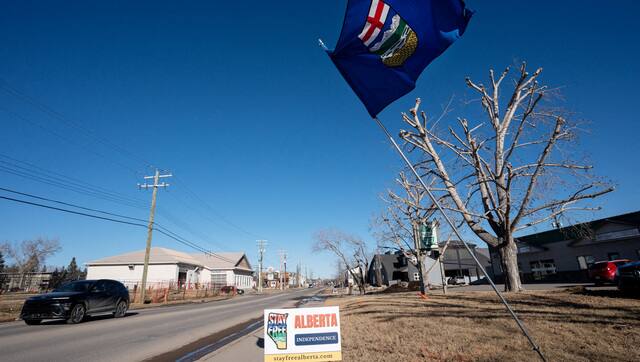
Stay Free Alberta isn’t alone. Another group, the Alberta Prosperity Project, is also leading efforts to secede. Its website states, “Sovereignty for Alberta holds the promise of economic prosperity, political empowerment, cultural preservation, greener energy, and an enhanced position on the global stage.”
“By asserting control over its resources, laws, and policies, Alberta can chart a path towards a future that aligns with the aspirations and welfare of its people, ensuring a legacy of prosperity for generations to come,” it adds.
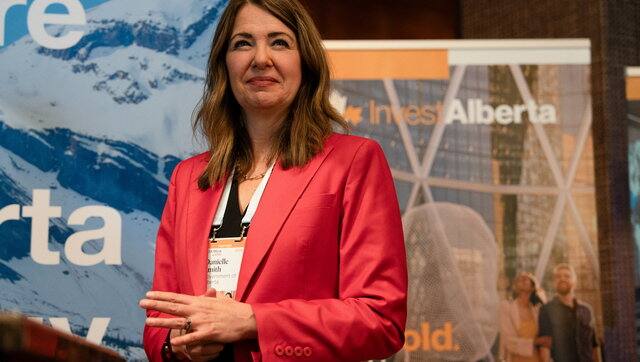
Though Alberta Premier Danielle Smith has said that she does not support seceding from Canada, she added that she would be willing to put it to a vote.
“To be clear from the outset, our government will not be putting a vote on separation from Canada on the referendum ballot,” she was quoted as saying by Time Magazine. “However, if there is a successful citizen-led referendum petition that is able to gather the requisite number of signatures requesting such a question to be put on a referendum, our government will respect the democratic process and include that question on the 2026 provincial referendum ballot.”
Smith has accused previous federal Liberal governments of introducing legislation that hampers Alberta’s ability to produce and export oil, which she said has cost the province billions of dollars. She also said she does not want the federal government meddling in provincial issues.
Smith acknowledged the frustration of some within the province, noting that polls showed that at least a third of Albertans are fed up with what they see as excessive interference from Ottawa. Smith has said she is “not going to demonise or marginalise” separatists and has argued that Alberta suffered under the previous government of Justin Trudeau, particularly due to policies that constrained the oil and gas sector. “What we need to do is we need to give Albertans hope,” Smith added, pointing to energy development as a central priority.
What happens next?
According to Time Magazine, if the proposal to secede is indeed put on the ballot, voters will be asked this question: “Do you agree that the Province of Alberta should cease to be a part of Canada to become an independent state?”
However, there is still a way to go. First, the signatures proffered by the Stay Free Alberta group must be verified by Elections Alberta, the province’s electoral authority. The proposal is also facing legal challenges from Indigenous groups, who say that such a development would violate the treaties they have signed with Canada. An Edmonton judge is expected to rule on a court challenge launched by a group of Alberta First Nations.
Others remain opposed even more strongly. “It stands for something that most of us Albertans and Canadians don’t stand for,” Thomas Lukaszuk, the province’s former deputy premier and a strong supporter of federalist identity, said. “It’s a form of treason.”
Other groups are countering such efforts. In December 2025, Elections Alberta verified over 404,000 signatures submitted by the Forever Canadian group. It demands a referendum to make it part of the province’s official policy that Alberta remain part of Canada.
However, experts say that the efforts to secede by referendum are likely to be defeated. Daniel Béland, a political science professor at McGill University in Montreal, said, “Right now, support for independence in Alberta is rather low — less than 30 per cent, and much lower if we only focus on hard-core supporters. And the odds of a victory of the pro-independence camp appear to be low at this stage.” Béland also said that considering recent news of a large data breach involving an Alberta separatist group, the formal verification process is especially crucial to ensure the signatures are authentic.
“Mark Carney is indeed popular, even in Alberta. The push for independence by some Albertans predates his prime ministership and is related to economic, fiscal, and political grievances about the seemingly unfair treatment of Alberta by the federal government,” he said. “These concerns increased during the Justin Trudeau years, but they have peaked and even declined since he left office.”
However, even if all this happens — which is unlikely — the referendum would still not automatically trigger independence for Alberta. At that point, Alberta would have to enter into negotiations with Ottawa.
FAQs
1. Why does Alberta want to separate from Canada?
Some residents believe Alberta is economically disadvantaged despite contributing heavily through oil revenues, and they oppose federal policies on energy and climate.
2. Can Alberta legally become independent?
It is complicated. Even if a referendum passes, independence would require negotiations with the Canadian federal government and face legal challenges.
3. How likely is Alberta’s secession?
Experts suggest it is unlikely, as public support remains below 30 per cent and strong opposition exists.
With inputs from agencies

Military drones & police check-ups: How Sri Lanka is fighting against worst dengue outbreak in a decade
How Facebook job ad lured 2 Karnataka men into Myanmar cyber scam camp
Why is India seeing 95% cloud cover despite a Super El Niño?
What is CJP’s fourth demand to the government as protests in Delhi intensify?
The new geography of war: Why the Houthis can no longer be ignored