


How Monica Witt, ex-US Air Force intelligence specialist, ended up being accused of spying for Iran
The FBI has refreshed its hunt for former US Air Force intelligence specialist Monica Witt, accused of defecting to Iran and sharing classified US defence information. From her counterintelligence career to espionage charges linked to Tehran and the IRGC, here’s everything known about one of America’s most controversial defectors

More than a decade after former United States Air Force counterintelligence specialist Monica Witt allegedly defected to Iran, American authorities are continuing their global effort to locate her.
The Federal Bureau of Investigation has now announced a reward of up to $200,000 for information leading to her arrest and conviction.
Witt, who once held high-level security clearances and worked on sensitive intelligence matters linked to foreign threats, was indicted in 2019 on charges connected to allegedly sharing classified American defence information with Iran.
Prosecutors say she later helped Iranian intelligence services target her former US colleagues, potentially putting intelligence personnel, covert sources, and operations at risk.
 More from Explainers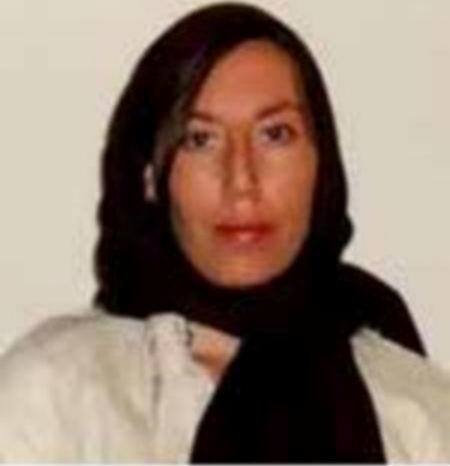
The allegations have made Witt one of the most prominent former US intelligence specialists accused of assisting Tehran.
Why has the FBI refreshed its focus on Monica Witt now?
On Thursday, the FBI’s Washington Field Office announced that it was offering a reward of up to $200,000 for information leading to Witt’s apprehension and prosecution. The agency said she remains at large and is believed to still be residing in Iran, a country currently at loggerheads with the US.
In its statement, the FBI described Witt as a former US Air Force intelligence specialist and counterintelligence agent who allegedly defected to Iran in 2013 after years of service inside the American national security establishment.
“Monica Witt allegedly betrayed her oath to the Constitution more than a decade ago by defecting to Iran and providing the Iranian regime National Defense Information and likely continues to support their nefarious activities,” said Daniel Wierzbicki, special agent in charge of the FBI Washington Field Office’s Counterintelligence and Cyber Division.
“The FBI has not forgotten and believes that during this critical moment in Iran’s history, there is someone who knows something about her whereabouts," Wierzbicki said. "The FBI wants to hear from you so you can help us apprehend Witt and bring her to justice.”
The FBI’s renewed appeal suggests that American investigators still consider Witt an active national security concern.
Officials believe her alleged cooperation with Iranian authorities may not have ended with her defection and that she may continue to support Tehran’s intelligence activities.
The bureau has publicly identified Witt using the aliases “Fatemah Zahra” and “Narges Witt.”
According to FBI details, she was born on April 8, 1979, in El Paso, Texas. Authorities describe her as 5 feet 6 inches tall, weighing around 120 pounds (54 kg), with brown hair and brown eyes. Investigators also say she speaks Farsi fluently.
The FBI’s wanted notice accuses Witt of involvement in espionage and conspiracy to commit espionage. According to federal authorities, a grand jury in Washington, DC, indicted her on February 8, 2019, after prosecutors accused her of transmitting national defence information to representatives of the Iranian government.
How did Monica Witt build her career inside US intelligence?
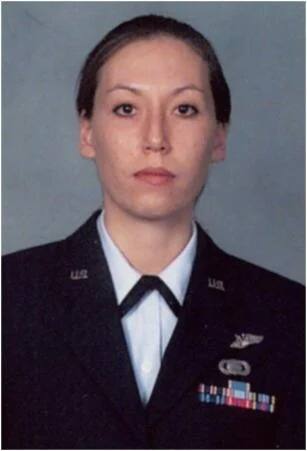
According to details included in her background records and indictment, Witt entered the US Air Force in December 1997. She was stationed at Offutt Air Force Base, where she served as a Persian-Farsi language specialist.
Her linguistic abilities later became central to her work in intelligence and counterintelligence operations involving Iran and the wider region.
In November 2003, Witt reportedly joined the Air Force Office of Special Investigations as a Special Agent while based at Andrews Air Force Base.
The AFOSI is responsible for investigating criminal, terrorist, and intelligence threats affecting the US Air Force, the Department of Defense, and other branches of the American government.
During her time in intelligence roles, Witt allegedly obtained access to highly classified information tied to US foreign intelligence and counterintelligence operations. Prosecutors say this included knowledge related to undercover personnel, intelligence sources, and sensitive national defense programs.
According to the FBI, Witt’s military and contractor work gave her access to SECRET and TOP SECRET information, including the true identities of undercover members of the US Intelligence Community.
The US Air Force later confirmed that Witt left military service in June 2008 with the rank of Technical Sergeant. During her service, she received several commendations, including the Air Medal, which is awarded for acts of achievement or heroism during aerial operations.
What did Monica Witt do after leaving the US military?
Even after her active military service ended, Witt continued working in fields connected to intelligence, security, and West Asian affairs.
For several months after leaving the Air Force, she worked with Booz Allen Hamilton in Maryland. According to records linked to her professional background, her responsibilities included consulting on Iranian issues while also offering language and cultural expertise.
She later worked with Chenega Federal Systems in Virginia from late 2008 until August 2010. In that role, Witt reportedly served as a Middle East Desk Officer and supervised highly sensitive counterintelligence operations directed against foreign intelligence services around the world.
According to information listed in an online résumé associated with Witt, her work involved overseeing and coordinating operations tied to international intelligence threats.
Later, between December 2010 and May 2011, Witt reportedly worked in Washington with Amideast, a non-profit organisation involved in educational and cultural initiatives. During that period, she reportedly assisted with applications for Iraqi Fulbright scholarship candidates seeking admission to US universities.
Her educational background also reflected her deep involvement with West Asian affairs and intelligence-related studies.
Records indicate she earned a bachelor’s degree from the University of Maryland and later obtained a master’s degree from George Washington University. She also studied Persian-Farsi at the Defense Language Institute.
According to information linked to her curriculum vitae, Witt had lived or worked in several countries during her career, including Iraq, Qatar, Jordan, Turkey, the United Arab Emirates, Tajikistan, and Iran.
When did Monica Witt begin moving closer to Iran?
US authorities say Witt’s growing ideological and political alignment with Iran became visible around 2012.
According to prosecutors, Witt converted to Islam during a ceremony broadcast on Iranian television. Afterward, she reportedly appeared multiple times on Iranian media outlets, where she identified herself as a former US military member and criticised American policies.

One of the key turning points identified by US investigators came in February 2012, when Witt travelled to Iran to attend a “Hollywoodism” conference organised by the New Horizon Organization.
American officials have characterised the conference as an anti-US propaganda event intended to connect foreign participants with Iranian intelligence-linked networks. Prosecutors say the gathering criticised American cultural influence and promoted anti-Western messaging.
US authorities later stated that the FBI warned Witt after the conference that Iranian intelligence personnel may have been trying to recruit her.
In 2012, Witt also authored articles published by George Washington University’s International Affairs Review. In one of those articles, she criticised efforts by the United States to pressure countries in the region to cut ties with Tehran.
The following year, Witt spoke publicly about her religious conversion in an interview with the International Quran News Agency.
“As someone who served in the US army for years, I expected that after embracing Islam, my right to choose a religion and my beliefs would be respected,” she said.
“However, a US army member becoming Muslim was not something they could stand. They are afraid of such individuals.”
According to prosecutors, Witt’s ideological transformation accelerated in 2013. The indictment states that she attempted to defect through the Iranian embassy in Kabul before eventually relocating to Iran permanently.
An undated FBI missing persons declaration later claimed that Witt had worked as an English teacher in either Afghanistan or Tajikistan before disappearing from regular contact after 2013.
What are the espionage allegations against Monica Witt?
According to the 2019 federal indictment, prosecutors allege that after settling in Iran, Witt began cooperating with the Iranian government and its intelligence apparatus by supplying classified information linked to US national defence.
Authorities accuse her of sharing information tied to a classified US Defense Department programme and exposing information connected to US intelligence personnel.
American prosecutors also allege that Witt conducted research on behalf of the Iranian regime aimed at identifying and targeting her former colleagues within the US government.
The FBI says her actions may have placed both intelligence officers and their families in danger, especially those stationed overseas.
According to court filings, Witt allegedly provided Iranian officials with information that could identify intelligence personnel and sources. Authorities further claim she assisted Tehran in cyber and intelligence-related targeting efforts.
The case also focused heavily on Witt’s alleged relationship with the Islamic Revolutionary Guard Corps, commonly known as the IRGC.
US authorities say the IRGC contains units involved in intelligence collection, unconventional warfare, and support for organisations accused by Washington of targeting US interests and citizens abroad.
According to the FBI, Witt’s defection and alleged intelligence cooperation directly benefited the IRGC.
Federal prosecutors also accused four Iranian nationals of helping Witt gather information on US intelligence personnel. Those individuals were charged with conspiracy and aggravated identity theft in connection with cyber operations allegedly targeting Witt’s former colleagues.
The indictment claimed that Iranian operatives used fake online identities and digital surveillance tactics to gather information connected to American intelligence officers.
Why has Monica Witt’s case remained in the spotlight for US?
Witt’s case remains highly sensitive because of the level of access she once had inside the American intelligence system.
Unlike many espionage investigations involving lower-level employees or outside contractors, Witt allegedly possessed deep knowledge of US counterintelligence methods, intelligence structures, and undercover operations tied to Iran.
According to prosecutors, her work inside the Air Force and later as a contractor exposed her to some of the US government’s most sensitive intelligence information.
Her alleged defection also represented a rare example of a former American counterintelligence specialist relocating to Iran and allegedly cooperating directly with the country’s security establishment.
The FBI has repeatedly suggested that the damage from her actions may extend beyond the original intelligence disclosures described in the indictment.
Officials believe the information she allegedly shared may have helped Iranian intelligence services improve their understanding of US operations and personnel.
Her case has also resurfaced amid wider US concerns over espionage and foreign influence efforts involving rival states.
In discussing ongoing national security threats, authorities have referenced several other cases involving alleged espionage or undeclared foreign-agent activity.
These include Eileen Wang, who agreed to plead guilty to acting as an illegal agent of the Chinese government; Jinchao Wei, a US Navy sailor convicted in an espionage-related case involving classified information; Abouzar Rahmati, a naturalised US citizen and Federal Aviation Authority contractor accused of acting on behalf of Iran; and Ahmadreza Mohammadi-Doostdar, who pleaded guilty to operating as an undeclared Iranian agent in the United States.
Also Watch:
With inputs from agencies

Military drones & police check-ups: How Sri Lanka is fighting against worst dengue outbreak in a decade
How Facebook job ad lured 2 Karnataka men into Myanmar cyber scam camp
Why is India seeing 95% cloud cover despite a Super El Niño?
What is CJP’s fourth demand to the government as protests in Delhi intensify?
The new geography of war: Why the Houthis can no longer be ignored