


Who is John Ternus, the next Apple CEO?
Apple on Monday named insider John Ternus as its next CEO, tasking the longtime hardware chief with steering the company after Tim Cook

John Ternus has been named the next chief executive officer of Apple, ushering in a new phase for the iPhone maker at a time when the global technology landscape is looking at a massive transformation driven by artificial intelligence (AI).
The leadership change, announced on Monday will see Ternus take over from Tim Cook on September 1, with Cook transitioning to the role of executive chairman.
The appointment marks the culmination of a long-term succession strategy approved unanimously by Apple’s board of directors.
It also reinforces the company’s preference for elevating internal leaders, with Ternus emerging as a natural successor after more than two decades inside the organisation.
A carefully planned transition
Apple’s decision to hand over leadership to Ternus comes at a time when the company faces a shifting competitive environment and heightened scrutiny over its pace of innovation, particularly in AI.
 More from Explainers
Once the world’s most valuable company, Apple has recently been overtaken by Nvidia, reflecting investor concerns about its position in next-generation technologies.
The transition will formally take effect on September 1, 2026, when Ternus assumes the CEO role and joins Apple’s board of directors.
Cook, who has led the company since 2011, will remain closely involved in its affairs as executive chairman, continuing to engage with policymakers and support strategic initiatives.
The leadership change signals both continuity and evolution. While Apple is maintaining its tradition of promoting from within, the context in which Ternus takes charge is markedly different from that faced by Cook when he succeeded Steve Jobs.
Cook’s tenure was defined by operational excellence and the global expansion of Apple’s ecosystem, whereas Ternus will step into the role at a time when AI is reshaping how consumers interact with technology and how companies compete.
Ternus’ rise within Apple
At 50, Ternus brings a wealth of experience built over a 25-year career at Apple. He joined the company in 2001 as part of its product design team, at a time when Apple was still recovering from financial struggles and redefining its identity under Jobs.
Before joining Apple, Ternus worked as a mechanical engineer at Virtual Research Systems. He holds a bachelor’s degree in Mechanical Engineering from the University of Pennsylvania, an institution he later returned to as a commencement speaker for engineering graduates in 2024.
His ascent within Apple has been steady and marked by increasing responsibility. In 2013, he was promoted to vice president of hardware engineering, a role that placed him at the centre of Apple’s product development efforts.
Eight years later, in 2021, he joined the company’s executive team as senior vice president of hardware engineering, reporting directly to Cook.
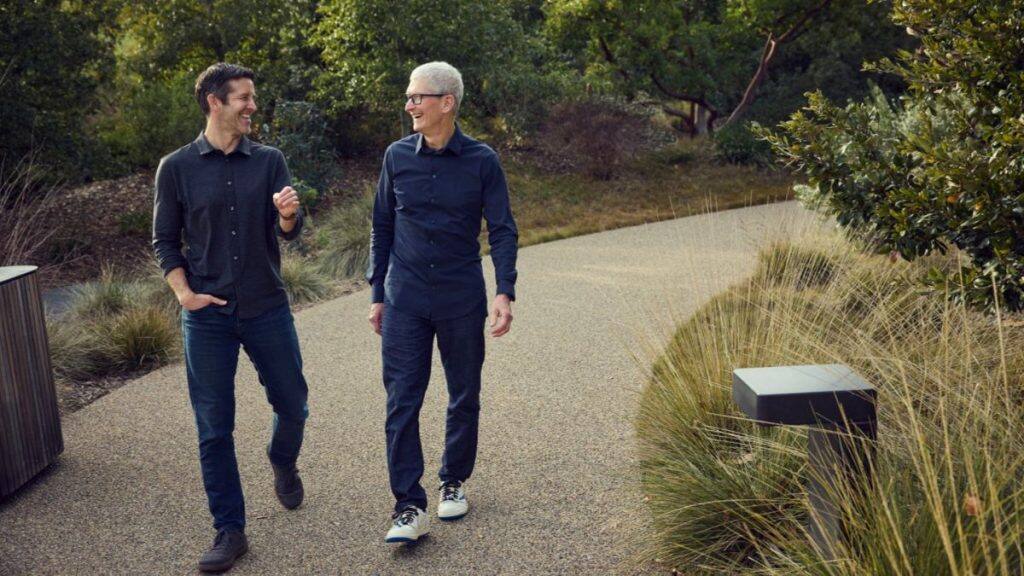
In this capacity, Ternus oversaw engineering across Apple’s entire hardware portfolio, including flagship products such as the iPhone, iPad, Mac, Apple Watch and AirPods.
His work has spanned multiple generations of devices and has been instrumental in shaping the evolution of Apple’s ecosystem.
Driving Apple’s hardware innovation
Ternus’ tenure has been closely associated with some of Apple’s most significant hardware initiatives. He has played a central role in reinvigorating the Mac lineup, which has gained market share against personal computers in recent years.
One of the defining moments of his career came when he led Apple’s transition away from Intel processors to custom-designed chips. This strategic shift, which ended more than a decade of reliance on external chipmakers, resulted in substantial improvements in performance and battery efficiency for Mac devices.
The move also demonstrated Apple’s ability to take bold decisions in pursuit of tighter integration between hardware and software.
Under his leadership, Apple introduced a range of products and updates across categories. These include multiple iterations of the iPhone, as well as the introduction of devices such as the ultra-thin iPhone Air and the MacBook Neo, a more affordable laptop designed to broaden access to the Mac experience.
Ternus has also been instrumental in advancing Apple’s wearable technology. AirPods, under his oversight, have evolved into highly sophisticated devices featuring active noise cancellation and additional capabilities that extend beyond audio, including hearing health functions.
His work has extended beyond performance and design to encompass sustainability and durability. Ternus has driven initiatives aimed at reducing Apple’s environmental footprint, including the adoption of recycled materials such as aluminium and innovations in manufacturing processes.
He has also overseen improvements in repairability and product longevity, contributing to the resilience of Apple’s devices.
Ternus' product philosophy
Ternus’ approach to innovation is rooted in a clear philosophy that prioritises products over technology for its own sake.
In a recent interview with tech review site Tom's Guide, he articulated this perspective, stating, “We never think about shipping a technology. We always think about how can we leverage technology to ship amazing products.”
This mindset reflects a continuity with Apple’s historical emphasis on user experience, a principle closely associated with Jobs. During his early years at Apple, Ternus worked under Jobs, gaining exposure to a leadership style that placed design and usability at the centre of product development.
His remarks suggest a deliberate and measured approach to emerging technologies such as AI, contrasting with the aggressive investment strategies adopted by some competitors.
While companies like Microsoft and Google have committed substantial resources to integrating AI across their platforms, Ternus appears focused on ensuring that such technologies translate into tangible improvements in Apple’s products.
The AI challenge facing Apple
The most immediate challenge for Ternus as CEO will be navigating Apple’s position in the rapidly evolving AI landscape. Despite introducing Siri in 2011, Apple has not yet delivered a major product centred on modern AI capabilities.
In recent years, competitors have made significant strides. Platforms such as OpenAI’s ChatGPT have attracted hundreds of millions of users, highlighting the growing importance of AI-driven applications.
Meanwhile, hardware and software innovations from other companies are beginning to redefine user expectations.
Apple has taken steps to address this gap, including a partnership with Google to integrate its Gemini AI into Siri. However, this reliance on external technology has raised questions among analysts about the company’s long-term strategy.
Another area of concern is the evolution of Siri itself. Unlike newer AI systems described as “agents” capable of performing complex, multi-step tasks, Siri has yet to achieve a comparable level of functionality.
Beyond AI, Ternus will also have to contend with intensifying competition across multiple fronts. Companies such as Meta Platforms have introduced augmented reality (AR) devices that have gained traction in the market, offering new ways for users to interact with digital content.
At the same time, Nvidia has expanded its ambitions beyond chips, exploring opportunities in personal computing and developing processors capable of powering laptops. These developments underscore the convergence of hardware and AI, an area where Apple must maintain its competitive edge.
Apple itself has ventured into new categories, including its Vision Pro headset, but faces the challenge of balancing innovation with affordability and widespread adoption.
Analysts have suggested that Ternus’ promotion may signal a renewed emphasis on hardware innovation, including potential investments in emerging product categories such as foldable devices, AR glasses and other next-generation technologies.
Ternus' leadership style and internal reputation
Within Apple, Ternus is regarded as a detail-oriented engineer with a collaborative approach to leadership. His reputation for precision and commitment to quality is illustrated by anecdotes from his early career, including his attention to seemingly minor design elements.
During a commencement address at the University of Pennsylvania, he reflected on the importance of both confidence and humility, advising graduates to “always assume you're as smart as anyone else in the room, but never assume that you know as much as they do.”
He also spoke about the value of dedication to craftsmanship, recalling an instance where he scrutinised the design of a component that would rarely be visible to users. “If you're going to spend that much time on something, you should put in your very best effort.”
Such insights provide a glimpse into the mindset that has shaped his approach to product development and leadership.
Ternus’ standing within Apple is reinforced by strong support from colleagues and industry observers. According to analysts, he is highly regarded across the organisation, with a reputation for fostering collaboration and maintaining high standards.
This internal backing is likely to be an asset as he assumes the CEO role, particularly given the scale and complexity of Apple’s operations.
Tim Cook’s legacy and continued role
As Ternus prepares to take over, he does so following a period of extraordinary growth under Cook. Since becoming CEO in 2011, Cook has overseen a dramatic increase in Apple’s market value, with the company’s shares rising approximately 20-fold during his tenure.
Cook’s leadership has been characterised by a focus on operational efficiency and supply chain management. He built a global network of manufacturing partners, particularly in China, enabling Apple to scale production while maintaining profitability.
This model has played a significant role in shaping global supply chains, contributing to China’s emergence as a manufacturing hub. Despite efforts to diversify production to countries such as India and Vietnam, Apple continues to rely heavily on Chinese suppliers for key components.
Cook has also been an influential figure beyond business operations. In 2014, he became the first Fortune 500 CEO to publicly come out as gay and has been vocal on issues such as diversity and sustainability.
In his new role as executive chairman, Cook will remain engaged with Apple’s strategic direction and external relationships, including interactions with policymakers.
Board changes and leadership reshuffle
The leadership transition will also bring changes to Apple’s board. Arthur Levinson, who has served as non-executive chairman for 15 years, will become lead independent director. Ternus will join the board upon assuming the CEO position.
Additionally, Apple announced that Johny Srouji, who has overseen the company’s custom chip and sensor development, will take on the role of chief hardware officer.
He will continue to lead these efforts alongside oversight of the hardware engineering group previously managed by Ternus, which will now be led by Tom Merieb.
Reflecting on his appointment, Ternus said, “I am profoundly grateful for this opportunity to carry Apple’s mission forward,” adding, “I am humbled to step into this role, and I promise to lead with the values and vision that have come to define this special place for half a century.”
With inputs from agencies

Military drones & police check-ups: How Sri Lanka is fighting against worst dengue outbreak in a decade
How Facebook job ad lured 2 Karnataka men into Myanmar cyber scam camp
Why is India seeing 95% cloud cover despite a Super El Niño?
What is CJP’s fourth demand to the government as protests in Delhi intensify?
The new geography of war: Why the Houthis can no longer be ignored