


What's the punishment for urinating on co-passengers, fighting on flights?
Unruly behaviour on planes is an offence and a punishable act in India. Verbal harassment, physical violence, and indecency can land passengers on the no-fly list

During the period of the inquiry, the concerned airline has the power to ban the passenger.The panel is required to take a decision within 30 days, and also clarify how long the passenger will not be allowed to fly.If the internal committee fails to come to a conclusion within that period, the passenger is free to fly, noted Indian Express. [caption id="attachment_11940782" align="alignnone" width="640"]
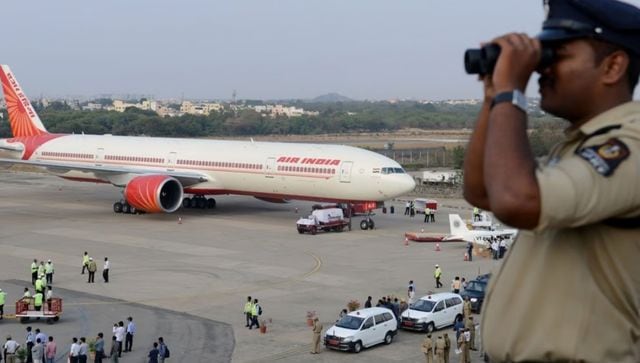
The government came up with the rules for the no-fly list in 2017. AFP (Representational Image)[/caption]Under the CAR, an airline can ban an individual from flying for a lifetime.Once a person is placed on a no-fly list, other airlines also have the option to impose a similar ban.The individual who has been banned by airlines has the right to appeal within 60 days from the date of issue of the order to an Appellate Committee set up by the Ministry of Civil Aviation, as per Indian Express. What will land a passenger on the no-fly list?As per the DGCA, a list of unruly behaviour includes consuming alcohol or drugs which may result in disruption, smoking in an aircraft, using threatening or abusive language towards a member of the crew or other passengers, intentionally interfering with the performance of a crew member's duties and so on.The nature of unruly acts which will decide the period of the ban has been classified as Level 1, 2, or 3.Level 1 includes behaviours such as "physical gestures, verbal harassment, unruly inebriation". This can lead to a ban of up to three months.Physically abusive behaviour like "pushing, kicking, hitting, grabbing or inappropriate touching or sexual harassment", which constitutes Level 2, will attract a debarment of up to six months.Level 3 comprises of life-threatening behaviour such as damage to aircraft operating systems, "physical violence such as choking, eye gouging, murderous assault, attempted or actual breach of the flight crew compartment etc". In such a scenario, the ban can range from a minimum of two years or more to an indefinite period.The Ministry of Home Affairs can also provide a list of individuals identified as “national security threats” to DGCA and the airlines, for inclusion in the no-fly list, as per PTI.ALSO READ: Why are Indians flying out of control?Who is on the no-fly list?As per The New Indian Express report in 2020, only one Mumbai-based jeweller has been placed on the no-fly list so far.In 2017, Birju Kishore Salla, a multi-millionaire on a Jet Airways Mumbai-Delhi flight had left a false note in the lavatory, claiming there were hijackers and explosives in the cargo area of the flight. This caused an emergency landing of the plane at Ahmedabad airport.He became the first person to be put on the no-fly list and was also charged under the new Anti-Hijacking Act, 2016.The recent incidents of unruly behaviour have invoked the public’s memory of when stand-up comedian Kunal Kamra was banned for months by several airlines for allegedly heckling Republic founder Arnab Goswami onboard an Indigo flight in 2020.Questioning the civil aviation's regulatory body over a mere ban of 30-days on Mishra, Trinamool Congress MP Mahua Moitra tweeted on Wednesday, “Bit confused as to how @DGCAIndia (Directorate General of Civil Aviation) works- @kunalkamra88 got a 6-month ban for questioning a co-passenger but another man who peed on an AI co-flyer gets a 30-day ban. Kunal… maybe change tack next time? Clearly more is less”.
Kamra had also earlier taken a jab at Air India over the ban period.With inputs from agenciesRead all the Latest News, Trending News, Cricket News, Bollywood News,India News and Entertainment News here. Follow us on Facebook, Twitter and Instagram.
Military drones & police check-ups: How Sri Lanka is fighting against worst dengue outbreak in a decade
How Facebook job ad lured 2 Karnataka men into Myanmar cyber scam camp
Why is India seeing 95% cloud cover despite a Super El Niño?
What is CJP’s fourth demand to the government as protests in Delhi intensify?
The new geography of war: Why the Houthis can no longer be ignored