


What’s the 'jihadi drug' India has seized for the first time?
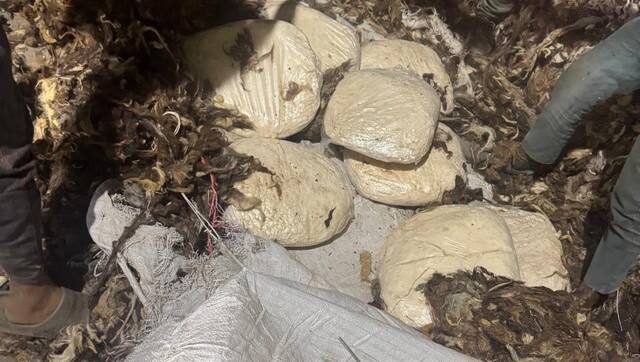
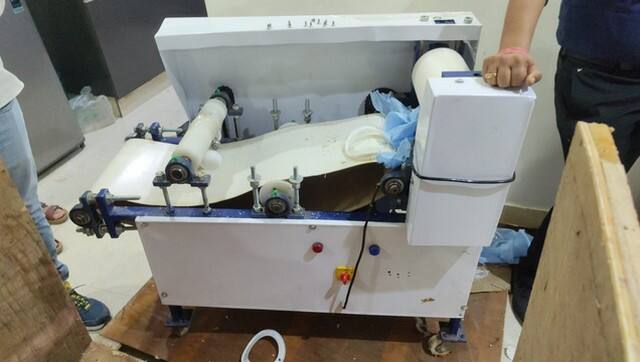
A total of 227.7 kg of Captagon in tablet and powder form, valued at approximately Rs 182 crore, has been seized from a residence in Neb Sarai, New Delhi, and from Mundra Port in Gujarat. Its nickname as the ‘jihadi drug’ stems from reports that terrorist groups such as Islamic State have used it to induce endurance, focus, and fearlessness while fighting battles and conducting operations

India has recorded its first-ever seizure of Captagon, a synthetic stimulant often referred to as the ‘jihadi drug’.
Union Home Minister Amit Shah announced that authorities confiscated the drug, also known as the “poor man’s cocaine”, during a coordinated crackdown named Operation Ragepill.
According to officials, a total of 227.7 kg of Captagon in tablet and powder form, valued at approximately Rs 182 crore, was seized from a residence in Neb Sarai, New Delhi, and from Mundra Port in Gujarat. The operation was carried out by the Narcotics Control Bureau (NCB). A Syrian national, reportedly linked to an international drug syndicate, has been arrested in connection with the case.
But what do we know? Let’s take a closer look
What they’re saying
“The Modi government is resolved for a ‘drug-free India’... Our agencies have achieved the first-ever seizure of Captagon, the so-called ‘jihadi drug’,” Shah wrote on X.
“The busting of the drug consignment destined for the Middle East and the arrest of a foreign national stand out as shining examples of our commitment to zero tolerance against drugs,” he added. “I repeat, we will clamp down on every gram of drugs entering India or leaving the country using our territory as a transit route. Kudos to the brave and vigilant warriors of the NCB.”
 More from Explainers
Zoom in: What is it?
Captagon was originally known as fenethylline. According to the University of Tennessee, it was first produced in Germany during the 1960s. The idea behind it was to treat children who were ‘hyperkinetic’, as well as patients with depression and narcolepsy. According to the US Justice Department, Captagon is a synthetic amphetamine-type stimulant. In the United States, fenethylline has been listed under Schedule I of the Controlled Substances Act since 1981.
It was eventually withdrawn after users reported hallucinations, visual distortions, and psychosis. It was also linked to rare instances of myocardial infarction, seizures, and delusions. As per reports, it contains a mixture of amphetamines, caffeine, methamphetamine, and other synthetic chemicals.
During the 1980s, several countries took note of its ill effects and banned it. Captagon was later added to Schedule II of the UN Convention on Psychotropic Substances. In India, it is regulated under the Narcotic Drugs and Psychotropic Substances (NDPS) Act. However, until around 2013, some European countries such as France, Belgium, Germany, Luxembourg, and the Netherlands allowed limited medical use for narcolepsy. Over time, legal production ceased, but illicit manufacturing continues.
Zoom out: The ‘jihadi drug’
While it is no longer produced legally or used for therapeutic purposes, it can still be found widely in West Asia. According to the National Library of Medicine, Captagon is manufactured in secret drug labs in Southern Europe and West Asia. It is widely considered one of the most popular drugs in Saudi Arabia, which accounts for nearly 80 per cent of seizures in the region.
While it has been used by affluent youth in the region for recreation or as a study aid, Captagon’s nickname as the “jihadi drug” stems from claims that terrorist groups such as Islamic State have used it to induce endurance, focus, and fearlessness while fighting battles and conducting operations. It is also said to increase alertness and wakefulness, reduce fatigue, and suppress appetite. Some users report feelings of well-being, pleasure, and even euphoria.
According to reports, large quantities of Captagon were found in Syria during the civil war. The former Bashar al-Assad government is alleged to have had links to trafficking networks and regional smuggling operations.
What are its side effects?
- Short-term effects include:
- Elevation in heart rate
- Increased body temperature
- Faster respiration
- Higher blood pressure
- Long-term effects include
- Extreme depression
- Lethargy
- Sleep deprivation
- Heart and blood vessel toxicity
- Malnutrition
In addition, prolonged use may lead to dependency, behavioural changes, and impaired cognitive function.
The bottom line: The seizure marks India’s first encounter with Captagon, highlighting both enforcement success and the risk of the country being used as a transit route in international drug trafficking networks.
FAQs
1. What is Captagon made of?
Modern Captagon typically contains a mix of amphetamines, caffeine, methamphetamine, and other synthetic chemicals rather than pure fenethylline.
2. Why is it called the ‘jihadi drug’?
The term comes from reports that extremist groups have used it to enhance endurance, alertness, and reduce fear during combat operations.
3. Why is this seizure important for India?
It marks the first-ever Captagon seizure in India, indicating the country’s emergence as a potential transit point in global drug trafficking routes.
With inputs from agencies

Military drones & police check-ups: How Sri Lanka is fighting against worst dengue outbreak in a decade
How Facebook job ad lured 2 Karnataka men into Myanmar cyber scam camp
Why is India seeing 95% cloud cover despite a Super El Niño?
What is CJP’s fourth demand to the government as protests in Delhi intensify?
The new geography of war: Why the Houthis can no longer be ignored