


What’s behind Germany’s regular transport strikes that have hit travellers?
Germany has been gripped by a series of strikes by transportation workers that have left air, rail and bus travellers stranded. Unions are demanding higher wages and better working conditions

Recently, Germany has been gripped by a series of strikes that have brought its transport sector to a standstill, leaving thousands of travellers stranded and disrupting daily commutes.
Ground staff at major airports, including Frankfurt and Munich, staged a one-day strike, impacting hundreds of flights on Tuesday. This action, orchestrated by the Ver.di labour union, is just one in a string of protests across various transport industries, from rail to local transit.
As demands for higher wages and better working conditions collide with employers' reluctance, the country faces the consequences of inflation and staff shortages.
Such short “warning strikes” are a common tactic in German contract negotiations. But they have frustrated travellers and commuters and made Germany, Europe’s economic powerhouse with a reputation for efficiency, appear dysfunctional.
 More from Explainers
Let's take a closer look at why the strikes are happening in Germany, their root causes, and what the future holds for Germany's critical transport networks.
Who is striking?
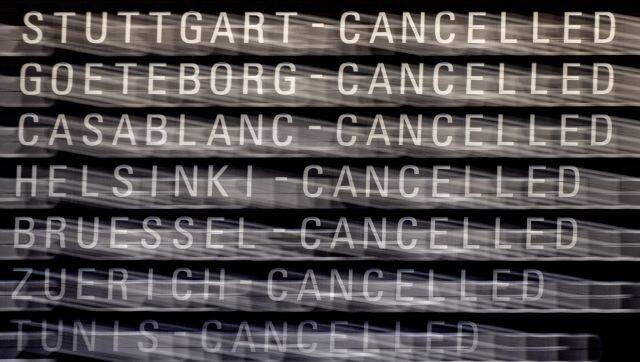
Thousands of travellers across Germany found themselves stranded on Tuesday when ground staff walked off the job at seven of the country’s biggest airports.
The one-day strike by the Ver.di labour union, which runs until 7.10 am (local time) Wednesday, affects several hundred flights at airports in Frankfurt and Munich, Lufthansa’s main hubs, as well as Berlin, Duesseldorf, Hamburg, Cologne-Bonn and Stuttgart.
The 25,000 members of the Ver.di union, which includes check-in, aircraft handling, maintenance and freight staff, have walked off the job. Members staged a similar strike at German airports earlier this month, prompting airlines to cancel hundreds of flights.
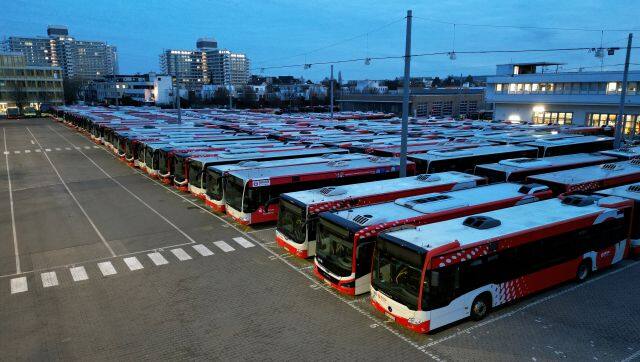
In early February, about 90,000 employees with the Ver.di union for over 130 local transport operators walked off the job in major cities across Germany. And in January, the rail workers' union GDL staged a series of multi-day strikes to protest the state of contract negotiations with the German railway operator, Deutsche Bahn.
One strike in late January was planned for six days and was set to be the longest in Deutsche Bahn’s history. The union ultimately ended the strike a day early to resume talks.
Why are they striking?
Each union's demands are different, but they centre around higher wages and better working conditions. They argue that inflation has made life difficult for members and that employers should compensate them accordingly to keep up with rising prices.
Ver.di, for example, is seeking pay raises for airport workers of 12.5 per cent, or at least € 500 ($539 or Rs 44, 678) more per month, as well as a one-time payment of € 3,000 (Rs 2.68 lakh) to offset the effects of inflation.
For transit employees, key demands include a shorter work week and extra compensation days for shift and night work.
For railway workers, in addition to pay raises, the union has called for working hours to be reduced from 38 to 35 per week without a pay cut. Deutsche Bahn has refused that.
What happens next?
Contract negotiations are ongoing, which means that more warning strikes — or even longer strikes — could be on the horizon.
A round of talks between Ver.di and Lufthansa on 12 February produced no agreement. More negotiations are scheduled for Wednesday.
After its five-day strike last month, the GDL rail workers union returned to talks with Deutsche Bahn and agreed not to stage further strikes before 3 March. But if no agreement is reached by then, train travellers may face more disruptions.
With inputs from AP

Military drones & police check-ups: How Sri Lanka is fighting against worst dengue outbreak in a decade
How Facebook job ad lured 2 Karnataka men into Myanmar cyber scam camp
Why is India seeing 95% cloud cover despite a Super El Niño?
What is CJP’s fourth demand to the government as protests in Delhi intensify?
The new geography of war: Why the Houthis can no longer be ignored