


What is Russia’s Victory Day, and why is the military parade scaled down this year?
Russia’s Victory Day parade, once a grand display of military power, has been significantly scaled back in 2026 amid security fears and the ongoing Ukraine war. Experts say the changes could reflect deeper political and military challenges facing the Kremlin

Today (May 9) is Victory Day in Russia.
However, celebrations will be muted this year compared to the past, and tanks, armoured vehicles and weapons systems – a staple of the parade – will not be displayed. Moscow has said this is down to the 'current operational situation' and fears of long-range drone strikes by Kyiv amid the Ukraine war.
But what do we know about the Victory Day parade? Why is it important? And how much is it being scaled down?
Russia’s Victory Day Parade
The holiday marks the victory of the Soviet Union over Nazi Germany in World War II. The Soviet Red Army lost over eight million soldiers in the conflict. Though the Allies celebrate 7 May as Victory in Europe Day, then Russian leader Joseph Stalin chose May 9 because that was the day the Nazis signed the instrument of surrender in Berlin.
 More from Explainers
It was Soviet leader Leonid Brezhnev who designated May 9 an annual holiday. It was Brezhnev who also added the spectacle of putting arms and armaments on display. Boris Yeltsin, the country’s first post-Soviet leader, took it one step further by turning it into an annual tradition.
A piece in AtlanticCouncil.org noted how just a handful of Victory Day parades had occurred between 1945 and 1991, that it was nowhere near the most important such holiday during the Soviet era. However, it added that since Putin took power, the piece contended that it has been elevated in status to the level of “pseudo-religion, complete with its own saints, symbols, dogmas, and heretics”.
Under Vladimir Putin, the Victory Day parade has become the centrepiece of Russia’s national identity. Since coming to power in 2000, Putin has overseen the transformation of the event into a highly choreographed display of military strength and state power. Annual parades in Moscow’s Red Square have featured thousands of troops, advanced missile systems and flypasts.
Putin has often used the stage to draw direct parallels between the Soviet victory in World War II and modern-day geopolitical conflicts including the Ukraine war. Over the years, hundreds of thousands of people have lined the streets of Moscow and other cities to watch the marches in person, while millions more have followed the event on television and online.
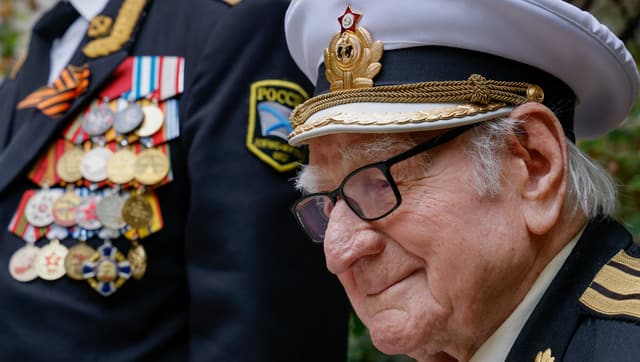
In 2017, journalist Andrei Kolesnikov wrote a piece on how Victory Day is essential to understanding Putin’s view of history and the “Great Patriotic War” (World War II).
“The current regime, which calls itself the sole heir of this victory, uses this achievement to make itself immune to criticism on other issues while justifying its current militarisation efforts and excessive state interference in all aspects of life,” Kolesnikov wrote. “In its official conception, Russia’s commemoration of Victory Day in 1945 is only formally an occasion for collectively mourning Russia’s war dead. It has turned instead into an instrument for providing support to the most militarised, bellicose kind of Russian leader.”
V-Day parade being tamped down
The Victory Day Parade is being massively toned down this year.
As per the Russian government, last year’s 80th anniversary celebrations saw around 11,000 troops and 150 military vehicles participate. Over two dozen foreign leaders and international officials came to Moscow for the parade, including Chinese President Xi Jinping. However, this year, Slovak Prime Minister Robert Fico is the only current world leader who has confirmed he will attend. Ex-Bosnian Serb leader Milorad Dodik said he will attend the parade in Moscow.
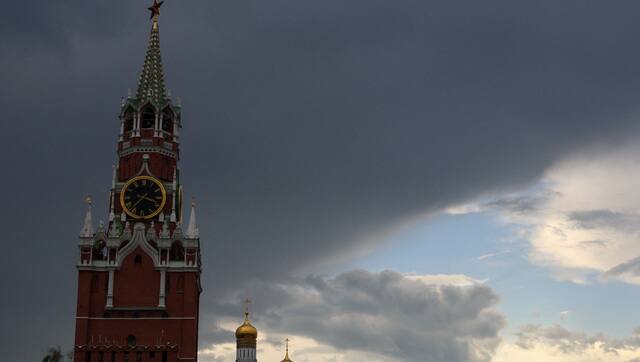
Putin has also called for a temporary ceasefire with Ukraine. However, Kyiv has shown little interest in doing so. “We will clarify what exactly this is about: a few hours of security for a parade in Moscow, or something more. Our proposal is a long-term ceasefire, reliable and guaranteed security for people, and a lasting peace. Ukraine is ready to work towards this in any dignified and effective format,” Ukrainian President Volodymyr Zelenskyy has said.
Ukrainian drones have struck Moscow at intervals throughout the war, and Russia has blamed Kyiv for a series of assassinations and attempted killings of high-ranking military officials in and near the capital. Ukraine has claimed responsibility for some of those attacks while denying others.
What do experts say?
Experts say that the downscaling of the parade could be significant.
Sociologist Sergei Erofeev, a lecturer at Rutgers University, told TVP World the downscaling of the Victory Day Parade shows that Putin is increasingly ruling by fear rather than strength. He said the parade has long been a key part of the Kremlin’s political mythology. “Victory Day is a very important part of this artificial construct,” Erofeev said. It helped sustain Putin’s rule “until the beginning of this war in February 2022.”
However, he claimed that the parade is no longer seen as a symbol of strength by Western leaders and Russians. It would suggest that Putin is a strong man, that he is supported by his nation, and that his pillars are still in place… but it is no longer the case,” Erofeev said. He added that Putin’s call for a temporary ceasefire was motivated by self-interest. “It is all about security. And the discourse of security in Russia today is the discourse of security of only one person,” Erofeev said.
A piece in the Atlantic Council also noted how the scaling back essentially meant Putin was admitting he can no longer control security in Moscow. It argued that this will show the world that Moscow is struggling militarily, which in turn could persuade Ukraine’s allies to do far more. The piece argued that Moscow could be far weaker than many had thought. It hoped that Ukraine could use this to hasten the end of Putin’s invasion.
Others are even more acerbic.
“Are they afraid of a mutiny? Or has all the equipment burned up in Ukraine?” Abbas Gallyamov, a former Kremlin speechwriter who is now on Russia's "foreign agent" list, posted on social media.
John Foreman, a former British defence attaché to Moscow, said the decision not to showcase military equipment this time reflected both battlefield pressures on Russia's army and the fear of presenting an attractive target for Ukraine to attack, given the increasing effectiveness of its deep-strike capabilities.
A lavish Victory Day parade could also attract criticism at a time when no end to the war is in sight, and the Kremlin has been forced to acknowledge widespread public frustration, particularly over large-scale disruption to internet services that Putin has defended on security grounds. “It’s not going well – the mood is not great, there are economic difficulties, they (Russians) see a war with no end,” Foreman said in a telephone interview.
News of the scaled-down parade prompted lively discussion among Russians on social media. In a chat stream on Telegram, one participant said it would be a “very strange parade” without weapons because the whole point was to show adversaries what they would have to contend with if they attacked Russia. Others suggested the time for a real parade would be when Russia achieved victory. “But when will that be?” one person asked.
FAQs
1. Why has Russia scaled down the Victory Day parade in 2026?
The parade has been reduced due to security concerns, particularly fears of Ukrainian drone strikes and the ongoing war situation.
2. What is the significance of Victory Day in Russia?
Victory Day marks the Soviet Union’s victory over Nazi Germany in World War II and is one of Russia’s most important national holidays.
3. What do experts say about the reduced parade?
Experts believe the downscaling may signal vulnerabilities in the Putin position.
With inputs from agencies

Military drones & police check-ups: How Sri Lanka is fighting against worst dengue outbreak in a decade
How Facebook job ad lured 2 Karnataka men into Myanmar cyber scam camp
Why is India seeing 95% cloud cover despite a Super El Niño?
What is CJP’s fourth demand to the government as protests in Delhi intensify?
The new geography of war: Why the Houthis can no longer be ignored