
Advertisement


Sections
What is regenerative agriculture? Is it the answer to stubble burning?
To address stubble burning menace in Delhi's adjoining states, industrialist Anand Mahindra stressed the need for 'regenerative agriculture'. It is an outcome-based approach designed to improve soil health, mitigate adverse effects of farming on the environment, increase production and profitability

With no respite from the extremely toxic air, significant areas of Delhi are struggling to breathe.The National Capital Region (NCR) and the surrounding states of Punjab, Haryana, Uttar Pradesh, and Rajasthan must put an end to stubble burning to solve this problem.In light of this, businessman Anand Mahindra has emphasised the significance of "regenerative agriculture."“To heal Delhi’s pollution, Regenerative Agriculture MUST be given a chance. It provides a remunerative alternative to stubble burning while simultaneously increasing soil productivity. Vikash Abraham of Naandi Foundation stands ready to help. Let’s do it!” he urged on X (formerly Twitter).Founded in 1998 as a public charitable trust, the Naandi Foundation manages thousands of centres for girls’ education and skill development as well as job opportunities. Mahindra chairs the board of the Foundation.What is regenerative agriculture?The World Economic Forum (WEF) explains regenerative agriculture or regenerative farming focuses on “the health of the soil, which has been degraded by the use of heavy machinery, fertilisers, and pesticides in intensive farming.”It is primarily an outcome-based approach designed to improve soil health, mitigate agriculture's negative effects on the environment, water resources, and biodiversity, and increase farm production and profitability.Its methods include limiting land ploughing, which maintains carbon dioxide levels in the soil, enhancing its water-absorbing capacity, and preserving the integrity of the earth's essential fungal ecosystems. Utilising compost and animal dung helps replenish the soil's nutrients, and rotating crops enhances biodiversity by allowing for a diversity of crop plantings, according to Hindustan Times.It is practised in Asia, Latin America, the US, Canada, Africa, Europe, Australia, and New Zealand. To grow commercial commodities like cardamom alongside maize, beans, and bananas, farmers in Tanzania and East Africa also employ regenerative farming.Global leaders and multinational companies are also eager to implement this sustainable agriculture technique in order to strengthen the food chain and lessen the effects on the already failing ecology, as the challenges posed by climate change are drawing near.[caption id="attachment_13367972" align="alignnone" width="640"]![]() Regenerative agriculture or regenerative farming focuses on “the health of the soil, which has been degraded by the use of heavy machinery, fertilisers, and pesticides in intensive farming.” PTI[/caption]How does it address the issue of stubble burning?Paddy crop residues are removed from fields by farmers in the agrarian regions of Punjab, Haryana, Rajasthan, and Uttar Pradesh in order to plant the following crop between mid-September and November.In addition to vehicle emissions, this technique known as stubble burning is a major factor in the declining AQI in the National Capital.According to a Moneycontrol report, the farmers have mostly adopted this practise because of the limited window of time between harvesting rice and sowing wheat. But this extremely unsustainable approach degrades soil fertility and pollutes the air.On the other hand, farmers practising regenerative agriculture continue to rotate between cash and cover crops by planting a new crop right away after harvest. Rotating crops at regular intervals preserves soil moisture content and aids in the management of pest infestations, the report explains.Additionally, it offers a varied diet to support the beneficial microorganisms in the soil.Crop rotation between nitrogen-fixing and nitrogen-hungry crops also helps farmers use less fertilisers, which is another important farming input that pollutes the soil and water.Relay planting is another key method in regenerative farming, whereby the seeds of the subsequent crop are sown while the current harvest is still in the reproductive stage. Here, farmers can decrease the likelihood of stubble burning by using relay planting to mitigate the risk of missing crop sowing deadlines.What are its other benefits?Regenerative agriculture can help to tackle the looming food crisis in many developing or underdeveloped countries has been the major repercussion of the climate change.The sustainable practice can also help multinational companies to achieve their net-zero goals.Global giants – Apple, Unilever, PepsiCo, Microsoft among others are focusing on developing a sustainable value chain system and organically growing their operations.How is soil health linked to pollution?The United Nations (UN) estimates that agriculture accounts for one-third of greenhouse gas emissions globally, with degraded soil contributing to the environment's vulnerability.[caption id="attachment_13367912" align="alignnone" width="640"]
Regenerative agriculture or regenerative farming focuses on “the health of the soil, which has been degraded by the use of heavy machinery, fertilisers, and pesticides in intensive farming.” PTI[/caption]How does it address the issue of stubble burning?Paddy crop residues are removed from fields by farmers in the agrarian regions of Punjab, Haryana, Rajasthan, and Uttar Pradesh in order to plant the following crop between mid-September and November.In addition to vehicle emissions, this technique known as stubble burning is a major factor in the declining AQI in the National Capital.According to a Moneycontrol report, the farmers have mostly adopted this practise because of the limited window of time between harvesting rice and sowing wheat. But this extremely unsustainable approach degrades soil fertility and pollutes the air.On the other hand, farmers practising regenerative agriculture continue to rotate between cash and cover crops by planting a new crop right away after harvest. Rotating crops at regular intervals preserves soil moisture content and aids in the management of pest infestations, the report explains.Additionally, it offers a varied diet to support the beneficial microorganisms in the soil.Crop rotation between nitrogen-fixing and nitrogen-hungry crops also helps farmers use less fertilisers, which is another important farming input that pollutes the soil and water.Relay planting is another key method in regenerative farming, whereby the seeds of the subsequent crop are sown while the current harvest is still in the reproductive stage. Here, farmers can decrease the likelihood of stubble burning by using relay planting to mitigate the risk of missing crop sowing deadlines.What are its other benefits?Regenerative agriculture can help to tackle the looming food crisis in many developing or underdeveloped countries has been the major repercussion of the climate change.The sustainable practice can also help multinational companies to achieve their net-zero goals.Global giants – Apple, Unilever, PepsiCo, Microsoft among others are focusing on developing a sustainable value chain system and organically growing their operations.How is soil health linked to pollution?The United Nations (UN) estimates that agriculture accounts for one-third of greenhouse gas emissions globally, with degraded soil contributing to the environment's vulnerability.[caption id="attachment_13367912" align="alignnone" width="640"]![]() Following a little improvement to the "very poor" category, the national capital's air quality index (AQI) returned to "severe" category on Thursday morning. Reuters[/caption]According to Livemint, environments can become more susceptible to extreme weather events like flooding due to damaged soil and eroded terrain.The natural storage of carbon dioxide in the soil is disturbed by intensive farming practises, the use of pesticides, fertilisers, and heavy machinery to increase food production, which also degrades the soil.A healthy soil, on the other hand, enhances biodiversity, or the range of species, generates more food and nutrition, and stores more carbon.The outlet quoted farming charity Regeneration International as warning that there might not be enough soil left to produce enough food to feed everyone in the next 50 years.According to a WEF 2022 article, “more than half of the world’s agricultural land is degraded. This leads to productivity losses of $400 billion a year and is a risk to food security in the future. Regenerative farming can restore agricultural land and reduce the industry’s environmental impact, including lowering greenhouse gas emissions.”How bad is Delhi’s pollution?Following a little improvement to the "very poor" category, the national capital's air quality index (AQI) returned to "severe" category on Thursday morning.At 8 am, the AQI reported in Anand Vihar was 429, 445 in IGI Airport, 433 in Jahangirpuri, 431 in Ashok Vihar, 462 in Dwarka Sector 8, 443 in ITO, according to the Central Pollution Control Board (CPCB).With inputs from agencies
Following a little improvement to the "very poor" category, the national capital's air quality index (AQI) returned to "severe" category on Thursday morning. Reuters[/caption]According to Livemint, environments can become more susceptible to extreme weather events like flooding due to damaged soil and eroded terrain.The natural storage of carbon dioxide in the soil is disturbed by intensive farming practises, the use of pesticides, fertilisers, and heavy machinery to increase food production, which also degrades the soil.A healthy soil, on the other hand, enhances biodiversity, or the range of species, generates more food and nutrition, and stores more carbon.The outlet quoted farming charity Regeneration International as warning that there might not be enough soil left to produce enough food to feed everyone in the next 50 years.According to a WEF 2022 article, “more than half of the world’s agricultural land is degraded. This leads to productivity losses of $400 billion a year and is a risk to food security in the future. Regenerative farming can restore agricultural land and reduce the industry’s environmental impact, including lowering greenhouse gas emissions.”How bad is Delhi’s pollution?Following a little improvement to the "very poor" category, the national capital's air quality index (AQI) returned to "severe" category on Thursday morning.At 8 am, the AQI reported in Anand Vihar was 429, 445 in IGI Airport, 433 in Jahangirpuri, 431 in Ashok Vihar, 462 in Dwarka Sector 8, 443 in ITO, according to the Central Pollution Control Board (CPCB).With inputs from agencies
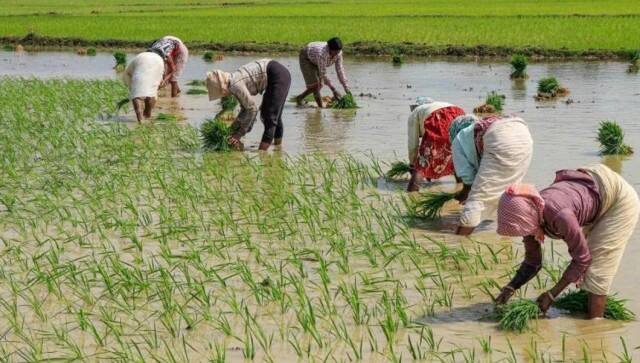 Regenerative agriculture or regenerative farming focuses on “the health of the soil, which has been degraded by the use of heavy machinery, fertilisers, and pesticides in intensive farming.” PTI[/caption]How does it address the issue of stubble burning?Paddy crop residues are removed from fields by farmers in the agrarian regions of Punjab, Haryana, Rajasthan, and Uttar Pradesh in order to plant the following crop between mid-September and November.In addition to vehicle emissions, this technique known as stubble burning is a major factor in the declining AQI in the National Capital.According to a Moneycontrol report, the farmers have mostly adopted this practise because of the limited window of time between harvesting rice and sowing wheat. But this extremely unsustainable approach degrades soil fertility and pollutes the air.On the other hand, farmers practising regenerative agriculture continue to rotate between cash and cover crops by planting a new crop right away after harvest. Rotating crops at regular intervals preserves soil moisture content and aids in the management of pest infestations, the report explains.Additionally, it offers a varied diet to support the beneficial microorganisms in the soil.Crop rotation between nitrogen-fixing and nitrogen-hungry crops also helps farmers use less fertilisers, which is another important farming input that pollutes the soil and water.Relay planting is another key method in regenerative farming, whereby the seeds of the subsequent crop are sown while the current harvest is still in the reproductive stage. Here, farmers can decrease the likelihood of stubble burning by using relay planting to mitigate the risk of missing crop sowing deadlines.What are its other benefits?Regenerative agriculture can help to tackle the looming food crisis in many developing or underdeveloped countries has been the major repercussion of the climate change.The sustainable practice can also help multinational companies to achieve their net-zero goals.Global giants – Apple, Unilever, PepsiCo, Microsoft among others are focusing on developing a sustainable value chain system and organically growing their operations.How is soil health linked to pollution?The United Nations (UN) estimates that agriculture accounts for one-third of greenhouse gas emissions globally, with degraded soil contributing to the environment's vulnerability.[caption id="attachment_13367912" align="alignnone" width="640"]
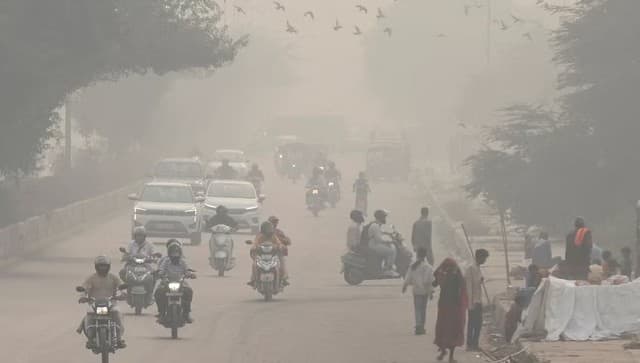 Following a little improvement to the "very poor" category, the national capital's air quality index (AQI) returned to "severe" category on Thursday morning. Reuters[/caption]According to Livemint, environments can become more susceptible to extreme weather events like flooding due to damaged soil and eroded terrain.The natural storage of carbon dioxide in the soil is disturbed by intensive farming practises, the use of pesticides, fertilisers, and heavy machinery to increase food production, which also degrades the soil.A healthy soil, on the other hand, enhances biodiversity, or the range of species, generates more food and nutrition, and stores more carbon.The outlet quoted farming charity Regeneration International as warning that there might not be enough soil left to produce enough food to feed everyone in the next 50 years.According to a WEF 2022 article, “more than half of the world’s agricultural land is degraded. This leads to productivity losses of $400 billion a year and is a risk to food security in the future. Regenerative farming can restore agricultural land and reduce the industry’s environmental impact, including lowering greenhouse gas emissions.”How bad is Delhi’s pollution?Following a little improvement to the "very poor" category, the national capital's air quality index (AQI) returned to "severe" category on Thursday morning.At 8 am, the AQI reported in Anand Vihar was 429, 445 in IGI Airport, 433 in Jahangirpuri, 431 in Ashok Vihar, 462 in Dwarka Sector 8, 443 in ITO, according to the Central Pollution Control Board (CPCB).With inputs from agencies
First Published:Nov 09, 2023, 11:45:12 IST
Advertisement
Advertisement

Military drones & police check-ups: How Sri Lanka is fighting against worst dengue outbreak in a decade
Sri Lanka is fighting its most severe dengue outbreak in nearly a decade, with infections rising sharply across the nation. Military drones have been deployed to tackle the outbreak, which has claimed 56 lives. Health officials said the outbreak is being driven primarily by the DENV-2 variant of the virus
3 min read
How Facebook job ad lured 2 Karnataka men into Myanmar cyber scam camp
The Karnataka Cyber Command has rescued two youths from a scam compound in Myanmar operated by Chinese fraudsters. The duo from Karnataka were lured on the pretext of data-entry jobs. They were asked to work for 16 hours a day and were expected to sleep for six hours daily
4 min read
Why is India seeing 95% cloud cover despite a Super El Niño?
India is witnessing nearly 95 per cent cloud cover despite a Super El Niño, a climate event usually linked to weaker monsoons. Regional weather systems, cyclonic circulations, the monsoon trough and moisture from two seas are temporarily overpowering one of the world's strongest climate phenomena
5 min read
What is CJP’s fourth demand to the government as protests in Delhi intensify?
The protest by the Cockroach Janta Party at Delhi’s Jantar Mantar refuses to die down. The group have made a fourth demand to the Centre, asking that no FIRs are filed against the agitators and that no legal action be taken. The government has expressed willingness to speak to the protesters, but refused to accede on the resignation of Education Minister Dharmandra Pradhan
5 min read
The new geography of war: Why the Houthis can no longer be ignored
The rise of the Houthis marks the emergence of a new geography of war — one in which influence flows not only from capitals and conventional armies, but also from rugged mountains overlooking vital sea lanes
6 min read
Advertisement
Advertisement