
Advertisement


Sections
What's the bacteria making China’s children sick?
China has attributed the spike in respiratory illnesses to mycoplasma pneumoniae among others. The bacteria typically causes a mild infection, with symptoms similar to a common cold. Younger children are at an increased risk of developing pneumonia because of their weak immune system

China’s healthcare system is making headlines again as a fresh wave of pneumonia cases sweeps across the country.Thousands of cases of “influenza-like illness” particularly among children, are overwhelming the paediatric hospitals in Beijing and Liaoning province.The unexpected spike has prompted the World Health Organization to press China to provide more details to calm concerns that a novel pathogen similar to COVID-19 was the source of the outbreaks.The Chinese health authorities have attributed the uptick of hospitalisation to mycoplasma pneumoniae, RSV, adenovirus, and influenza.More importantly, the WHO also clarified that no new pathogens have been detected. It said that while the level of illness is unusually high for this time of year, it is not unusual for winter to bring respiratory diseases, according to NDTV.[caption id="attachment_13438572" align="alignnone" width="640"]![]() A man carriers a child walk out from a crowded holding room of a children's hospital in Beijing. AP[/caption]What is mycoplasma pneumoniae?According to the United States’ Centers for Disease Control and Prevention (CDC), mycoplasma pneumoniae bacteria typically causes a mild infection, with symptoms similar to common cold.The bacteria, that has been around for some time, acts more like a virus and spreads faster from a human to human, as per Indian Express. It can cause illness by damaging the lining of the respiratory system (throat, lungs, windpipe), explained CDC. People can have the bacteria in their nose or throat at one time or another without being ill.It rarely requires hospitalisation, especially when a cough lasts for weeks. Younger children are an increased risk of developing pneumonia. Thus, many Chinese parents are worried.According to local media, the country’s top paediatric medical centres have been overwhelmed with sick children. Several families are waiting for over seven hours to see a doctor, according to NDTV.How does it spread?As per CDC, when someone infected with mycoplasma pneumoniae coughs or sneezes, they create small respiratory droplets that contain the bacteria.It is not that rapidly infectious as a virus but other people can get infected if they breathe in those droplets that can affect throat and nasal cavities and descend to the lungs very quickly, causing pneumonia.Thus, it is important to limit exposure to any person sneezing or persistent coughing in a closed or crowded environment.What are its signs and symptoms?The most common type of infection is tracheobronchitis (chest cold). Its symptoms include sore throat, feeling tired, fever and chills, shortness of breath, slowly worsening cough that can last for weeks or months, and headache.Children younger than five years who get this pneumonia could have symptoms that are different from older children and adults.[caption id="attachment_13438582" align="alignnone" width="640"]
A man carriers a child walk out from a crowded holding room of a children's hospital in Beijing. AP[/caption]What is mycoplasma pneumoniae?According to the United States’ Centers for Disease Control and Prevention (CDC), mycoplasma pneumoniae bacteria typically causes a mild infection, with symptoms similar to common cold.The bacteria, that has been around for some time, acts more like a virus and spreads faster from a human to human, as per Indian Express. It can cause illness by damaging the lining of the respiratory system (throat, lungs, windpipe), explained CDC. People can have the bacteria in their nose or throat at one time or another without being ill.It rarely requires hospitalisation, especially when a cough lasts for weeks. Younger children are an increased risk of developing pneumonia. Thus, many Chinese parents are worried.According to local media, the country’s top paediatric medical centres have been overwhelmed with sick children. Several families are waiting for over seven hours to see a doctor, according to NDTV.How does it spread?As per CDC, when someone infected with mycoplasma pneumoniae coughs or sneezes, they create small respiratory droplets that contain the bacteria.It is not that rapidly infectious as a virus but other people can get infected if they breathe in those droplets that can affect throat and nasal cavities and descend to the lungs very quickly, causing pneumonia.Thus, it is important to limit exposure to any person sneezing or persistent coughing in a closed or crowded environment.What are its signs and symptoms?The most common type of infection is tracheobronchitis (chest cold). Its symptoms include sore throat, feeling tired, fever and chills, shortness of breath, slowly worsening cough that can last for weeks or months, and headache.Children younger than five years who get this pneumonia could have symptoms that are different from older children and adults.[caption id="attachment_13438582" align="alignnone" width="640"]![]() Commuters wearing face masks as they wait at an intersection in the central business district during the morning rush hour in Beijing. AP[/caption]Instead, they may have cold-like symptoms such as sneezing, stuffy or runny nose, sore throat, watery eyes, wheezing, vomiting and diarrhoea.Once someone becomes infected with the bacteria, symptoms usually appear after one to four weeks.Who is more at risk?The bacteria can cause pneumonia in any age group, particularly in children and elderly and those with weakened immune system.Someone who is recovering from a respiratory illness is also at increased risk for serious infections.Mycoplasma pneumoniae outbreaks occur mostly in crowded settings like schools, college, residence halls, military training facilities, long-term care facilities, and hospitals.How is it treated?Mycoplasma pneumoniae is usually treated with antibiotics. Doctors can detect the infection using stethoscope from abnormal breathing patterns. A chest X-ray and a CT scan can also help make a diagnosis.According to Indian Express, azithromycin controls the infection in children and doxycycline and moxifloxacin is used to treat adults.A doctor’s consultation is essential before taking any medication.Is there any complications?Sometimes, severe complications can also occur that requires medical care.It can cause or worsen serious pneumonia, asthma attacks or new asthma symptoms, encephalitis (swelling of the brain), haemolytic anaemia (too few red blood cells, which means fewer cells to deliver oxygen in the body), renal dysfunction (kidney problems), skin disorders like Stevens-Johnson syndrome, erythema multiforme, toxic epidermal necrolysis.Can it be prevented?People can get infected with mycoplasma pneumoniae more than once. Building immunity with a good diet, exercise and sleep, avoiding crowded places and wearing a mask when going out, and follow social distancing, can help protect from all types of respiratory illness.Like respiratory germs, this infection most commonly spreads by coughing and sneezing.[caption id="attachment_13438612" align="alignnone" width="640"]
Commuters wearing face masks as they wait at an intersection in the central business district during the morning rush hour in Beijing. AP[/caption]Instead, they may have cold-like symptoms such as sneezing, stuffy or runny nose, sore throat, watery eyes, wheezing, vomiting and diarrhoea.Once someone becomes infected with the bacteria, symptoms usually appear after one to four weeks.Who is more at risk?The bacteria can cause pneumonia in any age group, particularly in children and elderly and those with weakened immune system.Someone who is recovering from a respiratory illness is also at increased risk for serious infections.Mycoplasma pneumoniae outbreaks occur mostly in crowded settings like schools, college, residence halls, military training facilities, long-term care facilities, and hospitals.How is it treated?Mycoplasma pneumoniae is usually treated with antibiotics. Doctors can detect the infection using stethoscope from abnormal breathing patterns. A chest X-ray and a CT scan can also help make a diagnosis.According to Indian Express, azithromycin controls the infection in children and doxycycline and moxifloxacin is used to treat adults.A doctor’s consultation is essential before taking any medication.Is there any complications?Sometimes, severe complications can also occur that requires medical care.It can cause or worsen serious pneumonia, asthma attacks or new asthma symptoms, encephalitis (swelling of the brain), haemolytic anaemia (too few red blood cells, which means fewer cells to deliver oxygen in the body), renal dysfunction (kidney problems), skin disorders like Stevens-Johnson syndrome, erythema multiforme, toxic epidermal necrolysis.Can it be prevented?People can get infected with mycoplasma pneumoniae more than once. Building immunity with a good diet, exercise and sleep, avoiding crowded places and wearing a mask when going out, and follow social distancing, can help protect from all types of respiratory illness.Like respiratory germs, this infection most commonly spreads by coughing and sneezing.[caption id="attachment_13438612" align="alignnone" width="640"]![]() A woman carries a child as they leave a children's hospital in Beijing. AP[/caption]Here are some steps to prevent it:
A woman carries a child as they leave a children's hospital in Beijing. AP[/caption]Here are some steps to prevent it:
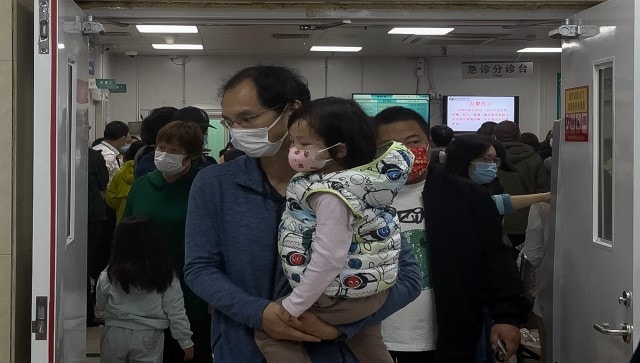 A man carriers a child walk out from a crowded holding room of a children's hospital in Beijing. AP[/caption]What is mycoplasma pneumoniae?According to the United States’ Centers for Disease Control and Prevention (CDC), mycoplasma pneumoniae bacteria typically causes a mild infection, with symptoms similar to common cold.The bacteria, that has been around for some time, acts more like a virus and spreads faster from a human to human, as per Indian Express. It can cause illness by damaging the lining of the respiratory system (throat, lungs, windpipe), explained CDC. People can have the bacteria in their nose or throat at one time or another without being ill.It rarely requires hospitalisation, especially when a cough lasts for weeks. Younger children are an increased risk of developing pneumonia. Thus, many Chinese parents are worried.According to local media, the country’s top paediatric medical centres have been overwhelmed with sick children. Several families are waiting for over seven hours to see a doctor, according to NDTV.How does it spread?As per CDC, when someone infected with mycoplasma pneumoniae coughs or sneezes, they create small respiratory droplets that contain the bacteria.It is not that rapidly infectious as a virus but other people can get infected if they breathe in those droplets that can affect throat and nasal cavities and descend to the lungs very quickly, causing pneumonia.Thus, it is important to limit exposure to any person sneezing or persistent coughing in a closed or crowded environment.What are its signs and symptoms?The most common type of infection is tracheobronchitis (chest cold). Its symptoms include sore throat, feeling tired, fever and chills, shortness of breath, slowly worsening cough that can last for weeks or months, and headache.Children younger than five years who get this pneumonia could have symptoms that are different from older children and adults.[caption id="attachment_13438582" align="alignnone" width="640"]
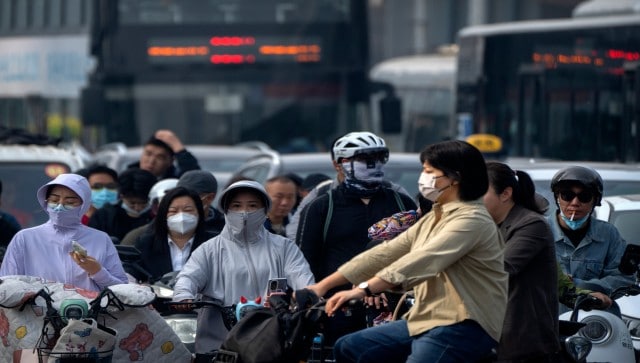 Commuters wearing face masks as they wait at an intersection in the central business district during the morning rush hour in Beijing. AP[/caption]Instead, they may have cold-like symptoms such as sneezing, stuffy or runny nose, sore throat, watery eyes, wheezing, vomiting and diarrhoea.Once someone becomes infected with the bacteria, symptoms usually appear after one to four weeks.Who is more at risk?The bacteria can cause pneumonia in any age group, particularly in children and elderly and those with weakened immune system.Someone who is recovering from a respiratory illness is also at increased risk for serious infections.Mycoplasma pneumoniae outbreaks occur mostly in crowded settings like schools, college, residence halls, military training facilities, long-term care facilities, and hospitals.
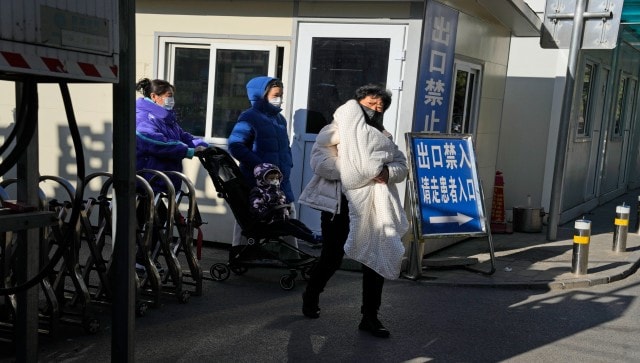 A woman carries a child as they leave a children's hospital in Beijing. AP[/caption]Here are some steps to prevent it:
- Cover your mouth and nose with a tissue when you cough or sneeze.
- Put your used tissue in a waste basket.
- If you don’t have a tissue, cough or sneeze into your upper sleeve or elbow, not your hands.
- Wash your hands often with soap and water for at least 20 seconds.
- If soap and water are not available, use an alcohol-based hand rub.
First Published:Nov 28, 2023, 11:28:40 IST
Advertisement
Advertisement

Military drones & police check-ups: How Sri Lanka is fighting against worst dengue outbreak in a decade
Sri Lanka is fighting its most severe dengue outbreak in nearly a decade, with infections rising sharply across the nation. Military drones have been deployed to tackle the outbreak, which has claimed 56 lives. Health officials said the outbreak is being driven primarily by the DENV-2 variant of the virus
3 min read
How Facebook job ad lured 2 Karnataka men into Myanmar cyber scam camp
The Karnataka Cyber Command has rescued two youths from a scam compound in Myanmar operated by Chinese fraudsters. The duo from Karnataka were lured on the pretext of data-entry jobs. They were asked to work for 16 hours a day and were expected to sleep for six hours daily
4 min read
Why is India seeing 95% cloud cover despite a Super El Niño?
India is witnessing nearly 95 per cent cloud cover despite a Super El Niño, a climate event usually linked to weaker monsoons. Regional weather systems, cyclonic circulations, the monsoon trough and moisture from two seas are temporarily overpowering one of the world's strongest climate phenomena
5 min read
What is CJP’s fourth demand to the government as protests in Delhi intensify?
The protest by the Cockroach Janta Party at Delhi’s Jantar Mantar refuses to die down. The group have made a fourth demand to the Centre, asking that no FIRs are filed against the agitators and that no legal action be taken. The government has expressed willingness to speak to the protesters, but refused to accede on the resignation of Education Minister Dharmandra Pradhan
5 min read
The new geography of war: Why the Houthis can no longer be ignored
The rise of the Houthis marks the emergence of a new geography of war — one in which influence flows not only from capitals and conventional armies, but also from rugged mountains overlooking vital sea lanes
6 min read
Advertisement
Advertisement