
Advertisement


Sections
What are the new rules for coaching centres? Will it curb student suicides?
The new rules state that coaching centres cannot enroll students below the age of 16. They also cannot make misleading promises such as guaranteeing ranks or good marks. Here's what experts think

The Government of India has issued a slew of new rules for coaching centres.The development comes asstudent suicides have risen across the country particularly in the coaching hub of Kota.Coaching centres have been ordered not to enrol students under the age of 16 and to avoid misleading advertisements about good marks and guaranteed ranks.But what are the rules? And will they help prevent suicides?Let’s take a closer look:What are the new rules?The rules released by the ministry of education state that coaching centres cannot enroll students below the age of 16, make misleading promises and guarantee ranks or good marks.The guidelines were announced by the the Ministry of Education on Thursday.“No coaching centre shall engage tutors having qualifications less than graduation. The institutions cannot make misleading promises or guarantee rank or good marks to parents for enrolling students in the coaching centres. The institutes cannot enrol students below 16 years of age. Student enrolment should be only after secondary school examination,” the guidelines state.“The coaching institutes cannot publish or cause to be published or take part in the publication of any misleading advertisement relating to any claim, directly or indirectly, of quality of coaching or the facilities offered therein or the result procured by such coaching centre or the student who attended such class,” it added.The government has also said that a fine of Rs 1 lakh can be imposed on coaching centres or their registrations cancelled for "charging exorbitant fees that cause undue stress leading to student suicide or for other malpractices."“The number of unregulated private coaching centers in the country continues to grow in the absence of any laid down policy or regulation. Instances of such centers charging exorbitant fees from students, undue stress on students resulting in students committing suicides, loss of precious lives due to fire and other accidents, and many other malpractices being adopted by these centres are widely reported in the media,” the education ministry said as per Hindustan Times. ![]() The government has also said that a fine of Rs 1 lakh can be imposed on coaching centres or their registrations cancelled for "charging exorbitant fees that cause undue stress leading to student suicide or for other malpractices." PTI[/caption]According to new guidelines, due to tough competition and academic pressure on students, coaching centres should take steps for the mental well-being of students and may conduct classes without putting undue pressure on them.“They should establish a mechanism for immediate intervention to provide targeted and sustained assistance to students in distress and stressful situations. The competent authority may take steps to ensure that a counselling system is developed by the coaching centre and is easily available for the students and parents.“Information about the names of psychologists, counsellors and the time they render services may be given to all students and parents. Trained counsellors could be appointed in the coaching centre to facilitate effective guidance and counselling for students and parents,” the guidelines state.It also mentioned that tutors “may undergo training in mental health issues to convey information effectively and sensitively to students about their areas of improvement”.The guidelines detailing the framework on mental wellbeing come against the backdrop of student suicides in coaching hub Kota in 2023. The rapid increase in the number of student suicides flagged various issues plaguing the coaching industry.According to the guidelines, the tuition fees for different courses and curricula being charged shall be fair and reasonable and receipts for the fee charged must be made available.“If the student has paid for the course in full and is leaving the course in the middle of the prescribed period, a student will be refunded from out of the fees deposited earlier for the remaining period on a pro-rata basis within 10 days.“If the student was staying in the hostel of the coaching centre then the hostel fees and mess fee etc. will also be refunded. Under no circumstances, the fee based on which enrolment has been made for a particular course and duration shall be increased during the currency of the course,” it said.The state government will be responsible for monitoring the activities of the coaching centre and enquiring about any coaching centre regarding the fulfilment of required eligibility of registration and satisfactory activities of the coaching centre.“Considering that regulation of +2 level education is the responsibility of State/Union Territory Governments, these institutions are best regulated by the State / UT governments,” the document states.“A complaint box or register may be placed at the coaching centre for the students to raise a complaint. Coaching center shall have committee for redressal of complaints/grievances of students. (viii) Provision of separate toilets for males and females shall be made within the coaching center building premises,” the guidelines state as per Hindustan Times.“Special provisions may be made by the coaching center to encourage greater representation of students from vulnerable communities such as female students, students with disabilities, and students from marginalised groups. The coaching center building, and the surrounding premises shall be Divyang-friendly….” it added.Will they help prevent suicides?First, let’s take a look at the statistics on suicide.As per Hindustan Times, student suicides have increased these past few years.In the year 2019, 10,335 students died by suicide, while 12,526 and 13,089 took their own lives in 2020 and 2021 respectively.
The government has also said that a fine of Rs 1 lakh can be imposed on coaching centres or their registrations cancelled for "charging exorbitant fees that cause undue stress leading to student suicide or for other malpractices." PTI[/caption]According to new guidelines, due to tough competition and academic pressure on students, coaching centres should take steps for the mental well-being of students and may conduct classes without putting undue pressure on them.“They should establish a mechanism for immediate intervention to provide targeted and sustained assistance to students in distress and stressful situations. The competent authority may take steps to ensure that a counselling system is developed by the coaching centre and is easily available for the students and parents.“Information about the names of psychologists, counsellors and the time they render services may be given to all students and parents. Trained counsellors could be appointed in the coaching centre to facilitate effective guidance and counselling for students and parents,” the guidelines state.It also mentioned that tutors “may undergo training in mental health issues to convey information effectively and sensitively to students about their areas of improvement”.The guidelines detailing the framework on mental wellbeing come against the backdrop of student suicides in coaching hub Kota in 2023. The rapid increase in the number of student suicides flagged various issues plaguing the coaching industry.According to the guidelines, the tuition fees for different courses and curricula being charged shall be fair and reasonable and receipts for the fee charged must be made available.“If the student has paid for the course in full and is leaving the course in the middle of the prescribed period, a student will be refunded from out of the fees deposited earlier for the remaining period on a pro-rata basis within 10 days.“If the student was staying in the hostel of the coaching centre then the hostel fees and mess fee etc. will also be refunded. Under no circumstances, the fee based on which enrolment has been made for a particular course and duration shall be increased during the currency of the course,” it said.The state government will be responsible for monitoring the activities of the coaching centre and enquiring about any coaching centre regarding the fulfilment of required eligibility of registration and satisfactory activities of the coaching centre.“Considering that regulation of +2 level education is the responsibility of State/Union Territory Governments, these institutions are best regulated by the State / UT governments,” the document states.“A complaint box or register may be placed at the coaching centre for the students to raise a complaint. Coaching center shall have committee for redressal of complaints/grievances of students. (viii) Provision of separate toilets for males and females shall be made within the coaching center building premises,” the guidelines state as per Hindustan Times.“Special provisions may be made by the coaching center to encourage greater representation of students from vulnerable communities such as female students, students with disabilities, and students from marginalised groups. The coaching center building, and the surrounding premises shall be Divyang-friendly….” it added.Will they help prevent suicides?First, let’s take a look at the statistics on suicide.As per Hindustan Times, student suicides have increased these past few years.In the year 2019, 10,335 students died by suicide, while 12,526 and 13,089 took their own lives in 2020 and 2021 respectively.![]() 'Anti-suicide' nets installed at a hostel to catch students in case they jump from higher floors, in Kota. PTI[/caption]A dozen died less than six months after arriving in Kota.Some are wondering if the guidelines will make a difference.Speaking on condition of anonymity, a representative of a coaching institute in South Delhi told Careers360, “This regulation seems to be only for bigger institutes and the ones which are running with fewer students are not required to be part of the regulation. Also, the enrollment of students in coaching centres is constantly changing, as students leave after completing their courses. Who is going to constantly monitor this and it is only going to open up avenues of corruption by the implementing body.”Keshav Agarwal, president of Educators Society, speaking to the website, questioned whether the ‘no coaching during school hours’ rule will work.Agarwal said, “Some students choose open schooling and prepare for exams while attending classes in the morning. Restricting their ability to study in the morning infringes upon their rights under Article 14, 19, and 21. The same applies to students who drop a year to prepare for exams, as there is no limit on the number of attempts in medical exams.”“Similar is the case for individuals preparing for exams to join the Indian Administrative Services (IAS), Staff Selection Commission (SSC) and even banking exams. How does one define class hours for such coaching institutes?”
'Anti-suicide' nets installed at a hostel to catch students in case they jump from higher floors, in Kota. PTI[/caption]A dozen died less than six months after arriving in Kota.Some are wondering if the guidelines will make a difference.Speaking on condition of anonymity, a representative of a coaching institute in South Delhi told Careers360, “This regulation seems to be only for bigger institutes and the ones which are running with fewer students are not required to be part of the regulation. Also, the enrollment of students in coaching centres is constantly changing, as students leave after completing their courses. Who is going to constantly monitor this and it is only going to open up avenues of corruption by the implementing body.”Keshav Agarwal, president of Educators Society, speaking to the website, questioned whether the ‘no coaching during school hours’ rule will work.Agarwal said, “Some students choose open schooling and prepare for exams while attending classes in the morning. Restricting their ability to study in the morning infringes upon their rights under Article 14, 19, and 21. The same applies to students who drop a year to prepare for exams, as there is no limit on the number of attempts in medical exams.”“Similar is the case for individuals preparing for exams to join the Indian Administrative Services (IAS), Staff Selection Commission (SSC) and even banking exams. How does one define class hours for such coaching institutes?”
The government has proposed registering new and existing centres within three months of the guidelines taking effect.The coaching centres cannot hire the services of any tutor or person who has been convicted of any offence involving moral turpitude.An institute will not be registered unless it has a counselling system as per the requirement of these guidelines.“Coaching centres shall have a website with updated details of the qualification of tutors, courses/curriculum, duration of completion, hostel facilities, and the fees being charged,” the guidelines state.[caption id="attachment_13200722" align="alignnone" width="640"]
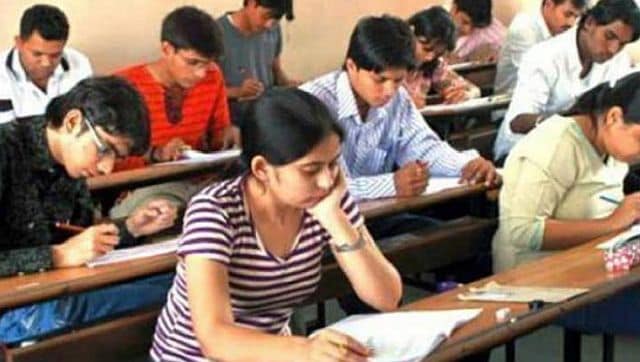 The government has also said that a fine of Rs 1 lakh can be imposed on coaching centres or their registrations cancelled for "charging exorbitant fees that cause undue stress leading to student suicide or for other malpractices." PTI[/caption]According to new guidelines, due to tough competition and academic pressure on students, coaching centres should take steps for the mental well-being of students and may conduct classes without putting undue pressure on them.“They should establish a mechanism for immediate intervention to provide targeted and sustained assistance to students in distress and stressful situations. The competent authority may take steps to ensure that a counselling system is developed by the coaching centre and is easily available for the students and parents.“Information about the names of psychologists, counsellors and the time they render services may be given to all students and parents. Trained counsellors could be appointed in the coaching centre to facilitate effective guidance and counselling for students and parents,” the guidelines state.It also mentioned that tutors “may undergo training in mental health issues to convey information effectively and sensitively to students about their areas of improvement”.The guidelines detailing the framework on mental wellbeing come against the backdrop of student suicides in coaching hub Kota in 2023. The rapid increase in the number of student suicides flagged various issues plaguing the coaching industry.According to the guidelines, the tuition fees for different courses and curricula being charged shall be fair and reasonable and receipts for the fee charged must be made available.“If the student has paid for the course in full and is leaving the course in the middle of the prescribed period, a student will be refunded from out of the fees deposited earlier for the remaining period on a pro-rata basis within 10 days.“If the student was staying in the hostel of the coaching centre then the hostel fees and mess fee etc. will also be refunded. Under no circumstances, the fee based on which enrolment has been made for a particular course and duration shall be increased during the currency of the course,” it said.The state government will be responsible for monitoring the activities of the coaching centre and enquiring about any coaching centre regarding the fulfilment of required eligibility of registration and satisfactory activities of the coaching centre.“Considering that regulation of +2 level education is the responsibility of State/Union Territory Governments, these institutions are best regulated by the State / UT governments,” the document states.“A complaint box or register may be placed at the coaching centre for the students to raise a complaint. Coaching center shall have committee for redressal of complaints/grievances of students. (viii) Provision of separate toilets for males and females shall be made within the coaching center building premises,” the guidelines state as per Hindustan Times.“Special provisions may be made by the coaching center to encourage greater representation of students from vulnerable communities such as female students, students with disabilities, and students from marginalised groups. The coaching center building, and the surrounding premises shall be Divyang-friendly….” it added.Will they help prevent suicides?First, let’s take a look at the statistics on suicide.As per Hindustan Times, student suicides have increased these past few years.In the year 2019, 10,335 students died by suicide, while 12,526 and 13,089 took their own lives in 2020 and 2021 respectively.
Kota, the coaching hub which has been in the media spotlight, saw at least 26 suicides in 2023.That was the highest number of suicides witnessed by the city since 2015.In 2022, 15 NEET/JEE aspirants died by suicide in the city.That number was 18 in 2019, 29 in 2018, 7 in 2017, 17 in 2017 and 18 in 2015.The newspaper said half of those that took their own lives were under the age of 18.[caption id="attachment_13060142" align="alignnone" width="640"]
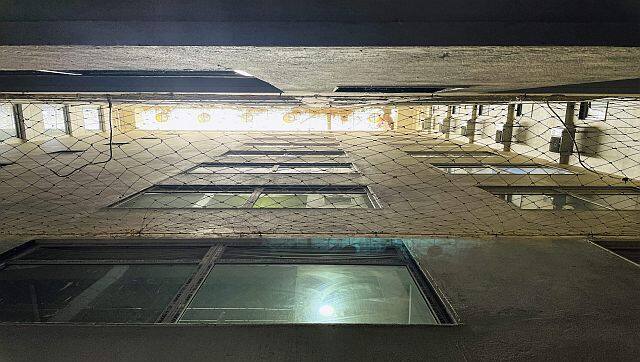 'Anti-suicide' nets installed at a hostel to catch students in case they jump from higher floors, in Kota. PTI[/caption]A dozen died less than six months after arriving in Kota.Some are wondering if the guidelines will make a difference.Speaking on condition of anonymity, a representative of a coaching institute in South Delhi told Careers360, “This regulation seems to be only for bigger institutes and the ones which are running with fewer students are not required to be part of the regulation. Also, the enrollment of students in coaching centres is constantly changing, as students leave after completing their courses. Who is going to constantly monitor this and it is only going to open up avenues of corruption by the implementing body.”Keshav Agarwal, president of Educators Society, speaking to the website, questioned whether the ‘no coaching during school hours’ rule will work.Agarwal said, “Some students choose open schooling and prepare for exams while attending classes in the morning. Restricting their ability to study in the morning infringes upon their rights under Article 14, 19, and 21. The same applies to students who drop a year to prepare for exams, as there is no limit on the number of attempts in medical exams.”“Similar is the case for individuals preparing for exams to join the Indian Administrative Services (IAS), Staff Selection Commission (SSC) and even banking exams. How does one define class hours for such coaching institutes?”
Agarwal also said the rules on space and infrastructure would affect only a few centres.“The regulations in the draft seem to mainly cater to coaching centres with residential facilities, such as those in Kota or Hyderabad. For local centres where students attend for only two to three hours, most of these rules become redundant,” Agarwal pointed out.But others have welcomed the new rules.The spokesperson of Allen Career Institute told Careers360, “We welcome these guidelines and look forward to working with the government in shaping them for the benefit and well-being of the student community.”With inputs from agencies
First Published:Jan 19, 2024, 19:09:04 IST
Advertisement
Advertisement

Military drones & police check-ups: How Sri Lanka is fighting against worst dengue outbreak in a decade
Sri Lanka is fighting its most severe dengue outbreak in nearly a decade, with infections rising sharply across the nation. Military drones have been deployed to tackle the outbreak, which has claimed 56 lives. Health officials said the outbreak is being driven primarily by the DENV-2 variant of the virus
3 min read
How Facebook job ad lured 2 Karnataka men into Myanmar cyber scam camp
The Karnataka Cyber Command has rescued two youths from a scam compound in Myanmar operated by Chinese fraudsters. The duo from Karnataka were lured on the pretext of data-entry jobs. They were asked to work for 16 hours a day and were expected to sleep for six hours daily
4 min read
Why is India seeing 95% cloud cover despite a Super El Niño?
India is witnessing nearly 95 per cent cloud cover despite a Super El Niño, a climate event usually linked to weaker monsoons. Regional weather systems, cyclonic circulations, the monsoon trough and moisture from two seas are temporarily overpowering one of the world's strongest climate phenomena
5 min read
What is CJP’s fourth demand to the government as protests in Delhi intensify?
The protest by the Cockroach Janta Party at Delhi’s Jantar Mantar refuses to die down. The group have made a fourth demand to the Centre, asking that no FIRs are filed against the agitators and that no legal action be taken. The government has expressed willingness to speak to the protesters, but refused to accede on the resignation of Education Minister Dharmandra Pradhan
5 min read
The new geography of war: Why the Houthis can no longer be ignored
The rise of the Houthis marks the emergence of a new geography of war — one in which influence flows not only from capitals and conventional armies, but also from rugged mountains overlooking vital sea lanes
6 min read
Advertisement
Advertisement