


What are the new biometric rules leading to long queues, delays at European airports?
The European Union launched its digital Entry and Exit System (EES) last year, which tracks when non-EU citizens enter and exit the Schengen area. But why is it causing delays?

Last year, the European Union launched its digital Entry and Exit System (EES).
The biometric system tracks when non-EU citizens enter and exit the Schengen area. The idea is to replace traditional passport stamping and speed up border crossings. The system is also aimed at curbing illegal immigration, which is a rising concern within the EU.
However, the rollout has been anything but smooth. The system is now causing long delays and disruptions to travel plans across several major European hubs. But what exactly is the EES? And why is it causing so much chaos at airports and borders?
Let’s take a closer look.
A look at EES
So, what exactly is the Entry and Exit System?
 More from Explainers
At its core, the EES is designed to digitally track when non-EU citizens enter and leave the Schengen area. The idea is to move away from traditional passport stamping and replace it with a centralised biometric database that records who comes in, who leaves and how long they stay. EU officials say this will make border checks faster and more accurate, while also helping clamp down on overstays and illegal immigration.
The Schengen Zone, established in 1985, comprises 29 members – 25 of the 27 European Union member states, as well as Switzerland, Norway, Iceland and Liechtenstein. It is the world’s largest area without internal border controls, allowing more than 400 million people to travel freely within it. That openness, however, also means the EU’s external borders carry enormous pressure – something the EES is meant to address.
The system is being rolled out in phases and is expected to be fully implemented by April 2026.
Under the EES, non-EU citizens entering or leaving the Schengen Zone have their fingerprints scanned and a facial photograph taken, with passport details logged into the system. The EES applies only to short-term visitors, such as tourists and business travellers, rather than long-term residents.
Citizens of the EU are exempt from the EES. The system defines a non-EU traveller as someone who does not hold EU nationality or the nationality of Iceland, Liechtenstein, Norway or Switzerland. This means the system applies to travellers from countries such as the United States, Canada, Australia and the United Kingdom.
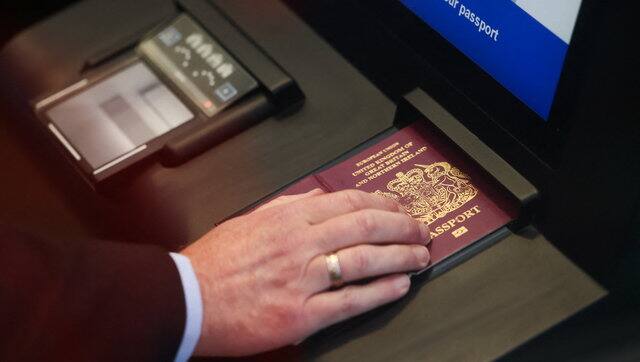
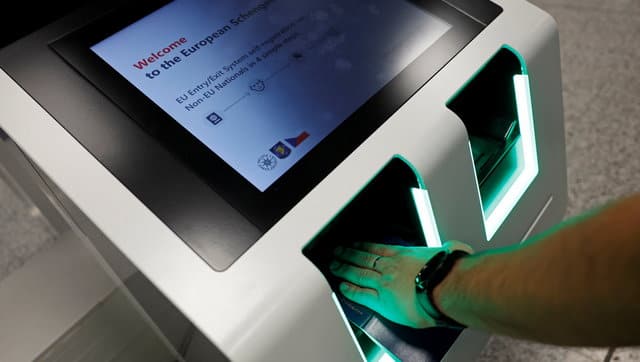
To make this work, the EU has installed self-service kiosks at airports and at some train and bus stations. The process is free, and travellers can pre-register their details. Non-EU citizens are required to input their name, passport information, fingerprints, and the date and place of entry and exit. The machine also captures a photograph of the traveller’s face. Children under the age of 12 are exempt from fingerprinting.
The EU has said anyone refusing to provide biometric details can be denied entry. At the same time, officials stress that the system does not track movements within the Schengen Zone itself. In other words, it records when you enter and when you leave – not where you go in between.
For frequent travellers, the system is meant to make repeat trips smoother. Once biometric details are stored, identities can be verified against existing records during subsequent visits. Registrations are valid for three years or until the traveller’s passport expires. The EU has said travellers’ data will generally be retained for three years before being deleted, though certain exceptions apply.
The EU has also said that border, visa and immigration authorities within the Schengen Zone will be able to access the data. This includes local police and Europol, the EU’s law enforcement agency. In some cases, data can be shared with non-Schengen countries or international organisations such as UN bodies, though only under what the EU describes as “strict conditions”.
Brussels insists all of this data collection is being done in line with EU data protection laws. “Travellers’ data will be collected and stored in full compliance with EU data protection rules and rights,” the European Commission has said.
How and why it is causing delays
The European Council last year said the EES is meant to “improving the effectiveness and efficiency of controls at the EU’s external borders”. In theory, the system should eventually speed things up. In practice, it has done the opposite, at least for now. EU countries were initially told to register at least 10 per cent of all third-country arrivals via the EES. As of 9 January, this threshold was raised to 35 per cent. That jump has proved difficult to manage on the ground.
According to Semafor, skiers arriving in Geneva have been made to wait as long as three hours. Travellers arriving in Tenerife in the Canary Islands have also faced massive delays. Airports have warned that wait times could stretch to six hours during peak travel periods, and there are already reports of people missing flights.
A Geneva Airport spokesperson told the BBC that the EES is responsible for “congestion… particularly on Saturdays during the busy ski season”, adding that the system has proved a “major challenge for Swiss customs and Geneva Airport”.
Andrew Knight, who runs Sanasty Car Hire at Tenerife Airport, told the outlet that while some passengers breezed through passport control “in about 20 minutes, other people are experiencing one-and-a-half to two-hour delays waiting to use the systems. A few times the systems have gone down, so it’s really hit and miss.”
In fact, the EU had been warned. The Airports Council International (ACI) Europe said in December that the system has “led to border control processing times at airports increasing by up to 70 per cent, with waiting times of up to three hours during peak traffic periods”.
Passengers in several countries including France, Germany, Greece, Iceland, Italy, Portugal and Spain have been affected.
ACI Europe and airport authorities point to several reasons for the delays:
- EES system outages
- Self-service kiosks being out of service or too few in number
- No automated border control gates at several airports
- No dedicated pre-registration EES app in many locations
- Too few border guards deployed because of staff shortages
Olivier Jankovec, Director General of ACI Europe, warned that implementing the system in phases “will inevitably result in much more severe congestion and systemic disruption for airports and airlines”. He also warned of potential “serious safety hazards” if overcrowding at border control becomes unmanageable.
Julia Lo Bue-Said, who runs travel agent network Advantage Partnership, told the BBC that “without question, the new system has created even more bottlenecks and pinch points [in places] that were already challenged”.
Authorities are on the defensive
EU officials have sought to play down the disruption, arguing that teething problems are inevitable with a system of this scale.
“Rolling out such a large-scale system is a complex task,” Euronews quoted European Commission spokesperson Markus Lammert as saying. “By extending the flexibility for the summer period, we give Member States the tools necessary to manage potential problems and, most importantly, avoid summer travel chaos.”
The European Commission has said that member states, which have until April 10, 2026, to fully implement the EES, can suspend the system, at least in part, for up to 90 days. They can also extend this by another 60 days to deal with peak tourist periods.
Lisbon Airport exercised this option in December after “serious deficiencies” in the system led to waiting times stretching to as long as seven hours.
Jankovec told the BBC that the ability to suspend the EES could be crucial during the summer months if “the situation becomes unsustainable at border control”.
Others in the travel industry have echoed similar concerns.
“We are urging border authorities to do all they can to minimise delays. They have contingency measures at their disposal – such as standing down the system or limiting checks – and we want them to be utilised to help manage the flow of people,” said Mark Tanzer, chief executive of ABTA, as quoted by Euronews. “Where problems have been experienced so far, some of these could have been avoided if the contingency measures were applied.”
What travellers can do
Non-EU travellers are being advised to plan for delays. Arriving early, building in extra buffer time before connecting flights, and keeping passports and details ready for biometric registration can help reduce stress at the border.
But until the system is properly implemented, delays are likely to remain a feature of travel to Europe for the foreseeable future.
With inputs from agencies

Military drones & police check-ups: How Sri Lanka is fighting against worst dengue outbreak in a decade
How Facebook job ad lured 2 Karnataka men into Myanmar cyber scam camp
Why is India seeing 95% cloud cover despite a Super El Niño?
What is CJP’s fourth demand to the government as protests in Delhi intensify?
The new geography of war: Why the Houthis can no longer be ignored